Saudi SDAIA Signs MoU with NAVER LABS and NAVER CLOUD to Develop Arabic Large Language Model 

The MoU was formalized during the third Global AI Summit (GAIN) in Riyadh. (SPA)
TT

Saudi SDAIA Signs MoU with NAVER LABS and NAVER CLOUD to Develop Arabic Large Language Model 

The MoU was formalized during the third Global AI Summit (GAIN) in Riyadh. (SPA)

The Saudi Data and AI Authority (SDAIA) signed on Tuesday a MoU with NAVER LABS and NAVER CLOUD to design an advanced language model for Arabic and its applications.

The MoU was formalized during the third Global AI Summit (GAIN) in Riyadh. It was signed on behalf of SDAIA by National Information Center Director Dr. Esam Alwagait, while Dr. Sangok Seok and Dr. Yoon Kim represented NAVER CLOUD and Dr. Choi Soo-Yeon represented NAVER Corporation.

The signing was hosted by SDAIA President Dr. Abdullah Al-Ghamdi and South Korea’s Ambassador to Saudi Arabia Choi-Byung- Huyk.

The partnership aims to employ the latest technical developments related to developing an Arabic language model to provide data-center solutions and services, in addition to participating in the cloud platform for digital transformation solutions.

Through a set of applications that use AI algorithms, SDAIA is focusing on boosting the position of the Arabic language in the field of AI.

The authority, in cooperation with the King Salman Global Academy for the Arabic Language, recently prepared a dictionary of data and AI to collect the most important technical terms and provide brief and simplified definitions in both Arabic and English.

SDAIA also prepared the "Your Voice" application, which enables the conversion of speech into text via a voice recognition feature in classical Arabic and local dialects, which can be used to record minutes of meetings and build interactive audio systems.

During the second Global AI Summit held in 2022, SDAIA launched the "ALLaM" application to serve the Arabic language and improve language models using the application in various fields, including: developing a model capable of writing and understanding Arabic poetry, developing an AI model capable of accurately parsing Arabic sentences, and developing a model that helps children learn the Arabic language in a fun and effective way.


In East Libya, Archaeologists Fight to Save 'Breathtaking' Ancient Greek Ruins

(FILES) A man holds a preserved artifact from the Cyrene archaeological site near the ancient historical town of Shahat in the northeastern Mediterranean coast of Libya on May 17, 2026. (Photo by Abdullah DOMA / AFP)
TT

In East Libya, Archaeologists Fight to Save 'Breathtaking' Ancient Greek Ruins

(FILES) A man holds a preserved artifact from the Cyrene archaeological site near the ancient historical town of Shahat in the northeastern Mediterranean coast of Libya on May 17, 2026. (Photo by Abdullah DOMA / AFP)

In eastern Libya, a small group of passionate archaeologists are striving to safeguard the ancient ruins of Cyrene and Apollonia -- sites first targeted by militant groups, then ravaged by Storm Daniel.

The UNESCO-listed ruins were once at the heart of a unique network of Greek colonies in North Africa, according to AFP.

"Breathtaking," tour guide Hamdi Al-Kailani said, surveying the imposing Temple of Zeus at Cyrene. The monument, he added, is slightly bigger than the Parthenon in Athens.

While calm reigns there today, Cyrene -- much like other sites across eastern Libya -- was the target of looting by terrorists, including the ISIS group, when the country descended into chaos following the fall of longtime ruler Muammar Gaddafi in 2011.

With state institutions largely absent, local experts and aficionados had to improvize.

"We were so afraid," recalled Smail Dakhil, who oversees the dilapidated Museum of Cyrene, which houses statues of Apollo and Zeus, and a storage of more than 40,000 rare artifacts salvaged from the ancient city.

"We came up with a plan among colleagues to hide the small statues, gold coins and archives in our homes," he told AFP.

Larger sculptures that could not be moved, including a rare female sphinx, were protected by volunteer archaeologists and residents who "stood watch over the sites around the clock so no thefts were recorded in Cyrene", Dakhil added.

In 631 BC, settlers from the Greek island of Thera, now Santorini, founded Cyrene and four other colonies -- Apollonia, Ptolemais, Arsinoe and Berenice -- along the coast of today's eastern Libya.

At its height, Cyrene had as many as 100,000 inhabitants and developed a rich intellectual life centred on the arts, music and science, with theatres and a renowned school of philosophy.

Earthquakes and wars eventually reduced the cities to ruins, and they were only rediscovered in the 18th century.

Then came Storm Daniel in 2023, with major floods sweeping through Derna, about 100 kilometres (60 miles) east of Cyrene, and killing thousands of people.

"The day after, everyone who loves this site came by," said Anis Hamid Younes, who oversees renovation works along a sacred pathway linking upper Cyrene to the Temple of Apollo.

"We were in shock," he added.

Younes leads a team that has spent months clearing fallen blocks and rubble, salvaging valuable objects and rebuilding a sanctuary and nearly 60 metres (200 feet) of an antique wall.

Despite what he described as "outdated equipment" and "a lack of resources", Younes said he hoped the area would reopen to visitors in September.

Storm Daniel brought destruction and death -- but also new discoveries.

Archaeologists have since unearthed engravings and funerary offerings hidden among thousands of Green and Roman tombs.

- 'Change of attitude' -

Some 20 kilometres away, experts are increasingly concerned about Apollonia, Cyrene's former port, a third of which has already been submerged by the sea over the centuries.

"Before Daniel, we estimated the risk of losing the site at 50 percent," said Talal Al-Hasey, a local official at the Department of Antiquities. "Now it's 80 percent."

"Urgent intervention is needed... Some structures are completely exposed to marine erosion," he added.

Sitting on one of the rock-cut seats of a Greek theatre, Ahmad Essa Abdulkariem, a senior Department of Antiquities official, lamented "the absence of assistance from UNESCO and other international organizations".

He said the department had made "repeated requests" for help with sites listed as endangered since 2016, but in vain.

Charaf Ahmimed, UNESCO's new director for the Maghreb, told AFP he was "not aware" of the requests, noting "UNESCO's desire to return in force" to Libya. He said he planned to visit Cyrene and Apollonia this summer.

Fresh from a trip to Paris, Essa said he dreamt of having a museum of comparable stature to the Louvre in Libya's eastern region of Cyrenaica.

Such space could also help Libya recover hundreds of ancient items now held abroad, including around 250 in Paris and another 200 at the British Museum in London.



Culinary Arts Commission Documents Saudi Food Heritage Through Global Ark of Taste Initiative

Culinary Arts Commission Documents Saudi Food Heritage Through Global Ark of Taste Initiative
TT

Culinary Arts Commission Documents Saudi Food Heritage Through Global Ark of Taste Initiative

Culinary Arts Commission Documents Saudi Food Heritage Through Global Ark of Taste Initiative

The Culinary Arts Commission has registered 180 Saudi products representing the Kingdom's 13 administrative regions within the global Ark of Taste initiative, as part of its efforts to document national food heritage, SPA reported.

The Ark of Taste is a global initiative dedicated to documenting food products threatened with disappearing, aiming to highlight local food diversity, support traditional producers, and promote sustainable production methods.

The Kingdom registered approximately 120 products between 2022 and 2024, before adding 60 new items this year, bringing the total to 180, spanning 16 categories including animal breeds, baked goods, dairy products, local coffee, honey, spices, and traditional vinegar.

The commission continues to support the documentation and registration of the Kingdom's food and cultural elements, preserving Saudi culinary heritage for future generations.


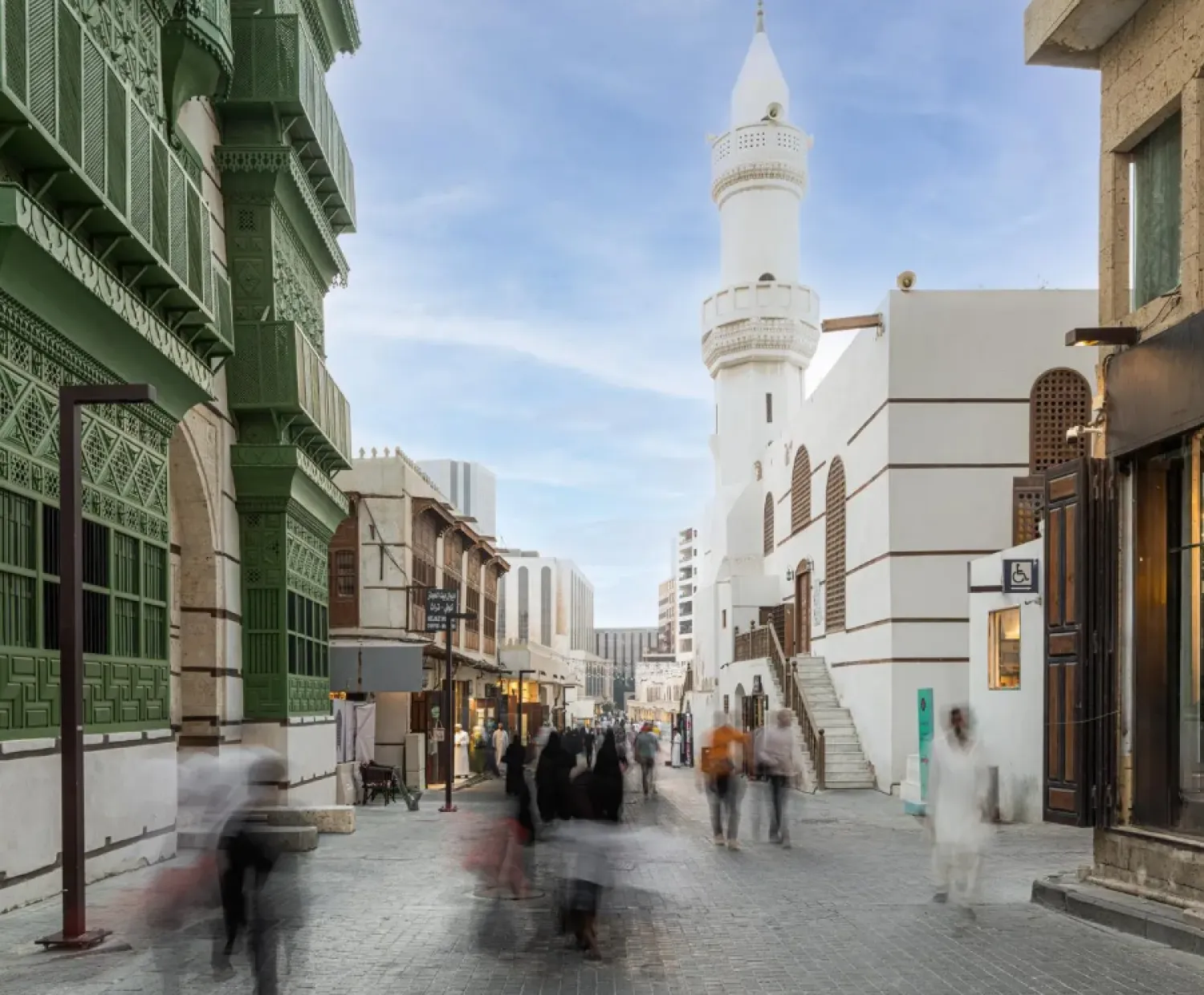
Historic Jeddah Marks 12 Years on UNESCO World Heritage List

Historic Jeddah was inscribed on the UNESCO World Heritage List after meeting three criteria of Outstanding Universal Value - SPA
TT

Historic Jeddah Marks 12 Years on UNESCO World Heritage List

Historic Jeddah was inscribed on the UNESCO World Heritage List after meeting three criteria of Outstanding Universal Value - SPA

This June marks the 12th anniversary of Historic Jeddah's inscription on the UNESCO World Heritage List, reflecting the Ministry of Culture's continued efforts to revitalize the area as part of Saudi Arabia's ongoing commitment to protecting and preserving cultural heritage and national identity.

Historic Jeddah was inscribed on the UNESCO World Heritage List after meeting three criteria of Outstanding Universal Value.

The site reflects the exchange of human values, building materials, and architectural styles across the Red Sea region. It also highlights its historic role as a center for trade and pilgrimage, enhancing its historical connection to Hajj from both architectural and urban perspectives, SPA reported.

The 12th anniversary of Historic Jeddah's presence on the UNESCO World Heritage List further reinforces its global status as a living heritage site, a distinctive cultural and tourism destination, and a vibrant center for culture, arts, and creativity.