


Q&A: Lily Collins Is ‘Emily in Paris,’ Rome and Barcelona 

British-US actress Lily Collins poses during the photocall of the presentation of the Netflix series "Emily in Paris" season four in Paris, France, 12 September 2024. (EPA)
TT

Q&A: Lily Collins Is ‘Emily in Paris,’ Rome and Barcelona 

British-US actress Lily Collins poses during the photocall of the presentation of the Netflix series "Emily in Paris" season four in Paris, France, 12 September 2024. (EPA)

First Paris, now Rome and next Barcelona — Lily Collins is taking on two more European cities.

As the star and producer of “Emily in Paris,” she’s been playing the unlucky-in-love marketing executive, breaking hearts (including her own) in France for the past three seasons of the Netflix show.

That changes in part two of the fourth season when, in her usual dramatic fashion, Emily heads to Italy. The cast, including Philippine Leroy-Beaulieu, Lucas Bravo, Ashley Park and Camille Razat, were all in Rome this week to premiere the new episodes releasing Thursday. Getting away from Paris is something there might be more of in future seasons, as writer and creator Darren Star says he’s happy to take this show on the road.

Although he rules out changing the title.

“No, it’s ‘Emily in Paris,’” says Star. “But Emily can have experiences in other cities and I think Rome is a part of the show now. It really is.”

Barcelona comes into play this October when Collins makes her West End debut opposite Álvaro Morte of “Money Heist” in a stage thriller named after the Spanish city.

Luckily, filming “Emily in Paris” in public places has helped give the actor the boost to become a leading lady on the stage.

“It did give me a bit more confidence, an understanding of performing in front of a large crowd this year,” Collins says. “It just ironically happened to be the year that I would then be doing theater right after.”

In a recent interview with The Associated Press in Rome, Collins explains why it’s the right time for her London stage debut and how filming in Rome allowed her to channel Audrey Hepburn’s on-screen Italian adventure in “Roman Holiday.” It has been edited for brevity and clarity.

AP: Would you ever play Audrey Hepburn?

COLLINS: Yes. I mean, I love her. There is no ever replicating her, but she is someone that I’ve grown up admiring.

AP: There were two distinct nods to her (in part two) — “Roman Holiday” and “Charade” — did I miss anything?

COLLINS: No, I think those were (the) two. “Roman Holiday” — there’s an essence of her the whole time. Because if you’re here — how can you not, you know?

AP: What was it like filming those scenes around Rome with the Vespa...

COLLINS: Stunning.

AP: I imagine you had to go round quite a few times?

COLLINS: We went around so many times, which was funny because then tourists, of course, are noticing that there’s this massive machine and then a car with a Vespa attached to it. And then we are going on an actual Vespa. But then there’s also the transport vehicle. So like, what are they filming? And then once they figured out it was our show, it was fun.

It was also surreal because you’re going around the Colosseum and everything in Rome is beautiful and ancient. And I was pinching myself, but it was amazing to be able to explore another city. I’d been to Paris before the show, so playing (Emily) who was coming to it fresh, was a character. Whereas this time, I’d been to Rome but never fully explored or been here for a long period of time. So it was a whole new adventure, but genuinely for me as well. And it was more of a vacation mode for Emily, which I was happy for her. I was like, “You go, girl. You get a little vacay.”

AP: Do you think this could continue?

COLLINS: I definitely hope so. We’re just, you know, waiting (crosses her fingers). But it would be really nice to explore more of Italy. I think there’s so much here. But I don’t know.

AP: I want to ask you about moving from the TV show to theater.

COLLINS: I’m very excited. But of course, I’m also nervous. And it’s a whole new world for me. I did theater as a kid, but this is something I’ve been dreaming of my whole life. And the West End is the West End. But it really feels just surreal and I love my team that we’re working with. I think it’s a beautiful, beautiful script. And the theater is one of a kind, I love the Duke of York (Theatre) and our director (Lynette Linton). It’s a wonderful, wonderful group.

AP: So that’s Lily in Barcelona.

COLLINS: Yes exactly (laughing). All the different cities around Europe.

AP: How does it fit in around your TV work and the show?

COLLINS: It’s all about timing as well because ... doing theater is something I’ve always wanted to do. But it is a time commitment that when you’re doing something like “Emily in Paris,” that is also the biggest time commitment. It’s making sure that it fits in at the right time. But it also isn’t just about that. It’s the project. When I read “Barcelona,” I went, “This is it.” And, “How do I make this happen? What time do we have? How do we make it happen with the theater?” You know? So it was a bit of a Tetris-type of thing, but to me it’s a different medium, it’s a different skill set, it’s a different experience.

This season, because “Emily in Paris” is more known, when you’re out and about in the streets, it does become a bit of live theater because you can’t control people watching all the time. And so sometimes there are scenes, when you’re near (Emily’s) apartment building or you’re in Rome or you’re in the mountains skiing, where there’s hundreds of people that just show up to watch. And so it is a bit like theater. You are performing for an audience that weirdly doesn’t know the storyline, though, so it’s a little bit the same and a little bit different. It’s like, “But you won’t see this for a few months, so please don’t spoil it!” Whereas with theater, it’s in the moment.


Movie Review: Stephen Curry's Animated Basketball Movie 'GOAT' Is a Disappointing Air Ball

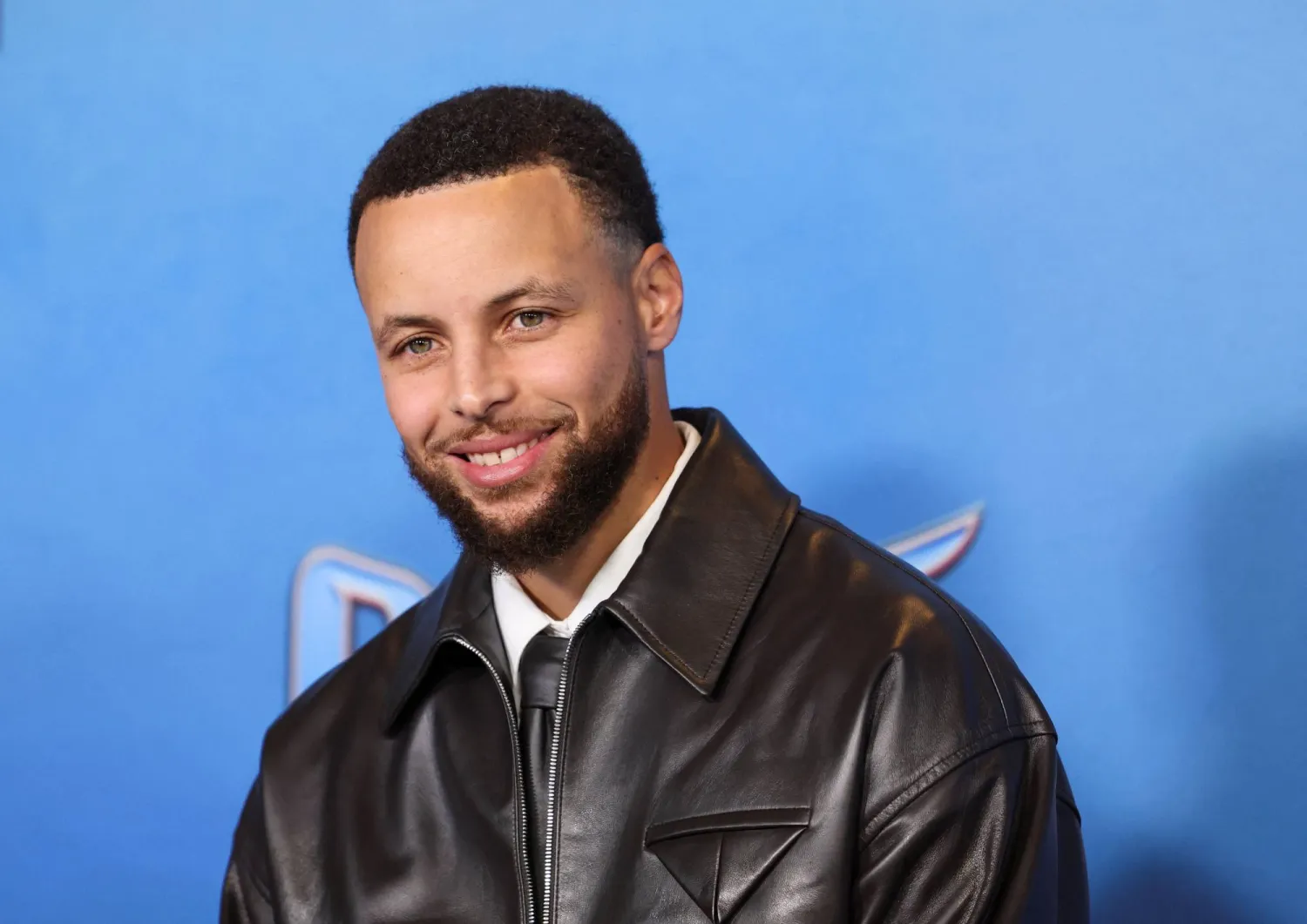
 Stephen Curry attends a premiere for the film "GOAT", in Los Angeles, California, US, February 6, 2026. (Reuters)
Stephen Curry attends a premiere for the film "GOAT", in Los Angeles, California, US, February 6, 2026. (Reuters)
TT

Movie Review: Stephen Curry's Animated Basketball Movie 'GOAT' Is a Disappointing Air Ball

 Stephen Curry attends a premiere for the film "GOAT", in Los Angeles, California, US, February 6, 2026. (Reuters)
Stephen Curry attends a premiere for the film "GOAT", in Los Angeles, California, US, February 6, 2026. (Reuters)

You'd expect an animated basketball movie with four-time NBA champion Stephen Curry in the producer's chair to be an easy lay-up. So why is “GOAT” such a brick?

Despite a wondrously textured, kinetic world and some interesting oddball characters, the movie is undone by a predictable, saccharine script. It’s as easy to see the steps coming as a Curry three-pointer arching into the net.

The movie has the kind of lazy, thin writing that feels like it all could have derived from a Hollywood happy hour gettogether: “Bro, bro. Wait. What if the GOAT was an actual goat?”

It centers on Will Harris, a goat with dreams of becoming a great baller, voiced by “Stranger Things” star Caleb McLaughlin. Undersized and an orphan — again with the orphans, guys? — Will is a delivery driver for a diner and late on his rent. He's a great outside shooter but a liability in the paint, unless he learns, that is.

He lives in Vineland — a hectic urban landscape with graffiti and living vines that choke the playgrounds — and is a rabid supporter of the local franchise, the Thorns. His idol is veteran Jett Fillmore, a leopard who's the league's all-time leading scorer, nicely voiced by Gabrielle Union. The Thorns are a bit of a mess, despite Jett's brilliance.

The game here is called roarball, a high-intensity, co-ed, multi-animal, full-contact sport derived from basketball with a hollow ball that has small holes. It's a “Mad Max” sport — ultraviolent, unofficiated and the dangers lurk not just from the beefy opponents but from the arena itself. The championship award is called the Claw.

The best part of the movie may be the environments for the other arenas — lava in one, a swamp with stalagmites and stalactites in another, plus an ice-bound one and another with desert sandstorms and rocks. Homefield advantage is a big thing in this league.

There seem to be only two kinds of points scored here — blazing windmills, cutting tomahawks and spectacular alley-oop dunks or slow-mo threes from so far downtown they might as well be in a different zip code. No mid-range jumpers, bro.

This universe is divided into “bigs” and “smalls” — rhinos, bears and giraffes on one side, gerbils and capybara on the other — and Will is deemed a small. “Smalls can’t ball,” he is told, condescendingly.

But Will — thanks to a viral video — improbably gets signed to the Thorns by the team's owner (a cynical warthog voiced wonderfully by Jenifer Lewis). It's seen as a shameless publicity stunt that no one wants, especially Jett, who needs a winning season after being taunted by “All stats, no Claw.”

Now, predictably, in Aaron Buchsbaum and Teddy Riley script, comes the bulk of the movie, giving a steady “The Karate Kid” or “Air Bud” vibe as it charts Will's steady rise to honored teammate and franchise future, despite Jett insisting she's not ready to go: “I’m the GOAT. I’m not passing the torch.”

The lessons are good — the importance of teamwork and believing in yourself — but the testosterone-fueled violence on the courts is WWE extreme. There are unnecessary plugs for Mercedes and Under Armor, and hollow slogans like “Dream big” and “Roots run deep.”

Some of the most interesting characters end up on the Thorns, a fragile, somewhat broken team that includes a rhino (voiced by David Harbour), a delicate ostrich (Nicola Coughlan), a gonzo Komodo dragon (Nick Kroll) and a desultory giraffe (Curry).

The Komodo dragon, named Modo, is the best of the bunch, an insane, unpredictable creature full of electricity. “If Modo was any more of a snack, he’d eat himself,” he declares. Could he get his own movie?

Directed by “Bob’s Burgers” veteran Tyree Dillihay and Adam Rosette, “GOAT” is targeted to Gen Alpha, leveraging cellphone screens and online likes, virality and diss tracks. It's not as funny as it thinks it is and tiresome in its overly familiar redemption arc.

Another potential basketball GOAT — Michael Jordan — gave us a clunker of a live-action- animated basketball movie in “Space Jam” exactly 30 years ago and “GOAT,” while not as bad as that mess, is an air ball none the same.


Music World Mourns Ghana's Ebo Taylor, Founding Father of Highlife

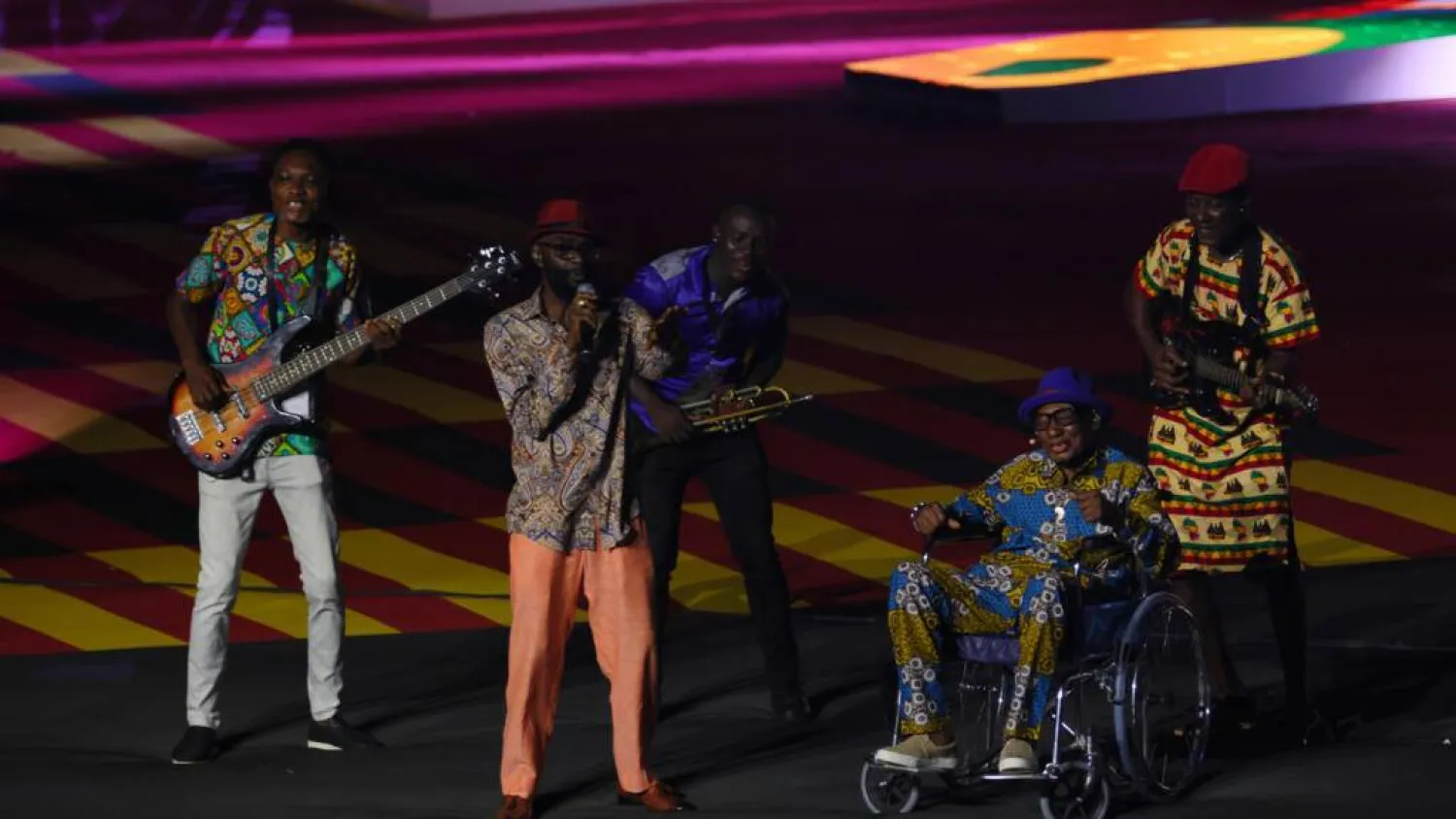
Ebo Taylor, who kept performing into his 80s, was instrumental in introducing Ghanaian highlife to international listeners. Nipah Dennis / AFP
TT

Music World Mourns Ghana's Ebo Taylor, Founding Father of Highlife

Ebo Taylor, who kept performing into his 80s, was instrumental in introducing Ghanaian highlife to international listeners. Nipah Dennis / AFP

Tributes have been pouring in from across Ghana and the world since the death of Ghanaian highlife legend Ebo Taylor.

A guitarist, composer and bandleader who died on Saturday, Taylor's six-decade career played a key role in shaping modern popular music in West Africa, said AFP.

Often described as one of the founding fathers of contemporary highlife, Taylor died a day after the launch of a music festival bearing his name in the capital, Accra, and just a month after celebrating his 90th birthday.

Highlife, a genre blending traditional African rhythms with jazz and Caribbean influences, was recently added to UNESCO's Intangible Cultural Heritage list.

"The world has lost a giant. A colossus of African music," a statement shared on his official page said. "Your light will never fade."

The Los Angeles-based collective Jazz Is Dead called him a pioneer of highlife and Afrobeat, while Ghanaian dancehall star Stonebwoy and American producer Adrian Younge, who his worked with Jay Z and Kendrick Lamar, also paid tribute to his legacy.

Nigerian writer and poet Dami Ajayi described him as a "highlife maestro" and a "fantastic guitarist".

- 'Uncle Ebo' -

Taylor's influence extended far beyond Ghana, with elements of his music appearing in the soul, jazz, hip-hop and Afrobeat genres that dominate the African and global charts today.

Born Deroy Taylor in Cape Coast in 1936, he began performing in the 1950s, as highlife was establishing itself as the dominant sound in Ghana in the years following independence.

Known for intricate guitar lines and rich horn arrangements, he played with leading bands including the Stargazers and the Broadway Dance Band.

In the early 1960s, he travelled to London to study music, where he worked alongside other African musicians, including Nigerian Afrobeat pioneer Fela Kuti.

The exchange of ideas between the two would later be seen as formative to the development of Afrobeat, a political cocktail blending highlife with funk, jazz and soul.

Back in Ghana, Taylor became one of the country's most sought-after arrangers and producers, working with stars such as Pat Thomas and CK Mann while leading his own bands.

His compositions -- including "Love & Death", "Heaven", "Odofo Nyi Akyiri Biara" and "Appia Kwa Bridge" -- gained renewed international attention decades later as DJs, collectors and record labels reissued his music. His grooves were sampled by hip-hop and R&B artists and helped introduce new global audiences to Ghanaian highlife.

Taylor continued touring into his 70s and 80s, performing across Europe and the United States as part of a late-career renaissance that cemented his status as a cult figure among younger musicians.

Many fans affectionately referred to him as "Uncle Ebo", reflecting both his longevity and mentorship of younger artists.

For many, he remained a symbol of highlife's golden era and of a generation that carried Ghanaian music onto the world stage.


'Send Help' Repeats as N.America Box Office Champ

Canadian actor Rachel McAdams and US actor Dylan O'Brien pose upon arrival on the red carpet for the UK premiere of the film 'Send Help' in central London on January 29, 2026. (Photo by CARLOS JASSO / AFP)
TT

'Send Help' Repeats as N.America Box Office Champ

Canadian actor Rachel McAdams and US actor Dylan O'Brien pose upon arrival on the red carpet for the UK premiere of the film 'Send Help' in central London on January 29, 2026. (Photo by CARLOS JASSO / AFP)

Horror flick "Send Help" showed staying power, leading the North American box office for a second straight week with $10 million in ticket sales, industry estimates showed Sunday.

The 20th Century flick stars Rachel McAdams and Dylan O'Brien as a woman and her boss trying to survive on a deserted island after their plane crashes.
It marks a return to the genre for director Sam Raimi, who first made his name in the 1980s with the "Evil Dead" films.

Debuting in second place at $7.2 million was rom-com "Solo Mio" starring comedian Kevin James as a groom left at the altar in Italy, Exhibitor Relations reported.

"This is an excellent opening for a romantic comedy made on a micro-budget of $4 million," said analyst David A. Gross of Franchise Entertainment Research, noting that critics and audiences have embraced the Angel Studios film.

Post-apocalyptic Sci-fi thriller "Iron Lung" -- a video game adaptation written, directed and financed by YouTube star Mark Fischbach, known by his pseudonym Markiplier -- finished in third place at $6.7 million, AFP reported.

"Stray Kids: The Dominate Experience," a concert film for the K-pop boy band Stray Kids filmed at SoFi Stadium in Los Angeles, opened in fourth place at $5.6 million.

And in fifth place at $4.5 million was Luc Besson's English-language adaptation of "Dracula," which was released in select countries outside the United States last year.

Gross called it a "weak opening for a horror remake," noting the film's total production cost of $50 million and its modest $30 million take abroad so far.

Rounding out the top 10 are:
"Zootopia 2" ($4 million)
"The Strangers: Chapter 3" ($3.5 million)
"Avatar: Fire and Ash" ($3.5 million)
"Shelter" ($2.4 million)
"Melania" ($2.38 million)