


Al-Hujailan: King Khalid Asked Me to Announce King Saud’s Removal

Saudi statesman Sheikh Jamil Al-Hujailan (PHOTO CREDIT : Mohammed Othman)
TT

Al-Hujailan: King Khalid Asked Me to Announce King Saud’s Removal

Saudi statesman Sheikh Jamil Al-Hujailan (PHOTO CREDIT : Mohammed Othman)

In the second installment of the memoirs of Saudi statesman Sheikh Jamil Al-Hujailan, Saudi Arabia’s first Minister of Information, he recounts the historic moment he was asked to announce the deposition of King Saud and the pledge of allegiance to Crown Prince Faisal as the new king.

Al-Hujailan was summoned by Prince Khalid, who would later become Crown Prince, along with Prince Fahd, the Interior Minister, and Prince Musaid, the Finance Minister, to deliver the statement.

Years later, Al-Hujailan recalls King Faisal’s reaction to the news of King Saud’s death in Athens in 1969.

Asharq Al-Awsat is exclusively sharing excerpts from Al-Hujailan’s memoirs, titled “Jamil Al-Hujailan: A Journey Through the Era of Seven Kings,” which will be available at the Riyadh International Book Fair.

Saudi Arabia’s First Information Minister

In March 1963, King Faisal called Al-Hujailan from Kuwait to appoint him as Saudi Arabia’s first Minister of Information, marking the start of a new media policy in the Kingdom.

The Yemeni revolution and the Saudi-Egyptian conflict that followed posed a major challenge for Saudi media, leading the government to reassess its press and media strategy.

It soon became clear that the existing media was not up to the task, and there was a need for a stronger, more capable media to meet the demands of the time.

Al-Hujailan became Saudi Arabia’s first Information Minister during a challenging time, both domestically and regionally. He faced numerous crises as he established the new ministry. The Kingdom was dealing with increased internal responsibilities and a major political conflict with Egyptian President Gamal Abdel Nasser over Yemen. It was also in a silent ideological struggle with the Arab left, supported by the Soviet Union, which opposed conservative regimes in the region.

The region was undergoing major changes that disrupted the balance of power and complicated Arab relations. Under King Faisal, Saudi Arabia openly condemned communism, a stance that surprised many observers.

The Soviet Union was frustrated by Saudi Arabia’s refusal to establish diplomatic relations, despite Moscow’s repeated efforts.

This stance also angered Soviet-aligned Arab leftist parties, who joined in a covert campaign against Saudi Arabia, accusing it of being too close to the United States and abandoning Arab nationalist goals. Yet, Saudi Arabia stood firm as a “fortress” against Soviet influence in the region.

The Story Behind the Broadcast Announcing King Saud’s Removal

Al-Hujailan recalls that one of the most difficult moments of his career was when he was asked to announce King Saud’s removal and Crown Prince Faisal’s ascension to the throne.

Ironically, the joint session where this decision was made took place in the same dining hall where Al-Hujailan had translated for King Saud and the Spanish foreign minister 12 years earlier.

Al-Hujailan recalled: “On the morning of November 2, 1964, a joint session of the Council of Ministers and the Shura Council took place at Al-Hamra Palace, better known as the Red Palace, in Riyadh.”

“Chaired by Prince Khalid bin Abdulaziz, the members reviewed a letter from the Al Saud family and a statement from religious scholars supporting the removal of King Saud and the pledge of allegiance to Crown Prince Faisal as the new king. The decision was unanimously approved.”

A statement announcing the removal and pledge was prepared for broadcast.

At the time, the only radio station in the Kingdom was in Jeddah, as Riyadh did not yet have one. Al-Hujailan remembers discussing the matter with Prince Khalid, Prince Fahd, the Interior Minister, and Prince Musaid, the Finance Minister. He was asked to handle the broadcast, to which he responded that he would send it immediately to the Jeddah station for an exceptional airing before the news bulletin.

Prince Khalid interjected, telling Al-Hujailan that he will be announcing the news. He was supported by Prince Fahd and Prince Musaid.

Al-Hujailan expressed his hesitation, noting that it was unusual for a Minister of Information to announce news about Saudi Arabia. However, the three princes insisted that Al-Hujailan take on this responsibility.

Al-Hujailan felt uncomfortable, as the removal of King Saud was a family matter, and he didn’t want his broadcast to imply any personal involvement, especially with King Saud waiting to hear the news. Al-Hujailan worried that King Saud would not forgive him for delivering such a significant announcement.

It was decided that Al-Hujailan would travel immediately to Jeddah with the statement for broadcast.

Around 11 a.m. Riyadh time, Al-Hujailan boarded a Boeing 707, the only modern plane in Saudi Arabian Airlines at the time. On the flight, Al-Hujailan wrestled with his thoughts about what he was about to do.

As Al-Hujailan prepared to read the statement announcing King Saud’s removal, he reflected on his life’s pivotal moments. This was a challenge he had not sought, and he felt a deep sense of embarrassment.

While Al-Hujailan viewed King Saud’s removal as a family issue, he understood the broader implications of announcing it. The world would be taken by surprise, and the announcement could lead to speculation and political misinterpretations. This is why it was vital for the Minister of Information to deliver the statement.

The removal of King Saud was not just another seasonal military coup that often draws skepticism and laughter in the Arab world. It marked a significant political event in a country known for its stability, where the royal family has upheld familial unity since its founding by King Abdulaziz.

The Al Saud family has always recognized the responsibilities of governance, prioritizing national stability and avoiding internal conflict. This was not simply news of a prince’s death or a minister’s dismissal; it was the ousting of a reigning king and the pledge of allegiance to a new monarch. Given its significance, such an announcement needed to be made by the Minister of Information.

On that historic day, Al-Hujailan announced the statement live from the radio studios in Jeddah on November 2, 1964.



Saudi Govt: Escalation in Yemen Not Aligned with UAE’s Pledges

Custodian of the Two Holy Mosques King Salman bin Abdulaziz chairs the cabinet meeting in Riyadh. (SPA)
TT

Saudi Govt: Escalation in Yemen Not Aligned with UAE’s Pledges

Custodian of the Two Holy Mosques King Salman bin Abdulaziz chairs the cabinet meeting in Riyadh. (SPA)

The Saudi government reiterated on Tuesday that the Kingdom “will not hesitate in taking the necessary steps and measures to confront any violation or threat to its national security.”

Custodian of the Two Holy Mosques King Salman bin Abdulaziz chaired the cabinet meeting that was held in Riyadh.

The cabinet “reiterated its commitment to the security, stability and sovereignty of Yemen and its full support to Chairman of the Presidential Leadership Council Dr. Rashad al-Alimi and his government.”

It regretted that “Saudi Arabia’s efforts to restore calm in Yemen were met with unjustified escalation that go against the foundations of the coalition to support legitimacy in Yemen.”

“The escalation does not serve efforts to achieve security and stability in Yemen and goes against all the pledges Saudi Arabia had received from the United Arab Emirates,” added the cabinet.

The cabinet expressed Saudi Arabia’s hope that “wisdom would prevail and that priority would be given to the principles of fraternity and good neighborliness and close relations between Gulf Cooperation Council (GCC) members.”

It hoped that “the UAE would comply with the Yemeni republic’s demand that it withdraw its forces from the country withing 24 hours and that it would cease all military and financial support to the Southern Transitional Council and any other party in Yemen.”

It hoped that “the UAE would take the desired step to maintain bilateral relations between the two countries, which Saudi Arabia is keen on bolstering.”

The cabinet also reviewed regional and international developments.

It hailed the role of the coalition to restore legitimacy in Yemen in protecting civilians in the Hadhramaut and Mahra governorates.

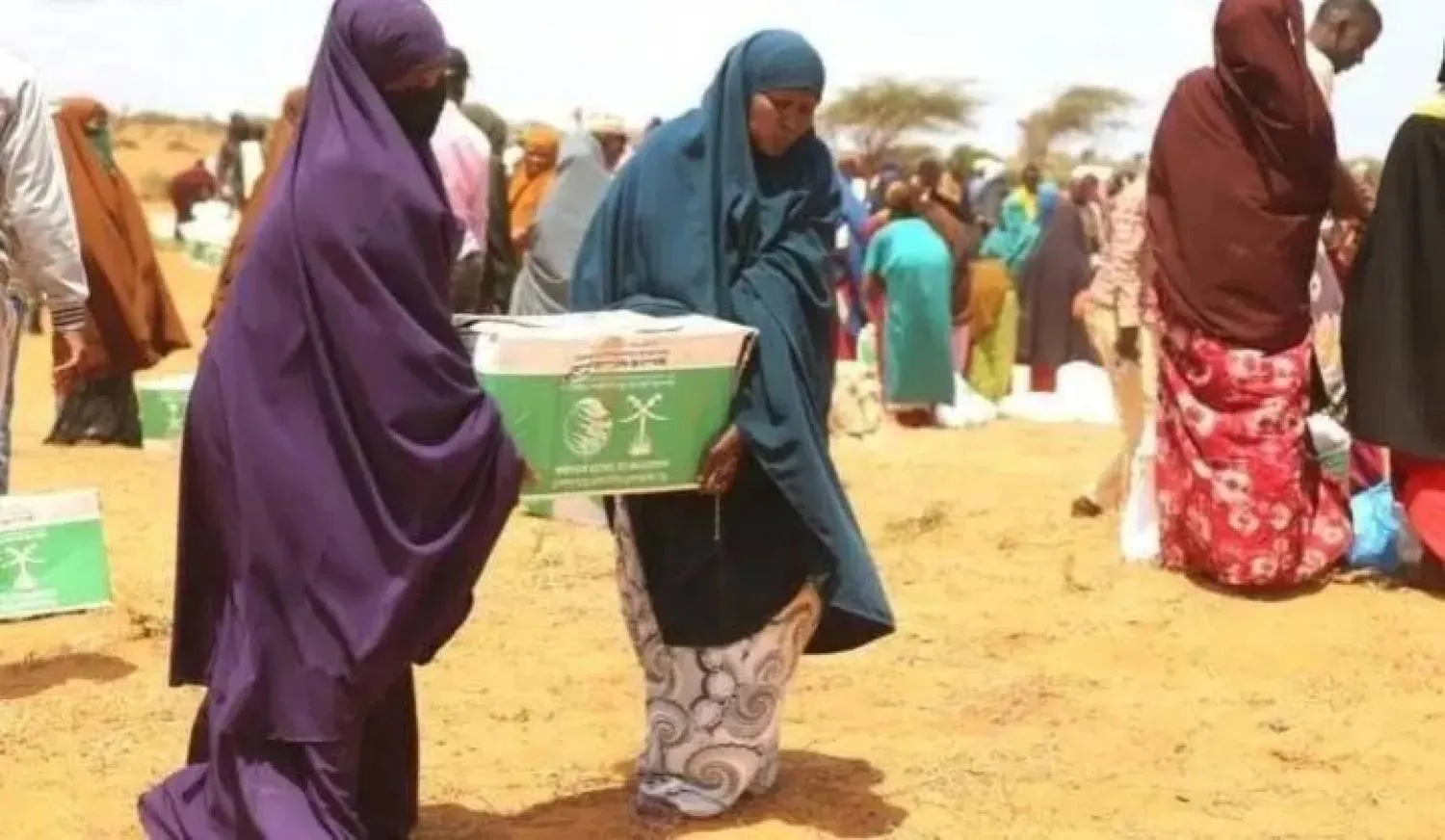
The cabinet renewed Saudi Arabia’s support to Somalia’s sovereignty and territorial unity, rejecting Israel’s recognition of Somaliland and warning that the move encourages separatist agendas that violate international law.

King Salman also briefed the cabinet on the message he received on Tuesday from Russian President Vladimir Putin that tackled bilateral ties between their countries.


UAE to Pull Forces Out of Yemen

The UAE flag. (WAM)
The UAE flag. (WAM)
TT

UAE to Pull Forces Out of Yemen

The UAE flag. (WAM)
The UAE flag. (WAM)

The United Arab Emirates’ Defense Ministry announced on Tuesday that it was pulling its remaining forces out of Yemen.

In a statement, it said: “In light of recent developments and their potential implications for the safety and effectiveness of counterterrorism missions, the Ministry of Defense announces the termination of the remaining counterterrorism personnel in Yemen of its own volition, in a manner that ensures the safety of its personnel and in coordination with the concerned partners.”

It added that the UAE “has participated as part of the Arab Coalition since 2015 in support of legitimacy in Yemen, in backing international efforts to combat terrorist organizations, and in pursuit of security and stability for the brotherly Yemeni people. The UAE has made great sacrifices in achieving these objectives.”

“The UAE Armed Forces concluded their military presence in Yemen in 2019 after completing the assigned missions within the agreed official frameworks,” it noted. “The remaining presence was limited to specialized personnel as part of counterterrorism efforts, in coordination with relevant international partners.”

It stressed that “this measure comes within the context of a comprehensive assessment of the requirements of the current phase, and in line with the commitments of the UAE and its role in supporting security and stability in the region.”


Muslim World League Affirms Support for Saudi Measures to Preserve Yemen's Sovereignty

Muslim World League Affirms Support for Saudi Measures to Preserve Yemen's Sovereignty
TT

Muslim World League Affirms Support for Saudi Measures to Preserve Yemen's Sovereignty

Muslim World League Affirms Support for Saudi Measures to Preserve Yemen's Sovereignty

The Muslim World League (MWL) has affirmed its full support for the supplementary statement issued by the Kingdom of Saudi Arabia regarding recent escalatory actions by the Southern Transitional Council in Yemen's Hadramout and Al-Mahara governorates.

The league expressed its support for the statement from the Coalition to Restore Legitimacy in Yemen concerning the unauthorized movement of ships carrying weapons and heavy vehicles from the Port of Fujairah to the Port of Mukalla, SPA reported.


These shipments were reportedly transported without the necessary official permits from the coalition’s Joint Forces Command. The MWL emphasized its unwavering solidarity with the Kingdom and its support for all measures taken to safeguard its national security.

In an official statement by General Secretariat, MWL Secretary-General and Organization of Muslim Scholars Chairman Sheikh Dr. Mohammed bin Abdulkarim Al-Issa commended the decisive and wise content of the Saudi statement.


Speaking on behalf of the league’s global assemblies and councils, Al-Issa noted that these measures are vital to ensuring peace, security, and the unity of the Yemeni people under their internationally recognized leadership.

Al-Issa highlighted that the priority remains preserving stability in Yemen and the broader region. He noted that outstanding issues, including the Southern cause, must be resolved through dialogue within established legal and legitimate frameworks.

Furthermore, he warned that supporting illegitimate practices only deepens internal divisions and serves those who do not have Yemen’s best interests at heart. He cautioned that any further steps deviating from the legitimate path would only ignite sedition, the heavy cost of which would be borne by the Yemeni people.

Concluding the statement, Al-Issa called upon all Yemeni parties to prioritize wisdom and the national interest. He urged them to unite under their legitimate leadership to preserve the country's sovereignty, independence, and territorial integrity, paving the way for a secure and prosperous future for Yemen.