


Damascus, Amman Agree to Facilitate Travel of Syrians through Nassib Border-Crossing

The Syrian ministers tour the Nassib border-crossing with Jordan. (Syrian Ministry of Transport)
TT

Damascus, Amman Agree to Facilitate Travel of Syrians through Nassib Border-Crossing

The Syrian ministers tour the Nassib border-crossing with Jordan. (Syrian Ministry of Transport)

The Syrian and Jordanian governments have been exerting efforts to facilitate the travel of Syrians through the Nassib-Jaber border-crossing between their countries.

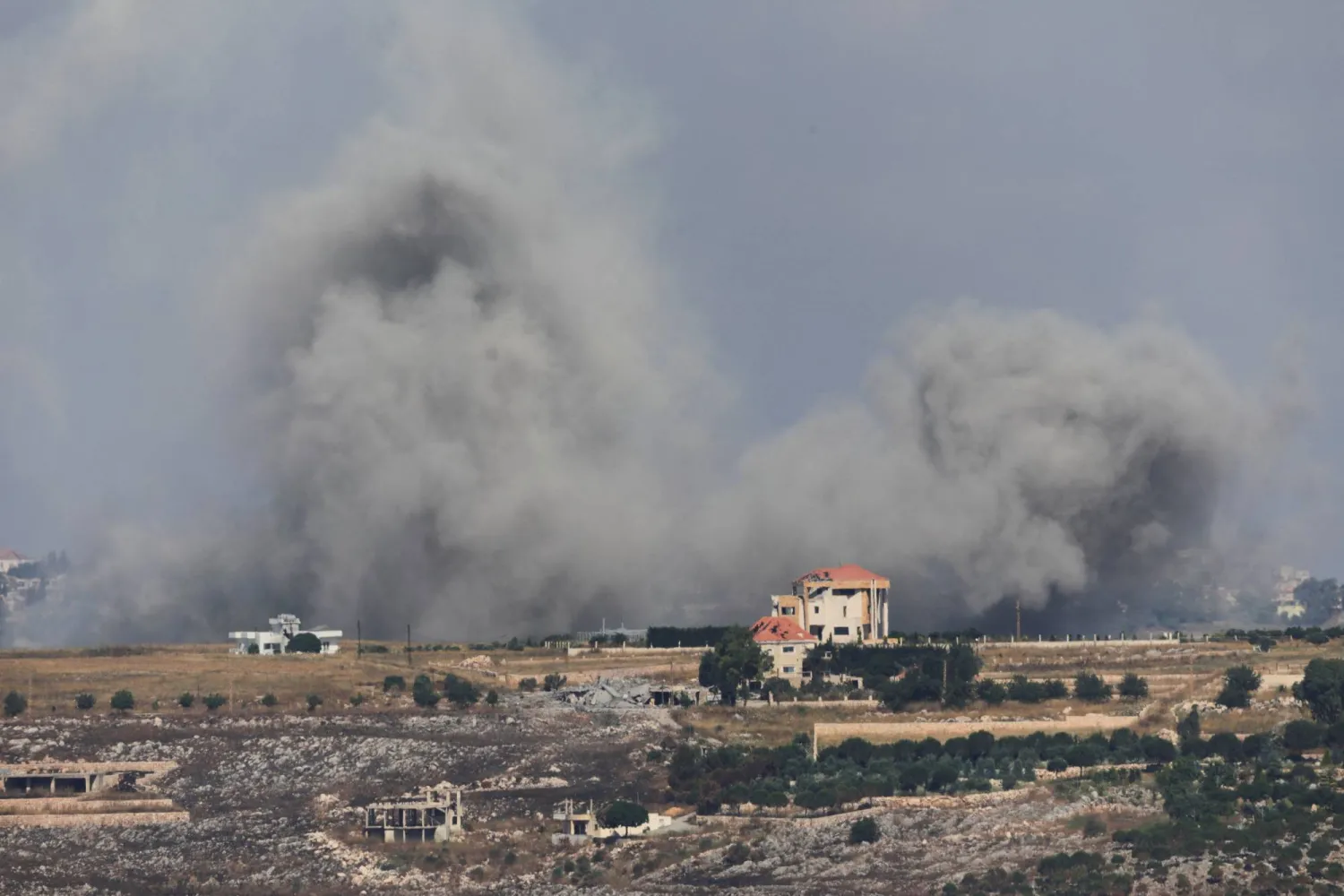
The governments are in agreement over the need to improve the crossing, located in the southern Daraa governorate, and remove hurdles that impede the flow of travelers from both countries, especially amid the Israeli assault against Hezbollah in Lebanon and its targeting of the majority of crossings between Syria and Lebanon.

Informed sources in Damascus said there was an agreement between Syria and Jordan over this issue as part of efforts to keep southern Syrian regions away from the Israeli escalation.

The governments are also keen on seizing the opportunity to improve trade exchange across the crossing after several Syrian travelers shifted their transit from Beirut’s Rafik Hariri International Airport to the Queen Alia International Airport in Jordan.

On Sunday, a Syrian government delegation, including the ministers of interior, transport, local administration and finance, toured the Nassib crossing to inspect the improvements there and the movement of travelers and goods.

Interior Minister Mohammed al-Rahmoun vowed to “ease” all obstacles, noting an improvement in services.

Communication is also present with officials on the Jordanian side of the border to overcome any problems, he added.

Daraa Governor Asaad Toukan had said the crossing needs “constant development” in aspects related to services, tourism and trade given that it is Syria’s gateway to Jordan and the Gulf region.

The ministers’ visit took place a week after Jordanian Foreign Minister Ayman al-Safadi held talks with Syrian President Bashar al-Assad in Damascus.

The informed sources said Amman had been imposing strict measures on Syrians and the transit of goods from Syria to the kingdom as part of its efforts to limit the flow of Syrian refugees to Jordan and combat drug smuggling.

The restrictions did impact movement at the crossing, with travelers being forced to wait more than seven hours to cross. Trucks had to wait days, even weeks, to pass.

The Israeli escalation in Lebanon, however, has led to faster measures and the suspension of some restrictions.



EU Condemns Israel's West Bank Control Measures

The Israeli settlement of Har Homa, seen from the West Bank city of Bethlehem, Tuesday, Dec. 17, 2024. (AP)
TT

EU Condemns Israel's West Bank Control Measures

The Israeli settlement of Har Homa, seen from the West Bank city of Bethlehem, Tuesday, Dec. 17, 2024. (AP)

The European Union on Monday condemned new Israeli measures to tighten control of the West Bank and pave the way for more settlements in the occupied Palestinian territory, AFP reported.

"The European Union condemns recent decisions by Israel's security cabinet to expand Israeli control in the West Bank. This move is another step in the wrong direction," EU spokesman Anouar El Anouni told journalists.


Atrocities in Sudan's El-Fasher Were 'Preventable Human Rights Catastrophe'

Sudanese displaced people who left El Fasher after its fall, sit in the shade in Tawila at the Rwanda camp reception point on December 17, 2025. (Photo by AFP)
TT

Atrocities in Sudan's El-Fasher Were 'Preventable Human Rights Catastrophe'

Sudanese displaced people who left El Fasher after its fall, sit in the shade in Tawila at the Rwanda camp reception point on December 17, 2025. (Photo by AFP)

The atrocities unleashed on El-Fasher in Sudan's Darfur region last October were a "preventable human rights catastrophe", the United Nations said Monday, warning they now risked being repeated in the neighbouring Kordofan region.


"My office sounded the alarm about the risk of mass atrocities in the besieged city of El-Fasher for more than a year ... but our warnings were ignored," UN rights chief Volker Turk told the Human Rights Council in Geneva.


He added that he was now "extremely concerned that these violations and abuses may be repeated in the Kordofan region".


Arab League Condemns Israel's Decisions to Alter Legal, Administrative Status of West Bank

A general view shows the opening session of the meeting of Arab foreign ministers at the Arab League Headquarters (Reuters)
TT

Arab League Condemns Israel's Decisions to Alter Legal, Administrative Status of West Bank

A general view shows the opening session of the meeting of Arab foreign ministers at the Arab League Headquarters (Reuters)

The General Secretariat of the Arab League strongly condemned decisions by Israeli occupation authorities to impose fundamental changes on the legal and administrative status of the occupied Palestinian territories, particularly in the West Bank, describing them as a dangerous escalation and a flagrant violation of international law, international legitimacy resolutions, and signed agreements, SPA reported.

In a statement, the Arab League said the measures include facilitating the confiscation of private Palestinian property and transferring planning and licensing authorities in the city of Hebron and the area surrounding the Ibrahimi Mosque to occupation authorities.

It warned of the serious repercussions of these actions on the rights of the Palestinian people and on Islamic and Christian holy sites.

The statement reaffirmed the Arab League’s firm support for the legitimate rights of the Palestinian people, foremost among them the establishment of their independent state on the June 4, 1967 borders, with East Jerusalem as its capital.