Iran's Vast Collection of Western Art, Much Long Hidden, Re-Emerges Despite High Tensions With US

A woman walks past a portrait of the leader of the American Indian Movement Russell Means, right, by American artist Andy Warhol, as she visits an exhibition titled Eye to Eye which showcases over 120 works by modern world artists as well as Iranian painters at Tehran Museum of Contemporary Art, in Tehran, Thursday, Nov. 21, 2024. (AP Photo/Vahid Salemi)
TT

Iran's Vast Collection of Western Art, Much Long Hidden, Re-Emerges Despite High Tensions With US

A woman walks past a portrait of the leader of the American Indian Movement Russell Means, right, by American artist Andy Warhol, as she visits an exhibition titled Eye to Eye which showcases over 120 works by modern world artists as well as Iranian painters at Tehran Museum of Contemporary Art, in Tehran, Thursday, Nov. 21, 2024. (AP Photo/Vahid Salemi)

As Iran faces increasing tensions with the West and turmoil at home, a new exhibition at the Tehran Museum of Contemporary Art is displaying Western artwork including pieces not seen by the public in at least a decade.
The unveiling of the exhibition “Eye to Eye” has drawn numerous women, their hair uncovered, to the underground galleries of the museum in Tehran's Laleh Park. Their presence, while unacknowledged by authorities, shows the way life has changed inside Iran just in the last few years even as the country's theocracy presses forward with enriching uranium to near-weapons grade levels and launching attacks on Israel during the ongoing Mideast wars, The Associated Press said.
“The first feeling that came to me, and I told my parents, was that I can’t believe I’m seeing these works, which have always been kept far from our eyes,” said Aida Zarrin, a young woman at the museum.
“If such events are held here and we can see artworks like the rest of the world, it’s enough. They are really precious.”
The government of Iran’s Western-backed shah, Mohammad Reza Pahlavi, and his wife, the former Empress Farah Pahlavi, built the museum and acquired the vast collection in the late 1970s, when oil boomed and Western economies stagnated. Upon opening, it showed sensational works by Pablo Picasso, Mark Rothko, Claude Monet, Jackson Pollock and other heavyweights, enhancing Iran’s cultural standing on the world stage.
But just two years later, in 1979, Shiite clerics ousted the shah and packed away the art in the museum’s vault. Some paintings — cubist, surrealist, impressionist and even pop art — sat untouched for decades to avoid offending Islamic values and the appearance of catering to Western sensibilities. Nearly everything is believed still to be there, though an Andy Warhol print of the empress was slashed during the revolution.
Today, the collection is likely worth billions of dollars. Even with Iran now cash-strapped under Western sanctions, officials with the museum have been able to advocate for keeping the collection, though there have been occasional trades in the past for items from Persian history. Those sanctions may increase under the next administration of US President-elect Donald Trump.
As Iranian politics have thawed, re-frozen and thawed again, the collection resurfaces along with those changes.
Among the over 120 works being shown are ones from Picasso, Andy Warhol and Francis Bacon, along with celebrated Iranian artists. One of the Warhols, “Jacqueline Kennedy II,” is a silkscreen double image of the former US first lady in mourning after the 1963 assassination of her husband, President John Kennedy. Another Warhol portrait of Rolling Stones frontman Mick Jagger also garnered attention from the cellphone photo snappers.
“A lot of these works are important works in the history of art, and that’s why this show distinguishes itself from others,” said Jamal Arabzadeh, the exhibition's curator. ”A lot of people with less exposure to art have discovered the museum for the first time. ... We are seeing a part of the community that are discovering art and the museum and see the potential of this place, and this is something to be proud of.”
The presence of Western art comes as Iran's government has long fought against items like Barbie dolls and depictions of cartoon characters from “The Simpsons.” Such Western influences have been deemed un-Islamic in the past and have been seen as part of a “soft” cultural war against Iran.
With a ticket costing the equivalent of 14 US cents, the exhibition offers a rare government-sanctioned event not involving the country's politics or Shiite religion.
Among the visitors were many women defying the country's mandatory headscarf, or hijab, law. Crackdowns over the hijab have slowed down after Iran's presidential election in July that elected reformist President Masoud Pezeshkian, though individual cases of arrest continue to draw anger.
And for many, the cost of tickets to travel abroad given Iran's collapsing rial currency keep foreign museums out of reach.
“This is very attractive for art enthusiasts because not everyone can go and see museums abroad. It’s extremely exciting to see the works here,” said a woman who only gave her last name, Dolatshahi. “I had no idea I could see works by van Gogh and Picasso here.”



UNESCO Honors Al-Bisht Al-Hasawi as Thousands Flock to Al-Ahsa Festival

Visitors can explore interactive displays, participate in live workshops, and witness the meticulous process of tailoring this iconic symbol of prestige - SPA
TT

UNESCO Honors Al-Bisht Al-Hasawi as Thousands Flock to Al-Ahsa Festival

Visitors can explore interactive displays, participate in live workshops, and witness the meticulous process of tailoring this iconic symbol of prestige - SPA

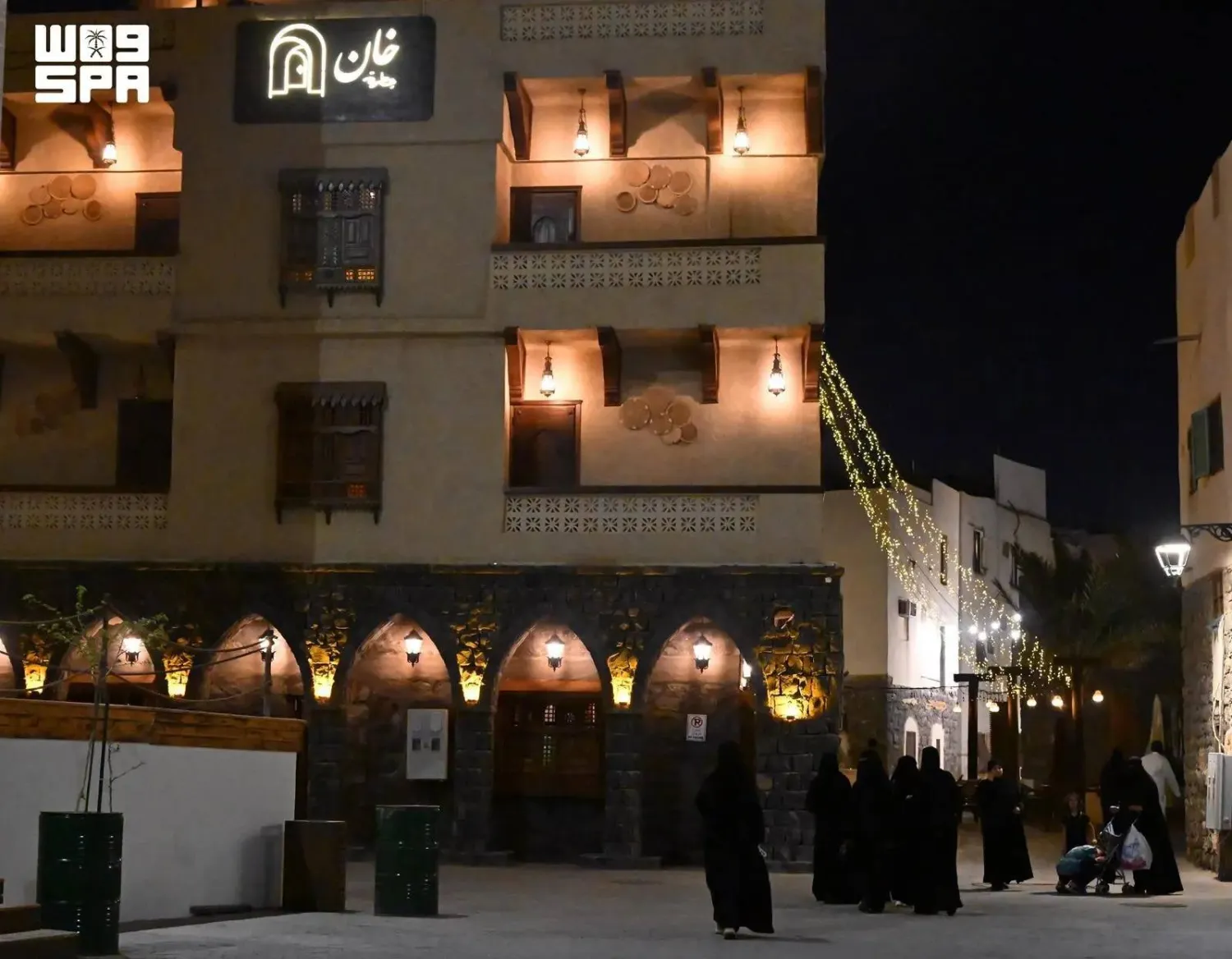
The third edition of Al-Bisht Al-Hasawi Festival is drawing thousands of regional and international visitors to Ibrahim Palace in historic Al-Hofuf.

Organized by the Heritage Commission, this year’s festival celebrates the inscription of the Bisht on UNESCO’s Representative List of the Intangible Cultural Heritage of Humanity.

The event showcases Al-Ahsa’s centuries-old tradition of hand-weaving and gold embroidery, a craft passed down through generations of local families, SPA reported.

Visitors can explore interactive displays, participate in live workshops, and witness the meticulous process of tailoring this iconic symbol of prestige.

With UNESCO's participation and representatives from six countries, the festival has evolved into a global platform for cultural dialogue, cementing the Bisht’s status as a world-class cultural treasure.


Saudi, Syrian Culture Ministers Tour National Museum of Damascus

The ministers observed the museum’s extensive collections spanning prehistoric eras to modern art. SPA
TT

Saudi, Syrian Culture Ministers Tour National Museum of Damascus

The ministers observed the museum’s extensive collections spanning prehistoric eras to modern art. SPA

Saudi Minister of Culture Prince Badr bin Abdullah bin Farhan and his Syrian counterpart, Mohammed Yassin Saleh, have toured the National Museum of Damascus during the Kingdom’s participation as guest of honor at the 2026 Damascus International Book Fair.

The ministers observed on Thursday the museum’s extensive collections spanning prehistoric eras to modern art.

A particular focus was placed on the Arab-Islamic wing, featuring significant artifacts from the Umayyad period.

The Kingdom's participation as guest of honor at the 2026 Damascus International Book Fair, which runs until February 16, stems from the role culture plays within Saudi Vision 2030.


Saudi Culture Minister Inaugurates Kingdom's Pavilion as Guest of Honor at Damascus Book Fair

Saudi Culture Minister Inaugurates Kingdom's Pavilion as Guest of Honor at Damascus Book Fair
TT

Saudi Culture Minister Inaugurates Kingdom's Pavilion as Guest of Honor at Damascus Book Fair

Saudi Culture Minister Inaugurates Kingdom's Pavilion as Guest of Honor at Damascus Book Fair

Saudi Minister of Culture Prince Badr bin Abdullah bin Farhan, who is the Literature, Publishing and Translation Commission Board Chairman, has inaugurated the Kingdom’s pavilion as guest of honor at the 2026 Damascus International Book Fair.

The inauguration took place on Thursday in the Syrian capital in the presence of Syrian Minister of Culture Mohammed Yassin Saleh and his Qatari counterpart, Sheikh Abdulrahman bin Hamad bin Jassim bin Hamad Al Thani.

The Kingdom's participation as guest of honor at the fair, which runs until February 16, stems from the role culture plays within Saudi Vision 2030.

Literature, Publishing, and Translation Commission Chief Executive Dr. Abdul Latif Al-Wasil affirmed that the Kingdom's presence as guest of honor at the fair reflects its leading role in the Arab cultural landscape and embodies its belief in the role of culture as a bridge for communication, a space for dialogue, and a tool for supporting joint cultural initiatives.

He explained that the Kingdom's presence in Damascus affirms the depth of Saudi-Syrian relations, based on partnership and mutual respect, and stems from the Kingdom's commitment to strengthening cultural exchange.

The Kingdom's pavilion showcases the cultural and creative diversity of the Saudi cultural and literary scene through a comprehensive cultural program that includes intellectual seminars, poetry evenings, a manuscripts exhibition, a Saudi fashion corner, a hospitality corner, and a corner displaying archaeological replicas, in addition to Saudi performing arts performances that express the depth of the Kingdom's cultural heritage.

The pavilion offers visitors to the exhibition the opportunity to explore aspects of Saudi culture in its literary, heritage, and human dimensions within a cultural experience presented in a unifying Arab spirit, affirming that culture remains one of the most effective means of fostering understanding and building shared meaning.

Syrian President Ahmed al-Sharaa met on Thursday with Prince Badr at the Conference Palace in Damascus.

The meeting was attended on the Saudi side by Advisor at the Royal Court Mohammed Al-Tuwaijri, along with other officials.