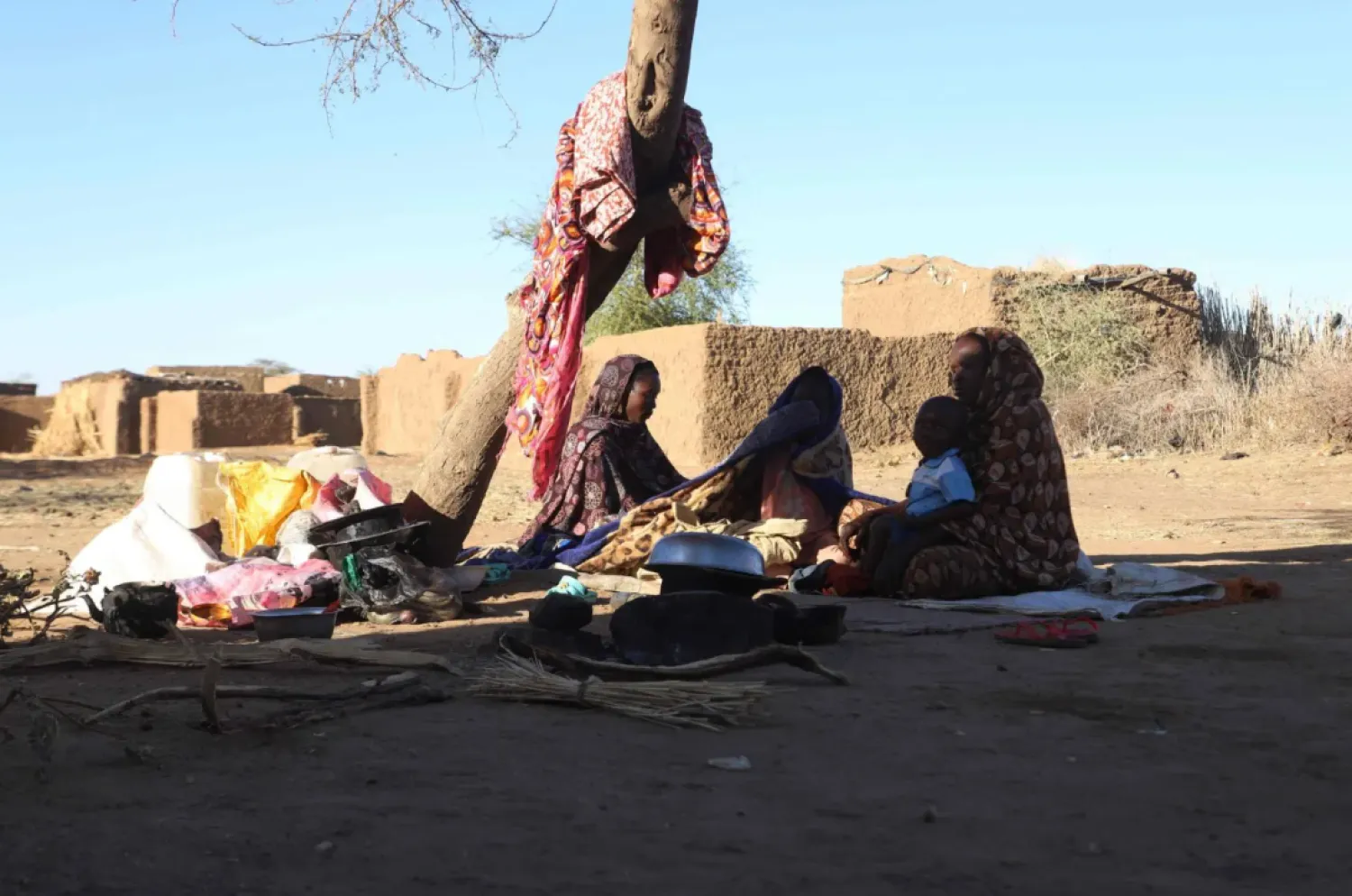
Sudan Again Tops International Rescue Committee Crises Watchlist

FILE PHOTO: A handout photograph, shot in January 2024, shows a woman and baby at the Zamzam displacement camp, close to El Fasher in North Darfur, Sudan. MSF/Mohamed Zakaria/Handout via REUTERS/File Photo
TT

Sudan Again Tops International Rescue Committee Crises Watchlist

FILE PHOTO: A handout photograph, shot in January 2024, shows a woman and baby at the Zamzam displacement camp, close to El Fasher in North Darfur, Sudan. MSF/Mohamed Zakaria/Handout via REUTERS/File Photo

Sudan - for the second year in a row - topped a 2025 watchlist of global humanitarian crises released by the International Rescue Committee (IRC) aid organization on Wednesday, followed by Gaza and the West Bank, Myanmar, Syria and South Sudan.
The New York-based IRC began the watchlist more than 15 years ago as an internal planning tool to prepare for the year ahead, but chief executive David Miliband said it now also served as a call to action globally, Reuters reported.
The report said 305.1 million people around the world are in humanitarian need - up from 77.9 million in 2015 - and that the 20 countries on the IRC watchlist account for 82% of them. Miliband described the numbers as "crushing."
"There are more resources to do more good for more people than at any time in history. This makes it all the more bewildering that the gap between humanitarian need and humanitarian funding is also greater than ever," he wrote in the watchlist report.
The report said the humanitarian crisis in Sudan was the largest since records began and that the country accounts for 10% of all people in humanitarian need, despite being home to just 1% of the global population.
War erupted in April 2023 from a power struggle between the Sudanese army and the paramilitary Rapid Support Forces ahead of a planned transition to civilian rule, and triggered the world's largest displacement crisis.
The remaining 15 countries on the IRC watchlist are: Lebanon, Burkina Faso, Haiti, Mali, Somalia, Afghanistan, Cameroon, Central African Republic, Chad, Democratic Republic of Congo, Ethiopia, Niger, Nigeria, Ukraine and Yemen.



EU Condemns Israel's West Bank Control Measures

The Israeli settlement of Har Homa, seen from the West Bank city of Bethlehem, Tuesday, Dec. 17, 2024. (AP)
TT

EU Condemns Israel's West Bank Control Measures

The Israeli settlement of Har Homa, seen from the West Bank city of Bethlehem, Tuesday, Dec. 17, 2024. (AP)

The European Union on Monday condemned new Israeli measures to tighten control of the West Bank and pave the way for more settlements in the occupied Palestinian territory, AFP reported.

"The European Union condemns recent decisions by Israel's security cabinet to expand Israeli control in the West Bank. This move is another step in the wrong direction," EU spokesman Anouar El Anouni told journalists.


Atrocities in Sudan's El-Fasher Were 'Preventable Human Rights Catastrophe'

Sudanese displaced people who left El Fasher after its fall, sit in the shade in Tawila at the Rwanda camp reception point on December 17, 2025. (Photo by AFP)
TT

Atrocities in Sudan's El-Fasher Were 'Preventable Human Rights Catastrophe'

Sudanese displaced people who left El Fasher after its fall, sit in the shade in Tawila at the Rwanda camp reception point on December 17, 2025. (Photo by AFP)

The atrocities unleashed on El-Fasher in Sudan's Darfur region last October were a "preventable human rights catastrophe", the United Nations said Monday, warning they now risked being repeated in the neighbouring Kordofan region.


"My office sounded the alarm about the risk of mass atrocities in the besieged city of El-Fasher for more than a year ... but our warnings were ignored," UN rights chief Volker Turk told the Human Rights Council in Geneva.


He added that he was now "extremely concerned that these violations and abuses may be repeated in the Kordofan region".


Arab League Condemns Israel's Decisions to Alter Legal, Administrative Status of West Bank

A general view shows the opening session of the meeting of Arab foreign ministers at the Arab League Headquarters (Reuters)
TT

Arab League Condemns Israel's Decisions to Alter Legal, Administrative Status of West Bank

A general view shows the opening session of the meeting of Arab foreign ministers at the Arab League Headquarters (Reuters)

The General Secretariat of the Arab League strongly condemned decisions by Israeli occupation authorities to impose fundamental changes on the legal and administrative status of the occupied Palestinian territories, particularly in the West Bank, describing them as a dangerous escalation and a flagrant violation of international law, international legitimacy resolutions, and signed agreements, SPA reported.

In a statement, the Arab League said the measures include facilitating the confiscation of private Palestinian property and transferring planning and licensing authorities in the city of Hebron and the area surrounding the Ibrahimi Mosque to occupation authorities.

It warned of the serious repercussions of these actions on the rights of the Palestinian people and on Islamic and Christian holy sites.

The statement reaffirmed the Arab League’s firm support for the legitimate rights of the Palestinian people, foremost among them the establishment of their independent state on the June 4, 1967 borders, with East Jerusalem as its capital.