Europeans Tell UN Ready to 'Snap Back' Iran Sanctions If Needed

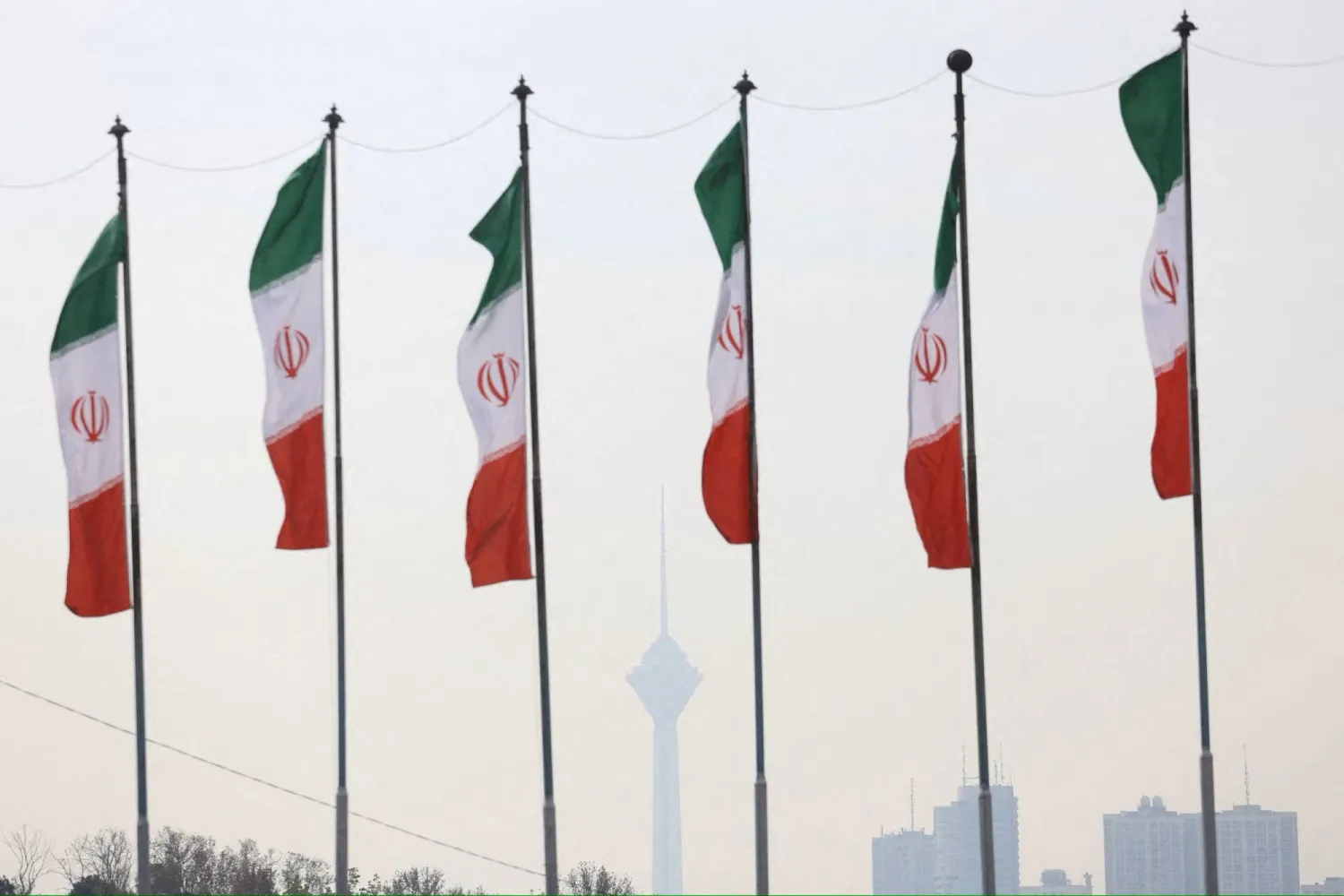
Iranian flags flutter as the Milad Tower is covered in smog following the increase in air pollution in Tehran, Iran December 8, 2024. Majid Asgaripour/WANA (West Asia News Agency) via REUTERS/File Photo
TT

Europeans Tell UN Ready to 'Snap Back' Iran Sanctions If Needed

Iranian flags flutter as the Milad Tower is covered in smog following the increase in air pollution in Tehran, Iran December 8, 2024. Majid Asgaripour/WANA (West Asia News Agency) via REUTERS/File Photo

Britain, France and Germany have told the United Nations Security Council that they are ready - if necessary - to trigger a so-called "snap back" of all international sanctions on Iran to prevent the country from acquiring a nuclear weapon.
They will lose the ability to take such action on Oct. 18 next year when a 2015 UN resolution expires. The resolution enshrines Iran's deal with Britain, Germany, France, the United States, Russia and China that lifted sanctions on Tehran in exchange for restrictions on its nuclear program.
Iran is "dramatically" accelerating enrichment of uranium to up to 60% purity, close to the roughly 90% level that is weapons grade, the UN nuclear watchdog chief told Reuters last week.
The move comes as Iran has suffered a series of strategic setbacks, including Israel's assault on Tehran's proxy militias Hamas in Gaza and Hezbollah in Lebanon and the ouster of Iranian ally Bashar al-Assad in Syria.
Western states say there is no need to enrich uranium to such a high level under any civilian program and that no other country has done so without producing nuclear bombs. Iran denies pursuing nuclear weapons.
"Iran must deescalate its nuclear program to create the political environment conducive to meaningful progress and a negotiated solution," the UN ambassadors of Britain, Germany and France wrote in a Dec. 6 letter to the Security Council.
"We reiterate our determination to use all diplomatic tools to prevent Iran from acquiring a nuclear weapon, including using snap back if necessary," they said.
The communication was in response to letters earlier last week from Russia and Iran, which followed an initial note to the council by Britain, Germany and France on Nov. 27. Russia and Iran also then followed up with further letters this week.
The tit-for-tat letters came as European and Iranian diplomats met late last month to discuss whether they can work to defuse regional tensions, including over Tehran's nuclear program, before Donald Trump's return to the White House.
During his first term, Trump quit the nuclear deal in 2018.
'EMBRACE DIPLOMACY'
In a letter to the council on Monday, Iran's UN Ambassador Amir Saeid Iravani urged the Europeans to "abandon their ineffective and failed policy of pressure and confrontation," saying they "should embrace diplomacy and focus on rebuilding the trust essential to resolving the current impasse."
The European parties to the Iran nuclear deal have adopted a tougher stance on Iran in recent months, notably since Tehran ramped up its military support to Russia for its war in Ukraine.
Russian UN Ambassador Vassily Nebenzia - in a Tuesday letter - said Britain, Germany and France had no right to invoke the "snap back" of sanctions and that it was irresponsible of them to suggest the possibility of using the "snap back" mechanism.
UN Secretary-General Antonio Guterres submitted his biannual report to the Security Council on the implementation of the 2015 resolution on Tuesday, warning there was a "critical need for a peaceful solution to the Iranian nuclear issue" given the deteriorating situation across the Middle East.
The "snap back" of international sanctions on Iran would require Iran to suspend all nuclear enrichment-related and reprocessing activities, including research and development, and ban imports of anything that could contribute to those activities or developing nuclear arms delivery systems.
It would also reimpose a conventional arms embargo, ban Iran from developing ballistic missiles capable of delivering nuclear weapons and revive targeted sanctions on dozens of individuals and entities. Countries also would be urged to inspect shipments to and from Iran and authorized to seize any banned cargo.



UK Publishes Legislation for Tougher Sanctions on Iran

People walk along a market street in Tehran on September 7, 2026. (AFP)
TT

UK Publishes Legislation for Tougher Sanctions on Iran

People walk along a market street in Tehran on September 7, 2026. (AFP)

Britain on Tuesday published legislation to introduce tougher sanctions on Iran, expanding trade restrictions and powers to target ships ‌as part ‌of what it described ‌as ⁠wider effort to ⁠curb Tehran's nuclear program and other hostile activities.

The government said the measures would restrict Iran's access to the British financial ⁠system, expand trade ‌bans to additional ‌goods, technology and services, ‌and prohibit Iranian aircraft from ‌landing in Britain unless exemptions apply.

Stephen Doughty, a foreign office minister, said in ‌a written statement that the legislation "doubles down on our action ⁠to ⁠constrain Iran's nuclear ambitions" and would help ensure Iran was never able to acquire a nuclear weapon.

Iran's embassy in London did not immediately respond to a request for comment.


Nicaragua Maintains German Arms Exports to Israel Violate International Law

 Carlos Jose Arguello Gomez, agent for Nicaragua, listens during public hearings on the preliminary objections raised by Germany in the case brought by Nicaragua, at the International Court of Justice (ICJ) at the Peace Palace in The Hague, Netherlands, Monday, Sept. 7, 2026. (AP)
Carlos Jose Arguello Gomez, agent for Nicaragua, listens during public hearings on the preliminary objections raised by Germany in the case brought by Nicaragua, at the International Court of Justice (ICJ) at the Peace Palace in The Hague, Netherlands, Monday, Sept. 7, 2026. (AP)
TT

Nicaragua Maintains German Arms Exports to Israel Violate International Law

 Carlos Jose Arguello Gomez, agent for Nicaragua, listens during public hearings on the preliminary objections raised by Germany in the case brought by Nicaragua, at the International Court of Justice (ICJ) at the Peace Palace in The Hague, Netherlands, Monday, Sept. 7, 2026. (AP)
Carlos Jose Arguello Gomez, agent for Nicaragua, listens during public hearings on the preliminary objections raised by Germany in the case brought by Nicaragua, at the International Court of Justice (ICJ) at the Peace Palace in The Hague, Netherlands, Monday, Sept. 7, 2026. (AP)

Nicaragua told the International ‌Court of Justice on Tuesday that Germany's arms exports to Israel violates the 1948 Genocide Convention and humanitarian law and urged the court to allow its case against Berlin to continue.

Germany suspended weapons exports to Israel for a few months in 2025, but they have since resumed. It is Israel's second biggest weapons supplier after the US and has long been one of its staunchest supporters, principally because of historical guilt for the Nazi Holocaust.

A US-backed ceasefire since October 2025 halted large-scale fighting that had devastated Gaza ‌but has not ‌ended Israeli strikes.

Speaking on behalf of Nicaragua, Ambassador ‌Carlos ⁠Jose Arguello Gomez said ⁠Berlin should have been aware there was a "serious risk that acts that could amount to genocide were being committed by Israel" and should have used all reasonable measures to prevent genocide according to the Genocide Convention.

Nicaragua and Germany are both signatories of the Genocide Convention which includes an obligation on states to act ⁠to prevent possible genocide - but it is unusual ‌for the court to hear cases where ‌neither party is directly involved in the conflict at the heart ‌of it.

Israel rejects genocide allegations as politically motivated and ‌says its military campaign has targeted the Hamas group, whose attack on Israel triggered the war in October 2023.

On Monday, Germany asked the ICJ, also known as the World Court, to throw out ‌the case because they argued the court lacked jurisdiction on various procedural grounds.

Nicaragua on Tuesday dismissed ⁠Berlin's arguments ⁠that it was unclear that a dispute existed when the case was filed, pointing to communication with the foreign ministry and press statements.

Nicaragua's case builds on the one South Africa brought against Israel for alleged genocide. In an interim ruling in 2024, the ICJ said it was plausible Israel violated some rights guaranteed under the Genocide Convention during its assault on Gaza. However, that case is not expected to be heard in full until late 2029.

A ruling on Germany's objection to jurisdiction is expected later this year. Even if the case can continue, it is expected to take years before a final ruling on the merits.


Nepal Flood Death Toll Rises as Rescuers Scour Tunnels

A man looks at the remains in the aftermath of flash floods at Trishuli in Nepal's Nuwakot district on September 7, 2026. (AFP)
TT

Nepal Flood Death Toll Rises as Rescuers Scour Tunnels

A man looks at the remains in the aftermath of flash floods at Trishuli in Nepal's Nuwakot district on September 7, 2026. (AFP)

The death toll from Nepal's devastating flood rose on Tuesday to 1,357, with 5,326 people still missing, the country's disaster authority said nearly two weeks after the August 26 disaster.

In China, 43 people were confirmed dead and 519 missing, according to state media, bringing the overall toll to 1,400 dead and 5,845 missing.

Rescue work continued in Nepal for a 14th day after the devastating glacial and mountain collapse near the China-Nepal border swept away roads, bridges and homes.

Nepali rescuers are focusing on three hydropower projects where they believe workers could still be trapped, the disaster agency said.

Hundreds of hydropower workers are among the missing, but the rescue of three from deep inside tunnels -- two Nepalis on Friday and a Chinese man on Saturday -- has raised hopes that others could still be alive.

"Our search and rescue operation is ongoing," Dharam Raj Uprety, chief of the country's disaster authority, told AFP.

"We are hoping that there might still be survivors in at least three projects, and we are pushing our operations there."

Foreign experts, including from China, India and South Korea, are aiding Nepali teams.

"We have also received reports that there are stranded people higher on the hill," Uprety added.

With mortuaries overflowing, Nepal has buried hundreds of bodies in mass graves after collecting DNA samples for future identification, according to police.

While the exact cause of the glacial collapse is unclear, climate change is accelerating glacial melt worldwide, increasing the risk of such disasters.

Nepal, a largely rural nation of 30 million people that has contributed little to the greenhouse gas emissions driving global warming, has said reconstruction could cost billions of dollars.

David Fisher, of the International Federation of Red Cross and Red Crescent Societies, said reaching communities isolated by the floods was a daunting task because of "narrow and dangerous" access routes.

"Every delay means families wait longer for the support they urgently need," he said in a statement.