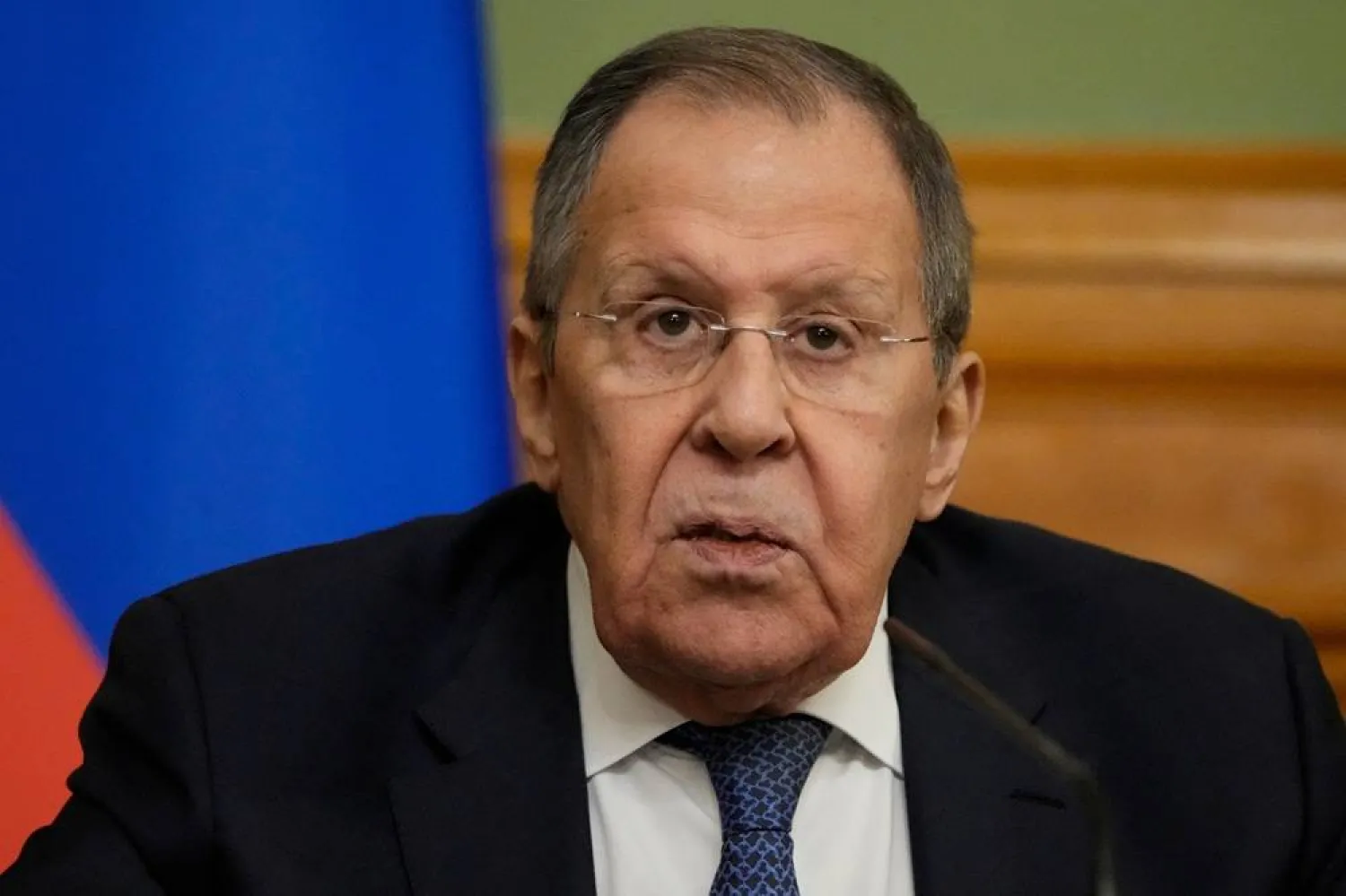
South Korean Opposition Submits Motion to Impeach Country's Acting President

South Korea's acting President Han Duck-soo speaks at the government complex in Seoul, South Korea, Thursday, Dec. 26, 2024. (Choi Jae-koo/Yonhap via AP)
TT

South Korean Opposition Submits Motion to Impeach Country's Acting President

South Korea's acting President Han Duck-soo speaks at the government complex in Seoul, South Korea, Thursday, Dec. 26, 2024. (Choi Jae-koo/Yonhap via AP)

South Korea’s main opposition party submitted a motion on Thursday to impeach the country’s acting leader over his reluctance to fill three Constitutional Court vacancies ahead of the court’s review of rebellion charges against impeached President Yoon Suk Yeol stemming from his short-lived martial law decree on Dec. 3.
The court appointments have stalled amid an intensifying dispute between the liberal opposition and Yoon’s conservative party, and the potential impeachment of Prime Minister Han Duck-soo may deepen the political paralysis that has halted high-level diplomacy and rattled financial markets, The Associated Press reported.
The opposition-controlled National Assembly also passed motions calling for the appointment of three Constitutional Court justices as the court prepares to start deliberations on whether to dismiss or reinstate Yoon. The vote came shortly after Han reiterated in a televised statement that he wouldn’t appoint the justices without bipartisan consent.
National Assembly Speaker Woo Won Shik urged Han to swiftly appoint the justices, saying that his calls for bipartisan consent essentially amounted to a refusal and “infringes on the National Assembly’s right to select Constitutional Court justices.”
Yoon’s People Power Party, whose members mostly boycotted the National Assembly vote, argued that Han shouldn’t exercise presidential authority to appoint the proposed justices while Yoon has yet to be formally removed from office.
The main opposition Democratic Party has accused the conservatives of undermining the court process to save Yoon’s presidency, and its motion to impeach Han could go to a floor vote as early as Friday. The Democrats’ floor leader, Park Chan-dae, said Han’s comments showed “he lacks both the qualifications to serve as the acting leader and the will to uphold the Constitution.”
Yoon’s presidential powers were suspended after the National Assembly voted to impeach him on Dec. 14 over an attempted power grab that lasted only hours but has triggered weeks of political turmoil that has shaken one of Asia’s most robust democracies.
To formally end Yoon’s presidency, at least six justices on the nine-member Constitutional Court must vote in favor. Three seats remain vacant following retirements and a full bench could make conviction more likely.
The court, which is to hold a pretrial hearing in Yoon’s case on Friday, has said it believes the acting president can exercise the right to appoint justices.
Three of the court’s nine justices are directly appointed by the president. Three are nominated by the head of the Supreme Court and three by the National Assembly, and they are then formally appointed by the president in what is widely considered a procedural matter.
The three seats that are currently open are to be nominated by lawmakers. South Korea’s Constitution states that the National Assembly “selects” three spots on the court rather than recommends, suggesting that the presidential appointments for these spots are a formality rather than a substantive authority, according to some legal experts.
“The consistent spirit reflected in our Constitution and laws is that an acting president should focus on maintaining stability in governance to help the country overcome crisis while refraining from exercising significant powers exclusive to the president, including appointments to constitutional institutions,” Han said. “I will withhold the appointment of Constitutional Court justices until the ruling and opposition parties submit an agreed-upon proposal.”
Han has also clashed with the Democrats over his vetoes of bills calling for independent investigations of Yoon and corruption allegations involving his wife, Kim Keon Hee.
If Han is impeached, Choi Sang-mok, the country’s deputy prime minister and finance minister, is next in line.
The impeachment vote against Han could face legal ambiguities. Most South Korean officials can be impeached with a simple majority of the National Assembly, but impeaching presidents requires two-thirds. The rival parties differ on which standard should apply to an acting president. The Democratic Party controls 170 of the National Assembly’s 300 seats, so it would need support from members of other parties including Yoon’s own to get a two-thirds majority.
While focusing on defending himself in the Constitutional Court, Yoon has dodged several requests by law enforcement authorities to appear for questioning over rebellion charges and also blocked searches of his office.
Authorities have already arrested Yoon’s defense minister, police chief and several other military commanders involved in the attempt to implement martial law, which harkened back to the days of authoritarian leaders the country hasn’t seen since the 1980s.
In a news conference in Seoul, Yoo Seung Soo, lawyer for former Defense Minister Kim Yong Hyun, repeated Yoon’s claim that his martial law decree was to “sound alarm against ... political abuse” by an opposition that has bogged down his agenda, and did not amount to a rebellion.



Cuba to Protect Essential Services as US Moves to Cut Off Oil Supply

 People wait for transportation as Cubans brace for fuel scarcity measures after US tightens oil supply blockade, in Havana, Cuba, February 6, 2026. (Reuters)
People wait for transportation as Cubans brace for fuel scarcity measures after US tightens oil supply blockade, in Havana, Cuba, February 6, 2026. (Reuters)
TT

Cuba to Protect Essential Services as US Moves to Cut Off Oil Supply

 People wait for transportation as Cubans brace for fuel scarcity measures after US tightens oil supply blockade, in Havana, Cuba, February 6, 2026. (Reuters)
People wait for transportation as Cubans brace for fuel scarcity measures after US tightens oil supply blockade, in Havana, Cuba, February 6, 2026. (Reuters)

Cuba detailed a wide-ranging plan on Friday to protect essential services and ration fuel as the communist-run government dug in its heels in defiance of a US effort to cut off oil supply to the Caribbean island.

The rationing measures are the first to be announced since President Donald Trump threatened to slap tariffs on the US-bound products of any country exporting fuel to Cuba and suggested hard times ahead for Cubans already suffering severe shortages of food, fuel ‌and medicine.

Government ‌ministers said the measures would guarantee ‌fuel supply ⁠for key sectors, ‌including agricultural production, education, water supply, healthcare and defense.

Commerce Minister Oscar Perez-Oliva struck a defiant tone as he laid out details of the government plan.

"This is an opportunity and a challenge that we have no doubt we will overcome," Perez-Oliva told a television news program. "We are not going to collapse."

The government will supply fuel to the ⁠tourism and export sectors, including for the production of Cuba's world-famous cigars, to ensure ‌the foreign exchange necessary to fund other basic ‍programs, Perez-Oliva said, adding, "If we ‍don't have income, then we will not overcome this situation."

Domestic ‍and international air travel will not be immediately affected by the fuel rationing, although drivers will see cutbacks at the pump until supply normalizes, he said.

The government said it would protect ports and ensure fuel for domestic transportation in a bid to protect the island nation's import and export sectors.

Perez-Oliva also announced an ambitious ⁠plan to plant 200,000 hectares (500,000 acres) of rice to guarantee "an important part of our demand," but acknowledged fuel shortfalls would push the country to depend more on renewable energy for irrigation needs and animal-power for tilling fields.

Education Minister Naima Ariatne, appearing on the same program, said infant-care centers and primary schools would remain open and in person, but secondary schools and higher education would implement a hybrid system that would require more "flexibility" and vary by institution and region.

"As a priority, we want to leave (open) our primary schools," Ariatne said.

Top officials said ‌health care would also be prioritized, with special emphasis on emergency services, maternity wards and cancer programs.


Trump Signs Order Preparing for Tariffs on Iran’s Trade Partners

A man walks past a mural depicting the US Statue of Liberty with the torch-bearing arm broken, painted on the outer walls of the former US embassy, in Tehran on February 6, 2026. (AFP)
TT

Trump Signs Order Preparing for Tariffs on Iran’s Trade Partners

A man walks past a mural depicting the US Statue of Liberty with the torch-bearing arm broken, painted on the outer walls of the former US embassy, in Tehran on February 6, 2026. (AFP)

US President Donald Trump on Friday signed an executive order threatening tariffs on Iran's trade partners, after he pledged a further round of talks with Tehran next week.

The order, effective from Saturday, called for a fresh "imposition of tariffs" on countries still doing business with Iran.

It comes amid heightened tensions between Washington and Tehran, with an American naval group led by an aircraft carrier in Middle Eastern waters and indirect talks held on Tehran's nuclear program in Oman on Friday.

The levies "may be imposed on goods imported into the United States that are products of any country that directly or indirectly purchases, imports, or otherwise acquires any goods or services from Iran", the order said.

Trump issued a threat of 25 percent tariffs on any country trading with Iran last month.

This order establishes a process for his administration to impose tariffs on goods from those countries.

The rate is to be determined by Secretary of State Marco Rubio, although the order specifies that it could be "for example" 25 percent, the level first mentioned by the US president in mid-January.

Tariffs would affect trade with a number of countries including Russia, Germany, Türkiye and the United Arab Emirates.

More than a quarter of Iran's trade is with China, with $18 billion in imports and $14.5 billion in exports in 2024, according to World Trade Organization data.

The talks on Friday in Muscat, mediated by Oman, were the first between the two foes since the United States joined Israel's war with Iran in June with strikes on nuclear sites.

"We likewise had very good talks on Iran," Trump told reporters on board Air Force One en route to his Mar-a-Lago resort in Florida, adding, "we're going to meet again early next week."

Diplomatic relations between Iran and the US broke down with the 1979 revolution that brought the current government into power after hostages were taken at the US embassy in Tehran for 444 days.

Direct engagement has been rare in the decades since.

Iran remains under an internet blackout amid a harsh government crackdown on economic protests that began in December across the country.

The US-based Human Rights Activists News Agency (HRANA) said Friday it has confirmed 6,505 protesters were killed, as well as 214 members of the security forces and 61 bystanders.


Trump Says US Talks with Iran ‘Very Good,’ More Negotiations Expected

US President Donald Trump gaggles with reporters while aboard Air Force One on February 6, 2026 en route to Palm Beach, Florida. (Getty Images via AFP)
TT

Trump Says US Talks with Iran ‘Very Good,’ More Negotiations Expected

US President Donald Trump gaggles with reporters while aboard Air Force One on February 6, 2026 en route to Palm Beach, Florida. (Getty Images via AFP)

US President Donald Trump said Friday Washington held "very good talks" on Iran after the two sides held an indirect dialogue in Oman.

Iran for its part said it expected to hold more negotiations with the United States, hailing a "positive atmosphere" during a day of talks in the Gulf sultanate.

With an American naval group led by an aircraft carrier in Middle Eastern waters, US and Iranian delegations held talks in Muscat mediated by Oman without publicly meeting face-to-face.

Shortly after the talks concluded, the US announced new sanctions against shipping entities and vessels, aimed at curbing Iran's oil exports. But it was not clear if the move was linked to the talks.

The talks were the first between the two foes since the United States joined Israel's war with Iran in June with strikes on nuclear sites.

"We likewise had very good talks on Iran," Trump told reporters on board Air Force One en route to his Mar-a-Lago resort in Florida, adding, "we're going to meet again early next week."

However, as Iran warned against further threats after Washington raised the specter of new military action, Trump said: "If they don't make a deal, the consequences are very steep."

Foreign Minister Abbas Araghchi, who led Iran's delegation in Muscat, said talks "focused exclusively" on the Iranian nuclear program, which the West believes is aimed at making an atomic bomb but Tehran insists is peaceful.

The US delegation, led by Middle East envoy Steve Witkoff and Trump's influential son-in-law Jared Kushner, had also wanted Tehran's backing for militant groups, its ballistic missile program and treatment of protesters on the agenda.

"In a very positive atmosphere, our arguments were exchanged and the views of the other side were shared with us," Araghchi told Iranian state TV, adding that the two sides had "agreed to continue negotiations."

Speaking to the official IRNA news agency, Araghchi expressed hope that Washington would refrain from "threats and pressure" so that "the talks can continue."

- 'Destabilizing power' -

Admiral Brad Cooper, the commander of US Central Command, was present at the talks, according to images published by the Oman News Agency.

Multiple sessions of talks in the morning and afternoon saw both sides shuttling to and from the residence of Omani Foreign Minister Badr Albusaidi.

The foreign ministry of US ally Qatar expressed hope the talks would "lead to a comprehensive agreement that serves the interests of both parties and enhances security and stability in the region."

The White House has made clear it wants the talks to rein in Tehran's ability to make a nuclear bomb, an ambition the country has always denied.

French Foreign Minister Jean-Noel Barrot said on Friday that Iran should stop being a "destabilizing power," citing its nuclear program and support for "terrorist" groups.

Barrot also called on "groups supported by Iran" to exert "the utmost restraint" in the event of any military escalation involving Iran.

- 'Maximum pressure' -

Trump initially threatened military action against Tehran over its crackdown on protesters last month, which rights groups say killed thousands, and even told demonstrators "help is on its way."

Regional powers urged the United States not to intervene, calling on Washington and Tehran to instead return to talks.

The US-based Human Rights Activists News Agency (HRANA) said Friday it has confirmed 6,505 protesters were killed, as well as 214 members of the security forces and 61 bystanders.

Those numbers are expected to climb because the magnitude of the crackdown has masked by the blanket internet shutdown imposed by the authorities for a fortnight, rights groups say.

Almost 51,000 people are also confirmed to have been arrested amid "the growing use of forced confessions," according to HRANA.

Yet Trump's rhetoric in recent days has focused on reining in the Iranian nuclear program and the US has maneuvered a naval group led by aircraft carrier USS Abraham Lincoln into the region.

Iran has repeatedly vowed it will hit back at US bases in the region if attacked.

The new sanctions to curb Iran's oil exports come with Trump "committed to driving down the Iranian regime's illicit oil and petrochemical exports under the administration's maximum pressure campaign," State Department spokesman Tommy Pigott said in a statement.