


TikTok Awaits Trump Reprieve as China Signals Open to Deal

A 3D-printed miniature model of US President-elect Donald Trump and TikTok logo are seen in this illustration taken January 19, 2025. (Reuters)
TT

TikTok Awaits Trump Reprieve as China Signals Open to Deal

A 3D-printed miniature model of US President-elect Donald Trump and TikTok logo are seen in this illustration taken January 19, 2025. (Reuters)

President-elect Donald Trump is expected to grant TikTok more time to strike a deal after he returns to power on Monday as China has signaled it would be open to a deal to keep TikTok in the US market.

The short video service used by 170 million Americans was briefly taken offline for US users on Saturday, hours before a law that said it must be sold by its Chinese owner ByteDance on national security grounds took effect on Sunday.

US officials had said that under ByteDance, there was a risk of Americans' data being misused.

TikTok restored access on Sunday and thanked Trump for providing assurances to TikTok and its business partners that they would not face hefty fines to keep the app running.

The app and website were operational on Monday, but TikTok was still not available for download in the Apple and Google app stores, suggesting the two companies were waiting for clearer legal assurances.

"Frankly, we have no choice. We have to save it," Trump said at a rally on Sunday ahead of his inauguration, adding that the US will seek a joint venture to restore the app used by half of Americans.

TikTok CEO Shou Zi Chew attended a service at St. John's Episcopal Church in Washington with Trump on Monday. Chew was joined by several Big Tech chief executives including Amazon.com founder Jeff Bezos, Meta CEO Mark Zuckerberg and Google CEO Sundar Pichai.

The company also sponsored an inauguration party on Sunday, hosted by the organizers of conservative youth and dating groups. Trump had earlier said he will issue an executive order to give TikTok a reprieve from the ban after he takes office, a promise TikTok cited in a notice posted to users on the app.

That comes as China indicated for the first time it would be open to a transaction keeping TikTok operating in the US When asked about the app's restoration and Trump's desire for a deal, China's foreign ministry told a regular news briefing on Monday that it believed companies should "decide independently" about their operations and deals.

"TikTok has operated in the US for many years and is deeply loved by American users," ministry spokesperson Mao Ning said. "We hope that the US can earnestly listen to the voice of reason and provide an open, fair, just and non-discriminatory business environment for firms operating there."

'SAVING TIKTOK'

The debate over TikTok comes at a tense moment in US-China relations. Trump has said he intends to place tariffs on China but has also indicated he hopes to have more direct contact with China's leader.

Trump saving TikTok represents a reversal in stance from his first term in office. In 2020, he aimed to ban the app over concerns the company was sharing Americans' personal info with the Chinese government. More recently, Trump has said he has "a warm spot in my heart for TikTok," crediting the app with helping him win over young voters in the 2024 presidential election.

In August 2020, Trump signed an executive order giving ByteDance 90 days to sell TikTok but then blessed a deal structured as a partnership rather than a divestment that would have included both Oracle and Walmart taking stakes in the new company.

Not everyone in Trump's Republican Party agreed with efforts to get around the law and "Save TikTok".

Republican senators Tom Cotton and Pete Ricketts said in a joint statement: "Now that the law has taken effect, there is no legal basis for any kind of 'extension' of its effective date. For TikTok to come back online in the future, ByteDance must agree to a sale that satisfies the law's qualified-divestiture requirements by severing all ties between TikTok and Communist China."

The US has never banned a major social media platform. The law passed overwhelmingly by Congress gives the incoming Trump administration sweeping authority to ban or seek the sale of other Chinese-owned apps.



ByteDance Quietly Rolls Out SeeDance 2.0 Globally

A smartphone displays the logo of Seedance 2.0, the image-to-video and text-to-video AI model. Lionel BONAVENTURE / AFP/File
TT

ByteDance Quietly Rolls Out SeeDance 2.0 Globally

A smartphone displays the logo of Seedance 2.0, the image-to-video and text-to-video AI model. Lionel BONAVENTURE / AFP/File

Chinese artificial intelligence powerhouse and TikTok creator ByteDance has quietly rolled out its latest video generator SeeDance 2.0 worldwide, while its US rival OpenAI called time on a similar product.

The SeeDance 2.0 model was launched in China last month, both stunning and spooking the entertainment industry with its ability to produce near-Hollywood-quality clips from simple text prompts.

However, it has also sparked concerns over copyright infringement, said AFP.

"We have further expanded Dreamina Seedance 2.0 in more markets in CapCut today, across Africa, South America, the Middle East and Southeast Asia, with more regions coming soon," CapCut, ByteDance's popular video editing tool, posted on X on Thursday.

It said the SeeDance 2.0 model would initially be available to some paid users.

The rollout includes "firm safeguards" to prevent violations of its safety policies, including the unauthorized use of individuals' likenesses or intellectual property, CapCut said.

Major Hollywood production studios including Disney, Paramount, Warner Bros and Netflix, have threatened legal action against Beijing-based ByteDance over accusations of copyright infringement.

Reports this month suggested that backlash had prompted ByteDance to pause SeeDance 2.0's global launch.

It was not immediately clear if ByteDance had resolved those legal issues. The United States is not among the current rollout markets.

ByteDance, which runs popular short video platforms TikTok and Douyin, has invested heavily in AI in recent years against a backdrop of increasing global regulatory scrutiny of such platforms.

ByteDance announced on Friday the sale of Moonton, an important gaming asset, to a subsidiary of Saudi Arabia's sovereign fund for more than $6 billion.

Moonton runs Mobile Legends: Bang Bang, one of Southeast Asia's most popular gaming titles.

ByteDance's move coincides with a broader shift in the AI industry towards more "agentic" tools that focus on performing practical, real-life tasks.

US AI giant OpenAI said on Tuesday it was shutting down its popular consumer-facing video-generating service Sora, a move widely understood to focus more on providing business users with agentic AI capacities.


South Korea to Invest $166 Million in AI Chip Startup Rebellions

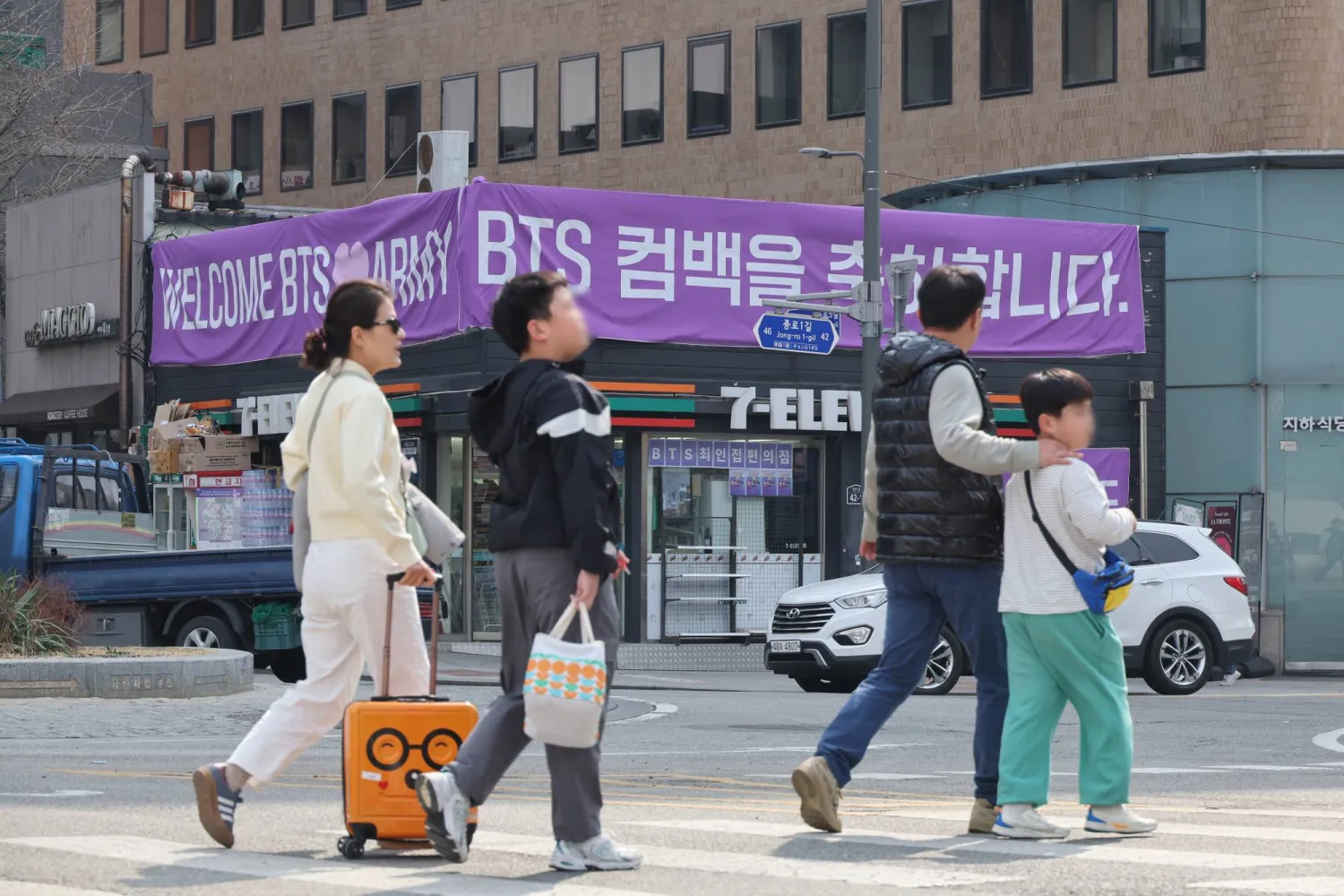
People walk near Gwanghwamun Square in Seoul, South Korea, 22 March 2026. The band performed their comeback concert on 21 March.  EPA/YONHAP
People walk near Gwanghwamun Square in Seoul, South Korea, 22 March 2026. The band performed their comeback concert on 21 March. EPA/YONHAP
TT

South Korea to Invest $166 Million in AI Chip Startup Rebellions

People walk near Gwanghwamun Square in Seoul, South Korea, 22 March 2026. The band performed their comeback concert on 21 March.  EPA/YONHAP
People walk near Gwanghwamun Square in Seoul, South Korea, 22 March 2026. The band performed their comeback concert on 21 March. EPA/YONHAP

South Korea's industry ministry on Tuesday said the Financial Services Commission's advisory board approved a 250 billion won ($166 million) investment in a local artificial intelligence chip startup called Rebellions, part of a government-backed push to nurture a homegrown advanced semiconductor firm.

Here are some details:

South Korea's Financial Services Commission advisory board, which evaluates investments in advanced strategic industries, ⁠approved a 250 ⁠billion won direct investment into Rebellions, an AI chip startup.

Rebellions, founded in 2020, designs neural processing units (NPUs) that handle AI computations.

The decision was made at a ⁠fund management committee meeting for the state-led "National Growth Fund," marking the first direct investment under the country's "K-Nvidia" initiative.

The funding will support Rebellions' mass production of NPU chips and the development of next-generation AI semiconductors, the industry ministry said in a statement.

The "K-Nvidia" project, jointly led by the Financial Services Commission and the ⁠Ministry ⁠of Science and ICT, seeks to nurture a globally competitive AI chip company amid intensifying competition in the sector, which is dominated by US firms like Nvidia.

The move underscores Seoul's efforts to strengthen its position in the AI supply chain and reduce reliance on foreign technology, as demand for high-performance computing chips surges.


Uber, Autonomous Mobility Firms to Launch Europe's 1st Commercial Robotaxis

Aerial photo shows light installation during the Festival of Lights in Zagreb, Croatia, March 18, 2026. REUTERS/Antonio Bronic
TT

Uber, Autonomous Mobility Firms to Launch Europe's 1st Commercial Robotaxis

Aerial photo shows light installation during the Festival of Lights in Zagreb, Croatia, March 18, 2026. REUTERS/Antonio Bronic

Uber Technologies and autonomous mobility companies Verne and Pony.ai have partnered up to launch Europe's first commercial robotaxi service in the Croatian capital Zagreb, with plans to expand to other cities, they said on Thursday.

Robotaxis are rapidly expanding into US cities as companies race to commercialize ⁠autonomous ride-hailing worldwide.

Alphabet's ⁠Waymo remains the early leader, while Tesla hopes its vast manufacturing scale and financial resources could reshape the competitive landscape.

The first ⁠commercial robotaxi service in Zagreb will be launched "soon,” the companies said.

Initial deployment work is underway, including public-road validation.

Pony.ai will provide autonomous driving solutions, while Verne will act as the fleet owner and service operator.

The three companies plan ⁠to ⁠expand the fleet to thousands of robotaxis in European cities over the next few years.

Uber and Nvidia said earlier this month they planned to expand their robotaxi service in 28 cities across North America, Europe, Australia and Asia.