Oman's Asyad Group Plans to Sell at Least 20% of Shipping Unit Via IPO

Asyad Group plans to sell shares in its shipping subsidiary through an initial public offering. Photo: Oman News Agency
TT

Oman's Asyad Group Plans to Sell at Least 20% of Shipping Unit Via IPO

Asyad Group plans to sell shares in its shipping subsidiary through an initial public offering. Photo: Oman News Agency

Oman's state-owned logistics firm Asyad Group plans to sell shares in its shipping subsidiary through an initial public offering, it said on Wednesday, as part of the country's privatization drive.

The group, owned by Oman's sovereign wealth fund, plans to sell a stake of at least 20% in Asyad Shipping Co and float it on the Muscat stock exchange, it said in document detailing its intention to float.

"The intended listing would provide investors with the opportunity to invest in one of the world's largest diversified maritime shipping companies and a key player in the Omani economy," the company said.

Asyad Shipping focuses on transporting liquefied natural gas (LNG), crude oil and other products. It lists energy firms BP and Shell as well as trading firm Trafigura among its customers and partners.

The offering will be made in two tranches, with 75% made to eligible investors in Oman and qualified institutional and other foreign investors. Of the 75% tranche, 30% of shares have been earmarked for anchor investors, the firm said.

The remaining 25% will be sold to retail investors in Oman.

The subscription period is expected to start next month, after the company has received regulatory approval.

Asyad Shipping plans to pay dividends semi-annually, beginning in September 2025 for the first six months of this year.

Oman Investment Bank, EFG Hermes, JP Morgan and Jefferies are acting as joint global coordinators. Sohar International is acting as joint global coordinator and as issue manager.
Credit Agricole and Societe Generale are joint bookrunners.


Oil to Fabric: Middle East Crises Reshape Global Fashion

A worker arranges spools of thread at a textile factory in Haiyan, Jiangsu province, China (Reuters)
TT

Oil to Fabric: Middle East Crises Reshape Global Fashion

A worker arranges spools of thread at a textile factory in Haiyan, Jiangsu province, China (Reuters)

Rising oil prices are no longer just an energy market story; they are feeding directly into the cost of clothing. From petrochemical plants to fabric mills and retail racks, a complex supply chain is passing on higher costs, pushing up the final price consumers pay.

According to the “Materials Market 2025” report by the Organization for Textile Exchange, polyester makes up about 59% of global fabric output, with roughly 88% produced from non-recycled petroleum sources, leaving the industry exposed to energy price swings.

Oil prices have surged about 32% since the start of the US-Israeli war on Iran on Feb. 28, approaching $100 per barrel.

Fabrics under oil pressure

Amal Saqr, a textile design consultant, said the sector is highly sensitive to shifts in oil prices because of its reliance on synthetic fibers.

More than 60% of fabrics used in global clothing production depend on petroleum-based materials such as polyester, nylon and acrylic, she said, adding that any rise in oil prices feeds directly into fabric costs.

She pointed to 2008, when polyester prices jumped about 30% within three months as oil hit record highs, forcing Asian spinning mills to cut output by 20% to 25%.

Disruptions in the Red Sea between 2023 and 2024 also drove shipping costs up by about 300%, raising raw material costs and straining supply chains.

Yemen’s Iran-aligned Houthis began targeting ships linked to Israel on Nov. 19, 2023, using drones and missiles.

Natural fabrics not immune

Natural fibers such as cotton and linen avoid direct reliance on oil, but are still exposed to energy costs, Saqr said, noting that farming depends on fertilizers, fuel and transport.

The global fertilizer crisis in 2021 pushed prices up about 80%, driving cotton prices higher by roughly 40%. Later disruptions in the Strait of Hormuz added another 40% increase in fertilizer costs due to shipping delays.

Global cotton production reached about 24.5 million tons in 2024, or roughly 19% of total fiber output, making it less dominant than synthetic fibers but relatively more stable in pricing, according to the Textile Exchange report.

Rising production costs

Higher energy prices are hitting every stage of production, from spinning to dyeing and drying, Saqr said.

With already thin margins, textile factories face a stark choice: raise prices or cut output, both of which ultimately hit consumers.

World Bank data shows operating costs for textile factories in several countries have risen by about 18% following recent energy price increases.

Import markets feel it fast

Import-dependent markets are quick to absorb shocks from shipping or energy disruptions, Saqr said.

Shipping costs from Asia have lifted synthetic fabric prices by 10% to 18%, while imported cotton prices have climbed by 15% to 25%.

Rerouting shipments from the Strait of Hormuz to the Cape of Good Hope has added 10 to 14 days to transit times, leading to shortages and swings in the availability of fabrics and garments.

Value chains under rethink

Burak Cakmak, chief executive of the Saudi Fashion Commission, said the impact of oil prices is not immediate, as final pricing reflects a full value chain including production, marketing and distribution.

Instead of passing costs on, many brands are rethinking how to create value, improving efficiency and working more closely with suppliers, he said.

He also pointed to a shift toward localized production, with brands operating closer to their markets and managing inventory more tightly to control costs and improve flexibility.

Sustainability gains urgency

Sustainability is no longer just an environmental concern; it is tied to efficiency and long-term economic viability, Cakmak said.

The sector is moving toward circular models, including recycling and waste reduction, practices that are becoming essential to improving operations.

Designers double down

Anna Zinola, director of Istituto Marangoni in Riyadh, said rising oil prices are reinforcing, not reshaping, designers’ shift toward more conscious material choices.

Sustainability is embedded in the curriculum as a core approach guiding every design decision, she said.

Students are trained to balance cost, sustainability and consumer demand, while exploring material innovations that combine environmental and commercial goals.

Prices set to rise

Reports by McKinsey and Euratex expect global clothing prices to rise by 8% to 12% over the next year, as supply chain pressure persists and shipping costs remain elevated.


Dollar Gains as Iran War Keeps Central Banks in Wait-and-see Mode

US dollar banknotes. (Reuters)
TT

Dollar Gains as Iran War Keeps Central Banks in Wait-and-see Mode

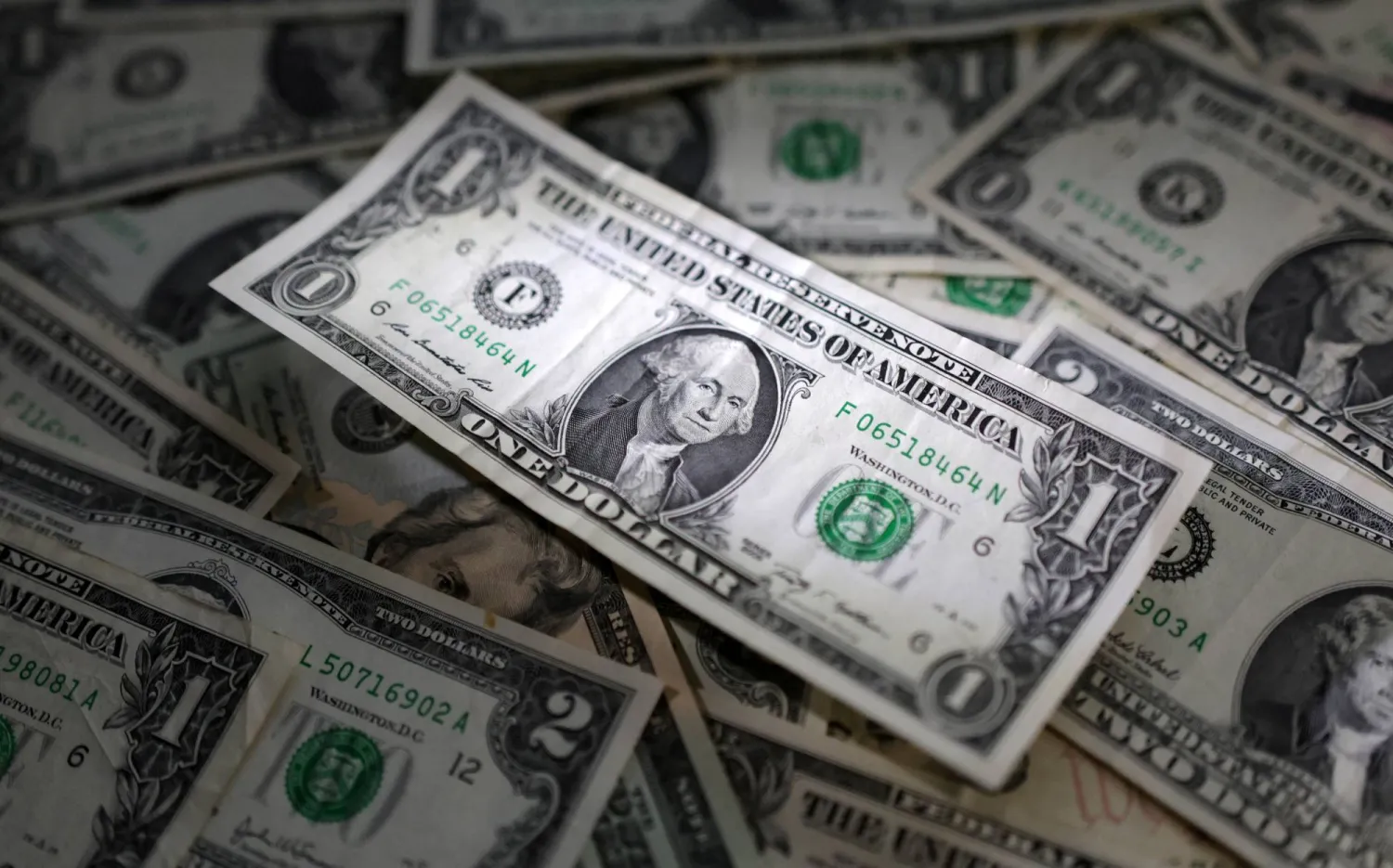
US dollar banknotes. (Reuters)

The dollar edged up against the euro on Wednesday on lingering concerns about the ongoing US-Israeli war with Iran, even after President Donald Trump extended the ceasefire to give Tehran more time to present a unified proposal for ending the conflict. Iran seized two ships in the Strait of Hormuz on Wednesday, tightening its grip on the strategic waterway, after Trump called off attacks indefinitely with no sign of peace talks restarting.

Markets have been swayed by alternating bouts of optimism that a deal is within reach and fears that the conflict could drag on, causing prolonged disruptions to energy markets.

"It's tough to have a really strong conviction at this point," said Dominic Bunning, head of G10 FX strategy at Nomura. That said, "overall it seems like both sides are more inclined to make progress than to re-escalate."

The dollar index, which measures the greenback against a basket of currencies including the yen and the euro, was last up 0.06% at 98.44, with the euro down 0.09% at $1.1731. The Japanese yen strengthened 0.09% against the greenback to 159.26 per dollar. Sterling strengthened 0.01% to $1.3507.

CENTRAL BANKS ON HOLD

Markets are pricing in low odds that the Federal Reserve will cut interest rates this year, given the risk that the war could fuel higher inflation.

Fed funds futures traders now see only a 35% chance of one cut by the end of 2026. Traders previously had forecast two cuts, with Kevin Warsh - Trump's nominee to lead the US central bank - seen as more likely to cut rates than Fed Chair Jerome Powell.

Warsh said on Tuesday he had made no promises to Trump about cutting rates, seeking to assure senators considering his confirmation that he would act independently of the White House while pursuing broad reforms.

US Treasury Secretary Scott Bessent said earlier this month that the Fed should "wait and see" before deciding whether to lower rates amid the war in Iran, noting that the US economy had been "very strong" in January and February.

"Since the war began, comments from Treasury Secretary Bessent make it seem like he recognizes that it might take Warsh some time to cut interest rates," said Marc Chandler, chief market strategist at Bannockburn Global Forex.

"And this is what I think we're going to see next week. You've got five G10 central banks that meet and none of them are going to do anything. It's a watch-and-wait" situation, Chandler said.

The Fed, European Central Bank, Bank of Japan, Bank of England and Bank of Canada are all scheduled to hold policy meetings next week.


Türkiye Central Bank Holds Rates at 37% as it Eyes Iran War Fallout

Central Bank of Türkiye (official website)
TT

Türkiye Central Bank Holds Rates at 37% as it Eyes Iran War Fallout

Central Bank of Türkiye (official website)

Türkiye's central bank held its key interest rate at 37% as expected on Wednesday, deciding not to hike but warning that fallout from the Iran war could yet change the inflation outlook.

It was the second straight policy meeting at which the bank held steady despite some expectations that it could tighten, suggesting it was preparing to stand pat well into the summer, analysts said.

The central bank also did not adjust its overnight lending and borrowing rates from 40% and 35.5% respectively. Since the war started in late February, it has halted an easing cycle that began in late 2024 and taken other liquidity steps that pushed the lira overnight rate up to the 40% limit - moves that prompted some analysts to predict a 300-point hike this week.

The bank said it is closely monitoring any "potential second-round effects" on inflation, for which "leading indicators suggest a slight increase in the underlying trend in April".

"Amid geopolitical developments and the resulting uncertainties, energy prices remain elevated and exhibit notable volatility," its policy committee added.

In a Reuters poll, 19 of 23 economists predicted no change to borrowing costs, while four forecast a rate hike. The war-related surge in energy prices has rattled import-heavy economies like Türkiye where inflation was 30.87% last month, but where expectations have risen. On Tuesday, US President Donald Trump extended the war ceasefire indefinitely.

The ceasefire allowed the central bank "to refrain from tightening," William Jackson, economist at Capital Economics, said in a note. "So long as energy prices don't spike again, we think the CBRT will opt to leave interest rates on hold for at least a few more months."

Economists generally anticipate that rate cuts may resume in September. The Reuters poll predicted rates would be cut to only 32.75% by year-end. A separate poll found end-2026 consumer price inflation at 27.53%, compared with 25.38% in a previous poll.

In its quarterly inflation report in February - before the war began - the central bank had kept its end-2026 interim inflation target at 16%, while lifting its forecast range to 15-21% from 13-19% previously.

A year ago, the central bank temporarily reversed course and hiked rates in the face of political instability that rattled markets, though it returned to rate cuts by mid-2025.