Saudi Energy Minister Prince Abdulaziz bin Salman said there was “no room for fear in the vocabulary of Saudis,” stressing that the resilience of the kingdom’s energy system and the determination of its people strengthened its ability to weather crises, ensure uninterrupted supplies and continue its transformation drive toward the goals of Vision 2030.
He also highlighted the importance of long-term investment in infrastructure, developing supply chains and localizing industries to help Saudi Arabia navigate global challenges and changes while preserving opportunities for future generations in a more sustainable future.
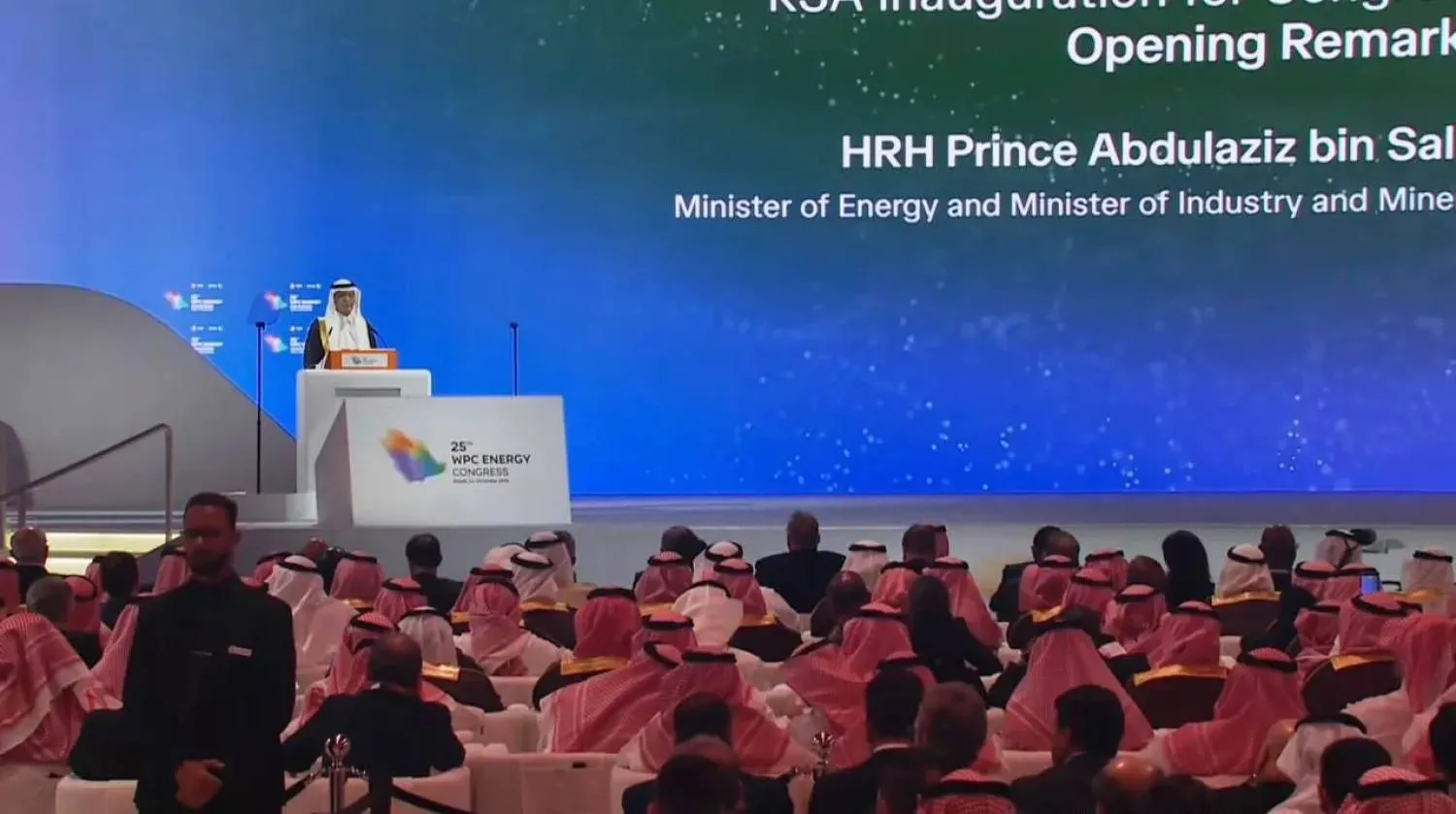
Prince Abdulaziz made the remarks in his opening address at the 25th WPC Energy Congress, held as part of Riyadh Energy Week on Monday, in the presence of a large number of ministers, officials and industry leaders.
He said recent experiences had demonstrated the importance of advance preparedness and building an energy system capable of adapting to different circumstances. Resilience, he added, was measured not only by a system’s ability to withstand disruptions, but also by its capacity to repair damage, restore operations and continue meeting market needs.
Prince Abdulaziz stressed that energy system resilience and reliable supplies were fundamental to addressing global challenges and changing conditions. He said the kingdom would continue investing in energy infrastructure, developing supply chains and strengthening human capabilities and modern technologies to ensure uninterrupted supplies under all circumstances.
He said the conference was being held at a pivotal moment for the global energy sector, adding that Saudi Arabia’s hosting of participants in its capital reflected the kingdom’s commitment to providing a safe environment and that the safety of its guests was a top priority.
The meeting, he said, embodied a commitment to prudent decision-making, practical cooperation and a shared sense of responsibility within the energy community, as the sector faces mounting challenges related to energy security and supply stability that are testing the resilience and adaptability of countries and economic systems.
Prince Abdulaziz said Saudi Arabia had invested over the years in developing infrastructure, improving supply chain efficiency and building human capabilities to ensure the energy system was prepared to cope with exceptional circumstances.
He cited the East-West oil pipeline as a key example of infrastructure that provides alternative routes for transporting oil to markets, strengthening the kingdom’s ability to manage risks that could disrupt traditional supply routes.
These capabilities, he said, had not been developed overnight, but were the result of years of planning, development and operational experience, supported by Saudi Aramco’s technical and operational expertise, industrial capabilities and transportation and supply networks, which help ensure business continuity under varying conditions.
Localizing supply chains
Prince Abdulaziz bin Salman stressed the importance of localizing supply chains and increasing local content, describing them as strategic objectives for Saudi Arabia. He cited Saudi Aramco’s announcement that it had achieved a 70% local content rate, a milestone reflecting the growing capabilities of national industries and their role in strengthening the sector’s resilience.
The minister said the value of these investments becomes more apparent when global supply chains are disrupted, as advanced systems and domestic capabilities help address gaps and mitigate the impact of interruptions, supporting energy system stability and ensuring continued operations.
He said resilience depends on skilled personnel, technical expertise and rapid response, enabling critical facilities to recover from damage and maintain services.
The energy minister reaffirmed the kingdom’s commitment to continued investment across the energy sector, developing new technologies and reducing emissions, while also investing in national talent and preparing future generations.
Implementing the vision
Prince Abdulaziz bin Salman said Saudi Arabia aims to build an energy system capable of sustained success and adapting to changing circumstances while safeguarding the security and sustainability of supplies.
He stressed that the kingdom has the resources needed to sustain economic growth and pursue its development vision, supporting the prosperity of its people and strengthening international partnerships.
While no one can predict when current conditions will end, recent experience underscores the importance of preparing for the future, developing solutions before they are needed and strengthening the ability to respond to rapidly changing demands, he said.
Prince Abdulaziz called for Riyadh to serve as a platform for deeper cooperation and translating international partnerships into practical action, with discussions focused on meeting global energy needs, reducing emissions and strengthening resilience to crises and challenges.
He said the world needed reliable partners and leaders willing to make long-term strategic decisions, reaffirming that Saudi Arabia would continue to play its role in the energy sector through an approach based on prudence, openness and expanding international partnerships.
He concluded by welcoming participants to Riyadh and calling for joint efforts to build a secure and resilient energy future that ensures reliable supplies and meets the needs of societies and economies worldwide.