Thousands of Lebanese Return to Aitaroun Only to Find their Homes in Ruinshttps://english.aawsat.com/arab-world/5110241-thousands-lebanese-return-aitaroun-only-find-their-homes-ruins
Thousands of Lebanese Return to Aitaroun Only to Find their Homes in Ruins
The Lebanese Army escorted families back to Aitaroun in South Lebanon (AFP)
Residents of Aitaroun, a border town in South Lebanon, have begun returning to their homes, only to find widespread destruction left by Israeli attacks.
Asharq Al-Awsat documented the scene as the Lebanese Army escorted families back, working to clear sand barriers blocking the town’s entrance. Meanwhile, explosions and Israeli airstrikes continued. The latest attack, on Saturday, targeted the Janta border crossing between Lebanon and Syria in the eastern BeKaa region.
The scale of devastation in Aitaroun was overwhelming, with homes, infrastructure, electricity, water networks, and roads severely damaged by Israeli bombardment.
“We entered the village from the western side, reaching the main square and parts of the eastern sector. However, access to the entire eastern side remains impossible due to the continued presence of the Israeli army,” a resident told Asharq Al-Awsat.
He estimated that over 95% of properties have been damaged, calling for urgent support from the government and international donors to restore essential services.
Another resident noted that most of the destruction occurred after the ceasefire, with homes, shops, and agricultural lands deliberately targeted. Farmers, who were forced to flee, lost their entire annual tobacco harvest while airstrikes destroyed irrigation ponds, burned hundreds of trees, and killed large numbers of poultry, cattle, and beehives.
Aitaroun overlooks Israel’s Yiftah military base, as well as the Hula Valley, the Avivim settlement, and the Dishon and Jall Al-Deir military outposts near Maroun Al-Ras. Before the war, the town had a population of over 9,000 residents, mainly working in agriculture, education, and healthcare, out of 21,000 registered citizens. Many had already migrated to Australia and Canada due to previous Israeli aggressions.
Since the 2006 Lebanon War, the number of residential buildings in Aitaroun had doubled to nearly 1,000, extending to the border for the first time. The town also saw growth in commercial businesses, stone and marble factories, dairy farms, and large grocery stores.
As Morgan Ortagus, Deputy US Envoy for the Middle East, visited Lebanon on Saturday—ten days before the ceasefire extension deadline on February 18—Israeli attacks on southern villages continued.
Israeli forces detonated homes in Kfar Kila and set fire to houses in Adaisseh, with flames spreading to nearby forests. Meanwhile, Israeli airstrikes hit Janta in eastern Lebanon, near the Syrian border.
During her visit to South Lebanon, Ortagus toured Bayada and Shamaa, accompanied by acting Lebanese Army Commander General Hassan Ouda and senior officers.
In response to ongoing Israeli operations, municipalities in Western and Central sectors issued warnings to residents, journalists, and visitors about the dangers of landmines left behind by Israeli forces.
Israeli Soldiers Share Rare Accounts from Gaza: Killings Never Stoppedhttps://english.aawsat.com/arab-world/5279038-israeli-soldiers-share-rare-accounts-gaza-killings-never-stopped
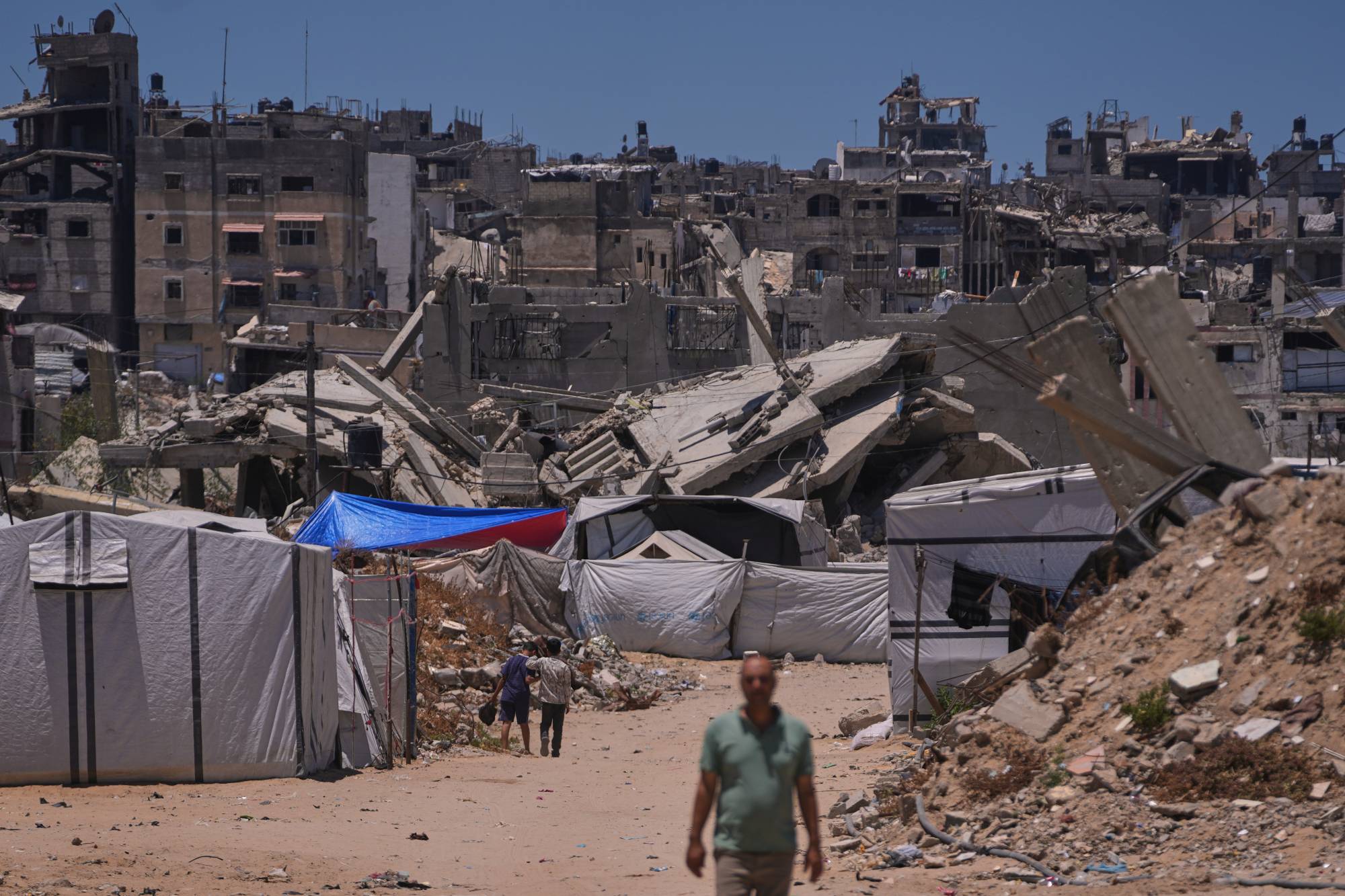
Palestinians inspect the rubble of a building destroyed in an Israeli strike in Deir al-Balah, in the central Gaza Strip, Friday, May 29, 2026. (AP Photo/Abdel Kareem Hana)
Israeli Soldiers Share Rare Accounts from Gaza: Killings Never Stopped
Palestinians inspect the rubble of a building destroyed in an Israeli strike in Deir al-Balah, in the central Gaza Strip, Friday, May 29, 2026. (AP Photo/Abdel Kareem Hana)
The Israeli combat soldier saw his teammates yelling in celebration, congratulating one another. They had just struck a vehicle of Palestinians driving near the Israeli-controlled part of the Gaza Strip, killing everyone inside.
The reservist said scenes like this had become common after a fragile ceasefire took effect in October. In the weeks he was stationed in Gaza, he said, he saw soldiers relishing the chance to go after those who crossed — or came close to crossing — the so-called yellow line that divides the strip into Israeli-controlled and Palestinian areas.
“It was a jungle,” the soldier, in his 20s, told The Associated Press. “After the ceasefire, the order was: If someone crosses the line, you shoot them.”
As diplomatic efforts to strengthen the deal have stalled, three soldiers described to AP a sense of confusion in the embattled territory, with a lack of clarity on rules of engagement around the yellow line. Some commanders paid lip service to the agreement, the soldiers said, while privately voicing desire for the war in Gaza to continue.
Sometimes, troops were too far away or acted too quickly to recognize who they were shooting, one soldier said — a concern echoed in comments from a whistleblower group of veterans.
Palestinians walk along a street surrounded by buildings destroyed by Israeli military strikes during the Israel-Hamas war in Khan Younis, southern Gaza Strip, Friday, May 29, 2026. (AP Photo/Abdel Kareem Hana)
The soldiers' accounts are a rare glimpse into what’s happened in the Israeli-controlled part of Gaza since the deal went into effect seven months ago. The soldiers — reservists deployed throughout Gaza between October and January who've since returned — spoke on condition of anonymity because they feared being ostracized over their comments. They said they were speaking out because they were angered and saddened by what they saw.
AP has documented shootings of Palestinian civilians, including children playing, close to the yellow line. And the soldiers said it felt like the killings never stopped amid the tenuous deal.
“To call it a ceasefire is a joke,” one soldier told AP.
Gaza's yellow line has been ambiguous, and Israel has taken control of more land When the ceasefire went into effect, Israel withdrew troops to a buffer zone demarcated by a yellow line, giving it control of just over half the strip.
Under the agreement, Israeli forces are meant to complete a fuller withdrawal, though there's no timeline for that. The US-backed diplomat overseeing the truce says progress is deadlocked over the central sticking point of disarming Hamas, upon which all other issues — including Israeli withdrawals and reconstruction — hinge.
In the meantime, Israel has expanded control over additional territory in Gaza. Both sides have accused the other of violating the ceasefire.
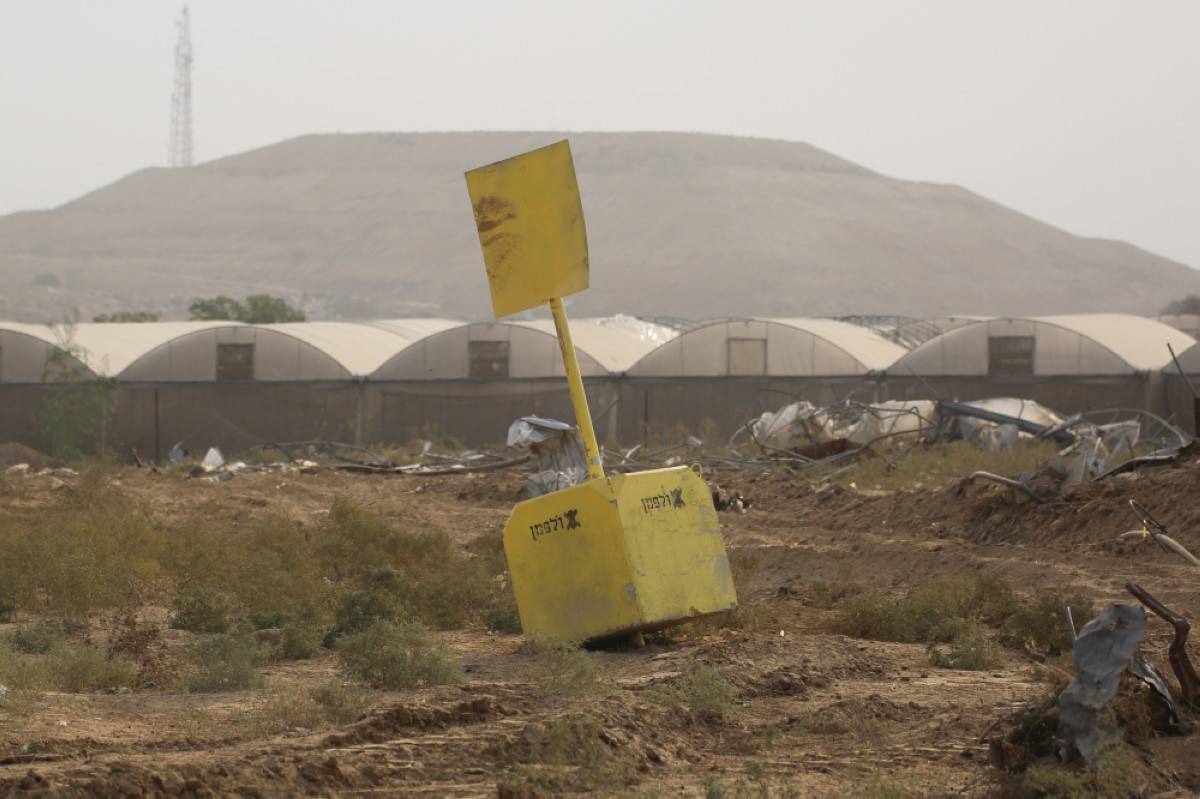
The line’s exact location has been ambiguous and sometimes invisible. In some places, it’s marked with yellow blocks and barrels; in others, it at times hasn't been indicated at all.
A concrete block marks the "Yellow Line" drawn by the Israeli military in Bureij, in the central Gaza Strip, on Nov. 4., 2025. AFP
The Israeli military invited AP this week to see a section of the yellow line in central Gaza, near the Maghazi refugee camp. The line there was visible, demarcated by a wide dirt path and small yellow markings. To the east was a desolate stretch of open space leading to a heavily fortified Israeli military post about 500 meters away.
An Israeli military commander said Hamas is active on the other side of the line and frequently sends people — militants and civilians — toward the line and even across it to test the army’s readiness and responses.
“There is no reason for anyone to come near the line,” he said, speaking on condition of anonymity under military rules. “There’s nothing here.”
The army says the entire line, which stretches the length of Gaza, is now clearly marked.
Since the ceasefire went into effect, more than 900 people have been killed in Gaza — dozens of those close to or over the yellow line, according to Gaza’s Health Ministry. The ministry doesn't say how many are militants, but unarmed men and children have been among the dead.
Israel's military has said most of the people killed crossing the line posed a threat to troops. But soldiers who spoke to AP and Breaking the Silence — the whistleblower group that has collected troops' testimonies throughout the war — say that at times soldiers were too far away, acting too quickly and under too much pressure to tell.
Israel's army told AP that the area adjacent to the yellow line is a “sensitive operational environment” with signs saying approaching is prohibited. It said the army doesn't target civilians solely for approaching the line and that its rules of engagement require the use of warnings before using force. In situations involving an immediate threat, forces are authorized to act, it said.
One soldier says troops must act fast, with information sometimes based on a hunch It was the combat soldier's second tour in Gaza when the ceasefire began. He said he was posted several hundred meters from the yellow line and saw several people trying to cross it killed by soldiers.
Soldiers shooting or ordering drone strikes don't always know who's crossing the line, he said. Although soldiers must provide coordinates and get approval from superiors before striking, it's hard to give exact information as people are moving, he said. He described soldiers calling in coordinates based on a hunch or the last place they saw someone.
Breaking the Silence says the general rules of engagement are extremely permissive, especially for those crossing the line, with orders in many areas being “shoot to kill.”
Executive director Nadav Weiman, a veteran who served in Gaza but not in this war, said distance from the target and some trigger-happy soldiers can be problematic.
He said orders and policies from the military’s high commanders “have created a reality where countless civilians have and are being killed for crossing invisible lines.”
In one account to Breaking the Silence, in interview notes seen by AP, a soldier describes instructions for troops about anyone crossing the yellow line: “eliminate him no matter what."
Another soldier stationed in Gaza for weeks after the ceasefire said the message from commanders was to hold the line at all costs.
“There was a general feeling that human lives are not valuable,” he said.
When it came to demarcating the yellow line, the soldier said his superiors told him it was “too much work," not their job and that Palestinians should know where it was.
Being in Gaza took an emotional toll, he said.
Sometimes snipers fired warning shots at people close to the line, he said, but commanders told troops to do more to protect themselves. The soldier understood that to mean firing more lethal shots.
He and the other soldiers who spoke to AP said troops generally understood, based on leaders and fellow soldiers' actions, that Israel was in Gaza for the long run, not an eventual withdrawal.
An internal report circulated among aid groups last month and seen by AP said that across Gaza, Israel has become “increasingly proactive” with its strikes.
Separate data from the Armed Conflict Location and Event Data Project, a US-based nonprofit, said April was the deadliest month in Gaza this year and that recorded deaths near the yellow line or of people who crossed it increased by more than 25% from January to April, to 73 from 58.
This week, Israeli Prime Minister Benjamin Netanyahu said Israel controls 60% of Gaza and the next step was to move to 70% control.
The soldiers told AP that on the ground, the ceasefire is elusive.
“We need to stop using this term," one said of the word, ceasefire. "It’s not serving people that want to stop the war.”
Palestinian Authorities Say Israeli Forces Kill Man Trying to Climb Barrierhttps://english.aawsat.com/arab-world/5278995-palestinian-authorities-say-israeli-forces-kill-man-trying-climb-barrier
Palestinian Authorities Say Israeli Forces Kill Man Trying to Climb Barrier
Palestinians walk along the separation barrier between the West Bank and east Jerusalem neighborhood of Beit Hanina, Sunday Feb. 15, 2026. (AP)
Israeli forces shot dead a Palestinian man Sunday as he attempted to enter Jerusalem by climbing over a barrier separating the city from the occupied West Bank, Palestinian authorities said.
The Palestinian health ministry in Ramallah identified the man as Imad Haroun Ashtiyeh, 26, saying he was killed by Israeli gunfire near the town of Al-Ram, north of Jerusalem.
Ashtiyeh, a construction worker from the village of Salem near Nablus, had attempted to climb the barrier at Al-Ram along with a few other men to make his way to the Israeli city of Tel Aviv for work, said Omer, a relative who gave only his first name.
"But then he was shot while attempting to climb over," Omer told AFP.
An AFP journalist saw Ashtiyeh's corpse shrouded in a Palestinian flag at the Ramallah medical complex, his relatives weeping over his body.
The Palestinian Authority's press office wrote on X that "Israeli occupation forces killed a Palestinian man seeking work while crossing the annexation and apartheid wall".
Al-Ram, located near the Qalandiya checkpoint, is separated from Jerusalem by a section of the barrier reinforced with barbed wire.
The Israeli military and police did not immediately respond to a request for comment.
Israeli security officials say a significant number of Palestinians from the West Bank attempt to enter Israel illegally, often by climbing over the barrier.
They are driven largely by economic hardship and the loss of work permits since the Hamas assault that sparked the Gaza war in October 2023, Palestinian officials say.
Most of them are arrested, while some have died or been injured fleeing from Israeli forces, Palestinian officials say.
Ashtiyeh is the fifth Palestinian killed trying to cross into Israel this year, and the 52nd since October 7, 2023, according to the Palestinian General Federation of Trade Unions.
Israel began building the barrier at the height of the second Palestinian intifada that erupted in 2002, saying it was needed to maintain security amid suicide bombings in Jerusalem and other Israeli cities.
The barrier cuts into many parts of the West Bank, which Israel has occupied since 1967, and Palestinians see it as a land grab and de facto border illegal under international law.
Israel maintains tight restrictions on the movement of the West Bank's roughly three million residents, who require special permits to cross checkpoints into east Jerusalem and Israel.
Violence has sharply escalated in the Palestinian territory since the Gaza war began.
At least 1,075 Palestinians -- both militants and civilians -- have been killed by Israeli forces or settlers in the West Bank since October 2023, according to AFP figures based on Palestinian health ministry data.
In the same period, at least 46 Israelis, including soldiers and civilians, have been killed in attacks or military operations in the West Bank, Israeli official figures show.
France Requests UN Security Council 'Emergency Meeting' on Lebanonhttps://english.aawsat.com/arab-world/5278983-france-requests-un-security-council-emergency-meeting-lebanon
France Requests UN Security Council 'Emergency Meeting' on Lebanon
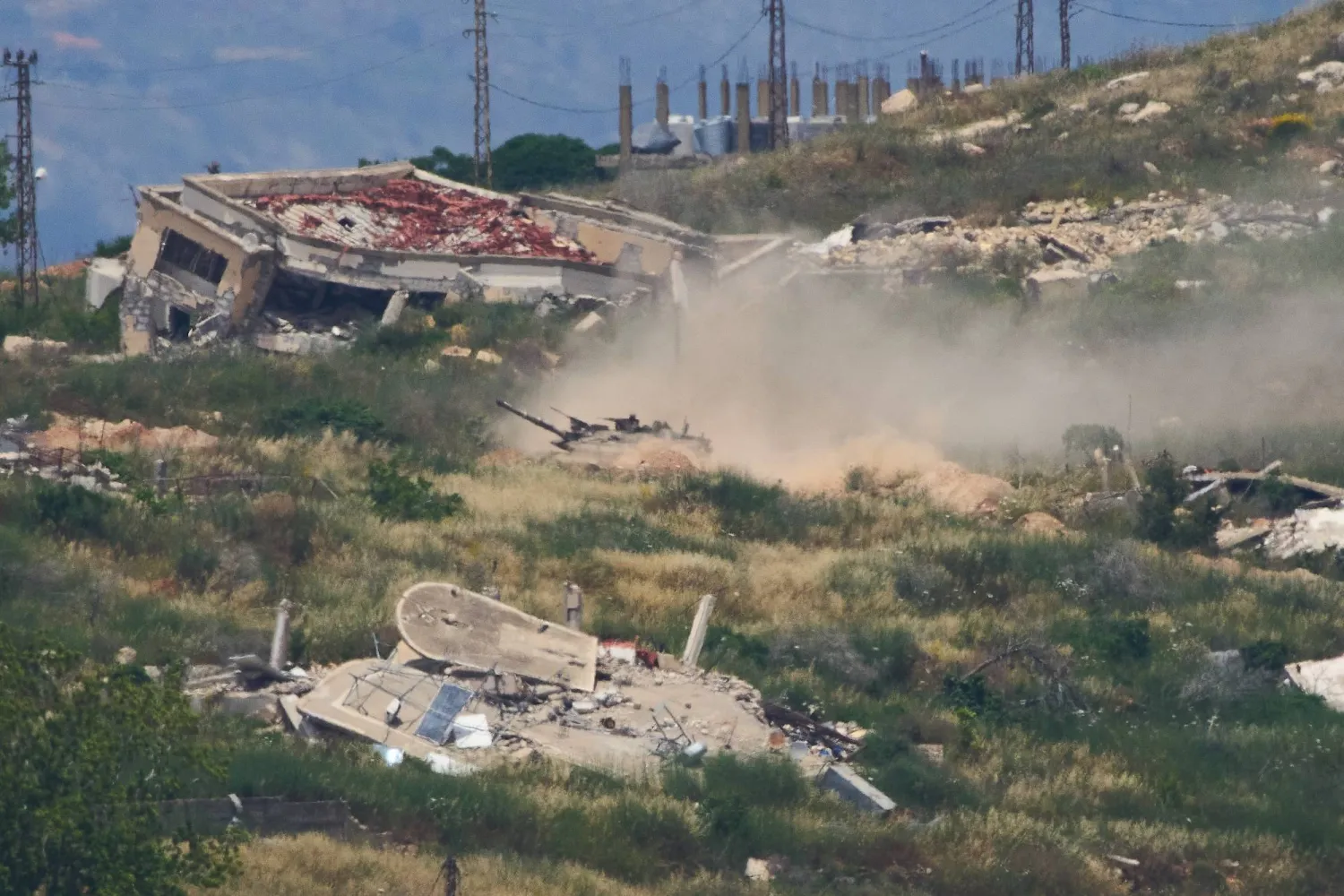
Israeli soldiers drive a tank in southern Lebanon as seen from northern Israel, Sunday, May 31, 2026. (AP Photo/Ariel Schalit)
France has requested an emergency meeting of the United Nations Security Council after Israeli forces seized the medieval Beaufort castle in Lebanon, the French foreign minister said Sunday, AFP reported.
"I have requested an emergency meeting of the United Nations Security Council because, while we recognize Israel's right, like that of all countries, to self-defense... nothing can justify the continuation of Israeli military operations in Lebanon and its ever-deeper occupation of Lebanese territory," Jean-Noel Barrot said on the BFMTV channel.
On Sunday, Israeli troops have captured a strategic mountain topped with a Crusader-built castle in southern Lebanon in the deepest incursion into the country in more than a quarter-century.
The capture of Beaufort castle, near the city of Nabatiyeh, came after days of airstrikes and intense fighting in nearby villages where Israeli troops fought Hezbollah members in the rugged area.
Israel has since launched a ground invasion, capturing dozens of Lebanese villages and towns close to the border. Hezbollah has launched thousands of missiles and drones at Israeli soldiers in southern Lebanon and northern Israel.
The Israeli push came despite a nominal ceasefire that has been in place since April 17 and just days before Lebanon and Israeli hold their next round of direct talks in Washington starting Tuesday.
لم تشترك بعد
انشئ حساباً خاصاً بك لتحصل على أخبار مخصصة لك ولتتمتع بخاصية حفظ المقالات وتتلقى نشراتنا البريدية المتنوعة