


Iran Intensifies Warnings Following Netanyahu’s Threats

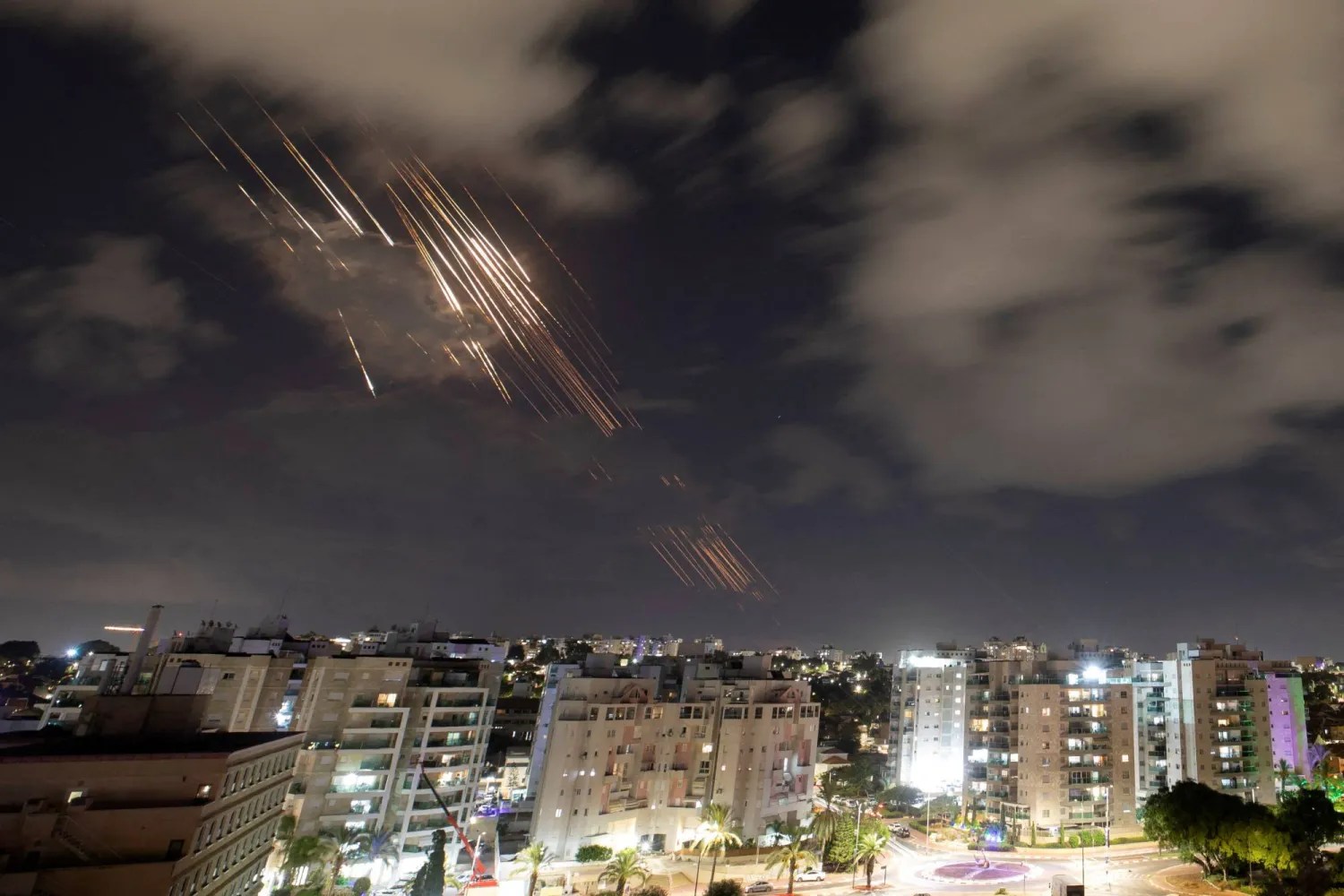
Israel’s Iron Dome intercepts Iranian missiles in early October (Archive - Reuters)
TT

Iran Intensifies Warnings Following Netanyahu’s Threats

Israel’s Iron Dome intercepts Iranian missiles in early October (Archive - Reuters)

Tehran has intensified its warnings in response to Israeli Prime Minister Benjamin Netanyahu’s recent statement that Israel is prepared to “get the job done” against Iran’s nuclear program if it secures support from US President Donald Trump.

US intelligence agencies have warned that Israel is considering major strikes against Iranian nuclear facilities in the first half of this year, taking advantage of Iran’s current state of vulnerability. Last week, Trump raised the possibility of an Israeli attack on Iran but stated that he would prefer to negotiate a deal that prevents Iran from developing nuclear weapons.

Iran now faces a critical decision on whether to negotiate with Trump, amid growing internal unrest due to economic struggles and setbacks in its regional influence. Analysts argue that Iran is increasingly compelled to engage in talks, particularly after its so-called “Axis of Resistance” weakened due to the fragmentation of its allies, the downfall of Syrian President Bashar al-Assad, and targeted strikes against Hezbollah. Trump believes that Iran’s diminished military strength has left it in a weak defensive position, making diplomatic engagement more likely than military escalation.

Mohammad Javad Zarif, Iran’s Vice President for Strategic Affairs, denied on Wednesday that Iran is in a weakened or vulnerable state, calling such claims a “new narrative led by Netanyahu.”

Zarif dismissed claims that Iran has lost its regional influence and is now pursuing nuclear weapons out of desperation. “This is a false narrative,” he stated. “We are not at our weakest; we are in a position to move forward and build a narrative of strength.”

Zarif also accused Israel of falsely depicting the regional conflict as a direct confrontation between Iran and Israel, stating that this framing distorts the reality of the situation.

“For over 30 years, Israel has been claiming that Iran is just six months away from obtaining a nuclear bomb, yet they are still saying the same thing today,” he added.

Mocking tensions between Europe and the US, Zarif recalled a speech he gave at the Munich Security Conference five years ago, where he warned that Western complacency would eventually backfire.

“I said that if you let certain forces do as they please with Iran, the time will come when you too will face the consequences. Now, we see this unfolding in Europe,” he remarked.

Alongside Zarif’s statements, Iranian military officials have escalated their warnings against Israel, cautioning that any military strike against Iran would have severe consequences.

The most forceful warning came from Amir Ali Hajizadeh, commander of the Revolutionary Guards (IRGC) missile unit, during a widely publicized interview on state television. Hajizadeh dismissed claims that Iran is weakened, calling them part of a Western psychological warfare campaign. He referenced Iran’s direct missile strikes on Israeli territory in April and October of last year as evidence of its capabilities.

On Wednesday, the Iranian army and the IRGC completed the second phase of their annual military exercises, shifting their focus from western Iran to the country’s oil- and gas-rich southwest.

Speaking on Tuesday, IRGC commander Hossein Salami declared that Iran would never bow to foreign pressure.

“Iran is a great and powerful nation, with determination and willpower capable of forcing arrogant powers to submit to its authority,” he asserted. “We are strong, and our enemies are well aware of this strength. Of course, we are obligated to be strong.”



People Inside Iran Describe Heavy Security and Scattered Damage in First Calls to Outside World

Members of the Iranian police attend a pro-government rally in Tehran, Iran, January 12, 2026. Stringer/WANA (West Asia News Agency) via Reuters
TT

People Inside Iran Describe Heavy Security and Scattered Damage in First Calls to Outside World

Members of the Iranian police attend a pro-government rally in Tehran, Iran, January 12, 2026. Stringer/WANA (West Asia News Agency) via Reuters

Iranians could call abroad on mobile phones Tuesday for the first time since communications were halted during a crackdown on nationwide protests in which activists said at least 646 people have been killed.

Several people in Tehran were able to call The Associated Press and speak to a journalist there. The AP bureau in Dubai, United Arab Emirates, was unable to call those numbers back. The witnesses said SMS text messaging still was down and that internet users in Iran could connect to government-approved websites locally but nothing abroad.

The witnesses gave a brief glimpse into life on the streets of the Iranian capital over the four and a half days of being cut off from the world. They described seeing a heavy security presence in central Tehran.

Anti-riot police officers, wearing helmets and body armor, carried batons, shields, shotguns and tear gas launchers. They stood watch at major intersections. Nearby, the witnesses saw members of the Revolutionary Guard's all-volunteer Basij force, who similarly carried firearms and batons. Security officials in plainclothes were visible in public spaces as well.

Several banks and government offices were burned during the unrest, they said. ATMs had been smashed and banks struggled to complete transactions without the internet, the witnesses added.

However, shops were open, though there was little foot traffic in the capital. Tehran's Grand Bazaar, where the demonstrations began Dec. 28, was to open Tuesday. However, a witness described speaking to multiple shopkeepers who said the security forces ordered them to reopen no matter what. Iranian state media had not acknowledged that order.

The witnesses spoke on condition of anonymity for fear of reprisal.

Iran says it communicated with Washington

US President Donald Trump has said Iran wants to negotiate with Washington after his threat to strike country over its crackdown.

Iranian Foreign Minister Abbas Araghchi, speaking to Al Jazeera in an interview aired Monday night, said he continued to communicate with US envoy Steve Witkoff.

The communication “continued before and after the protests and are still ongoing," Araghchi said. However, “Washington’s proposed ideas and threats against our country are incompatible.”

White House press secretary Karoline Leavitt said Iran’s public rhetoric diverges from the private messaging the administration has received from Tehran in recent days.

“I think the president has an interest in exploring those messages,” Leavitt said. “However, with that said, the president has shown he’s unafraid to use military options if and when he deems necessary, and nobody knows that better than Iran.”

Meanwhile, pro-government demonstrators flooded the streets Monday in support of the theocracy, a show of force after days of protests directly challenging the rule of 86-year-old Supreme Leader Ali Khamenei. Iranian state television aired chants from the crowd, which appeared to number in the tens of thousands, who shouted “Death to America!” and “Death to Israel!”

Others cried out, “Death to the enemies of God!” Iran’s attorney general has warned that anyone taking part in protests will be considered an “enemy of God,” a death-penalty charge.

Trump imposes tariffs on Iran trading partners

Trump announced Monday that countries doing business with Iran will face 25% tariffs from the United States. Trump announced the tariffs in a social media posting, saying they would be “effective immediately.”

Trump said Sunday that his administration was in talks to set up a meeting with Tehran, but cautioned that he may have to act first as reports of the death toll in Iran mount and the government continues to arrest protesters.

“I think they’re tired of being beat up by the United States,” Trump said. “Iran wants to negotiate.”

Iran, through the country’s parliamentary speaker, warned Sunday that the US military and Israel would be “legitimate targets” if Washington uses force to protect demonstrators.

More than 10,700 people also have been detained over the two weeks of protests, said the US-based Human Rights Activists News Agency, which has been accurate in previous unrest in recent years and gave the latest death toll early Tuesday. It relies on supporters in Iran crosschecking information. It said 512 of the dead were protesters and 134 were security force members.

With the internet down in Iran, gauging the demonstrations from abroad has grown more difficult. The Associated Press has been unable to independently assess the toll. Iran’s government hasn’t offered overall casualty figures.


Trump Says Nations Doing Business with Iran Face 25% Tariff on US Trade

US President Donald Trump speaks with members of the media aboard Air Force One en route from Florida to Joint Base Andrews, Maryland, US, January 11, 2026. REUTERS/Nathan Howard
TT

Trump Says Nations Doing Business with Iran Face 25% Tariff on US Trade

US President Donald Trump speaks with members of the media aboard Air Force One en route from Florida to Joint Base Andrews, Maryland, US, January 11, 2026. REUTERS/Nathan Howard

President Donald Trump said on Monday any country that does business with Iran will face a tariff rate of 25% on any trade with the US, as Washington weighs a response to the situation in Iran which is seeing its biggest anti-government protests in years.

"Effective immediately, any Country doing business with the Islamic Republic of Iran will pay a Tariff of 25% on any and all business being done with the United States of America," Trump said in a post on Truth Social. Tariffs are paid by US importers of goods from those countries. Iran, a member of the OPEC oil producing group, has been heavily sanctioned by Washington for years. It exports much of its oil to China, with Türkiye, Iraq, and India among its other top trading partners.

"This Order is final ‌and ⁠conclusive," Trump said ‌without providing any further detail.

There was no official documentation from the White House of the policy on its website, nor information about the legal authority Trump would use to impose the tariffs, or whether they would be aimed at all of Iran's trading partners. The White House did not respond to a request for comment.

The Chinese embassy in Washington criticized Trump's approach, saying China will take "all necessary measures" to safeguard its interests and opposed "any illicit unilateral sanctions and long-arm jurisdiction."

"China's position against the indiscriminate imposition of tariffs is consistent and clear. Tariff wars and trade wars have no winners, and ⁠coercion and pressure cannot solve problems," a spokesperson of the Chinese embassy in Washington said on X.

Japan and South Korea, which agreed on trade ‌deals with the US last year, said on Tuesday they are ‍closely monitoring the development.

"We ... plan to take any necessary ‍measures once the specific actions of the US government become clear," South Korea's trade ministry said in a ‍statement.

Japan’s Deputy Chief Cabinet Secretary Masanao Ozaki told reporters that Tokyo will "carefully examine the specific content of any measures as they become clear, as well as their potential impact on Japan, and will respond appropriately."

Iran, which had a 12-day war with US ally Israel last year and whose nuclear facilities the US military bombed in June, is seeing its biggest anti-government demonstrations in years. Trump has said the US may meet Iranian officials and that he was in contact with Iran's opposition, while piling pressure on its leaders, including threatening military action.

Tehran said ⁠on Monday it was keeping communication channels with Washington open as Trump considered how to respond to the situation in Iran, which has posed one of the gravest tests of clerical rule in the country since the Iranian Revolution in 1979.

Demonstrations evolved from complaints about dire economic hardships to defiant calls for the fall of the deeply entrenched clerical establishment. US-based rights group HRANA said it had verified the deaths of 599 people - 510 protesters and 89 security personnel - since the protests began on December 28.

While air strikes were one of many alternatives open to Trump, "diplomacy is always the first option for the president," White House press secretary Karoline Leavitt said on Monday.

During the course of his second term in office, Trump has often threatened and imposed tariffs on other countries over their ties with US adversaries and over trade policies that he has described as unfair to Washington.

Trump's trade policy is under legal pressure as ‌the US Supreme Court is considering striking down a broad swathe of Trump's existing tariffs.

Iran exported products to 147 trading partners in 2022, according to World Bank's most recent data.


Iran Summons French, German, Italian, UK Envoys Over Support for Protests

 Cars burn in a street during a protest over the collapse of the currency's value, in Tehran, Iran, January 8, 2026. Stringer/WANA (West Asia News Agency) via Reuters
Cars burn in a street during a protest over the collapse of the currency's value, in Tehran, Iran, January 8, 2026. Stringer/WANA (West Asia News Agency) via Reuters
TT

Iran Summons French, German, Italian, UK Envoys Over Support for Protests

 Cars burn in a street during a protest over the collapse of the currency's value, in Tehran, Iran, January 8, 2026. Stringer/WANA (West Asia News Agency) via Reuters
Cars burn in a street during a protest over the collapse of the currency's value, in Tehran, Iran, January 8, 2026. Stringer/WANA (West Asia News Agency) via Reuters

Iran on Monday summoned diplomats in Tehran representing France, Germany, Italy and the UK to object to what it described as support by those countries for the protests that have shaken the country, its foreign ministry said.

The diplomats were shown a video of the damage caused by "rioters" and told their governments should "withdraw official statements supporting the protesters", the ministry said in a statement quoted by state television.

In Paris, the French foreign ministry confirmed that "European ambassadors" had been summoned by Iran.