


Egypt Kuwait Holding Achieves $185 Million Net Profit in 2024

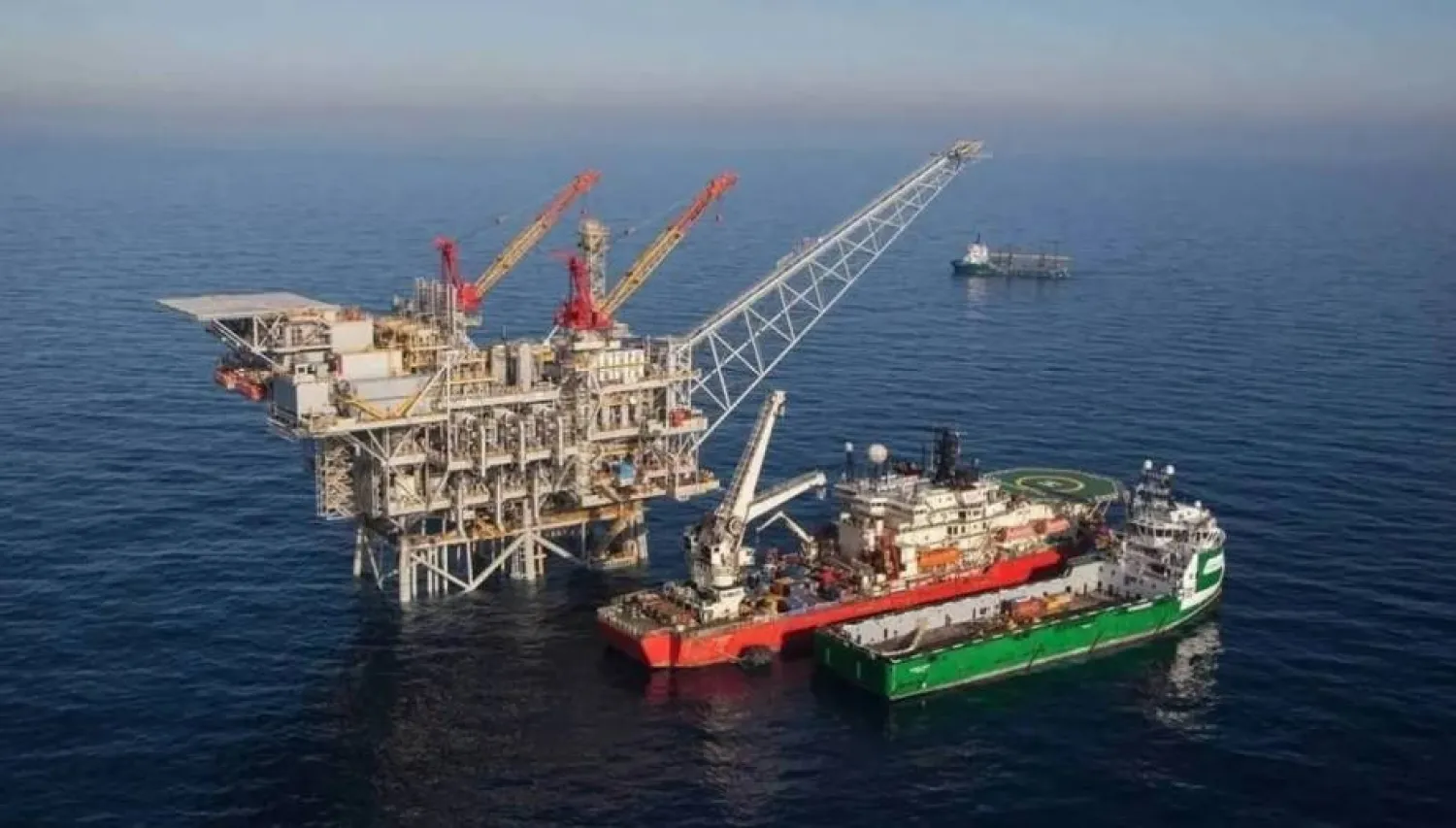
An offshore gas platform (Reuters)
TT

Egypt Kuwait Holding Achieves $185 Million Net Profit in 2024

An offshore gas platform (Reuters)

Egypt Kuwait Holding Company (EKH) on Sunday said it recorded a net profit of $185 million for the full fiscal year of 2024.

EKH posted revenues of $642 million, supported by solid gross and earnings before interest, taxes, depreciation and amortization (EBITDA) margins of 40% and 39%, respectively.

The company recorded a net profit of $185 million, with a 2% point expansion in net profit margin, reaching 29%. Meanwhile, net profit attributable to EKH shareholders stood at $163 million during the same period.

The company successfully maintained profitability margins despite economic challenges, with gross profit and EBITDA margins reaching 41% and 42%, respectively during the period, EKH said in a statement.

Commenting on the Group’s performance and business outlook, EKH Chairman Loay Jassim Al-Kharafi emphasized that EKH successfully navigated operational and economic challenges throughout 2024, attributing this resilience to the Group’s well-defined strategy and flexible business model.

These factors, he said, have enhanced EKH’s ability to achieve sustainable growth and drive long-term success.

Al-Kharafi added that the positive financial results reflect a notable recovery in prices and an increase in sales volumes of core products, reinforcing confidence in the strength and sustainability of the Group’s business portfolio and paving the way for ambitious expansion plans in 2025.

Al-Kharafi affirmed that the Group’s top priorities include boosting foreign currency revenues, expanding exports, and strengthening its financial position, while continuing to contribute to regional economic development.

He also noted that EKH’s first investment in Saudi Arabia is expected to commence commercial operations in the coming months.

Additionally, the Group is advancing its ambitious investment strategy, which includes its first strategic investment beyond the Middle East and North Africa region during the current year, expanding its global operational footprint, Al-Kharafi said.

This reflects EKH’s commitment to managing foreign exchange risk, expanding into high-growth markets, and diversifying its investment portfolio across sectors and geographies, he added.

“Looking ahead to 2025, we will continue to optimize our capital deployment and prioritize investments that align with our strategic objectives, to maximize returns for our stakeholders,” Al-Kharafi said.

Subsidiaries/Fertilizers

Meanwhile, the gross profits of the Alexandria Fertilizers Company (AlexFert) expanded, supported by steady natural gas supply secured by way of recent government interventions and sustained recovery in export urea prices.

In Fiscal Year 2024, revenues recorded $213 million, impacted by natural gas availability, while gross profit and EBITDA margins remained strong at 36% and 44%, respectively, coupled with a 2 percent point year-on-year expansion in the company’s bottom-line margin.

“Looking ahead, the company expects to sustain its strong performance, benefiting from stable natural gas supplies supported by government measures and the continued recovery in global urea prices,” it said in a statement.

Urea prices increased by 8% quarter-on-quarter in 4Q 2024 to reach $364 per ton, while the average global urea price stood at $387 per ton in January 2025.

Petrochemicals

Sprea Misr recorded revenues of 5.84 billion Egyptian pounds in FY 2024, up 19% year-on-year.

Net profit stood at 2.64 billion Egyptian pounds in 2024, reflecting a 2 percent point year-on-year expansion in bottom-line profitability to 45%, driven by gains from interest income and foreign exchange movements.

Sprea Misr is well-positioned to capitalize on the recovery of domestic prices following the devaluation of the Egyptian Pound and increased demand for Sulfonated Naphthalene Formaldehyde (SNF) due to the revival of Egypt’s construction sector.

Utilities Sector

NatEnergy recorded revenues of 5.3 billion Egyptian pounds, a 30% year-on-year increase, while net profit rose 21% to 1.8 billion Egyptian pounds.

Moving forward, NatEnergy is expected to benefit from recent electricity tariff hikes and will continue targeting higher-margin customers. Additionally, Kahraba is investing in a second substation in the 10th of Ramadan industrial zone to support growing energy demand.

Oil and Gas Sector

The North Sinai Offshore Concession reported total revenues of $62 million, reflecting a 7% year-on-year increase.

Meanwhile, net profit amounted to $31 million, with a net profit margin of 50%.

The company continues to deliver strong operational results, supported by its expansion initiatives. The commencement of production at the Aton-1 and KSE2 wells is expected to sustain stable gas production levels at approximately 55 million cubic feet per day (MMSCFD) until the end of 2026.

Additionally, the North Sinai Offshore Concession will benefit from the recent 10-year extension of its Concession Agreement, approved by the Egyptian General Petroleum Corporation (EGPC) during the year, further enhancing the long-term sustainability of its operations.

Non-banking financial services & other diversified sectors

Both Delta Insurance and Mohandes Insurance achieved strong growth, with net profit increasing by 72% and 27% year-on-year, respectively, in Egyptian pound terms during Fiscal Year 2024.

Looking ahead, management expects the insurance sector to maintain its positive trajectory, supported by continued upward revaluation of insured assets, stable premium growth, and a favorable macroeconomic environment, the company said.

Additionally, NileWood is making significant progress toward the commercial launch of its MDF board production line, with operations set to commence in the first half of 2025.



China Widens Foreign Investment Incentive List to Stem Falling Inflows

People visit a shopping center in Beijing on December 20, 2025. (AFP)
TT

China Widens Foreign Investment Incentive List to Stem Falling Inflows

People visit a shopping center in Beijing on December 20, 2025. (AFP)

China on Wednesday listed more sectors eligible for foreign investment incentives, from tax breaks to preferential ​land use, in its latest effort to stem a prolonged decline in overseas capital inflows.

Under the 2025 edition of the catalogue of industries for encouraging foreign investment, China added more than 200 and revised about 300, with a ‌focus on ‌advanced manufacturing, modern services and ‌green ⁠and ​high-tech ‌sectors, the list jointly issued by the National Development and Reform Commission and the commerce ministry showed.

The new catalogue, which takes effect on February 1, 2026, replaces the 2022 version and continues a policy framework ⁠that offers foreign-invested enterprises tariff exemptions on imported equipment, preferential ‌land pricing, reduced corporate income ‍tax rates in ‍designated regions and tax credits for reinvestment ‍of profits.

The catalogue also extends incentives to central and western regions, as well as the northeast and Hainan, as Beijing seeks to attract ​more foreign investment into less developed areas.

China has in recent months ⁠taken a raft of measures to boost foreign investment, including pilot programs in Beijing, Shanghai and other regions to expand market access in services such as telecoms, healthcare and education, amid trade tensions with the United States.

Foreign direct investment in China totaled 693.2 billion yuan ($98.84 billion) from January to November this year, down 7.5% from the ‌same period last year, data from the commerce ministry showed.


Environment Ministry Launches Saudi Citrus Season with Production Exceeding 158,000 Tons

The citrus production season in the Kingdom begins in July and continues through March each year. (SPA)
TT

Environment Ministry Launches Saudi Citrus Season with Production Exceeding 158,000 Tons

The citrus production season in the Kingdom begins in July and continues through March each year. (SPA)

The Saudi Ministry of Environment, Water and Agriculture launched on Wednesday the Kingdom’s citrus season in local markets as part of its efforts to support and develop the agricultural sector and enhance food security in the country, in line with the Saudi Vision 2030.

The is part of the ministry’s ongoing efforts to support national agricultural products, raise awareness of citrus varieties and their nutritional benefits and production areas, and highlight their year-round diversity across production seasons.

These efforts help in improving marketing efficiency, boost competitiveness, and achieve rewarding economic returns.

Citrus fruits are among the most widely cultivated crops in the Kingdom. They are grown in several regions that produce a variety of citrus types, most notably lemons, oranges, mandarins, grapefruit, citron, and kumquats.

The ministry said lemon production leads Saudi citrus output, with total production exceeding 123,000 tons and more than 1.5 million fruit-bearing trees. Orange production follows, with total output reaching 35,700 tons and more than 397,000 fruit-bearing trees.

The citrus production season in the Kingdom begins in July and continues through March each year, it added.

The ministry said the Saudi citrus season has been launched with a number of major retail markets across the Kingdom showcasing local products through innovative packaging and display methods. This boosts the quality and reliability of local products and increases consumer demand during production seasons.


SLB Awarded 5-Year Contract to Stimulate Unconventional Gas in Saudi Arabia

SLB has been awarded a five-year contract by Saudi Aramco to provide stimulation services for its unconventional gas fields. (Asharq Al-Awsat)
TT

SLB Awarded 5-Year Contract to Stimulate Unconventional Gas in Saudi Arabia

SLB has been awarded a five-year contract by Saudi Aramco to provide stimulation services for its unconventional gas fields. (Asharq Al-Awsat)

Global technology company, SLB, has been awarded a five-year contract by Saudi Aramco to provide stimulation services for its unconventional gas fields, the company said in a statement on Tuesday.

The move is part of a broader multi-billion contract, supporting one of the largest unconventional gas development programs globally, it said.

The contract encompasses advanced stimulation, well intervention, frac automation, and digital solutions, which are important to unlocking the potential of Saudi Arabia’s unconventional gas resources - a cornerstone of the Kingdom’s strategy to diversify its energy portfolio and support the global energy transition.

“This agreement is an important step forward in Aramco’s efforts to diversify its energy portfolio in line with Vision 2030 and energy transition goals,” said Steve Gassen, SLB executive vice president.

“With world-class technology, deep local expertise, and a proven track record in safety and service quality, SLB is well positioned to deliver tailored solutions that could help redefine operational performance in the development of Saudi Arabia’s unconventional resources,” he added.

These solutions provide the tools to work toward new performance benchmarks in unconventional gas development.

SLB is a global technology company that drives energy innovation for a balanced planet.

With a global footprint in more than 100 countries and employees representing almost twice as many nationalities, it works on innovating oil and gas, delivering digital at scale, decarbonizing industries, and developing and scaling new energy systems that accelerate the energy transition.