


Iran Vows Decisive Response to Any US-Backed Israeli Threat

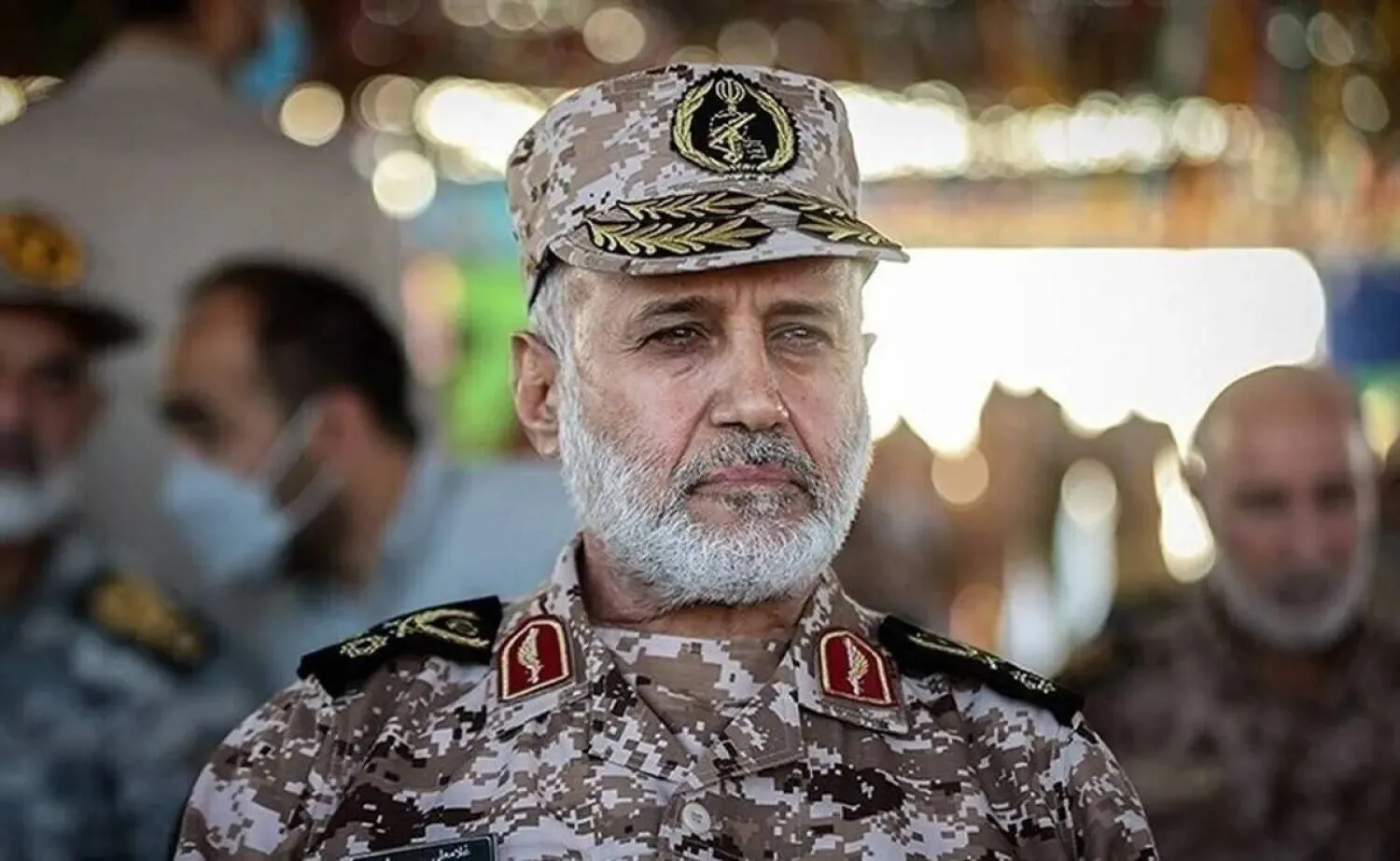
Gholam Ali Rashid, Commander of the Joint Operations Chamber of the Iranian Chiefs of Staff (Tasnim)
TT

Iran Vows Decisive Response to Any US-Backed Israeli Threat

Gholam Ali Rashid, Commander of the Joint Operations Chamber of the Iranian Chiefs of Staff (Tasnim)

A senior Iranian military official warned that Tehran would deliver a decisive response to any Israeli threat against its interests, including warnings backed by the United States.

General Gholam Ali Rashid, head of the Armed Forces Operations Room, stated that any Israeli threat against Iran would be assessed in light of US support for Israel and would be met with firm action by Iran’s military. He emphasized that Iran would target not only the source of aggression but also the facilities and bases supporting Israel’s operations.

The warning comes amid escalating rhetoric between Iran and Israel, particularly after Israeli Prime Minister Benjamin Netanyahu threatened to strike Iran’s nuclear facilities with Washington’s backing.

During a joint press conference with US Secretary of State Marco Rubio last week, Netanyahu claimed that Israel had already dealt a “strong blow” to Iran since the start of the Gaza war. He asserted that, with the support of US President Donald Trump, Israel had the capability to “complete the mission.”

Meanwhile, US intelligence agencies have reportedly warned that Israel is considering major strikes on Iranian nuclear facilities in the first half of this year, taking advantage of Iran’s current vulnerabilities. Trump himself recently raised the possibility of an Israeli attack on Iran, though he stated that he preferred negotiating a deal to prevent Tehran from developing nuclear weapons.

Iran now faces a strategic crossroads—either engage in negotiations with Trump or risk further regional setbacks. Economic hardships and declining regional influence have put Tehran under increasing pressure, with some analysts suggesting that Iran may have no choice but to negotiate. The disintegration of its allied groups, the fall of Syrian President Bashar al-Assad, and ongoing Israeli strikes on Hezbollah have weakened what was once a strong “Axis of Resistance.”

In response to these threats, Rashid accused Israel of spreading misinformation about Iran’s strength to deceive the US, Europe, and regional allies. He argued that Israel has always been weaker than it portrays itself and has lived in fear of Iran and its allied resistance groups for decades.

Iran’s Chief of Staff, Mohammad Bagheri, warned that any threat to Iranian security would destabilize the entire region. He declared that if an attack occurs, not only Israel but also those who assist in its military operations—including countries providing airspace and military bases—would be at risk.

In Washington, National Security Advisor Mike Waltz reaffirmed that Iran would never be allowed to obtain a nuclear weapon. He warned that an Iranian nuclear capability would pose a global threat and could enable Tehran to conduct terrorist attacks under a nuclear shield. Waltz stressed that the Trump administration remains committed to preventing Iran from achieving this goal.



Putin to Meet Trump Envoy Over US Push to End War

Jared Kushner (L), American businessman and Steve Witkoff (R), United States Special Envoy to the Middle East and special envoy for peace missions walk in the corridors during the 56th annual meeting of the World Economic Forum (WEF) in Davos, Switzerland, 20 January 2026. (EPA)
TT

Putin to Meet Trump Envoy Over US Push to End War

Jared Kushner (L), American businessman and Steve Witkoff (R), United States Special Envoy to the Middle East and special envoy for peace missions walk in the corridors during the 56th annual meeting of the World Economic Forum (WEF) in Davos, Switzerland, 20 January 2026. (EPA)

Russian President Vladimir Putin will meet US special envoy Steve Witkoff for talks on Thursday, the Kremlin said, as the US seeks to negotiate an end to the nearly four-year Ukraine war.

"Yes, indeed, such contacts for tomorrow are on the president's schedule," Kremlin spokesman Dmitry Peskov told the RBK news outlet on Wednesday.

Witkoff said earlier he planned to leave for Moscow from the World Economic Forum in Davos on Thursday night alongside Jared Kushner, Trump's son-in-law.

US President Donald Trump has tasked both officials with negotiating an exit from the Russia-Ukraine conflict.

"Jared and I will leave Thursday night and arrive in Moscow late at night," Witkoff told Bloomberg TV in an interview.

Witkoff said Russia had requested the meeting, and that he believed the two sides were close to reaching the final "10 percent" of a deal.

He said he would meet officials from the Ukrainian side later Wednesday.

The United States has in recent months intensified efforts to craft a deal to end Europe's deadliest conflict since World War II.

Ukraine says it has agreed to "90 percent" of a deal but key issues, including the thorny question of territory, remain unresolved.

Kyiv is also seeking clarity from its allies on post-war security guarantees, which it sees as key to deterring Moscow from launching a new assault.

The talks come as the fourth anniversary of Moscow's offensive looms and as Moscow has pounded Ukraine's energy facilities throughout the winter.


North Produces Enough Nuclear Material a Year for 10-20 Weapons, Says S. Korea President

South Korean President Lee Jae Myung speaks during his new year press conference at the presidential Blue House in Seoul, South Korea, 21 January 2026. (EPA)
TT

North Produces Enough Nuclear Material a Year for 10-20 Weapons, Says S. Korea President

South Korean President Lee Jae Myung speaks during his new year press conference at the presidential Blue House in Seoul, South Korea, 21 January 2026. (EPA)

North Korea is producing enough nuclear material a year for up to 20 weapons, the South's President Lee Jae Myung said on Wednesday, warning that Pyongyang's ambitions could pose a global danger.

The North carried out its first atomic test in 2006 in violation of UN resolutions and is now believed to possess dozens of nuclear warheads.

"Even now, nuclear materials sufficient to produce 10 to 20 nuclear weapons a year are still being produced" in North Korea, Lee told reporters at a New Year news conference.

At the same time, the North is continuing to improve its long-range ballistic missile technology aimed at striking the US mainland, Lee added.

"At some point, North Korea will have secured the nuclear arsenal it believes it needs to sustain the regime, along with ICBM capabilities capable of threatening not only the United States but the wider world," he said, referring to intercontinental ballistic missiles.

"And once there is excess, it will go abroad -- beyond its borders. A global danger will then emerge," he said.

Pyongyang has for decades justified its nuclear and missile programs as a deterrent against alleged regime change efforts by Washington and its allies.

A pragmatic attitude was needed in addressing North Korea's nuclear issue, Lee said, adding the "Trump-style approach" could help in communicating with Pyongyang.

"The suspension of nuclear material production and ICBM development, as well as a halt to overseas exports, would also be a gain," he said.

"It would be a gain for everyone," he added, noting that he had laid out the argument to both US President Donald Trump and his Chinese counterpart Xi Jinping.

Since his inauguration in June, Lee has pushed for dialogue with the North without preconditions, a stark departure from the hawkish approach of his predecessor.

- 'Trump-style approach' -

While Pyongyang has snubbed Seoul's dialogue offers, Lee said Trump could pave the way forward with North Korean leader Kim Jong Un -- with whom the US leader has expressed his affinity over the years.

"President Trump is a somewhat unique figure, but I think that very trait can at times be a significant asset in resolving problems on the Korean peninsula," Lee said.

"The Trump style approach seems to help when it comes to talking with Kim ... I am willing to play the role of a pacemaker in that process."

Trump met Kim three times during his first term in efforts to reach a denuclearization deal.

But since his second summit in Hanoi fell through over differences about what Pyongyang would get in return for giving up its nuclear weapons, no progress has been made between the two countries.

Trump had expressed hopes for a meeting with Kim ahead of the APEC summit in South Korea in October, which went unanswered by the North Korean leader.

Recently North Korea accused the South of flying a drone into the border city of Kaesong.

Lee's office has denied it was behind the incursion but alluded it might have been carried out by civilians.

One man has claimed responsibility for the breach, telling local media that he had carried it out to measure radiation levels at a North Korean uranium processing facility.


Another Train Crashes in Spain, Killing at Least 1 Person

Emergency services personnel work at the site where a train crashed into a collapsed retaining wall between Gelida and Sant Sadurni d'Anoia, Barcelona, Spain, late 20 January 2026. (EPA)
TT

Another Train Crashes in Spain, Killing at Least 1 Person

Emergency services personnel work at the site where a train crashed into a collapsed retaining wall between Gelida and Sant Sadurni d'Anoia, Barcelona, Spain, late 20 January 2026. (EPA)

Commuter rail service in Spain's northeastern Catalonia region was suspended Wednesday after a Barcelona commuter train crashed the night before, Spanish authorities said.

At least one person died in the Barcelona-area crash, and 37 others were injured as crews worked at night to complete the rescue effort. The train hit a retaining wall that fell onto the tracks, authorities said.

The news late Tuesday of another train crash mere days after Spain’s worst railway disaster since 2013 left many Spaniards in disbelief.

Emergency workers were still searching for more victims in the wreckage from Sunday’s deadly high-speed crash in southern Spain that killed at least 42 people, injured dozens more and took place some 800 kilometers (497 miles) away.

Three days of national mourning were underway, and the cause of that crash was being investigated.

The victim of the Tuesday night crash was a trainee train driver, regional authorities said. Of the 37 people affected, five were seriously injured. Six others were in less serious condition, emergency service said. Most of the injured had ridden in the first train car.

The suspension of commuter trains Wednesday morning caused significant traffic jams on roads leading into Barcelona. Regional authorities in Catalonia asked people to reduce unnecessary travel and companies to allow remote work while the disruptions continued.

Spanish Prime Minister Pedro Sánchez acknowledged the Barcelona area crash, writing on X on Tuesday night: “All my affection and solidarity with the victims and their families.”

While Spain’s high-speed rail network generally runs smoothly, and at least until Sunday had been a source of confidence, commuter rail services are plagued by reliability issues. However, accidents causing injury or death are not common in either.

The commuter train crashed near the town of Gelida, located about 37 kilometers (23 miles) outside Barcelona.

Spain’s railway operator ADIF said the containment wall likely collapsed due to heavy rainfall that swept across the northeastern Spanish region this week.