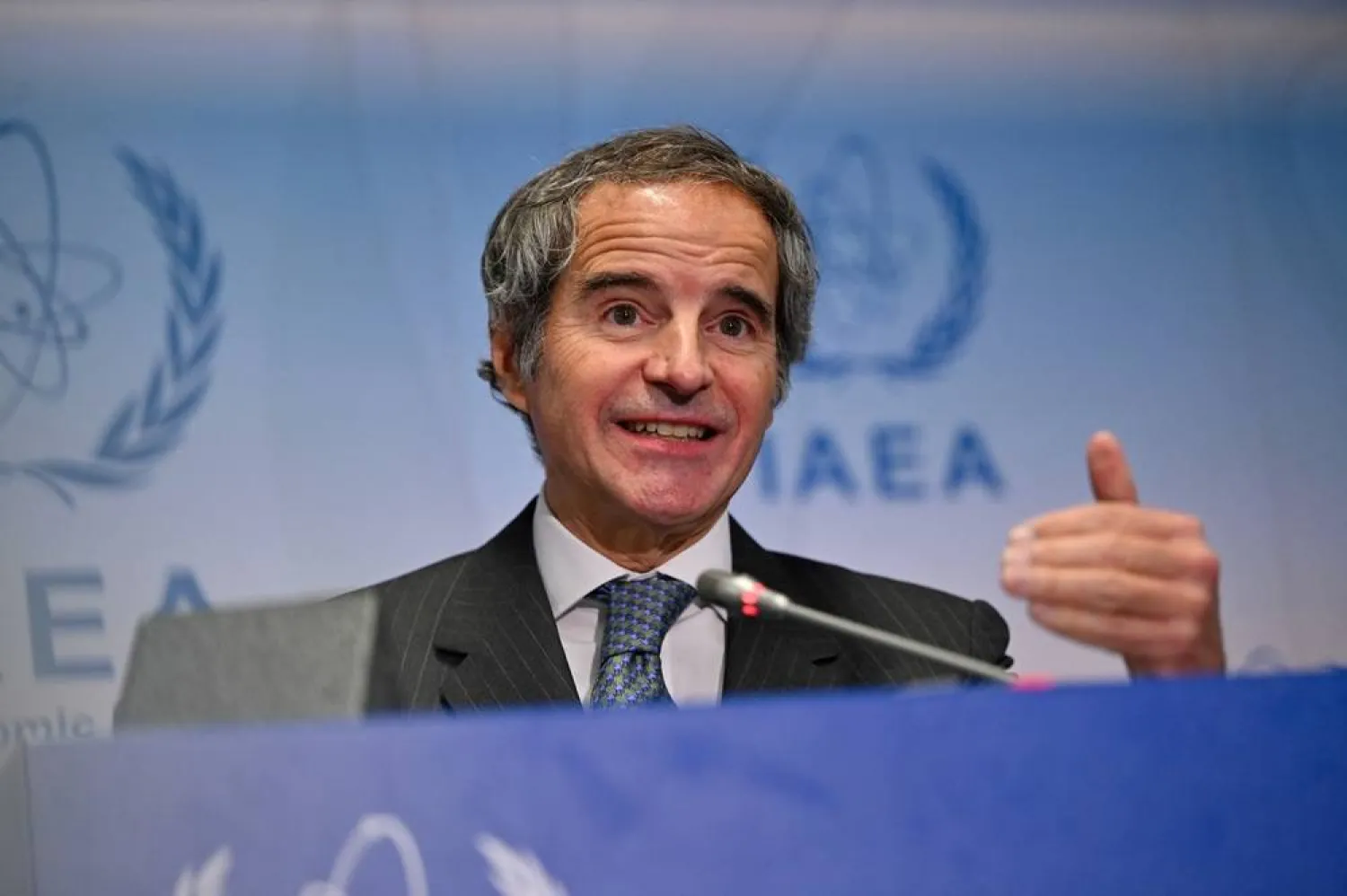

UN nuclear watchdog chief Rafael Grossi on Monday defended as an "extraordinary exception" his decision to send staff through Russian territory to relieve colleagues based at the Russian-occupied Zaporizhzhia nuclear power plant in Ukraine.
The International Atomic Energy Agency (IAEA) has had a small monitoring presence at the plant, Europe's biggest nuclear power station, since September 2022, roughly six months after Russia launched its full-scale invasion of Ukraine. It has rotated, or replaced, its staff there 26 times since then.
Ukraine's energy minister sent Grossi a letter saying the latest rotation, which for the first time happened through Russian territory, was "in violation of Ukraine's sovereignty", the Ukrainian energy ministry said on Monday.
Russia had deliberately prevented the rotations and the latest one happened without Ukraine's consent, Energy Minister German Galushchenko said. Ukraine's foreign ministry also objected to the move over the weekend.
Both Ukraine and the IAEA consider the plant to be Ukrainian.
"This is really and solely driven by the necessity to protect the lives of those who are working there," Grossi told a news conference.
The team that was replaced over the weekend had been there since Dec. 10, far longer than usual. During that December rotation, a drone attacked an IAEA car, destroying the back of it but causing no injuries. Grossi called it unacceptable at the time without saying who was behind it.
Russia and Ukraine blame each other for drone attacks and other military activity at Zaporizhzhia.
"What happened now is an extraordinary circumstance driven by the impossibility to conduct a rotation in a secure manner," Grossi said, adding that he had informed Ukrainian officials including President Volodymyr Zelenskiy.
"I think reading more into that is not a good idea, because the only thing that has led us to this extraordinary exception, to do the rotation in this way, is that I am responsible for the security of my staff."