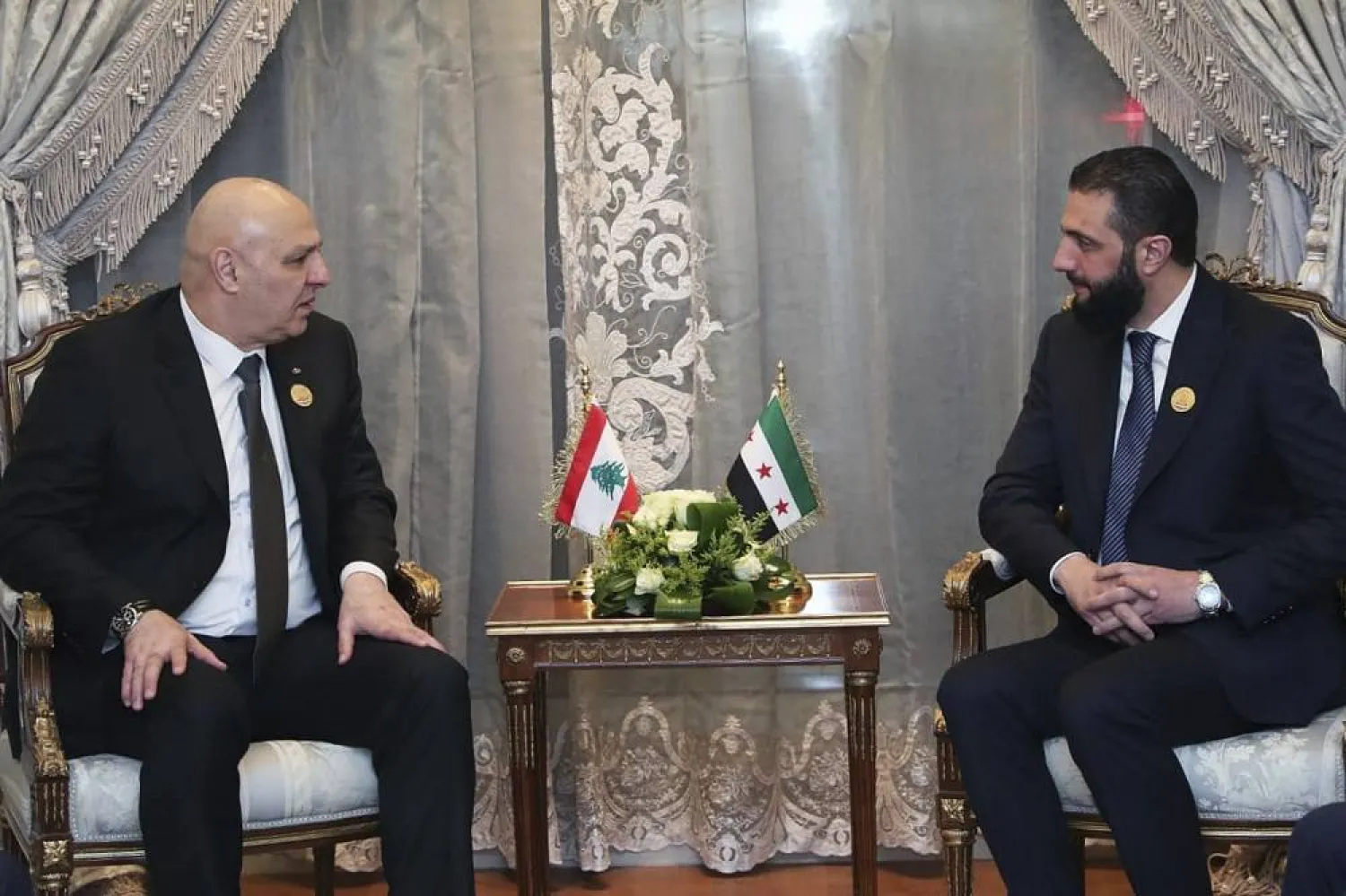

Lebanese President Jospeh Aoun held talks on Tuesday with Syria’s interim President Ahmed al-Sharaa on the sidelines of the emergency Arab summit in Cairo.
They discussed several pending issues between their countries and "agreed to coordinate through joint committees that will be established after the formation of the new Syrian government," said a Lebanese Presidency statement.
They also stressed the need to control the border between their countries to "prevent all kinds of violations."
Syria shares a 330-kilometer (205-mile) border with Lebanon, with no official demarcation at various points, rendering it porous and prone to smuggling.
Syria and Lebanon have a fraught history of conflict and violence, with the ouster in December of President Bashar al-Assad after five decades of rule by his clan, offering an opening for a new start.
Aoun’s January 9 election ended a two-year-long presidential vacuum in Lebanon, after Hezbollah, long the country’s dominant force, suffered staggering losses in a war with Israel.
Hezbollah also lost its key supply route from backer Iran through Syria after Sharaa’s Hayat Tahrir al-Sham (HTS) opposition group ousted Assad.
Sharaa then became Syria’s interim president.
While Aoun and Sharaa had spoken by phone in February, Tuesday marked their first in-person meeting.
Syria’s new authorities announced last month the launch of a security campaign in the border province of Homs, aimed at shutting down arms and goods smuggling routes.
They accused Hezbollah of launching attacks, saying it was sponsoring cross-border smuggling gangs.
According to the Syrian Observatory for Human Rights war monitor, the security campaign targeted drug smugglers and operators from the area with links to Hezbollah.
Hezbollah fought side by side with Assad’s troops after intervening in the Syrian civil war, which the ousted leader sparked by cracking down on democracy protests in 2011.
Israeli withdrawal
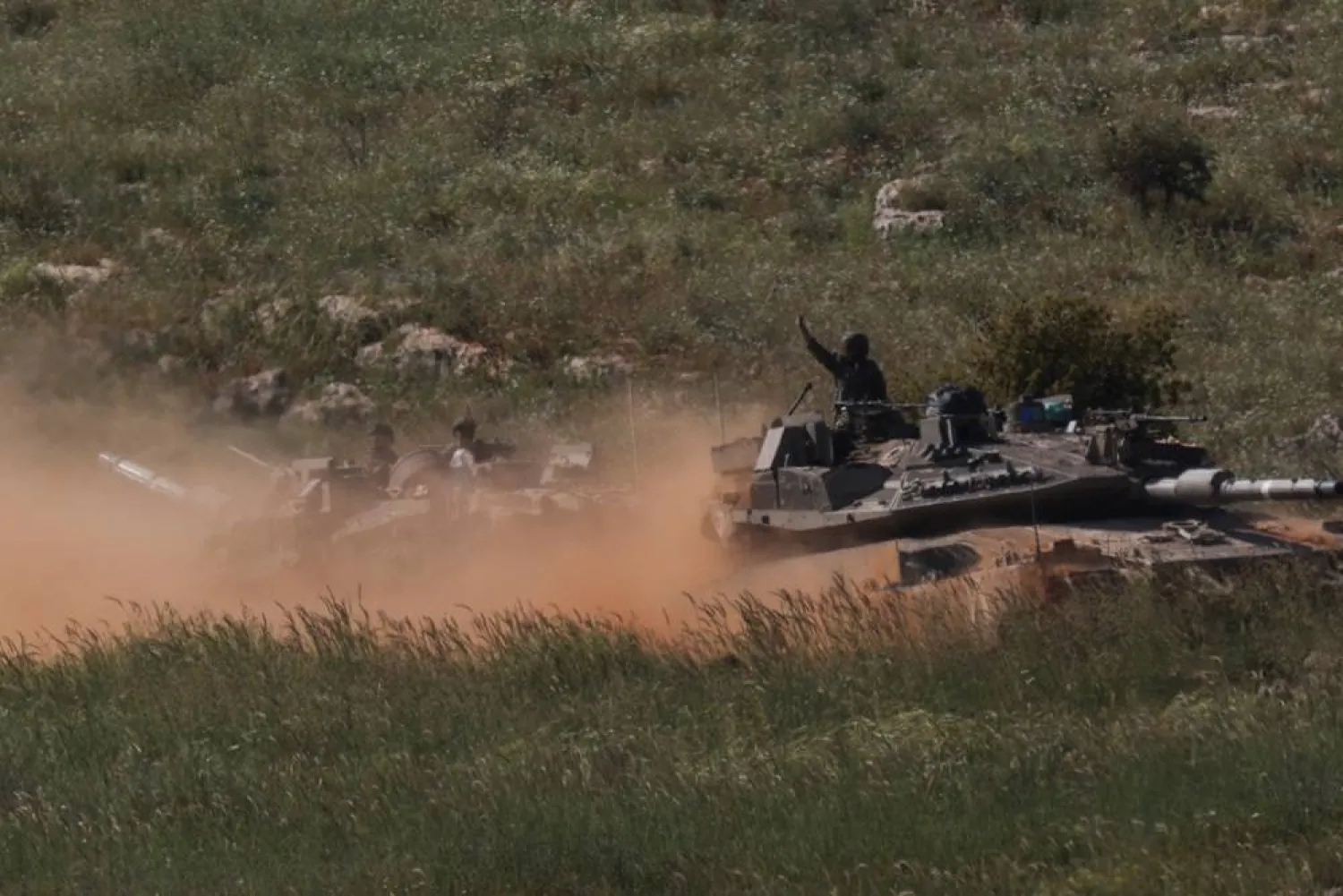
At the summit, Sharaa urged the international community to pressure Israel to "immediately" withdraw from southern Syria, condemning its attacks that have targeted his country’s security and stability.
The "hostile (Israeli) expansion is not only a violation of Syrian sovereignty, but also a direct threat to security and peace in the entire region", he said.
Israeli Prime Minister Benjamin Netanyahu last month demanded "the complete demilitarization of southern Syria" and said his country would not accept the new Syrian authorities to be present there.
Sharaa was attending his first Arab summit since ousting President Bashara al-Assad nearly three months ago.
The Syrian presidency published images of Sharaa meeting with senior officials including United Nations Secretary-General Antonio Guterres, Palestinian President Mahmud Abbas and European Union chief Antonio Costa on the sidelines of the summit.
Guterres and Sharaa "exchanged views about the historic opportunity to chart a new course for Syria as well as the challenges facing the country", according to the UN.
The United Nations envoy for Syria Geir Pedersen in a statement strongly condemned Israel's "military escalations" including air strikes" on its northern neighbor.
Under Assad, Syria was suspended from the Arab League over his deadly 2011 crackdown on pro-democracy protests which spiraled into a devastating civil war.
A UN Security Council committee approved a travel ban exemption for Sharaa, enabling him to visit Egypt for Tuesday's summit despite his inclusion on a sanctions list.
The meeting was called in response to a widely criticized proposal by President Donald Trump for the United States to take over Gaza and force its Palestinian inhabitants to relocate to Egypt or Jordan.
Sharaa has called Trump's proposal "a very huge crime that cannot happen".