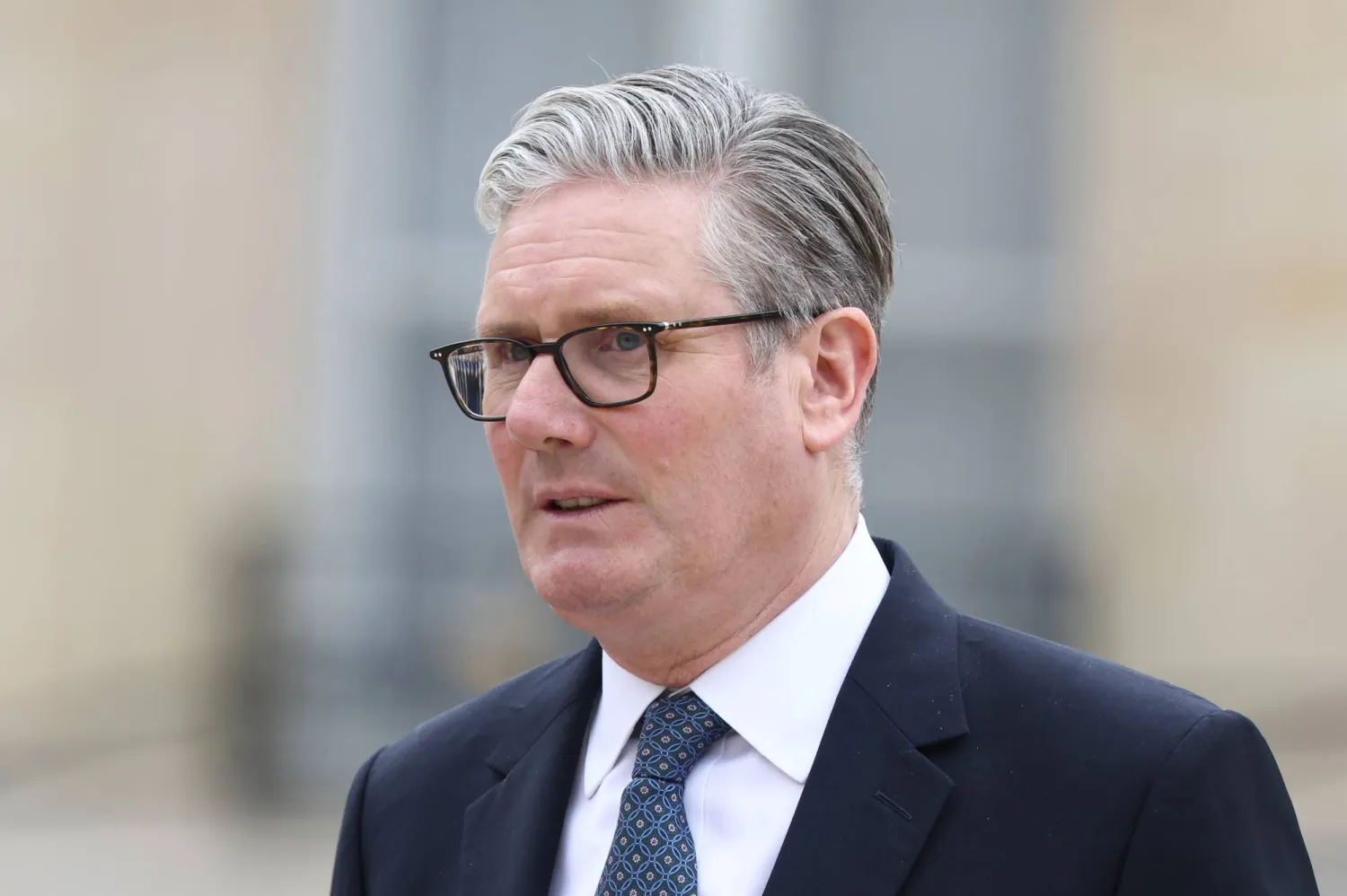
British Prime Minister Keir Starmer on Friday resisted demands he resign over revelations that his scandal-tainted pick for UK ambassador to Washington was appointed despite failing security checks.
Starmer says he was not informed that the Foreign Office had overruled the recommendation of security officials in early 2025 not to give Peter Mandelson the job. Many considered Mandelson a risky appointment because of his past friendship with convicted sex offender Jeffrey Epstein and alleged business links to Russia and China.
Starmer said he was “absolutely furious” that he had been kept in the dark, calling it staggering” and “unforgivable.” He said he would “set out all the relevant facts in true transparency” to Parliament on Monday.
The top Foreign Office civil servant, Olly Robbins, took the fall for the decision and resigned.
The prime minister's job has been endangered by his fateful decision to appoint Mandelson, a trade expert and elder statesman of the governing Labour Party, as envoy to the Trump administration. It was a calculated risk that backfired spectacularly, and could bring down the prime minister.
Opposition politicians expressed disbelief that Starmer could have been unaware Mandelson had failed security vetting. Starmer said he only found out on Tuesday of this week.
Darren Jones, the chief secretary to the prime minister, said Friday that “the recommendation was to not appoint Peter Mandelson to the role,” and that the Foreign Office ignored it. He said that was “astonishing,” but within the rules.
He said no government minister had been told of the security assessment. People familiar with the process said that is standard practice because of the sensitive personal information involved.
Jones said the checks, carried out by a department known as UK Security Vetting, “go through financial, personal, sexual, religious and other types of background information, and that is why it is kept extremely private on a portal that only a few people have access to.”
Opposition Conservative Party leader Kemi Badenoch said claims the prime minister didn’t know were “completely preposterous.”
“This story does not stack up. The prime minister is taking us for fools,” she told the BBC. “All roads lead to a resignation.”
Ed Davey, the leader of the centrist Liberal Democrats, said Starmer “must go” if he misled Parliament and lied to the British public. The Lib Dems asked the prime minister's ethics adviser to investigate whether Starmer broke the government code of conduct by misleading Parliament.
Starmer has repeatedly insisted that “due process” was followed in the appointment, which was announced in December 2024. Mandelson took up the Washington post in February 2025, after undergoing security vetting.
Mandelson had known Epstein links
Mandelson’s expertise as a former European Union trade chief was considered a major asset in trying to persuade the Trump administration not to slap heavy tariffs on British goods, and seemed to pay off when the countries struck a trade deal in May 2025.
But documents released by the government in March, after being forced by Parliament, showed Starmer ignored red flags raised by his staff about the appointment. He was warned that Mandelson’s friendship with Epstein, who died in prison in 2019, exposed the government to “reputational risk.”
Starmer fired Mandelson in September 2025 after evidence emerged that he had lied about the extent of his links to Epstein.
The release of millions of pages of Epstein-related documents by the US Department of Justice in January reveled more and showed Mandelson’s relationship with the financier continued even after Epstein’s conviction in 2008 for sexual offenses involving a minor.
Emails suggested Mandelson had passed on sensitive, and potentially market-moving, government information to Epstein in 2009 after the global financial crisis.
British police subsequently launched a criminal probe. Mandelson was arrested on Feb. 23 on suspicion of misconduct in public office.
He has been released without bail conditions as the police investigation continues. Mandelson has previously denied wrongdoing and hasn’t been charged. He does not face allegations of sexual misconduct.
King Charles III’s brother, Andrew Mountbatten-Windsor, formerly known as Prince Andrew, is also under police investigation over his friendship with Epstein. He, too, has been arrested but not charged.
Starmer's recent setbacks
The prime minister has apologized to the British public and to Epstein’s victims for believing what he has termed “Mandelson’s lies.”
The Mandelson revelations are among a string of setbacks Starmer has faced since he led the Labour Party to a landslide election victory in July 2024. He has struggled to deliver promised economic growth, repair tattered public services and ease the cost of living, and has been beset by missteps and U-turns.
The prime minister defused a potential crisis in February, when some Labour lawmakers called for him to resign over the Mandelson appointment. But he could face a leadership challenge after local and regional elections on May 7, in which Labour is expected to do badly.
Despite his struggles on the homefront, Starmer has been praised for his work on the world stage. He has played a key role in maintaining European support for Ukraine and was in Paris on Friday to host a summit alongside French President Emmanuel Macron on reopening the Strait of Hormuz, the oil shipping route choked off by the US-Israeli war on Iran.