US Weighing in on Lebanon's Next Central Bank Chief

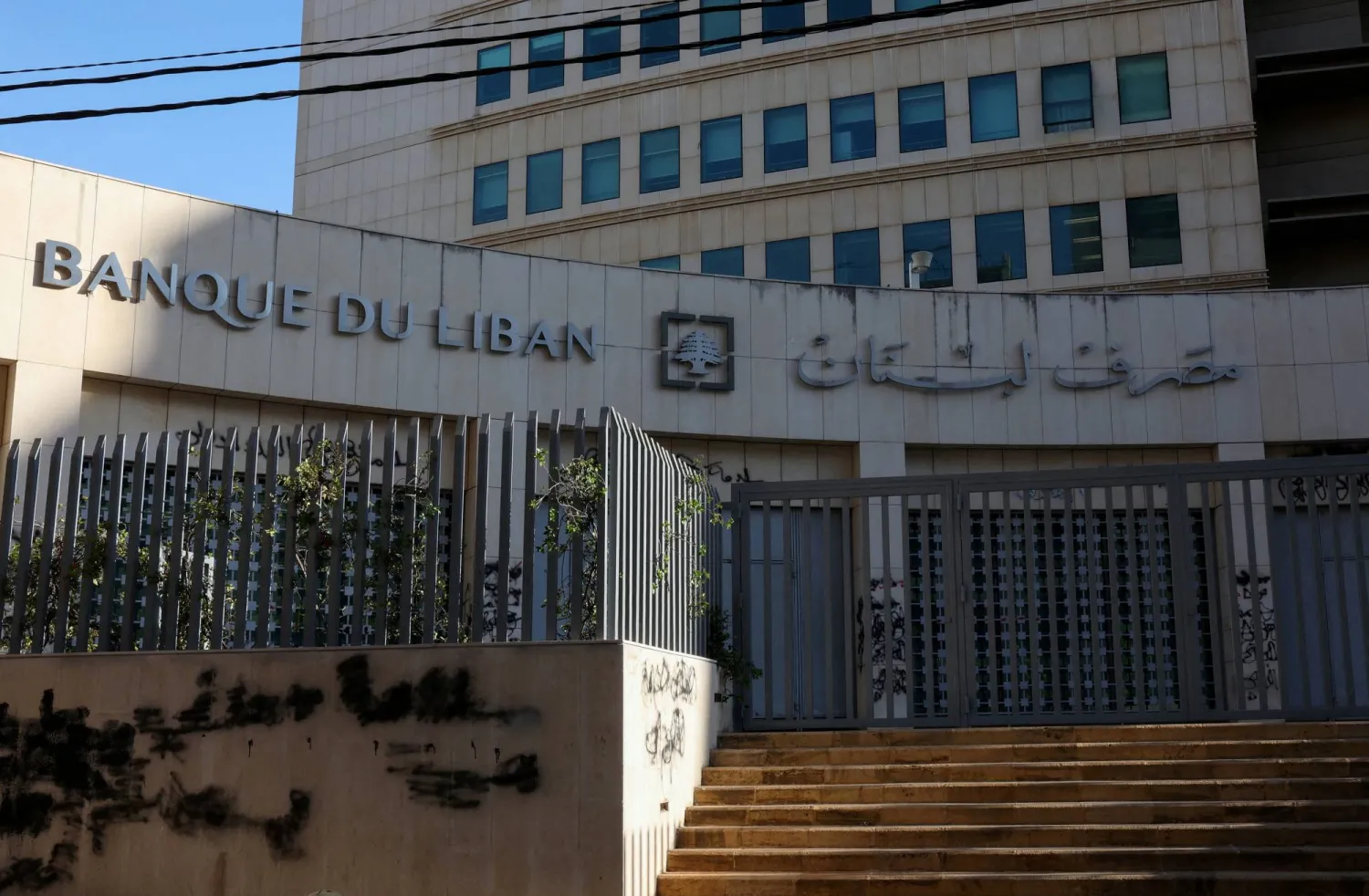
FILE PHOTO: A view shows Lebanon's Central Bank building in Beirut, Lebanon September 3, 2024. REUTERS/Mohamed Azakir/File Photo
TT

US Weighing in on Lebanon's Next Central Bank Chief

FILE PHOTO: A view shows Lebanon's Central Bank building in Beirut, Lebanon September 3, 2024. REUTERS/Mohamed Azakir/File Photo

The US is weighing in with Lebanon's government on the selection of the country's next central bank governor in a bid to curtail corruption and illicit financing for armed group Hezbollah through Lebanon's banking system, five sources familiar with the issue said.
Washington's feedback on the candidates for the top role in shaping Lebanon's monetary policy is the latest example of the US' unusually hands-on approach to the Middle Eastern country, where a more than five-year financial crisis has collapsed the economy. It also demonstrates the US' continued focus on weakening Hezbollah, the Iran-backed group whose sway over the Lebanese government has been reduced after the group was pummeled by Israel in last year's war. Since then, Lebanon has elected US-backed Joseph Aoun as president, and a new cabinet without a direct role for Hezbollah has taken power. That government must now fill vacant posts - including at the central bank, run by an interim governor since July 2023. The US is reviewing the profiles of a handful of candidates for the role, according to three Lebanese sources briefed on the issue, one Western diplomat and an official from US President Donald Trump's administration.
The sources spoke to Reuters on condition of anonymity to discuss Washington's role in the selection process, the details of which have not been previously reported.
US officials met with some potential candidates in Washington and at the US embassy in Lebanon, two of the Lebanese sources and the Trump administration official said.
The Lebanese sources, who were briefed on the meetings, said the US officials asked candidates questions, including how they would fight "terrorist financing" through Lebanon's banking system and if they were willing to confront Hezbollah.
The State Department, White House and the offices of Lebanon's president and prime minister did not immediately respond to requests for comment.
The Trump administration official said the meetings were part of "normal diplomacy" - but said the US was making its guidance on candidates' qualifications clear to the Lebanese government.
"The guidelines are, no Hezbollah and nobody who has been caught up in corruption. This is essential from an economic perspective," the official told Reuters.
"You need somebody who is going to implement reform, demand reform, and refuse to look the other way whenever people try to do business as usual in Lebanon," the official said.
MAJOR ROLE IN REFORM
The Lebanese sources said the candidates being seriously considered included former minister Camille Abousleiman, Firas Abi-Nassif, head of an investment firm, and Philippe Jabre and Karim Souaid, both heads of their own asset management firms.
The next governor will play a major part in any economic and financial reforms, which Aoun and Prime Minister Nawaf Salam have pledged to prioritize to help Lebanon emerge from a devastating financial meltdown that began in 2019.
Triggered by widespread corruption and profligate spending by the governing political elite, the economic crisis impoverished most Lebanese, demolished the Lebanese pound and brought the banking system to a standstill. Lebanon's new government is looking to resume talks with the International Monetary Fund for a financing program, but the reforms remain a prerequisite. Western and Arab countries have also set reforms as a condition to provide any reconstruction support to Lebanon, large swathes of which were left in ruins by Israel's military campaign last year.
The incoming governor would replace interim chief Wassim Mansouri, who has been overseeing the bank since the 30-year tenure of longtime head Riad Salameh ended in disgrace in 2023.
Through most of his time as central bank chief, Salameh was feted as a financial wizard and enjoyed the backing of the US, which has a keen interest in the position because it oversees Lebanon's broader banking system and helps keep it compliant with US laws preventing the financing of groups designated as "terrorist" factions, including Hezbollah.
But Lebanon's financial collapse tainted Salameh's legacy. A month after he left office in 2023, Salameh was sanctioned by the United States, Britain and Canada, which accused him of corrupt actions to enrich himself and his associates, and is facing charges of financial crimes in Lebanon and abroad. Last year, Lebanon was placed on a financial watchdog's "grey list" after failing to address concerns about terrorism financing and money laundering through its financial system.



Israel Calls Countries Condemning New West Bank Settlements ‘Morally Wrong’

Newly constructed buildings are pictured in the Israeli settlement of Givat Zeev near the Palestinian city of Ramallah in the occupied West Bank on October 24, 2025. (AFP)
TT

Israel Calls Countries Condemning New West Bank Settlements ‘Morally Wrong’

Newly constructed buildings are pictured in the Israeli settlement of Givat Zeev near the Palestinian city of Ramallah in the occupied West Bank on October 24, 2025. (AFP)

Israel reacted furiously on Thursday to a condemnation by 14 countries including France and Britain of its approval of new settlements in the occupied West Bank, calling the criticism discriminatory against Jews.

"Foreign governments will not restrict the right of Jews to live in the Land of Israel, and any such call is morally wrong and discriminatory against Jews," Foreign Minister Gideon Saar said.

"The cabinet decision to establish 11 new settlements and to formalize eight additional settlements is intended, among other things, to help address the security threats Israel is facing."

On Sunday, Israel's far-right Finance Minister Bezalel Smotrich announced that authorities had greenlit the settlements, saying the move was aimed at preventing the establishment of a Palestinian state.

Fourteen countries, including Britain, France, Germany, Spain and Canada, then issued a statement urging Israel to reverse its decision, "as well as the expansion of settlements".

Such unilateral actions, they said, "violate international law", and risk undermining a fragile ceasefire in Gaza in force since October 10.

They also reaffirmed their "unwavering commitment to a comprehensive, just and lasting peace based on the two-state solution... where two democratic states, Israel and Palestine, live side-by-side in peace and security".

Israel has occupied the West Bank following the 1967 Arab-Israeli war.

Excluding east Jerusalem, which was occupied and annexed by Israel in 1967, more than 500,000 Israelis live in the West Bank, along with about three million Palestinian residents.

Earlier this month, the United Nations said the expansion of Israeli settlements in the West Bank, all of which are illegal under international law, had reached its highest level since at least 2017.


Iraq Criminalizes Volunteering in Russia-Ukraine War

A photo circulated on social media shows a 24-year-old Iraqi who traveled to Russia to join its armed forces. (AFP)
TT

Iraq Criminalizes Volunteering in Russia-Ukraine War

A photo circulated on social media shows a 24-year-old Iraqi who traveled to Russia to join its armed forces. (AFP)

The Iraqi judiciary warned on Wednesday that people involved in the war between Russia and Ukraine will face jail as it attempts to crack down on the recruitment of Iraqis joining the conflict.

Faiq Zidan, the head of Iraq's Supreme Judicial Council, received on Wednesday National Security Advisor Qasim Al-Araji and members of a committee tasked with combating the recruitment of Iraqis.

Zaidan stressed that Iraq criminalizes any Iraqi who joins the armed forces of another nation without the approval of the government.

The judiciary does not have a fixed prison term for anyone accused of the crime, but a court in Najaf last week sentenced to life an Iraqi accused of human trafficking.

He was convicted of belonging to an international criminal gang that recruits Iraqis to fight for Russia in its war against Ukraine.

In November, Prime Minister Mohammed Shia al-Sudani ordered the formation of a committee, headed by Araji, to crack down on the recruitment of Iraqis to fight for the Russian and Ukrainian militaries.

Iraq does not have official figures detailing how many of its citizens have joined the war. Media reports said some 50,000 Iraqis have joined Russian ranks, while unofficial figures put the number at around 5,000, with 3,000 fighting for Russia and 2,000 for Ukraine.

The debate over the recruitment played out over the media between the Russian and Ukrainian ambassadors to Iraq.

Ukrainian Ambassador Ivan Dovhanych accused Russia of recruiting Iraqis. Last week, the Ukrainian government sent a letter to the Iraqi government about the recruitment.

It hailed Baghdad’s criminalization of such activity. The letter also revealed that Ukrainian authorities had arrested an Iraqi who was fighting for Russia.

Ukraine has denied that it has recruited Iraqis to join the conflict, but reports indicate otherwise.

Meanwhile, Russian Ambassador to Baghdad Elbrus Kutrashev acknowledged that Iraqi fighters had joined the Russian army.

Speaking to the media, he declined to give exact figures, but dismissed claims that they reached 50,000 or even 5,000, saying instead they number no more than a few hundred.

He confirmed that Iraqis had joined the Russian army and “that some four to five had lost their lives”.

He revealed that the Russian embassy in Baghdad had granted visas to Russia to the families of the deceased on humanitarian grounds.

Russian law allows any foreign national residing in Russia and who speaks Russian to join its army with a salary of around 2,500 to 3,000 dollars.

There have been mounting calls in Iraq for the authorities to crack down on human trafficking gangs.

Would-be recruits are often lured by the monthly salary and the possibility of gaining the Russian or Ukrainian nationality.

Critics of the authorities have said Iraqi youths are lured to join foreign wars given the lack of job opportunities in Iraq.


Somalia's Capital Votes in First Step toward Restoring Universal Suffrage

Members of the Justice and Solidarity Party (JSP) campaign in the streets as they share their political aims with voters in Mogadishu, Somalia, 22 December 2025. EPA/SAID YUSUF WARSAME
TT

Somalia's Capital Votes in First Step toward Restoring Universal Suffrage

Members of the Justice and Solidarity Party (JSP) campaign in the streets as they share their political aims with voters in Mogadishu, Somalia, 22 December 2025. EPA/SAID YUSUF WARSAME

Residents of Somalia's capital Mogadishu will vote on Thursday in municipal elections meant to pave the way for the East African country's first direct national polls in more than half a century.

With the exception of votes in the semi-autonomous region of Puntland and the breakaway region of Somaliland, Somalia last held direct elections in 1969, months before military general, Mohamed Siad Barre, took power in a coup, Reuters said.

After years of civil ‌war that ‌followed Barre's fall in 1991, indirect elections ‌were ⁠introduced in ‌2004. The idea was to promote consensus among rival clans in the face of an armed insurgency, although some Somalis say politicians prefer indirect elections because they create opportunities for corruption.

Under the system, clan representatives elect lawmakers, who then choose the president. The president, in turn, has been responsible for appointing Mogadishu's mayor.

The vote in Mogadishu, a ⁠city of some 3 million people where security conditions have improved in recent years ‌despite continuing attacks by al Qaeda-linked al ‍Shabaab militants, is seen as ‍a test run for direct elections at the national level.

Around ‍1,605 candidates are running on Thursday for 390 posts in Mogadishu's district councils, said Abdishakur Abib Hayir, a member of the National Electoral Commission. Council members will then choose a mayor.

"It shows Somalia is standing on its feet and moving forward," Hayir told Reuters. "After the local election, elections can and will take place in ⁠the entire country."

A 2024 law restored universal suffrage ahead of federal elections expected next year. However, President Hassan Sheikh Mohamud reached a deal in August with some opposition leaders stipulating that while lawmakers would be directly elected in 2026, the president would still be chosen by parliament.

Opposition parties have argued the rapid introduction of a new electoral system would benefit Mohamud's re-election prospects.

They also question whether the country is safe enough for mass voting given al Shabaab's control over vast areas of the countryside and regular strikes ‌on major population centers.