After 25 years in Saudi Arabia, Intel no longer views the local market in terms of processor demand or the number of users.
Instead, it is looking more closely at what is being built inside the Kingdom: artificial intelligence applications moving into production, locally assembled servers reaching regional markets, and Saudi talent shifting from using technology to developing it.
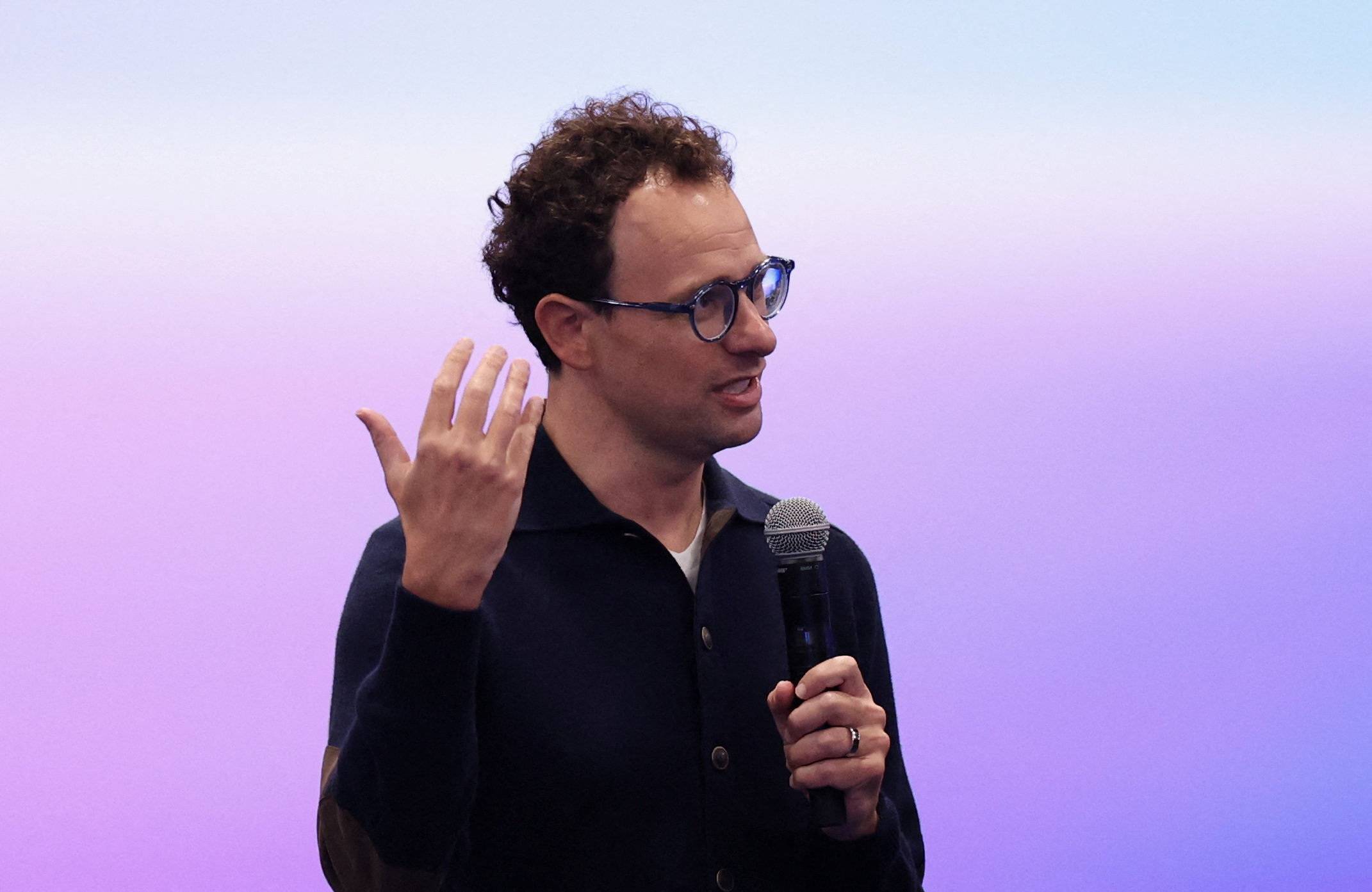
Taha Khalifa, Intel’s general manager for the Middle East and Africa, summed up that shift in an exclusive interview with Asharq Al-Awsat on the sidelines of the LEAP 2026 conference, saying the Kingdom’s relationship with technology had changed fundamentally.
Two decades ago, discussions largely centered on deploying technologies developed abroad. Today, the focus has shifted toward co-development in Saudi Arabia, involving Saudi engineers, local data and priorities linked to Vision 2030.
For Intel, the next phase will not be measured by the number of agreements or pilot projects, but by what actually reaches the market.
Over the next 12 to 24 months, the company says it wants to see solutions move from testing into production, clear figures from skills-development programs and early signs that computing infrastructure manufactured in Saudi Arabia is being exported to regional markets.
Among its programs, the Intel AI Digital Readiness initiative aims to reach 100,000 beneficiaries by 2030.
From Technology Supplier to Part of the Innovation Cycle
This change is directly reflected in the role Intel is seeking to play in the Saudi market. Rather than limiting itself to providing processors and ready-made solutions, the company says it is becoming involved at earlier stages of the innovation cycle, including designing technical architecture, optimizing models, enabling local developers and testing solutions before deployment.
Khalifa said partnerships in the Kingdom were no longer limited to supplying products, but had expanded to include co-development, local manufacturing, skills development and linking technology to the needs of priority sectors.
Intel sees this as moving the company from an external supplier to a more integrated local innovation ecosystem.
That approach is reflected in the Saudi Made, Developed, Deployed initiative launched by Intel, Hewlett Packard Enterprise and the Ministry of Communications and Information Technology during LEAP 2026, hosted in Riyadh late last month.
The initiative brings together locally assembled servers powered by Intel Xeon 6 processors, Saudi-developed software and local talent to accelerate the development and validation of solutions before moving them toward commercial use.
Khalifa said the real test begins after development. The next stage requires selecting use cases in priority sectors, testing their technical and commercial viability, and then expanding their deployment across more companies.
Success, he said, will not be measured by the number of solutions developed, but by how many achieve sustainable commercial use.
Vision 2030 and Digital Sovereignty
Intel links these initiatives directly to the goals of Vision 2030, not only through technology localization, but also by connecting local manufacturing, skills development and technological innovation with economic diversification, stronger digital sovereignty and the creation of technology sectors capable of competing regionally and globally.
For the company, localization therefore means more than establishing production lines in the Kingdom. It also means building the capacity to develop local solutions, operate them commercially and then expand them beyond the Saudi market.
The same rationale underpins the planned Saudi Innovation Center in Riyadh. Khalifa identified three measures of its success: the number of solutions that move from testing to commercial deployment; the number of local companies and developers that use it to develop their products; and the ability of solutions hosted there to scale within Saudi Arabia and beyond.
From Local Production to Regional Exports
On the manufacturing side, HPE has begun producing Xeon 6-powered servers in Riyadh to meet demand in Saudi Arabia and some regional markets. Khalifa said local production was only the first step.
Building a stable export base would require sustained domestic demand to deliver economies of scale, as well as confidence in regional markets.
Early indicators are positive, he said, and if the current momentum continues, Saudi Arabia could become a regional hub for manufacturing advanced computing infrastructure in the coming years.
Khalifa also placed Lenovo’s unveiling of its first laptop manufactured in Saudi Arabia at LEAP 2026 within the same trend.
The company plans to expand local production in the coming months to include desktop computers, workstations and servers, supporting AI growth in Saudi Arabia, the Middle East and Africa.
Computing Capacity Is Not the Only Bottleneck
Despite the rapid expansion of data centers and computing capacity dedicated to AI, Intel does not believe Saudi Arabia’s next challenge will necessarily be a shortage of raw computing power.
Khalifa identified two more decisive factors: developing applications that generate real economic value and having skilled people able to operate the available infrastructure and build solutions on top of it.
Large-scale computing capacity is not enough if industries cannot turn it into commercially viable applications, or if there is insufficient talent to operate systems and develop models and solutions.
Intel, therefore, links its infrastructure support to skills-building programs and the development of the local innovation ecosystem.
Energy Enters the Equation
As AI expands, energy efficiency is becoming increasingly important. Khalifa said the question was no longer only how much computing capacity was available, but how much of it could be operated efficiently within available energy resources.
Intel is conducting research with Think AI to explore heterogeneous computing and metrics such as tokens per watt, which the company expects to play a growing role in government and corporate decisions on AI infrastructure.
Arabic AI: Dialects and Cost
For Arabic-language models, including HUMAIN’s ALLaM, Intel says the challenge goes beyond understanding Modern Standard Arabic. Models must also accurately handle differences in dialect and cultural context, both among Arab countries and within individual countries.
Operational efficiency poses an additional challenge. Large language models require substantial computing resources, making better performance per watt and lower inference costs priorities if the goal is to move the models from limited experimental settings to broad, sustainable use.
Some Intelligence Is Moving From the Cloud to Devices
Intel expects a growing share of AI workloads in Saudi Arabia to shift from the cloud to personal and edge devices, particularly for use cases that require immediate responses or local processing of sensitive data.
Khalifa pointed to intelligent assistants, document processing, meetings and cybersecurity applications as likely candidates for this shift.
Public safety and financial services also stand out because they require faster, local data processing. Intel’s collaboration with Mobily and iOmniscient on AI-powered video analytics for safer, more responsive cities is an example of this type of application.
Stc and the Shift to Specific Use Cases
Intel’s collaboration with stc Group is taking a similar path. A memorandum of understanding between the two companies covers the exploration of AI PCs, edge AI and hybrid AI, as well as next-generation data center infrastructure with improved energy efficiency.
The next stage begins with identifying clear use cases, including network analytics, predictive maintenance and local intelligent assistants, with the aim of improving productivity and business environments.
Khalifa said the biggest opportunity lay in enterprise AI. Given stc’s broad customer base and infrastructure, the company could become a channel for deploying AI solutions at scale across multiple sectors.