Bodour Al Qasimi Becomes 1st Woman from the Gulf to Win BolognaRagazzi Awardhttps://english.aawsat.com/culture/5128613-bodour-al-qasimi-becomes-1st-woman-gulf-win-bolognaragazzi-award
Bodour Al Qasimi Becomes 1st Woman from the Gulf to Win BolognaRagazzi Award
Sheikha Bodour Al Qasimi received the prize for her groundbreaking children's book ‘House of Wisdom’ (WAM)
Emirati publisher, author, and women’s advocate Bodour Al Qasimi has made history by becoming the first woman from an Arab Gulf state to receive a prestigious BolognaRagazzi Award for Fiction, Emirates News Agency (WAM) reported on Thursday.
Sheikha Bodour Al Qasimi received the prize for her groundbreaking children's book ‘House of Wisdom’ at a ceremony in the impressive Farnese Chapel, at Palazzo d'Accursio, in Bologna, WAM said.
Reflecting on the honor, Sheikha Bodour said, “For me, this award signals a shift towards a more inclusive children's publishing sector. Amid heightened global tensions, stories like ‘House of Wisdom’ carry a message that books can occasion unity, progress, and a deeper understanding between cultures. It’s a timely statement about literature’s power to build bridges and keep the bigger human picture in view.”
“The House of Wisdom was a library that symbolized how knowledge and collaboration across cultures can build sturdy bridges. Its loss in 1258 is a tragic allegory for the fragility of intellectual freedom – a lesson of undiminished relevance today,” she added.
Feted for its engaging approach to encouraging critical thought, scientific curiosity, and compassion, the success of ‘House of Wisdom’ marks progress in international recognition of the value of Middle Eastern children's literature.
The book is illustrated by Majid Zakeri Younesi, whose evocative art provides a breathtaking complement to the story.
Red Sea Film Foundation Marks Record Presence in the Race for Oscars with 12 Supported Filmshttps://english.aawsat.com/culture/5331605-red-sea-film-foundation-marks-record-presence-race-oscars-12-supported-films
Red Sea Film Foundation Marks Record Presence in the Race for Oscars with 12 Supported Films
A record 12 Red Sea Film Foundation-supported films have entered the race for Best International Feature Film at the 99th Academy Awards, representing 12 countries across Saudi Arabia, the Arab world, Africa and Asia.
Eleven have been selected as the official submissions of their respective countries: "A Matter of Life and Death, Roqia, Soumsoum, the Night of the Stars, The Stories, Guria, Four Seasons in Java, Sink, Strawberries, Ben’Imana, We Are All Strangers, and The Other Side of the Sun."
They are joined by Angh, which won the Platform Award at the 2026 Toronto International Film Festival. Under new Academy rules introduced for the 99th Academy Awards, the Platform Award winner is among a select group of international festival prize winners eligible to submit directly for consideration in the category, according to SPA.
CEO of the Red Sea Film Foundation Faisal Baltyuor said: “The Red Sea Fund backs a broad slate of films each year, and for twelve of them to reach the Oscars race is an extraordinary moment of pride for the Red Sea Film Foundation. For eleven, being chosen by their countries as the official submission is in itself a significant recognition of the filmmakers and their work, and a testament to the talent and the stories emerging from Saudi Arabia, the Arab world, Africa and Asia. It reflects the growing impact of our commitment to empowering filmmakers and championing their creative visions, from the earliest stages of development through to the international stage. It has been a privilege to be part of their journeys, and we wish them every success as they continue in the Academy Awards race.”
The milestone caps a strong year for Foundation-supported cinema across Cannes, Venice and Toronto. At TIFF 2026 the Foundation marked its largest presence at the festival with eight supported films, culminating in Angh’s Platform Award, while Ben’Imana — now Rwanda’s official submission — won the Caméra d’Or at Cannes earlier in the year.
The shortlist for Best International Feature Film will be announced on December 15, 2026, with nominations on January 21, 2027. The 99th Academy Awards take place on March 14, 2027, in Los Angeles.
22 Private Museums in Aseer Document Region's Cultural Heritagehttps://english.aawsat.com/culture/5331603-22-private-museums-aseer-document-regions-cultural-heritage
Nationwide, licensed private museums rose to 118 at the end of 2025, up 19 from 99 a year earlier, with Aseer accounting for about 18.6% of the total - SPA
22 Private Museums in Aseer Document Region's Cultural Heritage
Nationwide, licensed private museums rose to 118 at the end of 2025, up 19 from 99 a year earlier, with Aseer accounting for about 18.6% of the total - SPA
Aseer Region had 22 licensed private museums at the end of 2025, tying Makkah Region for the highest number in the Kingdom, ahead of Riyadh Region with 20 and Eastern Region with 17, according to the Ministry of Culture's State of Culture in Saudi Arabia 2025 report.
Established by individuals dedicated to collecting and preserving heritage, the museums hold agricultural tools, cooking and storage vessels, traditional weapons, coins, documents, attire, jewelry, and craft equipment, SPA reported.
Together they document the lives of people across the region's varied environments, from the Sarawat highlands to the Tihama foothills and the coast, each of which shaped distinct styles of housing, dress, tools, and crafts.
The museums also enrich Aseer's tourism offering, complementing its historical sites, heritage villages, and folk arts, and can be built into travel and cultural itineraries.
Nationwide, licensed private museums rose to 118 at the end of 2025, up 19 from 99 a year earlier, with Aseer accounting for about 18.6% of the total.
A survey of 39 private museums found that 41% hold between 100 and 5,000 items and another 41% have more than 10,000. However, about 60% have no website and 66% lack social media accounts, underscoring the need to strengthen their digital presence and widen public access.
Ghassan Salame to Asharq Al-Awsat: Lebanon’s War-Damaged Heritage Could Take a Generation to Restorehttps://english.aawsat.com/culture/5331415-ghassan-salame-asharq-al-awsat-lebanon%E2%80%99s-war-damaged-heritage-could-take-generation
Ghassan Salame to Asharq Al-Awsat: Lebanon’s War-Damaged Heritage Could Take a Generation to Restore
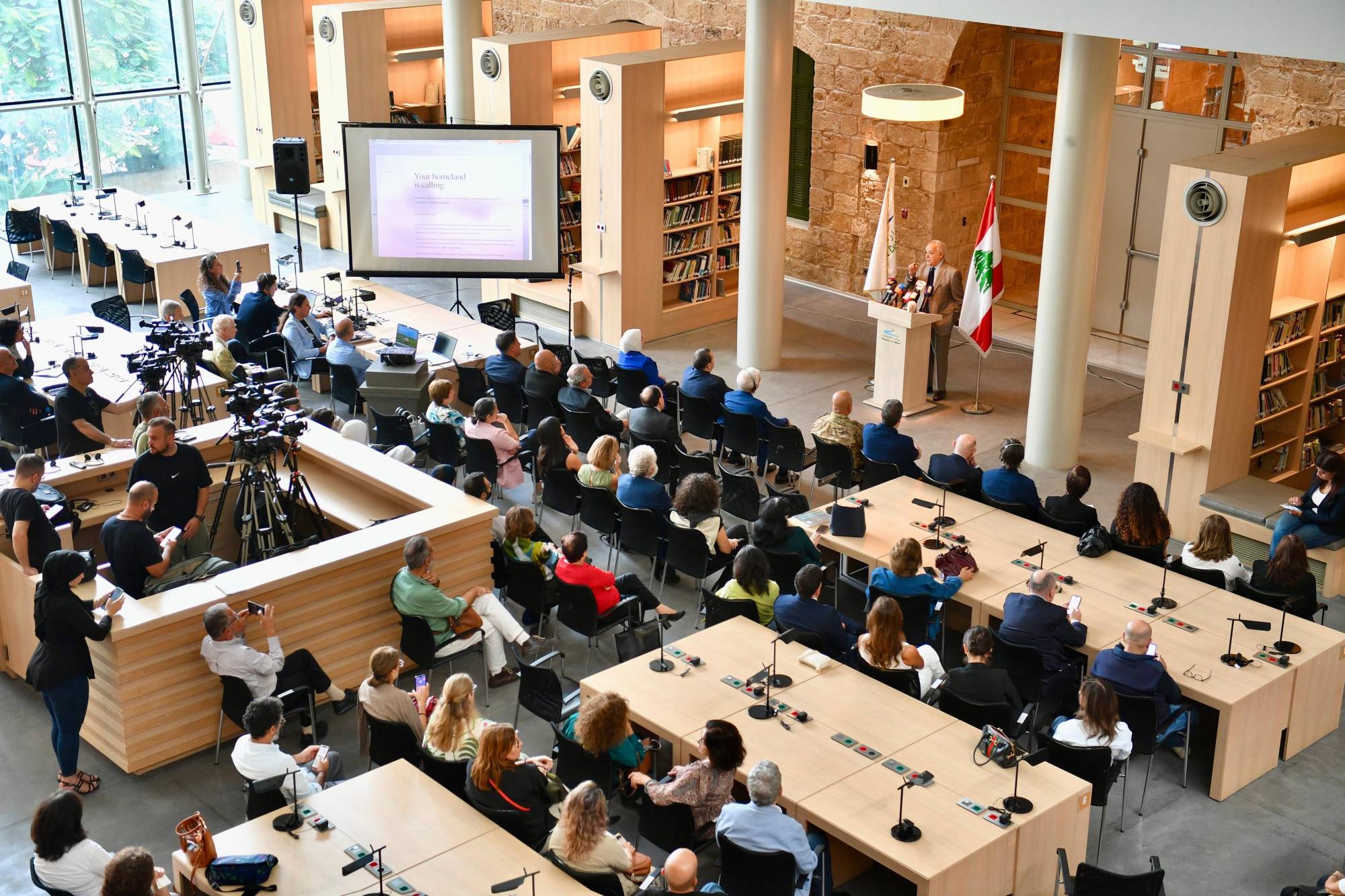
The platform was launched at the Lebanese National Library in Beirut. (Ministry of Culture)
Family photographs, home videos, letters, interviews and old songs are finding a new home in a digital archive created by Lebanon’s Culture Ministry to preserve personal memories as part of the country’s collective history.
Presented at the National Library, the “Archiving Lebanon’s Heritage” platform aims to build a global digital archive of Lebanon’s tangible and intangible heritage, including its natural and personal heritage, for future generations.
Developed by the ministry in partnership with the Heritage International Institute (HII) and other international organizations, the platform invites contributions from Lebanese at home and abroad, as well as anyone with accounts or records of the country’s past.
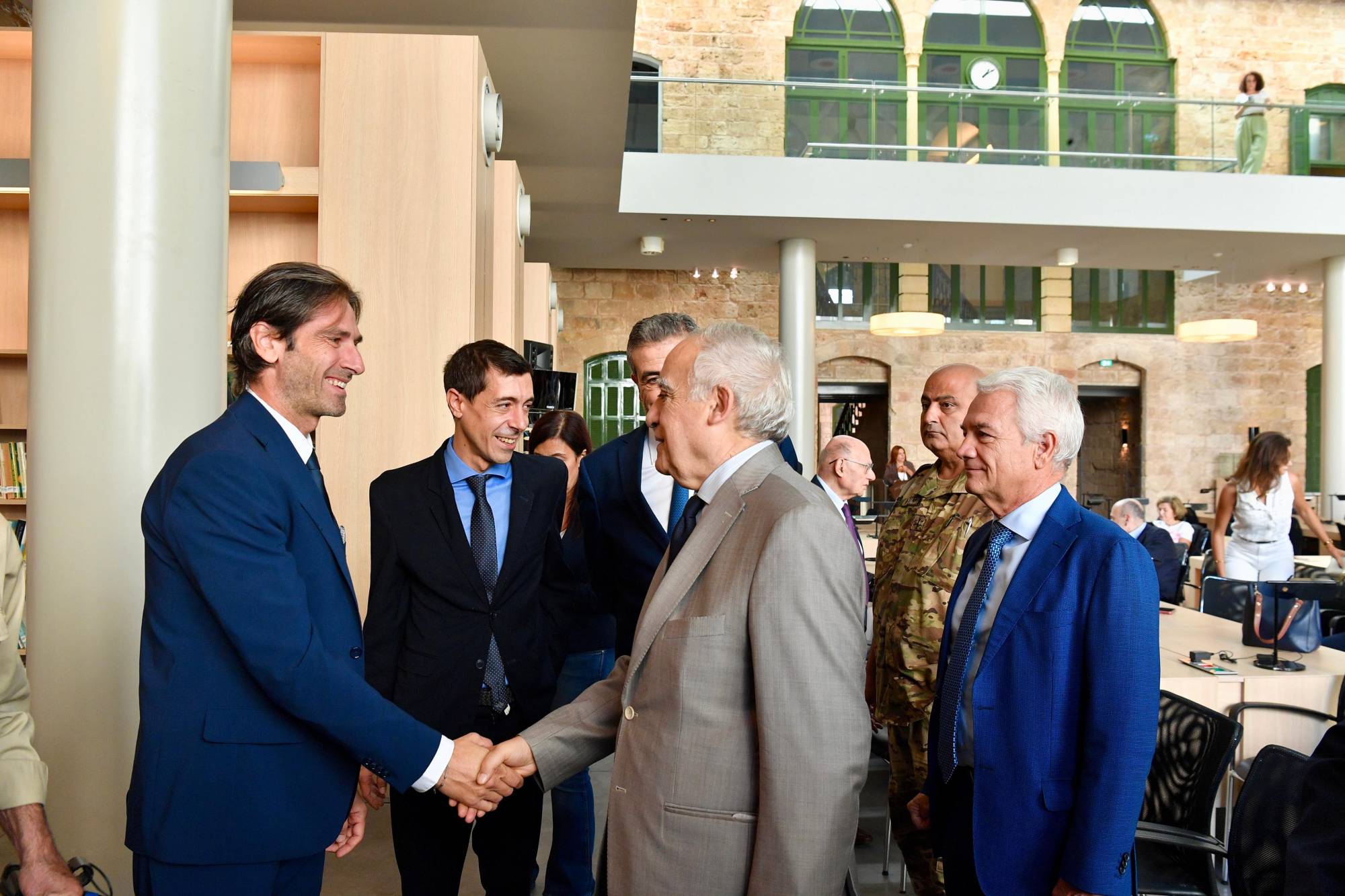
The initiative was unveiled in the presence of Culture Minister Ghassan Salame, Italian Ambassador Fabrizio Marcelli, HII President Sergio Iovino and Lebanon’s Director General of Antiquities Sarkis Khoury.
Salame with Italian Ambassador Fabrizio Marcelliat the launch ceremony. (Ministry of Culture)
Treasures hidden in Lebanese homes
Speaking to Asharq Al-Awsat, Salame explained that the latest war had damaged archaeological sites, historic markets and Lebanon’s tangible and intangible cultural heritage.
“I cannot put a precise figure on these losses. They certainly exceed millions of dollars, and restoring what was damaged could take an entire generation,” he noted.
The minister stressed that the war had affected all Lebanese in one way or another, describing its impact as “the theft of our intimate history, a history that is priceless.”
He stressed the importance of preserving existing heritage through modern technologies that can extend the lifespan of photographs, documents and other historical records.
Salame pointed out that private collections may contain materials more significant than those held by some public institutions.
While preparing the exhibition “Between the Lines of the Constitution” to mark the centenary of Lebanon’s Constitution, organizers discovered valuable documents preserved by families because a relative had held a particular position or worked in a field connected to them.
“These are treasures hidden in homes and within families,” Salame observed, stressing that the scale of these private collections should not be underestimated.
The platform accepts digital copies rather than originals. Contributors wishing to donate original documents can deposit them with the National Library for safekeeping. A written agreement protects contributors’ intellectual property rights, which remain exclusively theirs. They may also withdraw their materials from the platform at any time.
Lebanese Culture Minister Ghassan Salame delivers remarks at the event. (Ministry of Culture)
Contributors control access
Donors can decide how widely their submissions are shared, from keeping them in a completely private, protected archive to authorizing their publication.
Iovino described the initiative as providing the foundations for a “digital fortress” open to millions of Lebanese expatriates, as well as friends of Lebanon and people around the world.
Contributors, he stressed, retain full ownership of their memories and control over their accessibility.
Khoury urged Lebanese not to be discouraged by the heritage lost to war.
“Our story does not end with these losses or with the damage to our tangible and intangible heritage,” he told Asharq Al-Awsat. “We are the ones who create our heritage, as we have throughout history. Our memories help save what remains.”
Italy pledges continued support
Marcelli reaffirmed Italy’s commitment to preserving Lebanon’s cultural heritage, citing its involvement in restoring the Beirut National Museum and other museums damaged by the port explosion.
He also highlighted recent restoration work at the historic Mar Mikhael railway station, carried out in cooperation with UNESCO and the UN refugee agency.
Although these projects differ, they share a common goal: preserving historical evidence and making it accessible to the public. The new initiative, however, shifts the focus from monuments and institutions to the lives of individuals, families and communities.
Marcelli underscored the value of microhistory, which examines everyday experiences rather than focusing exclusively on major political events, wars, institutions and prominent figures.
The basic idea is that studying a seemingly marginal event, an ordinary person or a small community can reveal important insights into how an entire society functions, he said.
لم تشترك بعد
انشئ حساباً خاصاً بك لتحصل على أخبار مخصصة لك ولتتمتع بخاصية حفظ المقالات وتتلقى نشراتنا البريدية المتنوعة