


Saudi-British Business Council to Turn Sustainability, Green Finance Deals into Reality

A previous meeting between the Saudi Minister of Commerce, Chairman of the Economic and Social Committee of the Saudi-British Strategic Partnership Council, and the UK Minister of State for Business and Trade in Riyadh (SPA)
TT

Saudi-British Business Council to Turn Sustainability, Green Finance Deals into Reality

A previous meeting between the Saudi Minister of Commerce, Chairman of the Economic and Social Committee of the Saudi-British Strategic Partnership Council, and the UK Minister of State for Business and Trade in Riyadh (SPA)

The Saudi-British Joint Business Council (SBJBC) has revealed ongoing efforts to translate agreements aimed at advancing sustainability, clean energy, and green financing into tangible projects.

This comes alongside the development of new initiatives in artificial intelligence and defense technology, as part of expanding bilateral cooperation between the two nations.

Speaking to Asharq Al-Awsat, Cordelia Begbie, UK Executive Director of the SBJBC, stated that the council is currently exploring new sectoral opportunities as part of its 2025-2026 program, while also hosting a series of events aimed at enhancing collaboration between the two kingdoms.

SBJBC is set to support its new research unit through upcoming events that will focus on producing both independent and collaborative research papers, revealed Begbie.

These papers will address regulatory changes, sector insights, and opportunities for development, as well as highlight government initiatives designed to assist businesses in these areas.

According to Begbie, the council's activities are centered on clean technology projects, linking investors with emerging clean tech companies from both Saudi Arabia and the UK.

These initiatives also support specialized task forces that discuss policy developments and long-term opportunities in these sectors, with active participation from both public and private sector stakeholders.

The Saudi-British cooperation plan has made notable strides in investment, economic, and commercial projects, particularly through the “Saudi-British Vision 2030” partnership.

This initiative has significantly strengthened ties between the two nations in key areas such as technology, energy, infrastructure, and defense.

Additionally, the Saudi Public Investment Fund has made substantial investments in British projects, particularly in clean energy, green hydrogen, and infrastructure.

The two countries have also deepened their collaboration in renewable energy, with British companies playing a key role in Saudi Arabia’s large-scale solar and wind energy projects.

Begbie expressed strong optimism about the future of Saudi-British cooperation in climate, clean technology, hydrogen, and ammonia. The collaboration is seen as highly promising, driven by shared goals to address climate change and diversify the economy, with both nations committed to achieving net-zero emissions.

While the UK aims to reach this target by 2050, Saudi Arabia is set to achieve it by 2060, creating significant potential for bilateral cooperation.

Saudi Arabia is solidifying its position as a global leader in hydrogen production, with vast opportunities for collaboration with the UK, which has extensive expertise in hydrogen policies and technology. Geopolitical and economic ties also enhance this cooperation, as Saudi Arabia’s strategic location serves as an energy hub for Europe, Asia, and Africa.

Moreover, the UK’s environmental policy goals align with Saudi Arabia’s climate objectives, further strengthening the partnership.

Bilateral agreements, such as the Saudi-British Vision 2030 partnership, are expected to boost investments in clean technologies and sustainability.

The SBJBC continues to work with stakeholders to expand its reach and influence within Saudi Arabia. The council also oversees the ongoing growth of the Saudi-British Technology Center, an integral part of the SBJBC since its launch in 2022.

The SBJBC remains committed to enhancing private sector contributions and developing stronger commercial ties between the two nations, offering a range of services and providing access to high-level networks from both the public and private sectors in both countries.
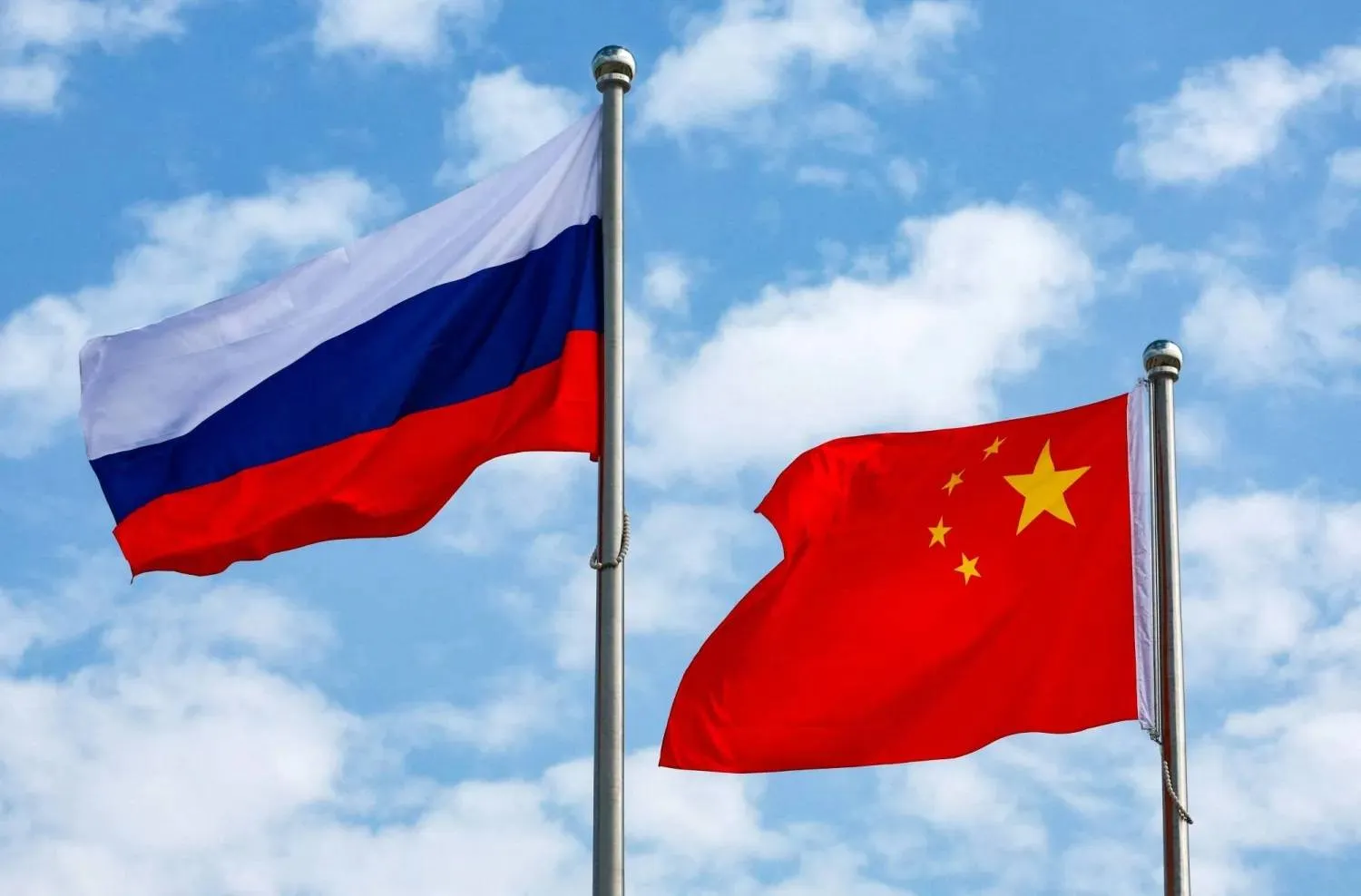



China Lines Up Second LNG Terminal For Sanctioned Russian Cargoes

Chinese and Russian flags fly at an airport in Tianjin, China August 31, 2025. Sputnik/Vladimir Smirnov/Pool via REUTERS 
TT

China Lines Up Second LNG Terminal For Sanctioned Russian Cargoes

Chinese and Russian flags fly at an airport in Tianjin, China August 31, 2025. Sputnik/Vladimir Smirnov/Pool via REUTERS 

China is preparing a second import terminal to handle liquefied natural gas cargoes from Russia's sanctioned Arctic LNG 2 project, expanding a ‌route that so far relies on a single facility, three sources with knowledge of the matter said.

The newly built Longkou LNG terminal in eastern China's Shandong province, operated by state pipeline giant PipeChina, is being lined up to receive Arctic LNG 2 cargoes, the sources told Reuters.

The move would provide a lifeline to the $21 billion project, which is under heavy sanctions, and to Moscow, whose gas exports have been hit by Europe's decision to halt purchases and ⁠whose oil sector faces pressure from Ukrainian attacks.

A second import terminal would allow China to take larger volumes of sanctioned Russian LNG, while giving Arctic LNG 2 - designed to produce 19.8 million metric tons a year - another export outlet.

China, the only known buyer of sanctioned Arctic LNG 2 cargoes, has so far received shipments through PipeChina's Beihai terminal in Guangxi. That facility took the project's first delivery to an offtaker in August 2025 aboard the Arctic Mulan tanker.

Since then, Beihai has received 41 cargoes, or 2.6 million tons, of LNG from Arctic LNG 2 - many via two floating storage units in Russia - according to ship-tracking data and Kpler estimates. It ‌has also ⁠received three LNG cargoes from Russia's sanctioned Portovaya terminal.

China needs an additional terminal to absorb more sanctioned cargoes, one of the sources said. All declined to be named as they were not authorized to speak to media.

The world's largest LNG importer, China bought 7.57 million tons from Russia last year, according to Chinese customs data.

Longkou is seen as a logical choice because, like Beihai, it is operated by PipeChina ⁠and is closer to the Koryak floating storage unit in Russia's Far East, where Arctic LNG 2 cargoes are stored and reloaded, the sources said.

An industry executive said Longkou has completed its mechanical build phase and should be ready before October, in time for peak winter ⁠demand.

Under its completed first phase, the Longkou terminal in the coastal city of Yantai has an annual receiving capacity of 5 million tons, compared with 6 million tons at Beihai.

PipeChina's Dalian LNG terminal in northeastern China is also being discussed as ⁠a potential future receiving point, a fourth source said.

Novatek has recently stepped up hiring in China, a separate source said.

Reuters reported last year that Novatek has cut cargo prices by 30% to 40% since August 2025 to attract Chinese buyers despite sanctions.


BofA Expects Fed to Hike Interest Rates 75 Basis Points in 2026

The Federal Reserve building in Washington. (Reuters)
TT

BofA Expects Fed to Hike Interest Rates 75 Basis Points in 2026

The Federal Reserve building in Washington. (Reuters)

Bank of America (BofA) expects the Federal Reserve to hike interest rates by 75 basis points in 2026, it said on Monday, citing resilient economic data and rising expectations of a hawkish Fed under new Chair Kevin Warsh.

BofA Global Research said in a note it expects the US central bank to raise rates in September, October, and December, compared with its prior forecast ⁠for no change this year, according to Reuters.

BofA's view is contrary to current 2026 outlooks of top Wall Street brokerages and comes after the Fed left its benchmark rate unchanged earlier this month, even as almost half of Fed policymakers indicated that they now expect rates to rise this year.

The policymakers' more hawkish outlook is accompanied by strength in the labor market and elevated inflation concerns.

“June Summary of Projections and ⁠Warsh's comments indicate that the Fed's reaction function is much more hawkish than we thought,” analysts at BofA said in a note.

In contrast to BofA's call, markets are pricing in 42 bps of hikes ⁠in 2026, according to London Stock Exchange Group (LSEG) data.

After three rate hikes this year, BofA analysts expect the central bank to keep interest rates on hold in ⁠2027.

“Inflation is likely to remain sticky, keeping the real policy rate from becoming overly restrictive,” they said.

Brokerages including BNP Paribas ⁠and Macquarie are also among the minority that expect the central bank to start hiking rates this year.


Yanbu Commercial Port Boosts Operational Efficiency by Serving 11 Vessels Simultaneously

The accomplishment builds on the vital role of Yanbu Commercial Port in strengthening Saudi Arabia's maritime transport system. (SPA)
TT

Yanbu Commercial Port Boosts Operational Efficiency by Serving 11 Vessels Simultaneously

The accomplishment builds on the vital role of Yanbu Commercial Port in strengthening Saudi Arabia's maritime transport system. (SPA)

Saudi Arabia’s Yanbu Commercial Port achieved a new operational milestone by successfully serving 11 vessels simultaneously of various sizes and cargo capacities, reflecting the port's high level of operational readiness, reported the Saudi Press Agency on Monday.

The achievement underscores the efficiency of the port's operations and its ability to manage maritime and commercial traffic with a high degree of effectiveness.

It contributes to smoother import and export activities and supports the continuity of supply chains in accordance with the highest operational and logistical standards.

The accomplishment builds on the vital role of Yanbu Commercial Port in strengthening Saudi Arabia's maritime transport system and reinforcing its position as a key logistics hub on the Red Sea coast.

It also supports economic growth and enhances the competitiveness of the maritime and commercial sectors.