


Uniqlo Operator Fast Retailing Seen Posting 14% Jump in Q2 Profit as Tariffs Loom 

Shoppers walk past Uniqlo store in King of Prussia Mall, as global markets brace for a hit to trade and growth caused by US President Donald Trump's decision to impose import tariffs on dozens of countries, in King of Prussia, Pennsylvania, US, April 3, 2025. (Reuters)
TT

Uniqlo Operator Fast Retailing Seen Posting 14% Jump in Q2 Profit as Tariffs Loom 

Shoppers walk past Uniqlo store in King of Prussia Mall, as global markets brace for a hit to trade and growth caused by US President Donald Trump's decision to impose import tariffs on dozens of countries, in King of Prussia, Pennsylvania, US, April 3, 2025. (Reuters)

The operator of Uniqlo, Japan's Fast Retailing, is expected to post another quarter of strong earnings on Thursday, but the focus will be on how the global clothing chain navigates a trade environment thrown into disarray by new US tariffs.

Fast Retailing is expected to post a 14% rise in operating profit to 125.9 billion yen ($866 million) in the three months through February from a year earlier, based on the LSEG consensus forecast drawn from six analysts.

That would be a record for the second quarter and a near doubling of the 7.4% profit growth of the first quarter.

From one store in Hiroshima, western Japan, 40 years ago, Uniqlo has grown to more than 2,500 locations across the world, selling inexpensive fleeces and cotton shirts made primarily in China and other Asian manufacturing hubs.

But that business model has been upended by widespread tariffs announced by US President Donald Trump, along with retaliation by some of America's trading partners.

The company has recently looked to North America and Europe for growth due to a slowing economy in China, its largest overseas consumer market with more than 900 Uniqlo stores on the mainland.

The tariffs will certainly be a negative for Fast Retailing, said independent analyst Mark Chadwick, but the measures will have the same impact on its retail peers and have a worse effect on other industries.

"Textile supply chains are probably more flexible than, say auto supply chains," said Chadwick, who writes on the Smartkarma platform. "In short, US tariffs will have a negative impact on Fast earnings looking out over the next 12 months, but less so than other global firms like Nintendo, Toyota."

SHARES RETREAT AFTER 2024 JUMP

Fast Retailing shares have fallen more than 4% this month, as Trump laid out his tariffs plan. They are down 19% in 2025, after surging nearly 50% last year.

Its founder Tadashi Yanai, Japan's richest man, aims to make his company the world's No. 1 clothing brand. Yanai, due to speak at Thursday's earnings briefing, has long been an advocate of free trade and has defended the company's business dealings in China when human rights concerns there have sprung up.

Trump said Japan would be hit with a 24% reciprocal tariff on non-auto products, while duties on Chinese goods will rise to 104%.

UBS analysts said that Uniqlo goods shipped to North America are procured from sources outside China, and Fast Retailing's tariff costs would be an estimated 34.3 billion yen next fiscal year, curbing business profit by about 6%.

"We will be watching closely whether a heightened price consciousness among consumers leads them to re-rate the balance between value and pricing at Uniqlo, potentially translating into business opportunities over the medium term," UBS's Takahiro Kazahaya wrote in a report this week.

Fast Retailing expects operating profit to reach 530 billion yen in the fiscal year ending in August, which would be a fourth straight year of record earnings.

Domestic sales have recently gotten a boost from a surge in duty-free shopping amid a tourism boom in Japan fueled by a weak yen.


Zara Owner Inditex Posts Record Profit in 2025

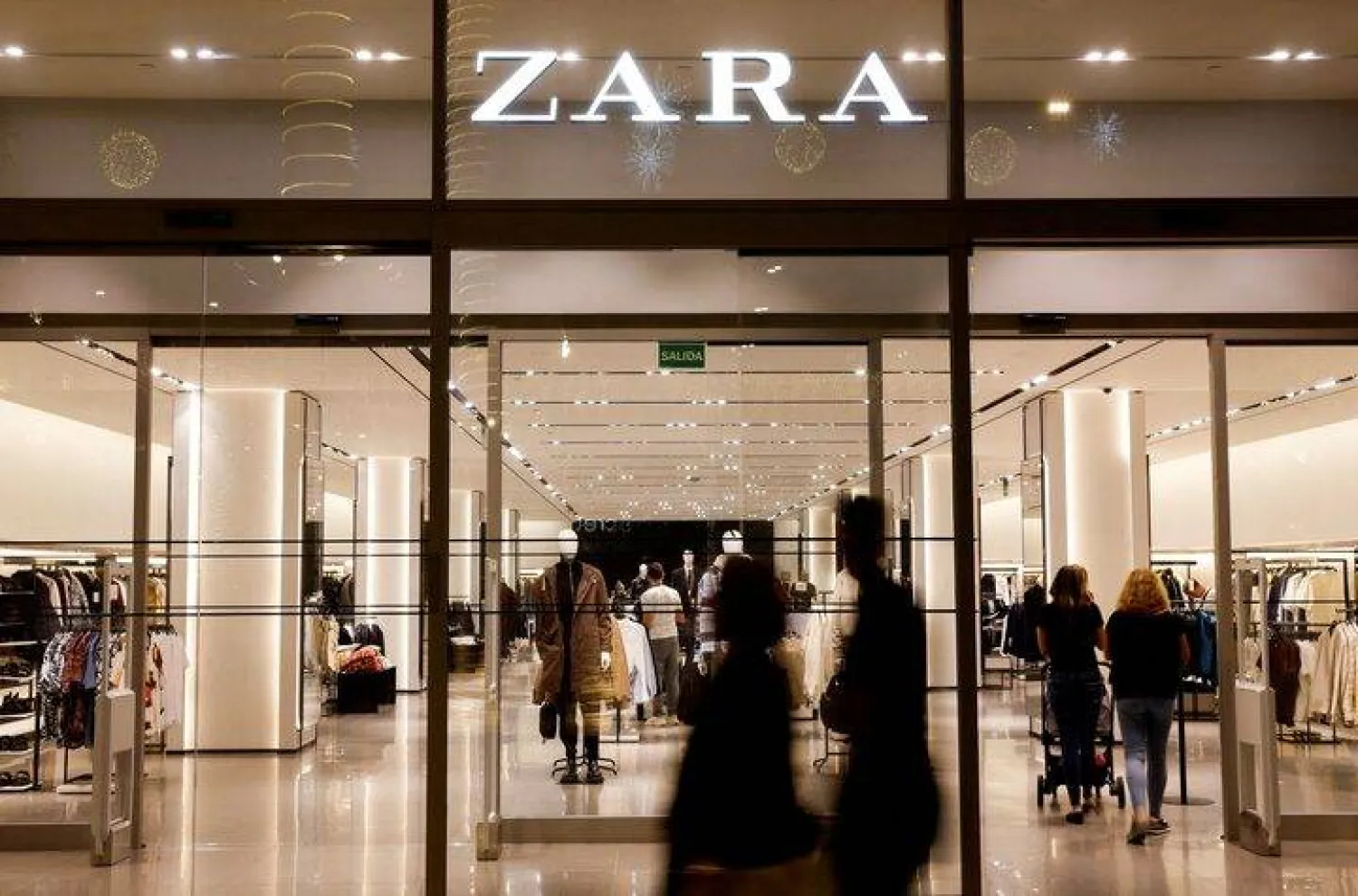
Shoppers walk past a Zara clothes store, part of the Spanish group Inditex, in Las Palmas de Gran Canaria, Spain, December 13, 2022. REUTERS/Borja Suarez
TT

Zara Owner Inditex Posts Record Profit in 2025

Shoppers walk past a Zara clothes store, part of the Spanish group Inditex, in Las Palmas de Gran Canaria, Spain, December 13, 2022. REUTERS/Borja Suarez

Zara owner Inditex, the world's leading low-cost fashion retailer, posted a record annual profit for the third year running on Wednesday, seeing off strong international competition.

The Spanish group, which includes top brands such as Massimo Dutti, Pull & Bear and Bershka, reported a profit of 6.22 billion euros ($7.23 billion) in the fiscal year ending January 31.

That marked a six percent rise on the 5.9 billion it raked in in 2024, which was also a group record, Inditex said.


Margot Robbie, Oprah Watch Blazy Transform Chanel with Color and Craft

Models present creations from the Fall/Winter 2026 collection of French-Belgian designer Matthieu Blazy for Chanel during Paris Fashion Week, in Paris, France, 09 March 2026. (EPA)
TT

Margot Robbie, Oprah Watch Blazy Transform Chanel with Color and Craft

Models present creations from the Fall/Winter 2026 collection of French-Belgian designer Matthieu Blazy for Chanel during Paris Fashion Week, in Paris, France, 09 March 2026. (EPA)

Chanel 's Matthieu Blazy is still building. Six months into his tenure at the Parisian stalwart, the designer staged his second ready-to-wear collection at Paris Fashion Week Monday, where brightly colored cranes rose from a holographic floor — a deliberate signal that the construction is ongoing.

For Parisians who have spent years staring at the real thing above Notre-Dame cathedral, the set was perhaps less dreamy than intended.

The audience inside the Grand Palais suggested the foundations are solid: Margot Robbie, Oprah, Jennie, Kylie Minogue, Lily-Rose Depp, Teyana Taylor and Olivia Dean all turned up to watch the next floor go on.

Blazy took his cue from a quote from Gabrielle “Coco” Chanel: “We need dresses that crawl and dresses that fly.”

The collection was structured around that tension — plain against spectacular, function against fantasy — with a discipline his sprawling debut last October sometimes lacked.

The opening looks were austere by design. Black knit zip-ups, tweed blousons and boxy overshirts arrived with little more than four gold buttons to signal they belonged to Chanel.

In the vast runway space, they could read as underwhelming. But Blazy’s point was architectural: the suit, he said, is “the first brick” — and everything else rises from it.

That logic tracks to the founder.

In her apartment on Rue Cambon, a wall is covered in gauze painted gold — something poor made precious.

Chanel built a house on that idea, borrowing from everyday dress and elevating it. Blazy is doing the same with her codes, stripping the suit to a knit shirt jacket or pressed-tweed blouson before rebuilding it in silicone-woven fabric and metallic mesh.

The collection’s most provocative move was its silhouette. Blazy pulled waistlines dramatically low — belts slung to mid-thigh, pleated skirts starting where blazers ended.

The references were retro flapper filtered through a modern lens: drop-waisted twinsets, patchwork dresses with floral embroidery, vivid patterned knits with a twenties pulse.

A furry coat in bold geometric color could have been worn in a chic part of London's Camden.

Whether the ultra-low waistlines will land with the well-heeled clients who pack Chanel’s front rows is another question. Selling a radically new proportion to women with deep loyalty to the house is a different challenge than winning critical praise.

The final stretch answered that concern with force. Sequined plaid suits arrived in dazzling color. Beaded coats glinted with star-chart embroidery. Metallic mesh was woven to mimic tweed motifs, and several models wore pastel-tinted hair to match their looks.

Fabric flowers burst from bodices. Trailing ribbons, layered ruffles, and insect-wing detailing turned the runway into something closer to spectacle than commerce.

Blazy cast wide — teens through to women in their fifties — and let the show breathe, with a runway circuit that took models the better part of five minutes. He framed it all with seven pared-back black and cream looks, as if to say: whatever else changes, the Chanel you know isn’t going anywhere.

If this second outing holds — on the penultimate day of fashion week — Blazy has found something rare at a heritage house: a way to honor the founder’s voice without simply echoing it.


Hugo Boss Posts Annual Profit Above Expectations

The logo of German fashion company Hugo Boss is seen at a store in Vienna, Austria, November 23, 2016. (Reuters)
TT

Hugo Boss Posts Annual Profit Above Expectations

The logo of German fashion company Hugo Boss is seen at a store in Vienna, Austria, November 23, 2016. (Reuters)

German fashion group Hugo Boss reported a higher than expected annual operating profit on Tuesday, despite a challenging market environment.

The company reported earnings ‌before interest ‌and taxes (EBIT) of ‌391 ⁠million euros ($455 million) ⁠for 2025, up from 361 million euros a year earlier, and above analyst's average forecast of 379 million euros in a company-provided ⁠poll.

"2025 once again highlighted ‌the ‌rapid transformation of our industry, shaped by ‌technological innovation, evolving consumer preferences ‌and ongoing macroeconomic and geopolitical uncertainty," Chief Executive Officer Daniel Grieder said in a statement.

Luxury groups ‌have been struggling with tighter consumer spending, with the ⁠sector ⁠hit by slowing demand for fashion and accessories particularly in the US and China.

The premium fashion retailer said it will propose a dividend of 0.04 euros per share for 2025, compared with 1.40 euros a year earlier.