Saudi Arabia Arrests Citizen for Promoting Fake Hajj Campaign Ads
A suspect is arrested for promoting fake Hajj campaigns. (Directorate of Public Security)
Saudi police in the Makkah region have arrested a citizen for posting fraudulent and misleading Hajj campaign ads on social media.
The ads promised accommodation and transportation services for pilgrims in the holy sites, aimed at deceiving people for financial gain.
The Directorate of Public Security announced on its official X account that the suspect has been detained, with legal action taken against him. The case has been referred to the Public Prosecution.
The Directorate urged citizens and residents to adhere to the rules and regulations of Hajj and report any violations by contacting the following numbers: (911) for Makkah, Riyadh, and the Eastern Province, and (999) for the rest of the Kingdom.
Last week, Saudi authorities warned individuals planning to perform Hajj to avoid falling for fake ads and deceptive offers, urging them to only use official channels.
In a statement, the Ministry of Hajj clarified that pilgrims must obtain a Hajj visa issued by the relevant Saudi authorities, coordinated with specialized offices in 80 countries.
The ministry also highlighted the direct booking options available through the Nusuk Hajj platform for pilgrims from 126 countries.
The statement emphasized that the official electronic path on the ministry’s website and the Nusuk app are the only authorized channels for domestic pilgrims to book packages.
The ministry has made provisions for inquiries and reports in multiple languages, available 24/7 through the “Guest of Rahman Care” center.
This is part of the ministry’s efforts to assist pilgrims and ensure they perform their rituals with ease and peace of mind.
In related developments, the Ministry of Tourism last Sunday reinforced the prohibition on hosting individuals in Makkah who do not have a valid Hajj permit or work/residence entry approval.
This directive, effective from April 29 until the end of the Hajj season, aims to ensure the safety and security of pilgrims.
Coinciding with this, the Ministry of Interior announced measures to safeguard pilgrims' safety, stating that individuals holding any type of visa other than a Hajj visa will not be allowed entry or stay in Makkah during this period.
The Ministry of Tourism also clarified that hospitality facilities in Makkah are strictly prohibited from hosting those affected by the Interior Ministry's directive, with violations subject to legal penalties.
Lebanese Exports to Saudi Arabia Resume as First Containers Head to Jeddahhttps://english.aawsat.com/gulf/5286439-lebanese-exports-saudi-arabia-resume-first-containers-head-jeddah
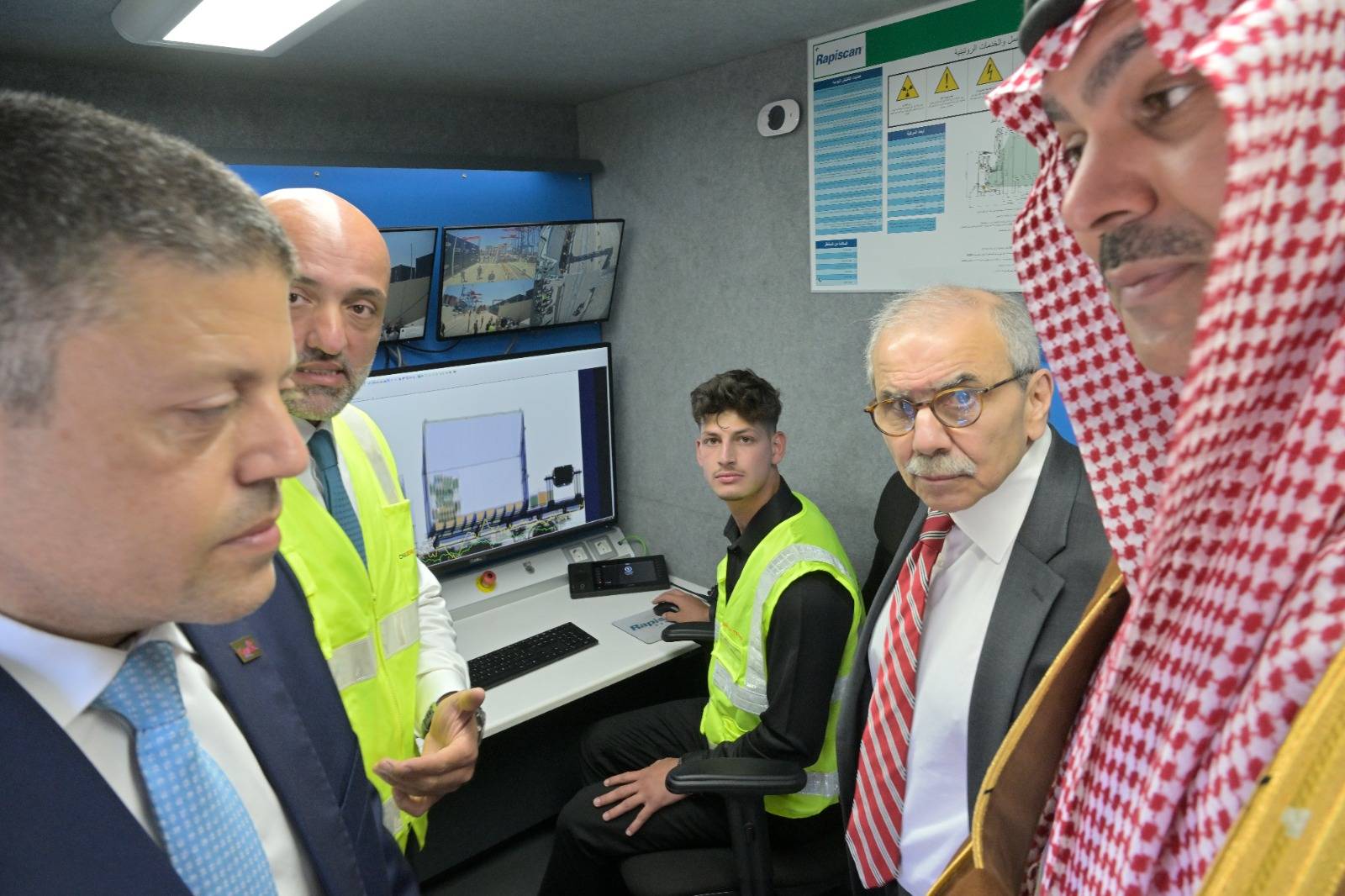
Lebanese Prime Minister Nawaf Salam and Saudi Ambassador Fahd Al Dossari inspect security and logistical procedures at the Port of Beirut ahead of the departure of the first shipments to Jeddah Port following Saudi Arabia's decision to lift the ban on Lebanese exports (Asharq Al Awsat).
Lebanese Exports to Saudi Arabia Resume as First Containers Head to Jeddah
Lebanese Prime Minister Nawaf Salam and Saudi Ambassador Fahd Al Dossari inspect security and logistical procedures at the Port of Beirut ahead of the departure of the first shipments to Jeddah Port following Saudi Arabia's decision to lift the ban on Lebanese exports (Asharq Al Awsat).
The first shipments of Lebanese exports to Saudi Arabia have departed from Beirut, marking the resumption of trade after a five year suspension imposed because of large scale smuggling of illicit goods into the Kingdom. Saudi Arabia reversed its decision last week in light of the positive results achieved through Lebanon's stricter security measures at ports, airports, and land border crossings.
Lebanese Prime Minister Nawaf Salam pledged on Saturday that Lebanon "will never again allow itself to become a launching point for any harm against our Arab brothers. Rather, it will be a partner in their security, stability, and prosperity."
Saudi Ambassador to Lebanon Fahd Al Dossari reaffirmed his country's support for "Lebanon's stability, its sovereignty over all its territory, the well being of its people, and the prevention of its use as a platform to harm its brothers."
His remarks came during a ceremony marking the departure of the first Lebanese exports to Jeddah Port following the Saudi decision to lift the ban on Lebanese imports.
Asharq Al-Awsat learned from Lebanese sources that Beirut is moving toward tighter oversight of exports and is preparing a mechanism expected to be launched soon that will enable direct cooperation with Saudi authorities to detect and prevent smuggling operations. Under the mechanism, scanning devices operating at ports, airports, and land crossings will be directly linked to their counterparts at Saudi entry points, allowing Saudi authorities to monitor incoming shipments and verify them in real time.
Once implemented, the system will allow officials at Jeddah Islamic Port to review scanner results immediately after cargo passes through inspection. Saudi authorities will be able to intervene to halt suspicious shipments or request manual inspections whenever concerns arise. The same data will also be available directly to Lebanese customs officials, who monitor the information on large screens in Beirut.
Lebanese authorities hope to expand the system in the future to other countries, including states that export goods to Lebanon, enabling Lebanese customs officials to monitor shipments bound for Lebanon in a similar manner.
Crown Prince Mohammed bin Salman directed on June 10 that Lebanese exports to the Kingdom be resumed in light of the "positive steps" taken by the Lebanese government to rebuild state institutions. The decision came in response to a request from Lebanese President Joseph Aoun and Prime Minister Nawaf Salam.
Lebanese Prime Minister Nawaf Salam and Ambassador Fahd Al Dossari inspect security procedures at the Port of Beirut (Asharq Al Awsat).
The first container bound for Jeddah Islamic Port departed on Saturday following the lifting of the ban on Lebanese exports to Saudi Arabia. The event was attended by Salam, several ministers, and Saudi Arabia's new ambassador to Beirut, Fahd bin Abdulrahman Al Dossari.
In his remarks, Ambassador Al Dossari said: "Based on the positive steps taken by the Lebanese state, we gather today to witness the relaunch of the first Lebanese exports to the Kingdom."
He added: "This step confirms Saudi Arabia's support for Lebanon's stability, its full sovereignty over all its territory, and the well being of its people. It also reflects the Kingdom's confidence in the Lebanese state's ability to take the necessary measures to prevent its territory from being used as a platform to harm its brothers."
A Moment Lebanon Has Long Awaited
Speaking from the Port of Beirut as the first container departed, Prime Minister Salam said Lebanon was "witnessing a moment it has awaited for a long time, namely the departure of the first containers bound for Jeddah Port after the lifting of the ban on Lebanese exports to the Kingdom."
He added: "I recall standing in this very place on November 25 last year. At that time, I said frankly that Lebanon had been used as a transit point for the export of illicit goods to a number of Arab countries, with the Kingdom, unfortunately, at the forefront. I also said that our ability to control our exports was a fundamental condition for lifting the ban, and that the installation of scanning equipment meant that the lifting of restrictions on Lebanese exports was drawing near."
Salam continued: "But we did not stop at installing modern scanning equipment at the ports of Beirut and Tripoli to monitor everything entering and leaving Lebanon. After appointing a new port administration composed of experienced and qualified professionals, and later a new customs administration, we worked to tighten border control measures with Syria and strengthened efforts to combat smuggling in all its forms."
Salam reiterated: "We will never again allow Lebanon to become a launching point for any harm against our Arab brothers. Rather, it will be a partner in their security, stability, and prosperity."
A Return of Hope for Thousands of Farmers
Salam noted that Saudi Arabia "was, before the ban, by far the largest market for our exports. Today, with the departure of this container, we are returning to those markets. I hope not only that we regain the level of exports we had before the ban, but that we surpass it."
He stressed that "our return to Saudi markets means the return of hope to thousands of farmers in the Bekaa, the South, and the North, to factories that survived the most difficult circumstances, and to all exporters who have waited a long time for this day."
He added that "this decision does not revive just one sector. It activates an entire economic chain, helps create job opportunities, and ensures an inflow of hard currency."
Salam pointed out that "this decision comes at a stage when Lebanon needs every possible measure to stimulate its economy and strengthen the capabilities of its productive sectors."
He added: "We hope this step will be followed by further measures that strengthen cooperation and facilitate travel between our two countries."
Salam continued: "From this platform, in the name of the Lebanese state and in my personal name, I renew my thanks and appreciation to His Royal Highness Prince Mohammed bin Salman bin Abdulaziz Al Saud for his generous decision to lift the ban on exports from Lebanon. Lebanon values its deep historical ties with Saudi Arabia and highly appreciates the role played by its leadership over decades in supporting Lebanon, its stability, and its institutions."
Five Year Ban
The Saudi ban began in 2021 on agricultural imports before being expanded to include all goods. It was linked to the smuggling of the narcotic Captagon after smugglers and criminal networks used Lebanon as a platform for trafficking drugs into the Kingdom.
The move increased pressure on Lebanon's already collapsing economy, which had been struggling with a severe financial crisis since 2019, particularly as agricultural exports lost access to their traditional Gulf markets. Lebanese exports to Saudi Arabia totaled approximately $240 million in 2020.
Lebanese Prime Minister Meets with Saudi Ambassador to Lebanonhttps://english.aawsat.com/gulf/5286435-lebanese-prime-minister-meets-saudi-ambassador-lebanon
Lebanese Prime Minister Meets with Saudi Ambassador to Lebanon
The Lebanese prime minister extended his best wishes for the ambassador’s success in his duties - SPA
Prime Minister of Lebanon Nawaf Salam met Saudi Ambassador to Lebanon Fahd Al-Dosari in Beirut on Sunday during a courtesy visit following the presentation of his credentials.
Ambassador Al-Dosari conveyed to the Lebanese prime minister the greetings of Custodian of the Two Holy Mosques King Salman bin Abdulaziz Al Saud and His Royal Highness Prince Mohammed bin Salman bin Abdulaziz Al Saud, Crown Prince and Prime Minister, SPA reported.
The Lebanese prime minister extended his best wishes for the ambassador’s success in his duties, emphasizing the importance of continuing efforts to strengthen the fraternal relations between Lebanon and Saudi Arabia.
Saudi Arabia Delivers Arab Group Statement on Gaza at UN Security Council Sessionhttps://english.aawsat.com/gulf/5286434-saudi-arabia-delivers-arab-group-statement-gaza-un-security-council-session
Saudi Arabia Delivers Arab Group Statement on Gaza at UN Security Council Session
The Kingdom welcomed international efforts aimed at securing a permanent ceasefire - SPA
The Kingdom of Saudi Arabia, on behalf of the Arab Group, delivered a statement during the UN Security Council’s emergency session on the humanitarian situation in the Gaza Strip, reaffirming that the Palestinian cause remains at the core of the conflict in the Middle East and that achieving a just and lasting peace requires the implementation of the two-state solution, including the establishment of an independent Palestinian state along the June 4, 1967 borders, with East Jerusalem as its capital.
In the statement delivered by Saudi Arabia’s Permanent Representative to the United Nations Dr. Abdulaziz Alwasil, the Kingdom reiterated the Arab Group’s rejection of settlement expansion, land confiscation, forced displacement, and the targeting of civilians, SPA reported.
It also stressed the invalidity of all attempts aimed at imposing Israeli sovereignty over the occupied Palestinian territories or altering the legal and historical status of Jerusalem and its holy sites.
The Kingdom welcomed international efforts aimed at securing a permanent ceasefire, including US-led efforts, emphasizing the importance of ensuring the immediate, sustained, and unhindered delivery of humanitarian aid to the Gaza Strip, and rejecting its use as a means of collective punishment or a tool of political pressure.
On behalf of the Arab Group, the Kingdom called on the Security Council to uphold its responsibilities in maintaining international peace and security and implementing its relevant resolutions, including Resolution no. 2334. It underscored the need to fulfill international legal obligations in a manner that contributes to protecting the Palestinian people and supporting prospects for peace and stability in the region.
لم تشترك بعد
انشئ حساباً خاصاً بك لتحصل على أخبار مخصصة لك ولتتمتع بخاصية حفظ المقالات وتتلقى نشراتنا البريدية المتنوعة