


Hamdok Calls for UN-African Union Meeting with Sudanese Warring Parties to Secure Ceasefire

Sudanese Former Prime Minister Abdalla Hamdok. (Facebook)
TT

Hamdok Calls for UN-African Union Meeting with Sudanese Warring Parties to Secure Ceasefire

Sudanese Former Prime Minister Abdalla Hamdok. (Facebook)

Sudanese former Prime Minister Abdalla Hamdok has called for an urgent joint meeting between the UN Security Council, the African Union Peace and Security Council, the Sudanese army, the Rapid Support Forces (RSF), allied groups, and key civil actors, in a bid to reach an unconditional ceasefire and humanitarian truce in his country’s war.

In a public address marking the second anniversary of the devastating war between the military and RSF, Hamdok proposed an inclusive summit attended by army chief Abdel Fattah al-Burhan, RSF leader Mohammed Hamdan Dagalo, leaders of the Sudan People’s Liberation Movement-North (SPLM-N) and the Sudan Liberation Movement (SLM), and representatives of civilian forces.

Hamdok’s initiative aims to secure a permanent ceasefire, reach a comprehensive peace agreement, and establish broad consensus on a transitional constitutional framework that revives Sudan’s path toward civilian democratic governance, rooted in the spirit of the December 2018 revolution.

He urged the formation of a fully empowered transitional civilian authority to oversee post-war recovery, reconstruction, and the organization of national elections. He also emphasized the need to begin confidence-building measures, including halting hostile media campaigns and releasing all prisoners and detainees.

Under his “Sudan Peace Appeal,” Hamdok also called for an international donor conference to bridge the humanitarian funding gap and support a Sudanese-led peace process that addresses the root causes of the conflict.

He proposed a three-track approach: humanitarian aid and civilian protection, a ceasefire with permanent security arrangements based on the Jeddah Agreement, and a political dialogue to lay the groundwork for lasting peace.

Moreover, Hamdok urged regional and international stakeholders to refrain from actions that prolong the conflict and to impose a comprehensive arms embargo on all parties. He also proposed forming a Sudanese-led expert task force to assess the war’s destruction and develop a national reconstruction and recovery plan.

The former prime minister warned that continued fighting could turn Sudan into a hub for extremist and terrorist groups. He condemned growing hate speech and atrocities, including massacres and horrific violence, which he said risk transforming the country into a breeding ground for terrorism.

Meanwhile, the army marked the start of the third year of war by announcing military gains against RSF positions in western and southern Omdurman, seizing weapons and killing dozens of fighters. The army claimed it had cleared several strategic areas and was now targeting remaining RSF pockets in Khartoum State.


EU Proposes Full Resumption of Syria Cooperation Accord

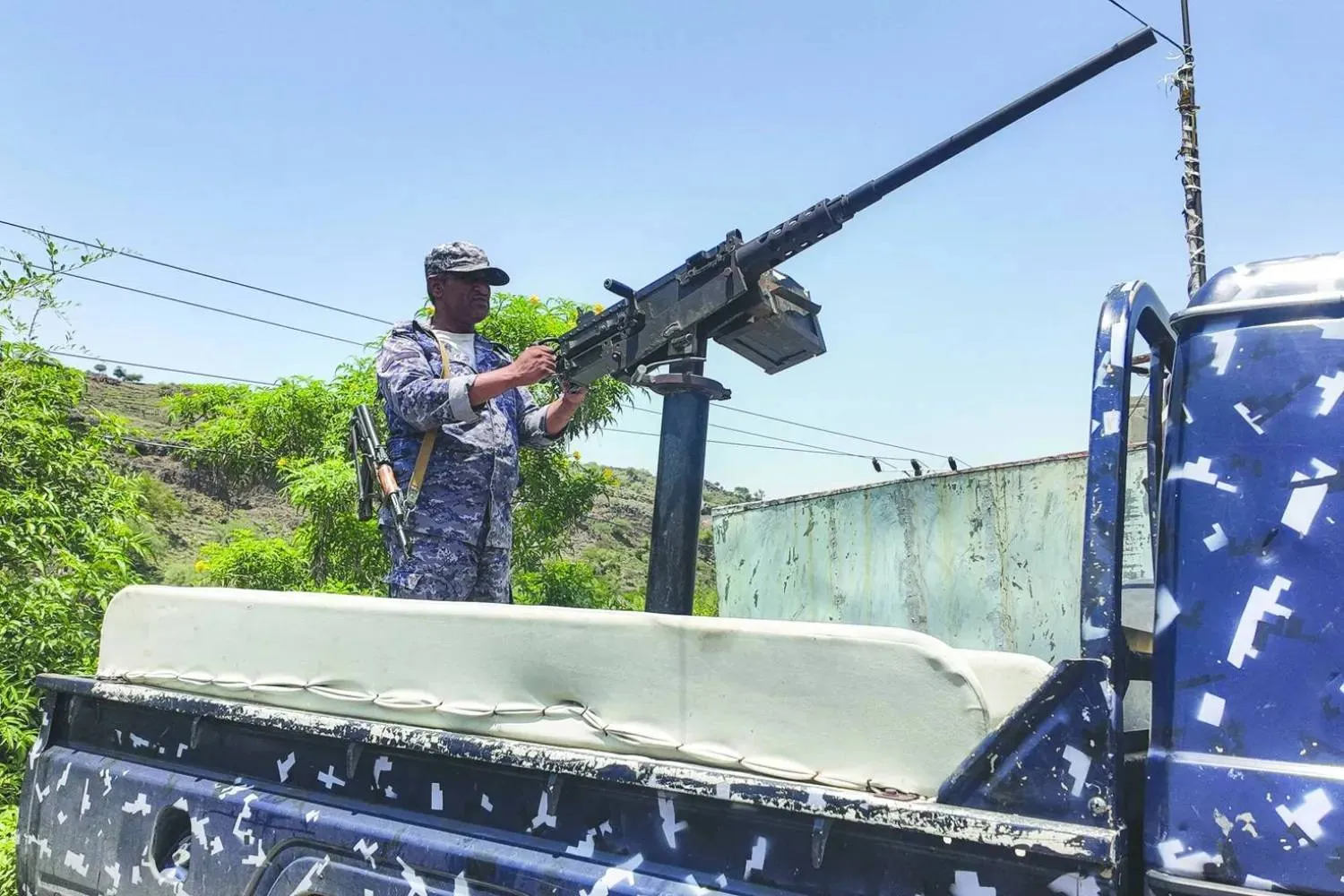
Members of the Syrian security forces (AFP – file photo)
TT

EU Proposes Full Resumption of Syria Cooperation Accord

Members of the Syrian security forces (AFP – file photo)

Brussels on Monday proposed EU states fully restart the bloc's cooperation agreement with Syria, in the latest step to help bolster the country after the ouster of Bashar al-Assad.

The deal -- which abolishes customs duties on imports of most industrial products from Syria -- was partially suspended in 2011 when Assad's regime ruthlessly cracked down on protests at the start of the civil war.

The 27-nation EU has launched a new chapter with Syria since Assad's ouster from power in December 2024 after over a decade of fighting that devastated the country and sent millions of refugees abroad.

European Commission chief Ursula von der Leyen announced a 620-million-euro ($730 million) two-year financial support package during a visit to Damascus in January.

The bloc has also dropped economic sanctions as it looks to help the authorities under President Ahmed al-Sharaa to rebuild the country and reintegrate internationally.

EU diplomats said that the push to resume the cooperation deal -- which needs approval from member states -- comes ahead of the launch of a new "high-level political dialogue" with Syria next month.

The EU could also look to strike a more ambitious deal to deepen ties with Damascus, the diplomats said.

Some European countries have expressed interest in seeing refugees who came from Syria during the civil war return to their homeland.


Berri to Asharq Al-Awsat: US Working to Extend Lebanon-Israel Ceasefire

Parliament speaker meets with US ambassador to Lebanon Michel Issa (Lebanese Presidency)
TT

Berri to Asharq Al-Awsat: US Working to Extend Lebanon-Israel Ceasefire

Parliament speaker meets with US ambassador to Lebanon Michel Issa (Lebanese Presidency)

Lebanese Parliament Speaker Nabih Berri said the US is working to extend the ceasefire between Lebanon and Israel, while President Joseph Aoun confirmed that “bilateral negotiations will be handled by Lebanon through a delegation headed by Ambassador Simon Karam, and no one will take part on Lebanon’s behalf or replace it in this mission.”

US Ambassador to Lebanon Michel Issa visited Aoun and Berri after returning to Beirut for the first time since the announcement of a 10-day temporary truce, without making any media statements.

Berri told Asharq Al-Awsat that Washington is pursuing efforts to extend the ceasefire, declining to disclose his position on the direct negotiations with Israel that the president is planning.

In remarks distributed by the Lebanese presidency’s media office, Aoun said negotiations aim to halt hostilities, end the Israeli occupation of areas in the south, and deploy the army along the internationally recognized southern border.

Aoun added: “US President Donald Trump showed full understanding and responsiveness during our call regarding Lebanon’s demands, and intervened with Israel to halt hostilities and prepare to launch a negotiating track that would end the abnormal situation and restore the authority of the Lebanese state and its sovereignty over all its territory, foremost the south.”

He said contacts would continue to preserve the ceasefire and begin negotiations, which should be backed by the broadest national support so the negotiating team can achieve its objectives.

He continued: “The upcoming negotiations are separate from any other talks, because Lebanon faces two options: either the continuation of war with its humanitarian, social, economic and sovereignty-related consequences, or negotiations to put an end to this war and achieve sustainable stability. I have chosen negotiations, and I remain hopeful that we can save Lebanon.”


Lebanon President Says Israel Talks Aim to End Hostilities, Occupation

FILED - 16 February 2026, Lebanon, Beirut: Lebanese President Joseph Aoun speaks during a joint press conference with German President Steinmeier (not pictrued) at the presidential palace. Photo: Markus Lenhardt/dpa
TT

Lebanon President Says Israel Talks Aim to End Hostilities, Occupation

FILED - 16 February 2026, Lebanon, Beirut: Lebanese President Joseph Aoun speaks during a joint press conference with German President Steinmeier (not pictrued) at the presidential palace. Photo: Markus Lenhardt/dpa

Lebanese President Joseph Aoun said Monday that planned talks with Israel aim to end hostilities and the Israeli occupation in the south, as he named an ex-ambassador to the United States to lead the delegation.

"The choice to negotiate aims to stop hostilities, end the Israeli occupation of southern regions and deploy the (Lebanese) army all the way to the internationally recognized southern borders" with Israel, Aoun said in a statement.

A 10-day ceasefire pausing more than six weeks of war between Hezbollah and Israel started on Friday after being announced by US President Donald Trump.

More than 2,300 people have been killed in Israeli attacks and over a million displaced since Hezbollah dragged Lebanon into the Middle East conflict last month.

Aoun named former Lebanese ambassador to Washington Simon Karam to head the negotiations with Israel, and said "no one will share this task with Lebanon or take its place".

Iran-backed Hezbollah is not part of the talks and its supporters strongly oppose bilateral Lebanon-Israel negotiations.

Senior Hezbollah official Mahmud Qamati blasted Aoun on Saturday, saying "defeated, you go to the Israelis and Americans, let's see what you will get out of it".

The truce in Lebanon was one of Iran's conditions for resuming talks with Washington to extend their separate ceasefire and work out the terms of a lasting peace.

But Aoun said Monday that the Israel-Lebanon talks will be "separate from any other negotiations", in an implicit reference to the US-Iran diplomacy.

"Lebanon is facing two options: either the continuation of the war, with all its humanitarian, social, economic, and sovereign repercussions, or negotiations to put an end to this war and achieve lasting stability," he said.

"I have chosen negotiations, and I am full of hope that we will be able to save Lebanon."
