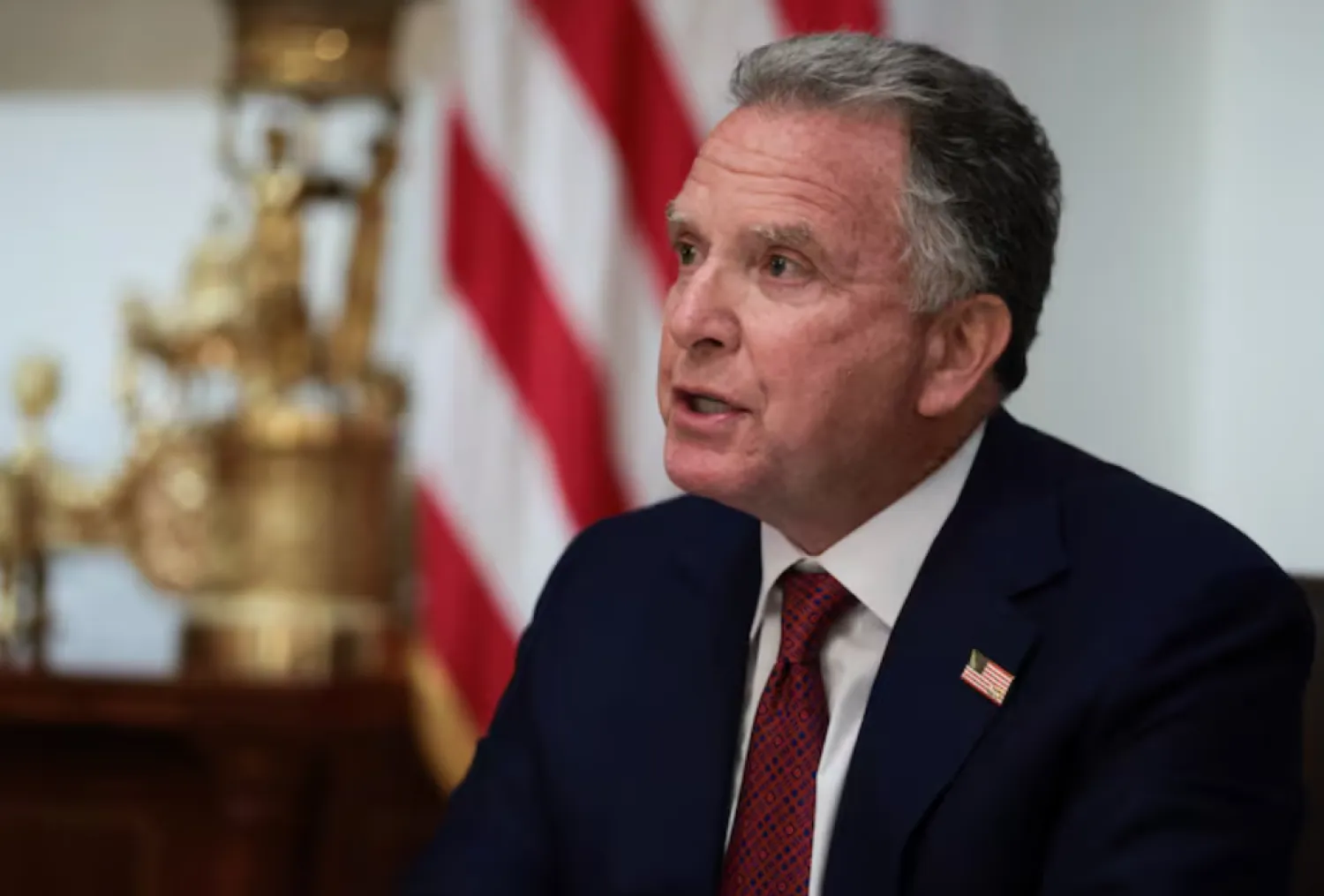
US Vice President JD Vance held talks with Indian Prime Minister Narendra Modi on Monday as New Delhi looks to avoid American tariffs, negotiate a bilateral trade deal with Washington and strengthen ties with the Trump administration.
Vance, who is on a largely personal four-day visit to India, met with Modi at his residence in New Delhi and the two leaders “reviewed and positively assessed the progress in various areas of bilateral cooperation," Modi’s office said in a statement. They also “welcomed the significant progress” in the negotiations of an expected trade deal between the two countries, the statement said.
The US is India’s largest trading partner and the two countries are now holding negotiations aiming to seal a bilateral trade agreement this year. They have set an ambitious target of more than doubling their bilateral trade to $500 billion by 2030. If achieved, the trade deal could significantly enhance economic ties between the two countries and potentially strengthen diplomatic ties as well.
The deal “presents an opportunity to negotiate a new and modern trade agreement focused on promoting job creation and citizen well-being in both countries, with the goal of enhancing bilateral trade and supply-chain integration in a balanced and mutually beneficial manner,” Vance’s office said in a statement.
Vance’s first visit to New Delhi came amid the backdrop of US President Donald Trump's now-paused tariff program against most countries, including India. It also coincides with a rapidly intensifying trade war between the United States and China, which is New Delhi’s main rival in the region.
Modi's office said that the two leaders “noted continued efforts towards enhancing cooperation in energy, defense, strategic technologies and other areas" and “exchanged views on various regional and global issues of mutual interest, and called for dialogue and diplomacy as the way forward.”
Indian Foreign Ministry spokesperson Randhir Jaiswal said on Monday that Vance’s visit will “further deepen the India–US comprehensive global strategic partnership.”
Vance was greeted with an Indian classical dance performance after he arrived at New Delhi’s Palam airport on Monday, following his visit to Rome, where he met with Pope Francis on Easter Sunday, a day before the pontiff's death.
Vance was accompanied by his wife, Usha Vance, a practicing Hindu whose parents are from India, along with their three children and officials from the US administration.
India is a close partner of the US and an important strategic ally in combating the rising influence of China in the Indo-Pacific region. It was also part of the Quad, which is made up of the US, India, Japan and Australia and is seen as a counterbalance to China’s expansion in the region. Trump is expected to attend a summit of Quad leaders in India later this year.
Washington has long sought to develop a deeper partnership with New Delhi, which is seen as a bulwark against China. Modi particularly established a good working relationship with Trump during his first term in office, and the two leaders are likely to further boost cooperation between their countries.
Modi was among the first leaders to visit the US and hold talks with Trump after he returned to the White House. During his visit, he hailed a “mega partnership” with the US, and kickstarted a negotiation process to minimize the possible fallout of Trump’s tariffs.
The two leaders also said they planned to grow their defense partnership, with India signaling compliance with the Trump administration’s demands, saying it will purchase more oil, energy and defense equipment from the US. Modi also has cooperated with Trump's moves to deport migrants as India has accepted many of its citizens from the US in the past few months.
Regardless, Trump targeted India with a 26% levy, part of which has since been paused. However, he has continued to call India a “tariff abuser” and “tariff king.”
The trade negotiations are especially urgent for India, which could be hit hard by Trump’s tariffs, particularly in the agriculture, processed food, auto components, high-end machinery, medical equipment and jewelry sectors.
Harsh Vardhan Shringla, India’s former foreign secretary and ambassador to the US, said that Vance’s visit comes at a time of global upheaval in world trade. He said ties between New Delhi and Washington could see an upsurge under Trump’s presidency, mainly in technology-sharing and defense.
“US trade policy under Trump offers an opportunity for India to embed itself in a bigger way in the US markets and global supply chains,” Shringla said.
Modi's government is also hoping to attract investment from Tesla and SpaceX CEO Elon Musk.
Last month, Musk’s Starlink entered into agreements with two of India’s top telecom operators to provide satellite-based internet services. Musk also indicated that he would visit India later this year after speaking last week with Modi, signaling that there could be progress in the electric carmaker’s push to enter the Indian market.
India is also a major defense partner of the US. It has in recent years embedded advanced American jets, helicopters, missiles and military gear into its armed forces. The two countries have announced plans to sign a 10-year framework later this year for strengthening their defense partnership.