Saudi VAT Refund Scheme Poised to Boost Tourism and Retail Spendinghttps://english.aawsat.com/business/5135388-saudi-vat-refund-scheme-poised-boost-tourism-and-retail-spending
Saudi VAT Refund Scheme Poised to Boost Tourism and Retail Spending
A passenger completing travel procedures at King Khalid International Airport in Riyadh (Asharq Al-Awsat)
Saudi Arabia’s recent decision to allow foreign tourists to reclaim value-added tax (VAT) on eligible purchases is expected to significantly enhance the Kingdom’s appeal as a global tourist destination, while giving a strong boost to retail and non-oil economic sectors.
The policy follows amendments to the executive regulations of the VAT law, approved by the Board of Directors of the Zakat, Tax, and Customs Authority. Effective April 18, international visitors are now eligible to reclaim the 15% VAT on goods purchased in Saudi Arabia, provided the items are for personal use and not consumed within the country. Refunds can be processed at departure points through designated service providers.
The move comes amid Saudi Arabia’s continued efforts to diversify its economy under Vision 2030. The Kingdom recorded more than 30 million foreign visitors in 2024, and international tourist spending reached a record SAR154 billion (USD41 billion), a 14% increase compared to the previous year.
Tax expert Ali Al-Nasser told Asharq Al-Awsat that the VAT refund initiative marks a pivotal step toward positioning Saudi Arabia as a competitive tourism hub. “Lowering the effective cost of shopping by 15% creates a powerful incentive for visitors to spend more. This will not only stimulate retail activity but also encourage businesses to improve services and tailor promotions to tourists,” he said.
Al-Nasser advised tourists to keep tax invoices from participating retailers and ensure purchases are unused before departure. Refunds do not apply to services such as accommodation, food and beverages, tobacco products, or vehicle purchases. He also emphasized that refunds must be requested at the point of exit through officially approved channels.
Experts anticipate that the new system will lead to a 15-20% rise in tourist arrivals in the coming years, driven by the added value and improved visitor experience. Al-Nasser also expects a 10-15% increase in average spending per tourist, especially as awareness of the refund system grows.
Mohammed Al-Abdulkarim, a tourism expert, called the VAT refund scheme a “strategic step” that aligns with Saudi Arabia’s tourism ambitions. “Allowing tax refunds makes Saudi Arabia more competitive with other global destinations, particularly for shopping tourism,” he said. “It enhances visitor satisfaction and encourages both longer stays and repeat visits.”
Al-Abdulkarim urged tourists to retain receipts and provide passport information at the point of sale. He added that refunds can be issued either in cash or via electronic payment at the airport before departure.
Beyond tourism, the VAT refund program is expected to have a broader economic impact. Increased tourist spending will benefit retail outlets, while related sectors such as transport and hospitality are likely to see indirect gains.
Report: Multi-Level Partnerships a Safeguard for Gulf Securityhttps://english.aawsat.com/business/5279366-report-multi-level-partnerships-safeguard-gulf-security
Report: Multi-Level Partnerships a Safeguard for Gulf Security
Gulf leaders in a group photo during the Gulf Cooperation Council summit in Kuwait in 2024 (SPA).
A recent analytical report says Gulf states are well positioned to play a larger role in shaping the regional security architecture in the aftermath of the war against Iran by adopting a multi-level security approach that combines greater self-reliance with broader international partnerships.
The report, prepared by Ambassador Alessandro Minuto-Rizzo, President of the NATO Defense College Foundation and former Deputy Secretary General of the North Atlantic Treaty Organization (NATO), was published by the Gulf Research Center in Jeddah. It says partnership with NATO represents an important avenue for developing Gulf defense capabilities, offering opportunities to benefit from the alliance's accumulated military and operational expertise while enhancing strategic dialogue and exchanges in the fields of security and defense.
Multi-Level Approach
Minuto-Rizzo argues that the next phase will require Gulf states to adopt a multi-level security strategy based on diversifying partnerships and strengthening self-reliance, while maintaining strategic ties with the United States and expanding engagement with Europe and NATO.
He says Gulf countries handled the war against Iran with considerable political prudence, seeking to avoid being drawn into military confrontation despite coming under attack and sustaining direct damage. He notes that Gulf states have in recent years continued a policy of diplomatic opening toward Tehran.
The President of the NATO Defense College Foundation points to the restoration of Saudi-Iranian relations through Chinese mediation and notes that Gulf states sought to de-escalate tensions following the outbreak of the war while strengthening contacts with potential security partners such as Pakistan, Egypt and Türkiye.
In his report, published in Views on the Gulf, a journal of the Gulf Research Center, he argues that the Gulf states' decision not to respond directly with military force to Iranian attacks was not a sign of weakness. Rather, it reflected a deep political understanding of the risks of widening the conflict and turning it into a full-scale regional war with consequences that could prove difficult to contain.
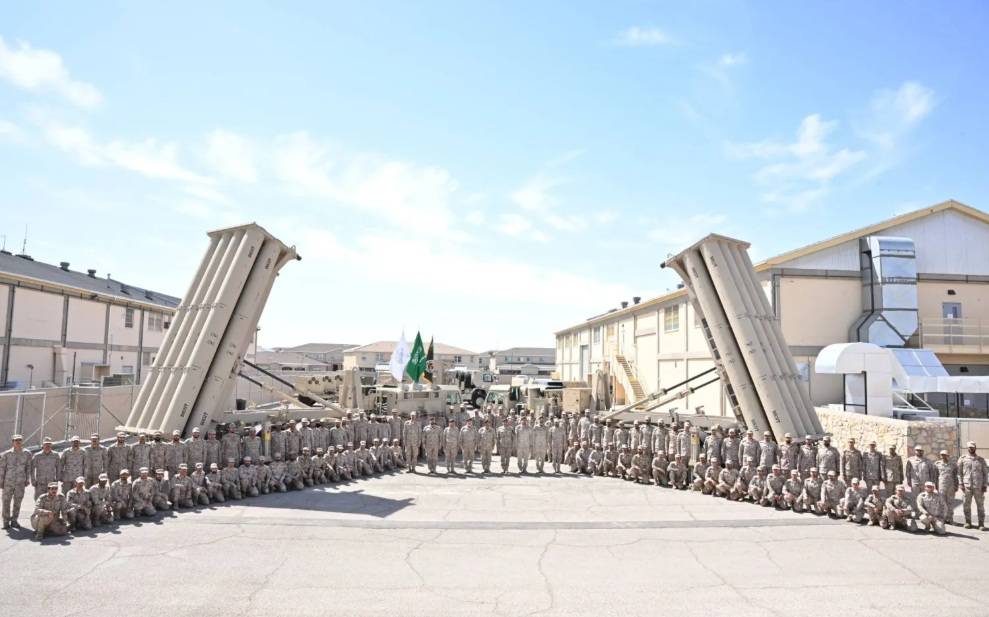
A Saudi Royal Air Defense Forces company during a graduation ceremony at Fort Bliss, United States (Ministry of Defense).
The US Role in the Region
According to Minuto-Rizzo, the United States remains the cornerstone of Gulf security despite growing debate over the past two decades about the nature of Washington's role in the region. In this context, he recalls discussions within NATO at the beginning of the century, in which he participated, regarding the Gulf's importance as a strategic partner, stressing that the region has remained firmly on Washington's security agenda.
At the same time, he says the recent war exposed the limits of some traditional assumptions about deterrence. He argues that one reason for the shortcomings exposed by the crisis was the United States' decision to enter a war against Iran that proved more complex than initially anticipated.
Nevertheless, the ambassador does not expect any significant reduction in the US presence in the Gulf given the region's strategic importance, although US-Israeli relations could see more visible divergences on certain issues in the future.
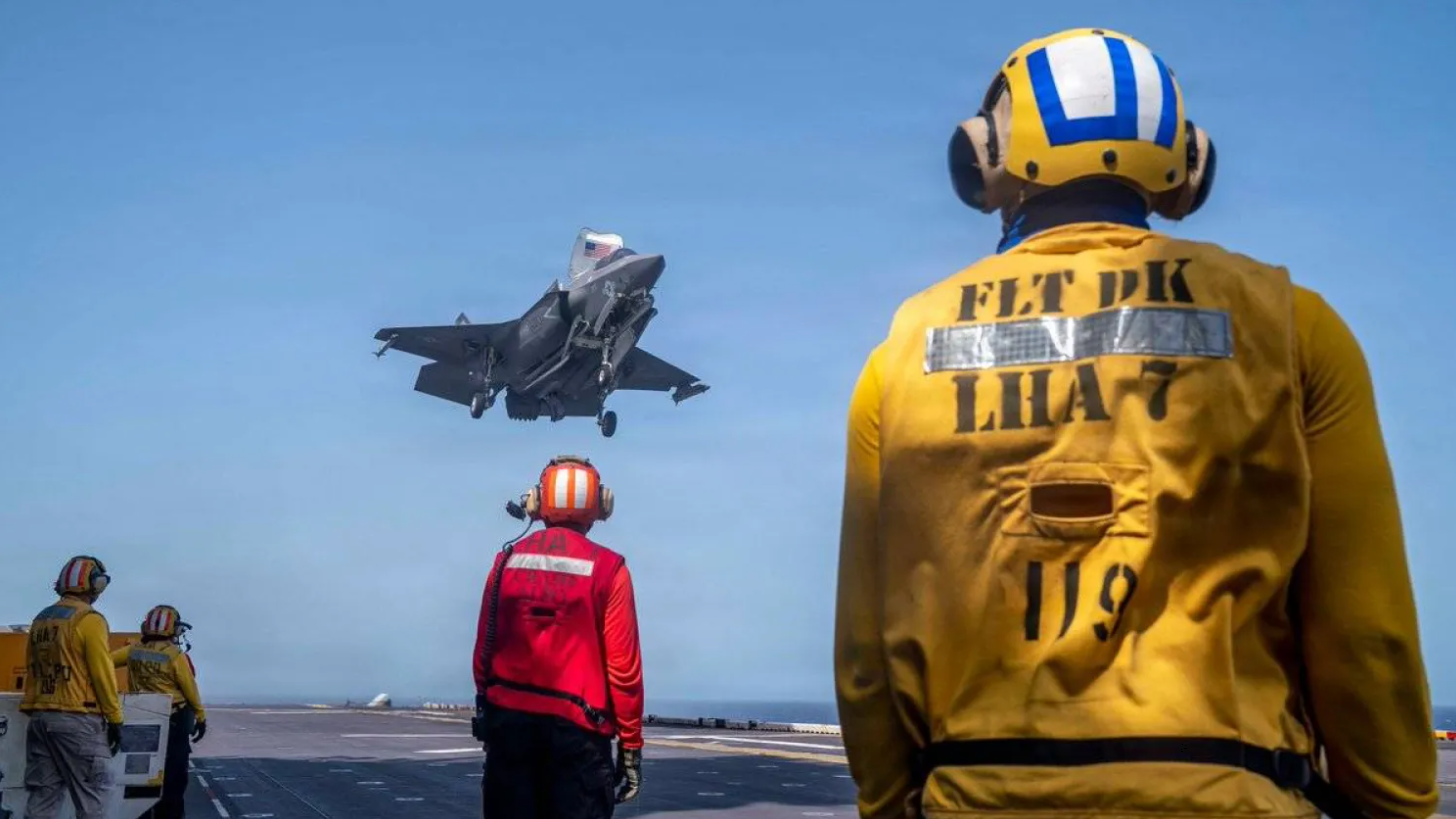
US sailors watch a US Marine Corps F-35B stealth fighter land (CENTCOM).
Lessons Learned
The President of the NATO Defense College Foundation believes one of the key lessons of the war is the need to establish clear political and strategic objectives before engaging in any military confrontation. He warns against underestimating Iran as a regional power that will remain an influential actor regardless of the war's outcome.
As for the future of regional security, the former NATO official argues that a multi-level security approach represents the most realistic option for Gulf states, particularly if members of the Gulf Cooperation Council succeed in strengthening security and military integration.
"Security partnerships do not fully align in terms of objectives and interests, but diversifying them helps build a stronger safety net capable of addressing challenges," he says.
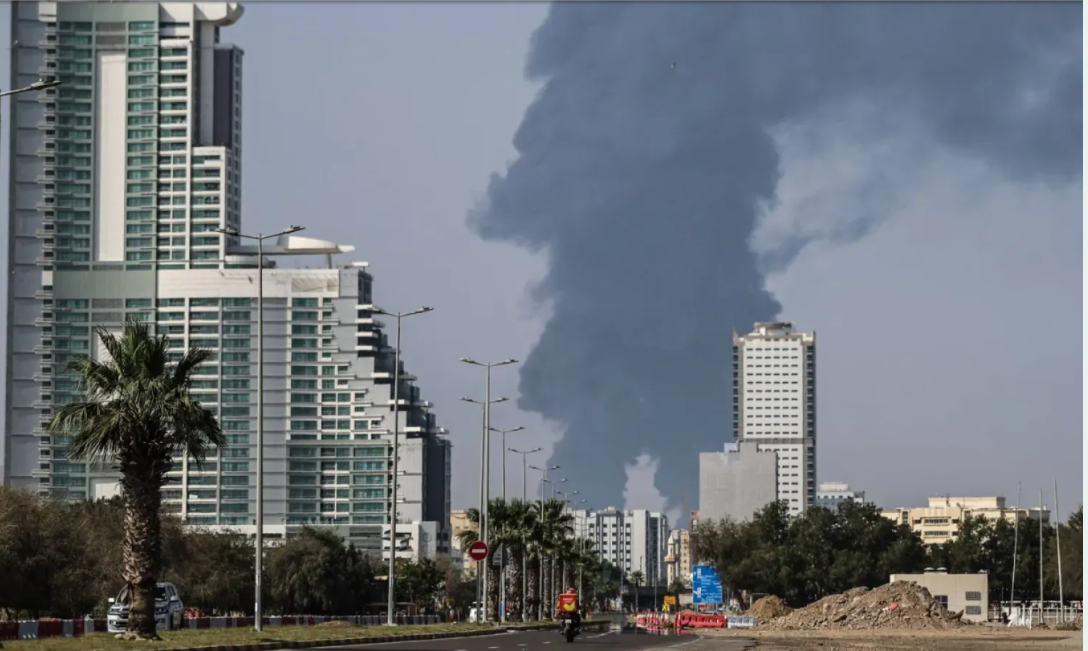
Smoke rises above the UAE emirate of Fujairah after earlier Iranian strikes (AFP).
Minuto-Rizzo argues that NATO provides an advanced institutional framework for security cooperation that goes beyond traditional bilateral relationships, citing the Istanbul Cooperation Initiative as a mechanism that offers broad opportunities for training, coordination and capacity-building between the alliance and Gulf countries.
He says renewing partnership with NATO could open significant opportunities for Gulf states, particularly Saudi Arabia, to benefit from the alliance's accumulated military and operational expertise while also enhancing strategic dialogue and consultation between military and political leaders, helping anticipate crises and prevent their escalation.
Minuto-Rizzo also stresses the importance of strengthening Europe's presence in the Gulf, arguing that Europe can make a meaningful contribution to regional security and stability through balanced partnerships based on shared interests rather than purely military considerations.
The President of the NATO Defense College Foundation concludes that the most important message for Arab states is the need to take control of their strategic decision-making and overcome divisions that have weakened the region for decades. Building a stable security architecture, he says, requires combining self-reliance with diversified international partnerships in a way that ensures balance and stability in a region that continues to face complex and constantly evolving challenges.
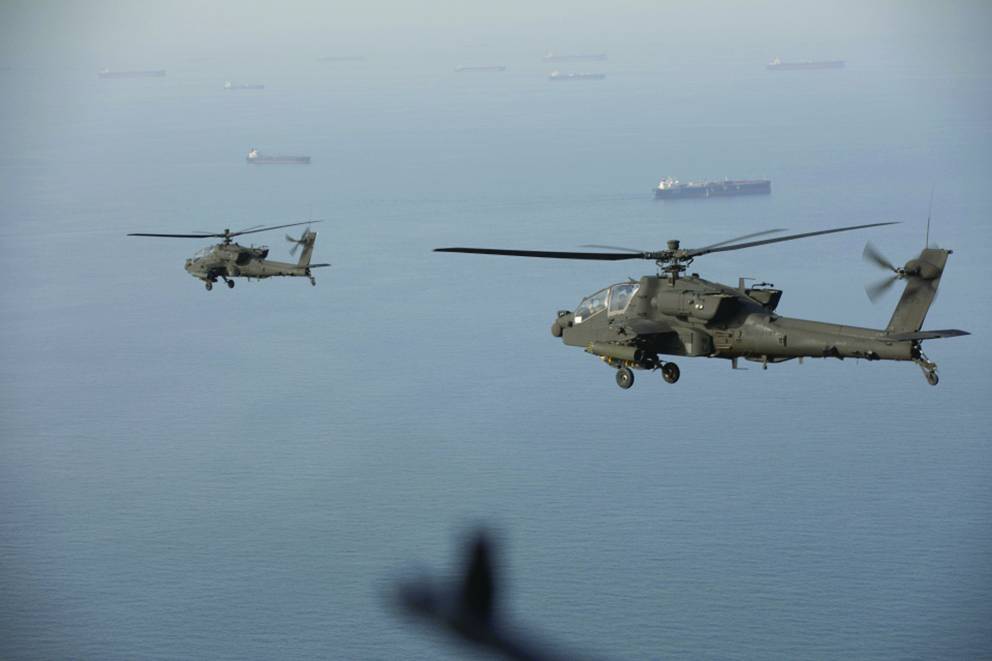
Two US AH-64 Apache attack helicopters fly over the Strait of Hormuz (CENTCOM).
Gold Falls as Renewed Middle East Tensions Fuel Inflation Fearshttps://english.aawsat.com/business/5279319-gold-falls-renewed-middle-east-tensions-fuel-inflation-fears
Gold Falls as Renewed Middle East Tensions Fuel Inflation Fears
Gold bracelets on display for sale at a gold shop in Istanbul's Grand Bazaar (AFP)
Gold prices fell on Monday as renewed US-Iran tensions pushed the dollar and oil prices higher, fuelling fears of inflation and reinforcing the higher-for-longer interest rate outlook.
Spot gold was down 0.7% at $4,506.49 per ounce at 1158 GMT after hitting a two-week high on Friday. The yellow metal dropped nearly 2% in May, its third consecutive monthly fall.
US gold futures for August delivery fell 1.2% to $4,536.70.
The dollar edged higher, making greenback-priced bullion more expensive for holders of other currencies, Reuters reported.
The US said it struck Iranian military sites over the weekend and Iran's Revolutionary Guards on Monday said they had targeted a US base in response, the latest exchange of attacks amid negotiations to end the three-month-old war.
"The optimism surrounding negotiations between the US and Iran aimed at ending the standoff in the Strait of Hormuz faded over the weekend," ActivTrades analyst Ricardo Evangelista said. "As a result, energy prices rebounded, reviving inflation concerns and reinforcing hawkish Federal Reserve expectations."
Brent crude oil prices gained more than 3% after the latest strikes. Higher oil prices can accelerate inflation and keep interest rates higher for longer. While gold is traditionally seen as a hedge against inflation, it loses its appeal in a high-interest-rate environment as a non-yielding asset.
Traders are now pricing in a Fed rate hike this year, with a 39% chance of a quarter-point increase in December, according to CME Group's FedWatch tool.
A host of Fed board members are set to speak this week, while major data releases are scheduled to include the ISM survey of manufacturing and the May payrolls report on Friday.
"Traders will be closely watching this week's key data releases as these have the potential to reshape expectations regarding the future path of Fed monetary policy, influencing demand for the US dollar and, consequently, the performance of gold prices," Evangelista said.
Spot silver rose 0.6% to $75.69 per ounce, platinum gained 1.3% to $1,941.15 and palladium was steady at $1,355.00.
Saudia to Expand Its Fleet with Delivery of 12 New Aircraft in 2026https://english.aawsat.com/business/5279288-saudia-expand-its-fleet-delivery-12-new-aircraft-2026
Saudia to Expand Its Fleet with Delivery of 12 New Aircraft in 2026
Saudia Airlines will fly in pilgrims from across the globe. (SPA)
Saudia Airlines has finalized a deal with Airbus to receive 12 new aircraft in 2026 as part of its ongoing fleet expansion and modernization program.
By implementing this strategy, the airline aims to improve the efficiency of its current operations, expand its reach to new international markets, and enhance the overall travel experience for its guests, SPA reported.
The arrival of the Airbus A321neo marks another milestone in Saudia’s 2026 aircraft delivery program, following the introduction of its first Airbus A321XLR.
The airline expects to receive additional modern aircraft over the course of the year as it continues to strengthen and modernize its fleet.
The continued expansion of Saudia’s fleet supports the objectives of the Kingdom’s national strategies for the aviation, tourism, entertainment, and sports sectors, while also enhancing services for pilgrims.
لم تشترك بعد
انشئ حساباً خاصاً بك لتحصل على أخبار مخصصة لك ولتتمتع بخاصية حفظ المقالات وتتلقى نشراتنا البريدية المتنوعة