US Solar Tariffs Could Drive Asia Transition Boom

Massive new tarrifs could hit solar panels made in Southeast Asia from June. (AFP)
TT

US Solar Tariffs Could Drive Asia Transition Boom

Massive new tarrifs could hit solar panels made in Southeast Asia from June. (AFP)

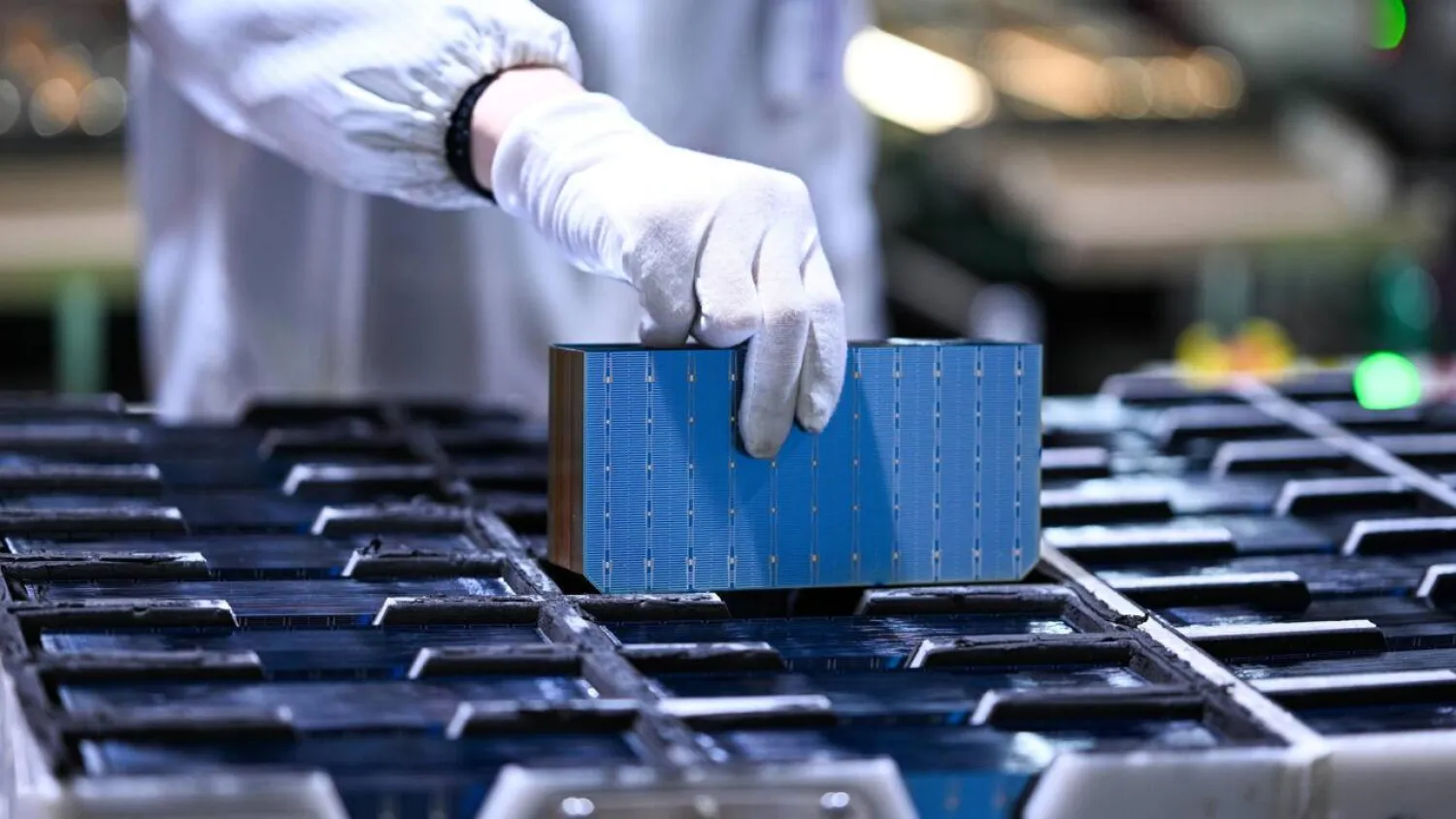
Massive planned US duties on solar panels made in Southeast Asia could be a chance for the region to ramp up its own long-stalled energy transition, experts say.
Earlier this month, Washington announced plans for hefty duties on solar panels made in Cambodia, Vietnam, Thailand and Malaysia.
The levies follow an investigation, launched before US President Donald Trump took office, into "unfair practices" in the countries, particularly by Chinese-headquartered firms, AFP said.
If approved next month, they will pile upon tariffs already imposed by the Trump administration, including blanket 10-percent levies for most countries, and 145 percent on Chinese-made goods.
For the US market, the consequences are likely to be severe. China makes eight out of every 10 solar panels globally, and controls 80 percent of every stage of the manufacturing process.
The new tariffs "will practically make solar exports to US impossible commercially", said Putra Adhiguna, managing director at the Energy Shift Institute think tank.
Southeast Asia accounted for nearly 80 percent of US solar panel imports in 2024.
And while investment in solar production has ramped up in the United States in recent years, the market still relies heavily on imported components.
For Chinese manufacturers, already dealing with a saturated domestic market, the raft of tariffs is potentially very bad news.
Many shifted operations to Southeast Asia hoping to avoid punitive measures imposed by Washington and the European Union as they try to protect and nurture domestic solar industries.
The proposed new duties range from around 40 percent for some Malaysian exports to an eye-watering 3,521 percent for some Cambodia-based manufacturers.
- Tariffs 'accelerate' transition -
But there may be a silver lining for the region, explained Ben McCarron, managing director at Asia Research & Engagement.
"The tariffs and trade war are likely to accelerate the energy transition in Southeast Asia," he said.
China will "supercharge efforts" in regional markets and push for policy and implementation plans to "enable fast adoption of green energy across the region", driven by its exporters.
Analysts have long warned that countries in the region are moving too slowly to transition from planet-warming fossil fuels like coal.
"At the current pace, it (Southeast Asia) risks missing out on the opportunities provided by the declining costs of wind and solar, now cheaper than fossil fuels," said energy think tank Ember in a report last year.
For example, Malaysia relied on fossil fuels for over 80 percent of its electricity generation last year.
It aims to generate 24 percent from renewables by 2030, a target that has been criticized as out of step with global climate goals.
The tariff regime represents a double opportunity for the region, explained Muyi Yang, senior energy analyst at Ember.
So far, the local solar industry has been "largely opportunistic, focused on leveraging domestic resources or labor advantages for export gains", he told AFP.
Cut off from the US market, it could instead focus on local energy transitions, speeding green energy uptake locally and driving a new market that "could serve as a natural hedge against external volatility".
Still, replacing the US market will not be easy, given its size and the relatively nascent state of renewables in the region.
"Success hinges on turning this export-led momentum into a homegrown cleantech revolution," said Yang.
"Clearance prices" may be attractive to some, but countries in the region and beyond may also be cautious about a flood of solar, said Adhiguna.
Major markets like Indonesia and India already have measures in place intended to favor domestic solar production.
"Many will hesitate to import massively, prioritizing trade balance and aims to create local green jobs," he said.



Türkiye's Pegasus Airlines Acquires Biggest Czech Airline, Smartwings, in a Deal Worth $180 million

A passenger plane of the ‘Pegasus’ airline lands at the ‘Stuttgart Airport’ in Stuttgart, Germany, Wednesday, May 3, 2023. (Bernd Weissbrod/dpa via AP, File)
TT

Türkiye's Pegasus Airlines Acquires Biggest Czech Airline, Smartwings, in a Deal Worth $180 million

A passenger plane of the ‘Pegasus’ airline lands at the ‘Stuttgart Airport’ in Stuttgart, Germany, Wednesday, May 3, 2023. (Bernd Weissbrod/dpa via AP, File)

Türkiye's Pegasus Airlines said on Monday it has signed an agreement to acquire the biggest Czech airline, Smartwings, along with its owner, Czech Airlines, from Prague City Air.

Pegasus said the deal, which is worth 154 million euros (almost $180 million) was a “step forward in our continued global growth journey,” Reuters reported.

The process of transferring the ownership of Czech Airlines should be completed in 12 months, Smartwings spokeswoman Vladimíra Dufková said.

Smartwings currently operates regular, charter and private flights to some 80 destinations with almost 50 planes. The airline previously negotiated a takeover by Polish national carrier LOT but that fell through over the weekend after Pegasus filed a rival bid.

Pegasus, a low cost carrier, that was established in 1990. It says it operates flights to 153 destinations in 54 countries.


stc Receives 5-Star Recognition Certificate for Institutional Excellence from EFQM

stc Receives 5-Star Recognition Certificate for Institutional Excellence from EFQM
TT

stc Receives 5-Star Recognition Certificate for Institutional Excellence from EFQM

stc Receives 5-Star Recognition Certificate for Institutional Excellence from EFQM

stc Group has been awarded the 5-star recognition certificate for institutional excellence from the European Foundation for Quality Management (EFQM) for 2025.

stc is the first Saudi company to receive this prestigious recognition across all its private sector operations in the Kingdom. It is also the first company in the global telecommunications sector to achieve this rating according to the EFQM 2025 model.

This accomplishment highlights stc's leading position in performance and innovation, SPA reported.

Chief Legal and Risk Officer and General Counsel of stc Group Mathad Alajmi stated that this achievement reinforces customers' and partners' confidence in the group's capabilities, underscoring its commitment to the highest standards of corporate excellence.

This commitment is reflected in the delivery of digital solutions, supported by a flexible, adaptable organizational culture. stc will continue its journey of improvement to support the growth of the digital economy in the region and enhance the Kingdom's global competitiveness.


Iran's Currency Sinks to a New Record Low

FILE PHOTO: People walk past a sign at a currency exchange as the value of the Iranian Rial drops, in Tehran, Iran, October 5, 2025. Majid Asgaripour/WANA (West Asia News Agency) via REUTERS
TT

Iran's Currency Sinks to a New Record Low

FILE PHOTO: People walk past a sign at a currency exchange as the value of the Iranian Rial drops, in Tehran, Iran, October 5, 2025. Majid Asgaripour/WANA (West Asia News Agency) via REUTERS

Iran's currency slipped to the lowest level in its history on Monday, nearing 1,250,000 rial to the US dollar on the open rate market, various outlets including the semi-official Tasnim news agency reported.

The Iranian rial stood around 55,000 to the US dollar in 2018, when US sanctions were reimposed by the first Trump administration to force Tehran to the negotiating table by limiting its oil exports and access to foreign currency.

Iranian media blamed the government's recent economic liberalization policies for adding pressure to the open rate market, Reuters.

The open rate market is where ordinary Iranians buy foreign currency, whereas businesses typically use state-regulated rates.

However, the government's recent decision to allow importers to tap into the open market to import essential goods has added pressure on the market and increased the dollar's price, semi-official Fars news agency said.

Iran's economy is at risk of recession, with the World Bank forecasting an economic shrinkage of 1.7% in 2025 and 2.8% in 2026. The risk is compounded by rising inflation, with Iran's Statistical Center announcing monthly inflation of 48.6% in October, the highest in 40 months. Despite inflationary pressures, Iran said last month it would increase fuel prices in December under certain conditions, primarily impacting drivers using more than 100 liters per month.