



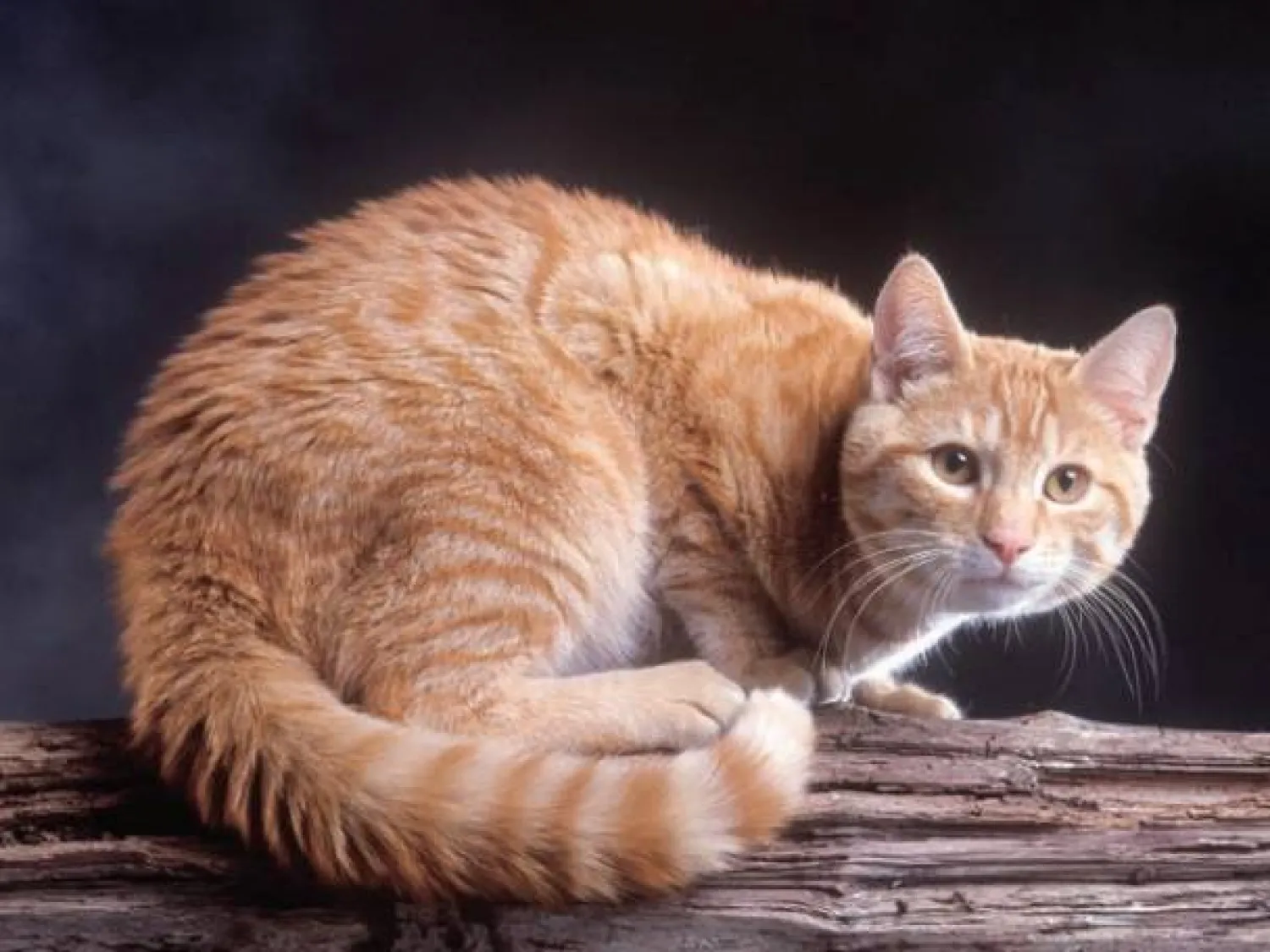

Garfield, Puss in Boots, Aristocats' Toulouse – cultural icons maybe, ginger most certainly.
And now scientists across two continents have uncovered the DNA mystery that has given our furry friends, particularly males, their notable color.
They discovered, according to BBC, that ginger cats are missing a section of their genetic code, which means the cells responsible for their skin, eye and fur tone produce lighter colors.
The breakthrough has brought delight to the scientists but also the thousands of cat lovers that originally crowdfunded the research.
The scientists hope solving the puzzle could also help shed light on whether orange colored cats are at increased risk of certain health conditions.
It has been known for decades that it is genetics that gives orange tabby cats their distinctive coloring, but exactly where in the genetic code has evaded scientists till now.
Two teams of scientists at Kyushu University in Japan and Stanford University in the US have now revealed the mystery in simultaneous papers published on Thursday.
What the teams found was that in the cells responsible for giving a cat its skin, hair follicles and eyes their color - melanocytes - one gene, ARHGAP36, was much more active.
Genes are made up of pieces of DNA which give instructions to a cat's cells, like other living creatures, on how to function.
By comparing the DNA from dozens of cats with and without orange fur they found that those with ginger coloring had a section of DNA code missing within this ARHGAP36 gene.
Without this DNA the activity of the ARHGAP36 is not suppressed, and therefore, it is more active. The scientists believe that the gene instructs those melanocytes to produce lighter pigment.
Also, for decades scientists have observed that cats with completely ginger coloring are far more likely to be male. This tallies with the fact that the gene is carried on the X chromosome.
Chromosomes are larger sections of DNA, and male cats like other mammals have an X and a Y chromosome, which carry different number of genes.
As it is a gene only on the X chromosome, in this case controlling the pigment production, then one missing piece of DNA is enough to turn a cat fully ginger.
In comparison female cats have two X chromosomes so the DNA needs to be missing in both chromosomes to increase lighter pigment production to the same extent - it means a mixed coloring is more likely.
“These ginger and black patches form because, early in development, one X chromosome in each cell is randomly switched off,” explains Prof Hiroyuki Sasaki, geneticist at Kyushu University.
“As cells divide, this creates areas with different active coat color genes, resulting in distinct patches.”


