


First Aid Trucks Have Entered Gaza After Nearly 3 Months of Israel’s Blockade

Palestinians gather to receive food cooked by a charity kitchen, amid a hunger crisis, as the Israel-Hamas conflict continues, in Khan Younis in the southern Gaza Strip, January 2, 2025. REUTERS/Hatem Khaled/File Photo
TT

First Aid Trucks Have Entered Gaza After Nearly 3 Months of Israel’s Blockade

Palestinians gather to receive food cooked by a charity kitchen, amid a hunger crisis, as the Israel-Hamas conflict continues, in Khan Younis in the southern Gaza Strip, January 2, 2025. REUTERS/Hatem Khaled/File Photo

The first aid trucks have entered Gaza following nearly three months of Israel’s complete blockade of food, medicine and other supplies, Israel and the United Nations said Monday.

Five trucks carrying baby food and other aid entered the territory of over 2 million Palestinians via the Kerem Shalom crossing, according to the Israeli defense body in charge of coordinating aid to Gaza, COGAT.

The UN called it a “welcome development” but said far more aid is needed to address the vast humanitarian crisis. Food security experts last week warned of famine in Gaza.

Israeli Prime Minister Benjamin Netanyahu earlier said his decision to resume limited, “basic” aid to Gaza came after pressure from allies who said they couldn't support Israel's renewed military offensive if there are “images of hunger” coming from the Palestinian territory.

The UN humanitarian chief, Tom Fletcher, said the few trucks were a “drop in the ocean of what is urgently needed.” He said an additional four UN trucks were cleared to enter Gaza. Those trucks may enter tomorrow, according to COGAT.

During the ceasefire, some 600 aid trucks entered Gaza each day.

Fletcher added that given the chaotic situation on the ground, the UN expects the aid could be looted or stolen. He urged Israel to open multiple crossings in northern and southern Gaza to permit a regular flow of aid.

Still, the announcement raised hope among Palestinians that more desperately needed food, medicine and other supplies would enter.

Israel over the weekend launched a new wave of air and ground operations across Gaza, and the army ordered the evacuation of its second-largest city, Khan Younis, where Israel carried out a massive operation earlier in the 19-month war that left much of the area in ruins.

Israel says its offensive is a bid to pressure Hamas to release the remaining hostages abducted in the Oct. 7, 2023, attack that ignited the war. Hamas has said it will only release them in exchange for a lasting ceasefire and an Israeli pullout.

Netanyahu said Monday that Israel plans on “taking control of all of Gaza,” as well as establishing a new system to distribute aid that circumvents Hamas. He has said Israel also will encourage what he refers to as the voluntary emigration of much of Gaza's population to other countries.

Netanyahu warns of a ‘red line’ on Gaza  

The Trump administration has voiced full support for Israel's actions and blames Hamas for the toll on Palestinians, though in recent days it has expressed growing concern over the hunger crisis.

President Donald Trump, who skipped Israel on his trip to the region last week, voiced concern about the humanitarian situation in Gaza, as did Secretary of State Marco Rubio, who said on a visit to Türkiye that he was “troubled” by it.

In a video statement posted to social media, Netanyahu said Israel's “greatest friends in the world” had told him, “We cannot accept images of hunger, mass hunger. We cannot stand that. We will not be able to support you.” Netanyahu mentioned “senators” without giving their nationality.

Netanyahu said the situation was approaching a “red line” and a “dangerous point,” but it was not clear if he was referring to the crisis in Gaza or the potential loss of support from allies.

The video statement appeared aimed at pacifying anger from Netanyahu's nationalist base at the decision to resume aid. Two far-right governing partners have pressed Netanyahu not to allow aid into Gaza.

At least one of them, Finance Minister Bezalel Smotrich, appeared to be on board with the latest plan.

“No more raids and going in and out, but conquering, cleansing and remaining until Hamas is destroyed,” he said. “We are destroying what is still left of the Strip, simply because everything there is one big city of terror.”

Netanyahu says ‘minimal’ aid to be let in  

The aid that would be let in would be “minimal,” Netanyahu said, without specifying precisely when it would resume, and would act as a bridge toward the launch of a new aid system in Gaza, in which a US-backed organization will distribute assistance in hubs that will be secured by the Israeli military.

Israel says the plan is meant to prevent Hamas from accessing aid, which Israel says it uses to bolster its rule in Gaza.

UN agencies and aid groups have rejected the plan, saying it won't reach enough people and would weaponize aid in contravention of humanitarian principles. They have refused to take part in it.

Meanwhile, Israeli special forces disguised as displaced Palestinians launched a rare ground raid into Khan Younis early Monday, according to local residents.

The forces killed Ahmed Sarhan, a leader in the armed wing of the Popular Resistance Committees, in a shootout, the group said. Palestinian witnesses said his wife and daughter were detained.

The forces drove in on a civilian vehicle and carried out the raid under cover from heavy airstrikes. At least five other people were killed, in addition to Sarhan, according to Nasser Hospital.

Also on Monday, an Israeli strike on a school-turned-shelter in the built-up Nuseirat refugee camp killed five people, including a woman and a girl, and wounded 18, mostly children, according to Al-Awda Hospital, which received the casualties.

The Israeli military had no immediate comment on either incident.

The war in Gaza began when Hamas-led fighters attacked southern Israel, killing some 1,200 people, mostly civilians, and abducting 251 others. The gunmen are still holding 58 captives, around a third of whom are believed to be alive, after most of the rest were returned in ceasefire agreements or other deals.

Israel’s retaliatory offensive has killed more than 53,000 Palestinians, mostly women and children, according to Gaza’s Health Ministry, which doesn’t differentiate between civilians and combatants in its count. The campaign has destroyed large areas of Gaza and displaced around 90% of its population.

Army: Lebanese Soldier among Those Killed in Monday Israeli Strike

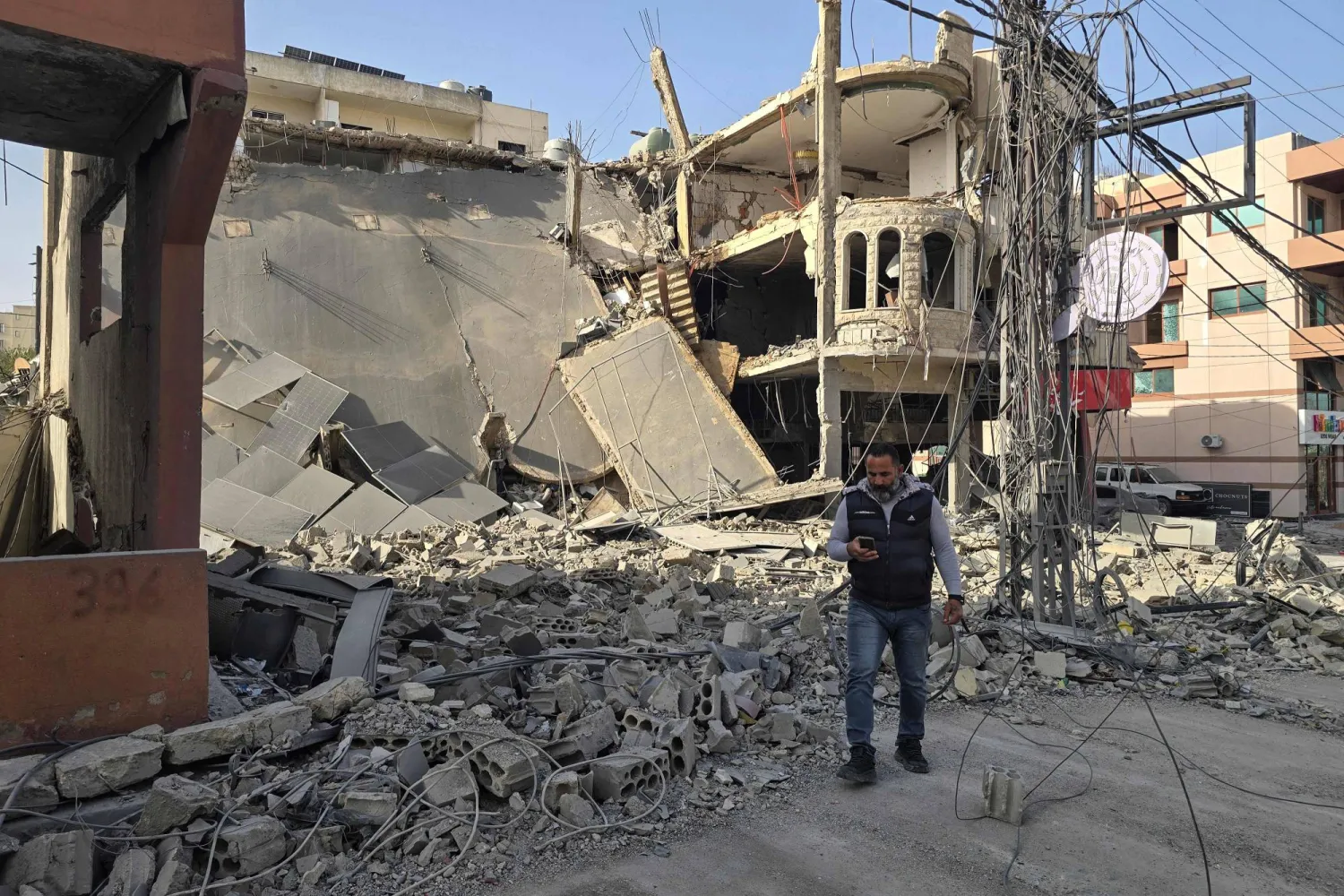
Lebanese soldiers secure the site of an Israeli drone strike that targeted a truck in the village of Sibline, south of Beirut, on December 16, 2025. (Photo by Mahmoud ZAYYAT / AFP)
TT

Army: Lebanese Soldier among Those Killed in Monday Israeli Strike

Lebanese soldiers secure the site of an Israeli drone strike that targeted a truck in the village of Sibline, south of Beirut, on December 16, 2025. (Photo by Mahmoud ZAYYAT / AFP)

A Lebanese soldier was among three people killed in an Israeli air strike on a car in the country's south, the army said Tuesday, denying Israeli claims that he was also a Hezbollah operative.

Israel has kept up regular strikes on Lebanon, usually saying it is targeting Hezbollah, despite a November 2024 ceasefire that sought to end more than a year of hostilities with the Iran-backed militant group, which it accuses of rearming.

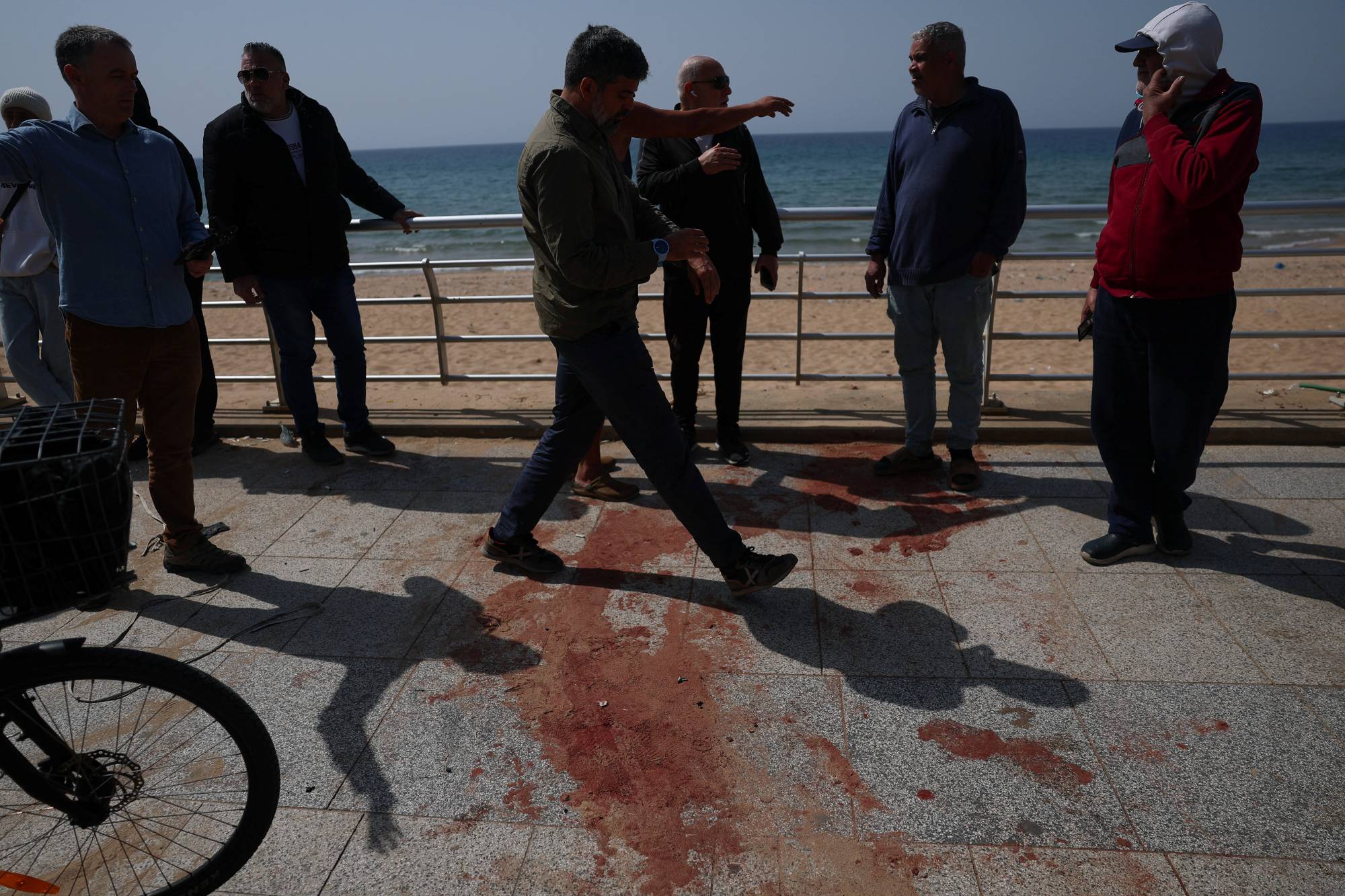
Lebanon's state-run National News Agency said Monday's strike on a vehicle was carried out by an Israeli drone around 10 kilometers (six miles) from the southern coastal city of Sidon and "killed three people who were inside".

The Lebanese army said on Tuesday that Sergeant Major Ali Abdullah had been killed the previous day "in an Israeli airstrike that targeted a car he was in" near the city of Sidon.

The Israeli army said it had killed three Hezbollah operatives in the strike, adding in a statement on Tuesday that "one of the terrorists eliminated during the strike simultaneously served in the Lebanese intelligence unit".

A Lebanese army official told AFP it was "not true" that the soldier was a Hezbollah member, calling Israel's claim "a pretext" to justify the attack.

Under heavy US pressure and amid fears of expanded Israeli strikes, Lebanon has committed to disarming Hezbollah, starting with the south.

The Lebanese army plans to complete the group's disarmament south of the Litani River -- about 30 kilometers from the border with Israel -- by year's end.

The latest strike came after Lebanese and Israeli civilian representatives on Friday took part in a meeting of the ceasefire monitoring committee for a second time, after holding their first direct talks in decades earlier this month.

The committee comprises representatives from Lebanon, Israel, the United States, France and the United Nations Interim Force in Lebanon (UNIFIL).

More than 340 people have been killed by Israeli fire in Lebanon since the ceasefire, according to an AFP tally of Lebanese health ministry reports.


Israel Defense Minister Vows to Stay in Gaza, Establish Outposts

Israeli Defense Minister Israel Katz. (dpa)
TT

Israel Defense Minister Vows to Stay in Gaza, Establish Outposts

Israeli Defense Minister Israel Katz. (dpa)

Defense Minister Israel Katz on Tuesday vowed Israel will remain in Gaza and pledged to establish outposts in the north of the Palestinian territory, according to a video of a speech published by Israeli media. 

His remarks, reported across Israeli media, come as a fragile US-brokered ceasefire between Israel and Hamas holds in Gaza, said AFP. 

Mediators are pressing for the implementation of the next phases of the truce, which would involve an Israeli withdrawal from the territory. 

Speaking at an event in the Israeli settlement of Beit El in the occupied West Bank, Katz said: "We are deep inside Gaza, and we will never leave Gaza -- there will be no such thing." 

"We are there to protect, to prevent what happened (from happening again)," he added, according to a video published by Israeli news site Ynet. 

Katz also vowed to establish outposts in the north of Gaza in place of settlements that had been evacuated during Israel's unilateral disengagement from the territory in 2005. 

"When the time comes, God willing, we will establish in northern Gaza, Nahal outposts in place of the communities that were uprooted," Katz said, referring to military-agricultural settlements set up by Israeli soldiers. 

"We will do this in the right way and at the appropriate time." 

Katz's remarks were slammed by former minister and chief of staff Gadi Eisenkot, who accused the government of "acting against the broad national consensus, during a critical period for Israel's national security." 

"While the government votes with one hand in favor of the Trump plan, with the other hand it sells fables about isolated settlement nuclei in the (Gaza) Strip," he wrote on X, referring to the Gaza peace plan brokered by US President Donald Trump. 

The next phases of Trump's plan would involve an Israeli withdrawal from Gaza, the establishment of an interim authority to govern the territory in place of Hamas and the deployment of an international stabilization force. 

It also envisages the demilitarization of Gaza, including the disarmament of Hamas, which the group has refused. 

On Thursday, several Israelis entered the Gaza Strip in defiance of army orders and held a symbolic flag-raising ceremony to call for the reoccupation and resettlement of the Palestinian territory. 


A Shaky Start for Lebanon’s Financial Gap Bill

Depositors hold protest banners against the draft deposit recovery law during popular demonstrations on the road to the Presidential Palace (Asharq Al-Awsat). 
TT

A Shaky Start for Lebanon’s Financial Gap Bill

Depositors hold protest banners against the draft deposit recovery law during popular demonstrations on the road to the Presidential Palace (Asharq Al-Awsat). 

A widening wave of objections in Lebanon to the draft “financial gap” bill has exposed the hurdles facing its passage in parliament.

Prepared by a ministerial and legal committee chaired by Prime Minister Nawaf Salam, the bill has drawn resistance from influential political and sectoral actors, bolstering the opposition voiced by depositors’ associations and the banking lobby.

Conflicting ministerial positions ahead of Monday’s special cabinet session to review the final draft underscore the sharp disputes likely to intensify once the bill is formally sent to parliament, a senior financial official told Asharq Al-Awsat.

With parliamentary elections due next spring, candidates are wary of confronting voters or powerful interest groups.

According to the government’s forthcoming brief, the bill marks the end of years of disorder and the start of a clear path to restore rights, protect social stability, and rebuild confidence in the financial system after six years of paralysis, silent erosion of deposits, and crisis mismanagement.

It is framed not as a narrow technical fix, but as a strategic shift, from denying losses and letting them fall haphazardly, to acknowledging and organizing them within an enforceable legal framework.

The government argues the plan would protect about 85% of depositors by enabling access to a guaranteed portion of savings, up to $100,000 over four years, while preserving the nominal value of all deposits via central bank–guaranteed bonds maturing in 10, 15, and 20 years.

Banks, however, have openly declared their “fundamental reservations and strong objection” to the bill on financial regularization and deposit treatment.

Professional associations and unions have joined depositors’ groups in opposing proposals they say would load the bulk of losses onto depositors, either through direct haircuts or by stretching repayment over one to two decades.

The Beirut Order of Engineers added its voice, warning that the near-final draft manages collapse rather than delivers reform, distributing losses unfairly at the expense of depositors and productive sectors, and failing to explicitly protect union funds.

Legal objections have also surfaced over provisions with retroactive effect, taxes, levies, and accounting adjustments applied to transfers made after the crisis erupted in autumn 2019, as well as to past deposit returns.

Banks say such measures constitute an unjustified infringement of rights and lack sound legal and financial grounding or precedent.

The financial official noted that these retroactive elements could be challenged before the State Council, as they contradict the principle that laws apply only after promulgation. Most transactions, he added, were conducted under then-valid laws and central bank approvals.

By contrast, previous governments compelled the central bank to spend more than $11 billion on poorly controlled subsidies, much of which was smuggled abroad, notably to Syrian markets.

Banks insist that any credible solution must begin with a precise, transparent assessment of the financial gap at the Central Bank, based on audited, unified accounts and realistic financial modeling.

They argue that the plan effectively wipes out banks’ capital and - under loss-sharing rules set by Law 23/2025 - ultimately hits depositors, while the state avoids settling its debts to the central bank or covering its balance-sheet shortfall.
