


How the Trump Administration's Move Will Affect Harvard's International Students

File photo: Demonstrators with signs stand around the John Harvard Statue in Harvard Yard following a rally against President Donald Trump's attacks on Harvard University at Harvard University in Cambridge, Massachusetts on April 17, 2025. (Photo by Joseph Prezioso / AFP)
TT

How the Trump Administration's Move Will Affect Harvard's International Students

File photo: Demonstrators with signs stand around the John Harvard Statue in Harvard Yard following a rally against President Donald Trump's attacks on Harvard University at Harvard University in Cambridge, Massachusetts on April 17, 2025. (Photo by Joseph Prezioso / AFP)

President Donald Trump's administration escalated its standoff with Harvard University on Thursday, revoking the school's ability to enroll international students.

The government told Harvard's thousands of current foreign students that they must transfer to other schools or they will lose their legal permission to be in the US, The Associated Press said.

The move could significantly affect the university, which enrolls nearly 6,800 international students, most of them in graduate programs. Those students may now have to scramble to figure out their next steps.

The Department of Homeland Security took this latest step because Harvard failed to comply fully with requests to produce records about its foreign students, Homeland Security Secretary Kristi Noem said in a letter. Noem accused Harvard of “perpetuating an unsafe campus environment that is hostile to Jewish students, promotes pro-Hamas sympathies and employs racist ‘diversity, equity and inclusion’ policies.’”

Harvard said the action is unlawful and undermines the school’s research mission.

Here's what to know about how this decision affects international students and what legal authority Noem has to take the step.

Does the government have authority over Harvard's enrollment? The US government has authority over who comes into the country. The Department of Homeland Security oversees which colleges are part of the Student Exchange and Visitor Program. On Thursday, DHS said it would remove Harvard. The program gives colleges the ability to issue documentation to foreign students admitted to their schools. Then, the students apply to obtain visas to study in the United States.

Will Harvard's current international students be allowed to graduate? Students who completed their degrees this semester will be allowed to graduate. Noem's letter said the changes would take effect for the 2025-2026 school year. Harvard's Class of 2025 is expected to graduate next week.

However, students who have yet to complete their degree need to transfer to another university, Noem said, or they'll lose their legal permission to remain in the US.

Will admitted students be able to enroll at Harvard in the fall? No, not unless the government changes its decision or a court steps in. For now, Noem said Harvard could restore its status as a host institution for foreign students if it complied with a list of demands within 72 hours. Those demands include requests for a range of records, such as disciplinary records for international students, plus any audio and video recordings of protest activity.

Harvard previously had failed to provide those records, Noem said. The university said Thursday it was working to provide guidance to affected students.

Has the government ever done this before? The government can and does remove colleges from the Student Exchange and Visitor Program, making them ineligible to host foreign students on their campus. However, it's usually for administrative reasons outlined in law, such as failing to maintain accreditation, lacking proper facilities for classes, failing to employ qualified professional personnel — even failing to “operate as a bona fide institution of learning.” Other colleges are removed when they close.

“I've never seen it revoked for any reason besides the administrative issues listed in the statute,” said Sarah Spreitzer, vice president of government relations at the American Council on Education, an association of universities. “This is unprecedented.”

How else has the Trump administration targeted Harvard? Harvard's battle with the Trump administration dates to early April. The storied institution became the first elite college to refuse to comply with the government's demands to limit pro-Palestinian protests and eliminate diversity, equity and inclusion policies. That kicked off a series of escalating actions against Harvard. Various federal agencies, including DHS and the National Institutes of Health, have cut their grant funding to Harvard, significantly impacting research projects conducted by faculty. Harvard has sued the administration, seeking to end the grant freeze.

The administration first threatened to revoke Harvard's ability to host international students back in April. Trump also has said Harvard should lose its tax-exempt status. Doing so would strike at the school's ability to fundraise, as wealthy donors often give to tax-exempt institutions to lower their own tax burdens.

FBI Foils 'Terror Plot' Targeting Los Angeles, US Attorney General Says

US Attorney General Pam Bondi speaks at a press conference following the arrest in the D.C. pipe bomber investigation, at the Justice Department in Washington, D.C., US, December 4, 2025. REUTERS/Jessica Koscielniak
TT

FBI Foils 'Terror Plot' Targeting Los Angeles, US Attorney General Says

US Attorney General Pam Bondi speaks at a press conference following the arrest in the D.C. pipe bomber investigation, at the Justice Department in Washington, D.C., US, December 4, 2025. REUTERS/Jessica Koscielniak

The FBI has foiled a bomb plot targeting multiple targets, including immigration agents and vehicles, in Los Angeles and Orange County, Attorney General Pam Bondi said on Monday, Reuters reported.

"The Turtle Island Liberation Front—a far-left, pro-Palestine, anti-government, and anti-capitalist group—was preparing to conduct a series of bombings against multiple targets in California beginning on New Year’s Eve. The group also planned to target ICE agents and vehicles," Bondi said in a statement.

Four people have been charged with conspiracy and possession of an unregistered destructive device, according to the complaint filed in the US District Court for the Central District of California.

The bombing plot called for planting explosive devices at five locations targeting two US companies at midnight on New Year's Eve in the Los Angeles area, it said.


Iran Hosts Regional Talks on Afghanistan, but Kabul Stays Away

The Iranian flag waves in front of the International Atomic Energy Agency (IAEA) headquarters, before the beginning of a board of governors meeting, amid the coronavirus disease (COVID-19) outbreak in Vienna, Austria, March 1, 2021. (Reuters)
TT

Iran Hosts Regional Talks on Afghanistan, but Kabul Stays Away

The Iranian flag waves in front of the International Atomic Energy Agency (IAEA) headquarters, before the beginning of a board of governors meeting, amid the coronavirus disease (COVID-19) outbreak in Vienna, Austria, March 1, 2021. (Reuters)

Afghanistan's neighbors met in Iran and agreed to deepen regional coordination to address political, economic and security challenges, as well as calling for sanctions on Afghanistan to be lifted. The only absent party? Afghanistan itself.

China, Pakistan, Pakistan, Tajikistan, Uzbekistan and Turkmenistan all joined the talks organized by Iran, as did Russia, according to a statement released after the meeting on Sunday, The AP news reported.

Afghanistan was invited but decided not to attend. Its Taliban-led government was tight-lipped on the reasons, with the foreign ministry saying only that it would not participate because Afghanistan “currently maintains active engagement with regional countries through existing regional organizations and formats, and has made good progress in this regard.”

The statement from the talks in Iran stressed the importance of maintaining economic and trade ties with Afghanistan to improve living conditions and called for the country’s integration into regional political and economic processes.

The Taliban were isolated after they retook power in Afghanistan in August 2021, but in the past year, they have developed diplomatic ties. They now raise several billion dollars every year in tax revenues to keep the lights on.

However, Afghanistan is still struggling economically. Millions rely on aid for survival, and the struggling economy has been further impacted by the international community not recognizing the Taliban government's seizure of power in the wake of the chaotic withdrawal of US-led troops in 2021. Natural disasters and the flow of Afghans fleeing Pakistan under pressure to return home have underlined Afghanistan’s reliance on foreign aid to meet essential needs.

The countries at the talks also voiced security concerns and pledged cooperation in combating terrorism, drug trafficking and human smuggling, while opposing any foreign military presence in Afghanistan. They underscored the responsibility of the international community to lift sanctions and release Afghanistan’s frozen assets, and urged international organizations to support the dignified return of Afghan refugees from neighboring countries.

The participants backed efforts to reduce tensions between Afghanistan and Pakistan, which have been particularly strained, with border clashes between the two sides killing dozens of civilians, soldiers and suspected militants and wounding hundreds more.

The violence followed explosions in Kabul on Oct. 9 that Afghan authorities blamed on Pakistan. A Qatar-mediated ceasefire has largely held since October, although there have been limited border clashes. The two sides failed to reach an overall agreement in November despite three rounds of peace talks.

Asif Durrani, Pakistan’s former special representative for Afghanistan, said the Taliban government’s decision to skip the meeting reflected a “lack of political maturity.” Writing on X, Durrani said the move reinforced concerns that the Taliban were unwilling to negotiate, instead adopting an “I don’t accept” stance that he said would do little to resolve serious regional problems.

Mohammad Sadiq, the current Pakistani special representative for Afghanistan who attended the talks, wrote on X that the Afghan people had already suffered enough and deserved better.

Only an Afghanistan that does not harbor militants would inspire confidence among neighboring and regional countries to engage meaningfully with Kabul and help unlock the country’s economic and connectivity potential, he wrote.

Participants agreed to hold the next meeting of foreign ministers of Afghanistan’s neighboring countries as soon as possible in Ashgabat, Turkmenistan, and welcomed Pakistan’s offer to host the next round of special envoys’ talks in Islamabad in March.

Iran’s foreign ministry spokesman, Esmail Baghaei, on Sunday said that the meeting had not been held for about two years and marked the first such gathering attended by special envoys on Afghanistan from neighboring countries as well as Russia. Russia and Uzbekistan sent the special envoys of their presidents, while Pakistan was represented by a delegate from the prime minister’s office.

Landlocked Afghanistan is sandwiched between the Middle East, Central Asia, and South Asia, making it strategically located for energy-rich and energy-hungry nations.


Russia Indicates It’s Open to Ukraine Joining EU as Part of Peace Deal to End War, US Officials Say

 In this photo provided by the Ukrainian Presidential Press Office, Ukrainian President Volodymyr Zelenskyy, left, shakes hands with US Secretary of the Army Dan Driscoll in Kyiv, Ukraine, Thursday, Nov. 20, 2025. (Ukrainian Presidential Press Office via AP)
In this photo provided by the Ukrainian Presidential Press Office, Ukrainian President Volodymyr Zelenskyy, left, shakes hands with US Secretary of the Army Dan Driscoll in Kyiv, Ukraine, Thursday, Nov. 20, 2025. (Ukrainian Presidential Press Office via AP)
TT

Russia Indicates It’s Open to Ukraine Joining EU as Part of Peace Deal to End War, US Officials Say

 In this photo provided by the Ukrainian Presidential Press Office, Ukrainian President Volodymyr Zelenskyy, left, shakes hands with US Secretary of the Army Dan Driscoll in Kyiv, Ukraine, Thursday, Nov. 20, 2025. (Ukrainian Presidential Press Office via AP)
In this photo provided by the Ukrainian Presidential Press Office, Ukrainian President Volodymyr Zelenskyy, left, shakes hands with US Secretary of the Army Dan Driscoll in Kyiv, Ukraine, Thursday, Nov. 20, 2025. (Ukrainian Presidential Press Office via AP)

Russia has indicated it’s open to Ukraine joining the European Union as part of a peace deal to end the war, US officials said as the latest round of talks between Ukrainian President Volodymyr Zelenskyy and US envoys ended Monday. as Kyiv faces Washington’s pressure to swiftly accept a US-brokered peace deal while confronting an increasingly assertive Moscow. 

Ukraine's lead negotiator, Rustem Umerov, said on social media that “real progress” had been achieved at the talks in Berlin with President Donald Trump’s special envoy Steve Witkoff and Trump’s son-in-law Jared Kushner as well as European officials. The talks lasted roughly 90 minutes, after a five-hour session Sunday. 

The US government said in a social media post on Witkoff’s account after Sunday's meeting that “a lot of progress was made.” 

The search for possible compromises has run into major obstacles, including control of Ukraine’s eastern Donetsk region, which is mostly occupied by Russian forces. 

Zelenskyy has expressed readiness to drop Ukraine’s bid to join the NATO military alliance if the US and other Western nations give Kyiv security guarantees similar to those offered to NATO members. But Ukraine’s preference remains NATO membership as the best security guarantee to prevent further Russian aggression however this option doesn’t currently have full backing from all allies. 

Still, Ukraine has continued to reject the US push for ceding territory to Russia. Russian President Vladimir Putin wants Ukraine to withdraw its forces from the part of Donetsk region still under its control as one of the key conditions for peace. 

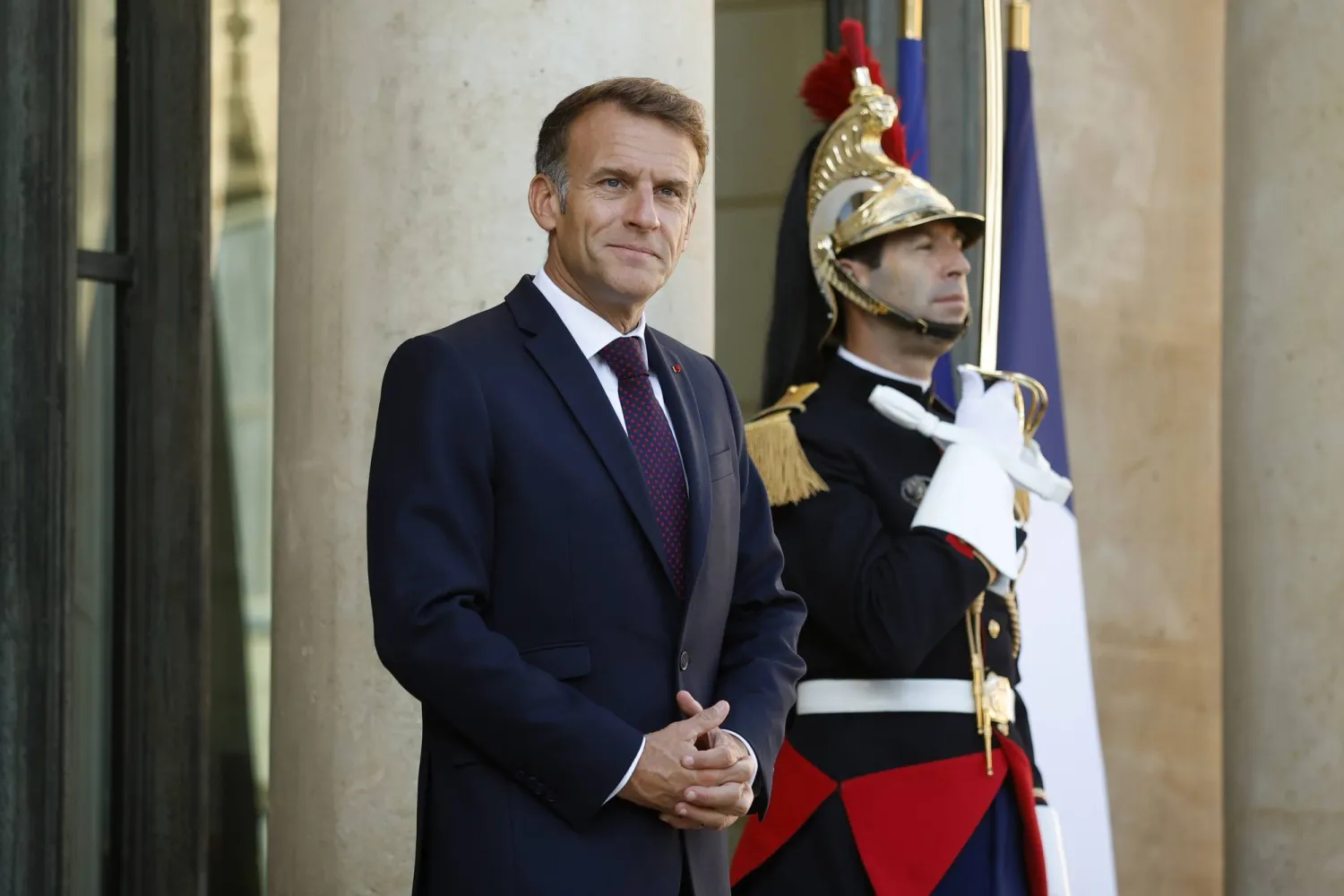
Zelenskyy’s itinerary on Monday also included meetings with German and other European leaders. French President Emmanuel Macron’s office confirmed he would travel to Berlin later Monday. 

“The issue of security in particular will ultimately determine whether this war actually comes to a standstill and whether it flares up again,” a spokesperson for German Chancellor Friedrich Merz, Stefan Kornelius, told reporters. 

The Russian president has cast Ukraine’s bid to join NATO as a major threat to Moscow’s security and a reason for launching the full-scale invasion in February 2022. The Kremlin has demanded that Ukraine renounce the bid for alliance membership as part of any prospective peace settlement. 

Zelenskyy emphasized that any Western security assurances would need to be legally binding and supported by the US Congress. 

The Kremlin said Monday it expected to be updated on the Berlin talks by the US side. 

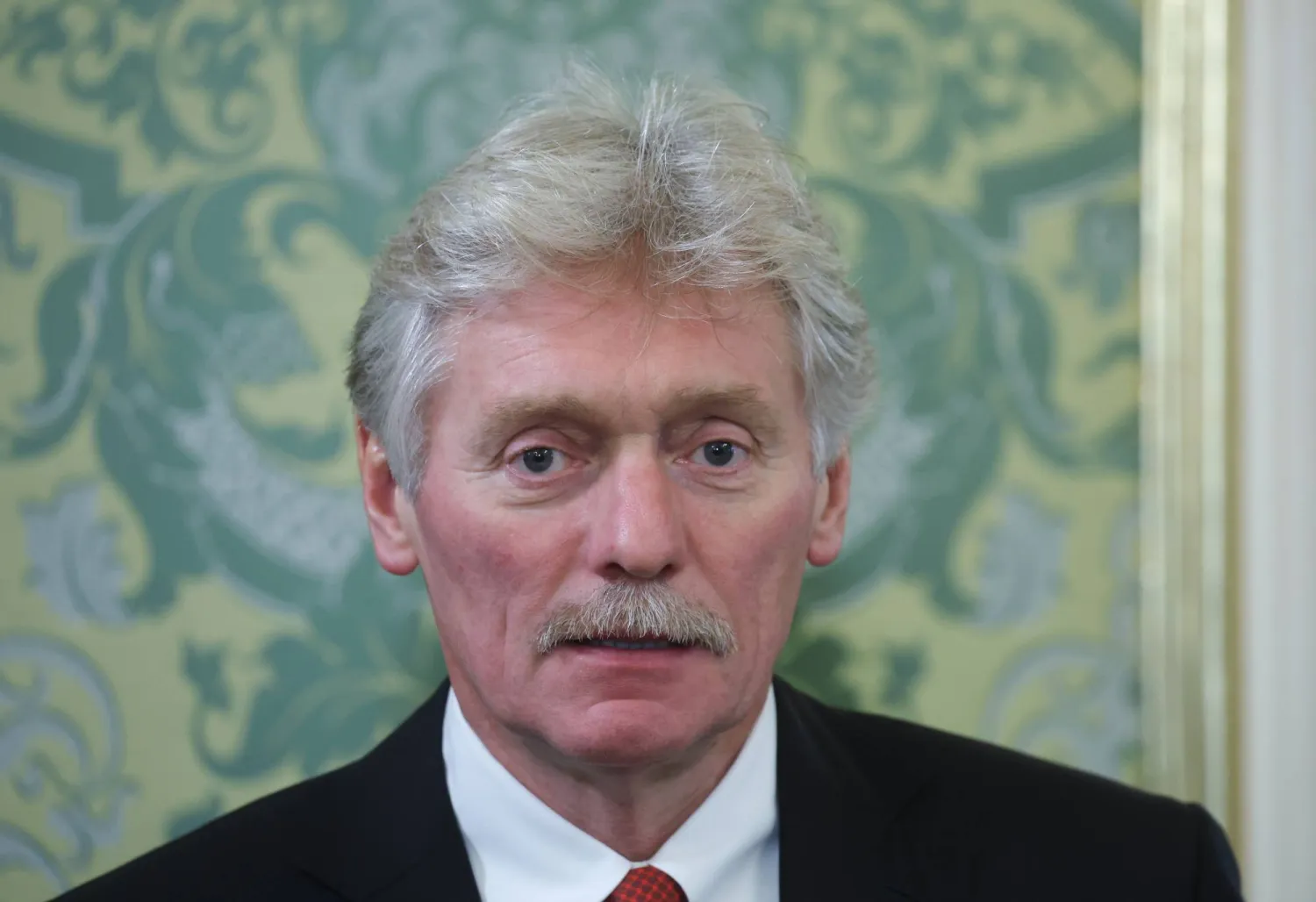
Asked whether the negotiations could be over by Christmas, Kremlin spokesperson Dmitry Peskov said trying to predict a potential time frame for a peace deal was a “thankless task.” 

“I can only speak for the Russian side, for President Putin,” Peskov said. “He is open to peace, to a serious peace and serious decisions. He is absolutely not open to any tricks aimed at stalling for time.” 

Putin has denied plans to attack any European allies. 

In London, meanwhile, the new head of the MI6 spy agency was set to warn on Monday how Putin’s determination to export chaos around the world is rewriting the rules of conflict and creating new security challenges. 

Blaise Metreweli was using her first public speech as chief of the United Kingdom’s foreign intelligence service to say that Britain faces increasingly unpredictable and interconnected threats, with emphasis on “aggressive, expansionist” Russia. 

Russia fired 153 drones of various types at Ukraine overnight Sunday into Monday, according to Ukraine’s Air Force, which said 133 drones were neutralized, while 17 more hit their targets. 

In Russia, the Defense Ministry on Monday said forces destroyed 130 Ukrainian drones overnight. An additional 16 drones were destroyed between 7 a.m. and 8 a.m. local time. 

Eighteen drones were shot down over Moscow itself, the defense ministry said. Flights were temporarily halted at the city’s Domodedovo and Zhukovsky airports as part of safety measures, officials said. 

Damage details and casualty figures were not immediately available.