
Australia’s Bid for Ancient Rock Art World Heritage Listing Stalls Over Pollution 

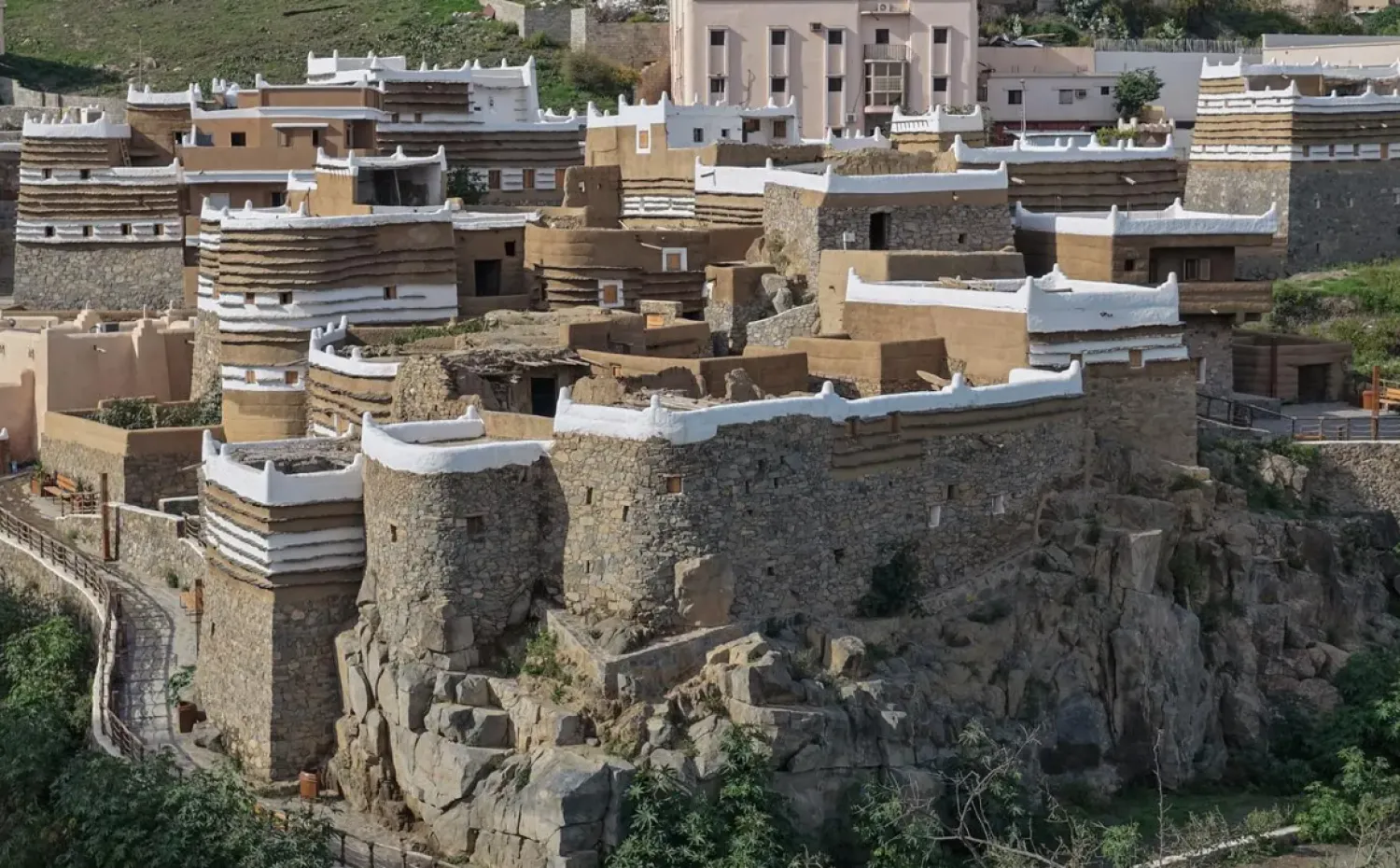
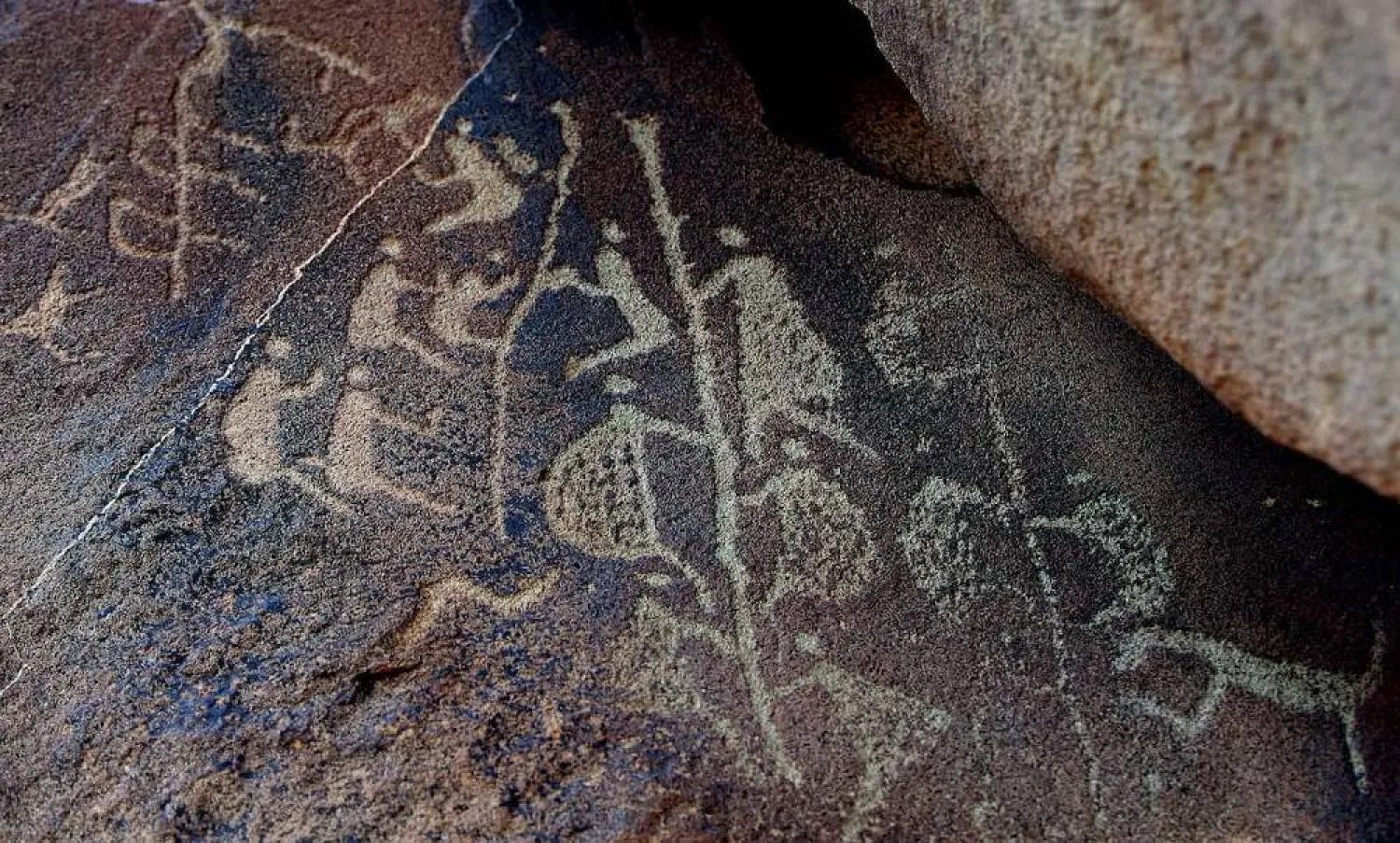
Located on the Burrup Peninsula in Western Australia state, the Murujuga rock art, which is of cultural and spiritual significance to local Indigenous Australians, was nominated for heritage listing in 2023. (Getty Images/AFP)
TT

Australia’s Bid for Ancient Rock Art World Heritage Listing Stalls Over Pollution 

Located on the Burrup Peninsula in Western Australia state, the Murujuga rock art, which is of cultural and spiritual significance to local Indigenous Australians, was nominated for heritage listing in 2023. (Getty Images/AFP)

Australia’s bid to secure World Heritage status for a site with Indigenous rock art estimated to be 50,000 years old has been dealt a blow after a UN advisory body warned it was at risk from nearby industrial pollution.

The International Council on Monuments and Sites advised UNESCO to refer the nomination back to the Australian government so it could “prevent any further industrial development adjacent to, and within, the Murujuga Cultural Landscape”.

Located on the Burrup Peninsula in Western Australia state, the Murujuga rock art, which is of cultural and spiritual significance to local Indigenous Australians, was nominated for heritage listing in 2023.

The Burrup Peninsula is also a key industrial hub, home to two gas plants run by Woodside, and fertilizer and explosives plants run by Norway's Yara International.

The government on Wednesday extended the lifetime of Woodside’s largest gas plant in the region, the North West Shelf, until 2070. The extension will generate up to 4.3 billion metric tons of additional carbon emissions.

Scrutiny over the impact of Australia's resources industry on Indigenous heritage sites has been magnified since Rio Tinto destroyed the 46,000-year-old Juukan Gorge rock shelters as part of a mine expansion in 2020.

Australia has said the Murujuga petroglyphs were in “good condition overall” and presented findings from a study of the site that said there were no suggestions “acid rain or deposition is contributing to damage of the rock art”.

Despite this, ICOMOS recommended preventing further industrial development near the site and called for a “decommissioning and rehabilitation plan for existing industrial activities”.

ICOMOS, citing media reports quoting rock art experts and information received about the proposed North West Shelf extension, concluded “the conservation conditions of the petroglyphs are extremely vulnerable and threatened by industrial acidic emissions”.

Luke James, a cultural heritage expert at Deakin University, said the ICOMOS draft decision was a “setback” for the Australian government.

“ICOMOS has identified some concerns around protection and management,” he said. “It is now up to the Australian government to demonstrate to the committee that these are surmountable, or it will need to wait at least a year - and do further work - for another chance at inscription.”

Woodside said in a statement it continued to support the heritage listing of the rock art and would work with the Murujuga traditional owners and government to prepare its response to ICOMOS' recommendation.

“We believe the World Heritage nomination should proceed on the strength of the evidence and stand as proof that cultural heritage and industry can responsibly coexist when collaboration, transparency and rigorous scientific monitoring are in place,” it said.

The UNESCO World Heritage Committee will meet in July.


Rome to Charge Tourists to Get Close to the Famed Trevi Fountain

 A visitor takes a photo of Rome's Trevi Fountain, Friday, Dec. 19, 2025, as the city municipality announced that, starting on Feb. 1, it will impose a 2 euro fee for tourists to visit the recessed fountain edge. (AP)
A visitor takes a photo of Rome's Trevi Fountain, Friday, Dec. 19, 2025, as the city municipality announced that, starting on Feb. 1, it will impose a 2 euro fee for tourists to visit the recessed fountain edge. (AP)
TT

Rome to Charge Tourists to Get Close to the Famed Trevi Fountain

 A visitor takes a photo of Rome's Trevi Fountain, Friday, Dec. 19, 2025, as the city municipality announced that, starting on Feb. 1, it will impose a 2 euro fee for tourists to visit the recessed fountain edge. (AP)
A visitor takes a photo of Rome's Trevi Fountain, Friday, Dec. 19, 2025, as the city municipality announced that, starting on Feb. 1, it will impose a 2 euro fee for tourists to visit the recessed fountain edge. (AP)

Tourists who want to get close to Rome's Trevi Fountain will soon have to pay a two-euro ($2.34) fee, the city mayor said on Friday, as authorities look to profit more handsomely from Italy's many attractions.

Mayor Roberto Gualtieri told reporters the new payment system would start on February 1, adding that the measure was expected to raise 6.5 million euros a year.

"Two euros isn't very much ... and it will lead to less chaotic tourist flows," Gualtieri said, stressing that citizens of Rome will continue to have free access to the fountain.

Tourists will ‌have to ‌pay if they want to get ‌onto ⁠the stone steps ‌surrounding the fountain's basin, while the small surrounding square offering a view of the imposing monument will remain open for everyone.

The Trevi Fountain, where tradition dictates that visitors toss a coin into the water to guarantee their return to Rome, has long been a major tourist attraction, even for visiting world leaders.

Completed in 1762, the monument is ⁠a late Baroque masterpiece depicting Oceanus and symbolizing the varying ‌moods of the world's seas and ‍rivers.

It has received nine million ‍visitors so far this year, Gualtieri said, suggesting that he ‍expects many people will opt to view the fountain from afar in future, rather than pay to get near the water.

Visitors on Friday said they would be willing to pay if the money was put to good use.

"If it means that money is used to keep it maintained, then yeah, that's fine," said British ⁠tourist Yvonne Salustri.

Gualtieri said five other relatively unknown sites in Rome that are currently free will start charging five euros for access from February, continuing the recent trend aimed at squeezing profits from Italy's cultural heritage.

In 2023, a five-euro entrance fee was introduced for Rome's ancient Pantheon. As a result, the square outside is often crammed with people waiting for their turn to pay and enter.

Venice has introduced a tourist entry-fee system during the peak travel season, while Verona this month began charging for access to the balcony in ‌the northern Italian city that is associated with Shakespeare's "Romeo and Juliet".


ICAIRE Launches Data, AI Glossary to Mark World Arabic Language Day

The interactive edition enables users to easily browse AI- and data-related terminology in Arabic, English, and French
TT

ICAIRE Launches Data, AI Glossary to Mark World Arabic Language Day

The interactive edition enables users to easily browse AI- and data-related terminology in Arabic, English, and French

The International Center for Artificial Intelligence Research and Ethics (ICAIRE) announced the launch of an interactive edition of the Data and Artificial Intelligence Glossary, in cooperation with the Saudi Data and Artificial Intelligence Authority (SDAIA), the King Salman Global Academy for Arabic Language (KSGAAL), and the Islamic World Educational, Scientific and Cultural Organization (ICESCO).

The launch coincides with World Arabic Language Day, observed annually on December 18.

The dictionary aims to preserve the Arabic language, enrich Arabic digital content with technical terminology and concepts, raise awareness of modern concepts, and facilitate access to information for researchers and practitioners.

It seeks to unify technical terminology in support of the development of the digital economy and the building of a sustainable knowledge-based future.

The interactive edition enables users to easily browse AI- and data-related terminology in Arabic, English, and French, and allows users to interact with the dictionary by adding terms in various dialects.

These enhance knowledge exchange and help ensure the unification and integration of efforts among scientific and technical institutions both regionally and internationally. The dictionary includes more than 1,200 technical terms.


Jeddah Book Fair Highlights World Arabic Language Day with Discussion on Literature’s Global Reach

The event was held under the cultural program overseen by the Saudi Literature, Publishing and Translation Commission
TT

Jeddah Book Fair Highlights World Arabic Language Day with Discussion on Literature’s Global Reach

The event was held under the cultural program overseen by the Saudi Literature, Publishing and Translation Commission

As part of its World Arabic Language Day celebration, the Jeddah Book Fair 2025 has organized a panel discussion on expanding Arabic literature’s global reach.

The event was held under the cultural program overseen by the Saudi Literature, Publishing and Translation Commission. Several female academics and other literature enthusiasts took part.

The panel discussed the concept of world literature and its relationship to comparative literature, stressing that opening Arabic texts to the world’s literature requires moving beyond local geographic boundaries and engaging in wider circles of reception and circulation.

The discussion also highlighted the key role of the press and media in conveying literary texts and reaching global readers, while praising Saudi efforts to internationalize Arabic literature through clear plans and strategies as a sustainable institutional approach.

The panel is part of the commission’s efforts to mark global occasions linked to Arabic literature and culture within an integrated cultural program offered by the Jeddah Book Fair, which continues to welcome visitors until December 20, with Saudi and Arab publishing houses showcasing the latest literary releases.