


EU Lifts Most Syria Sanctions

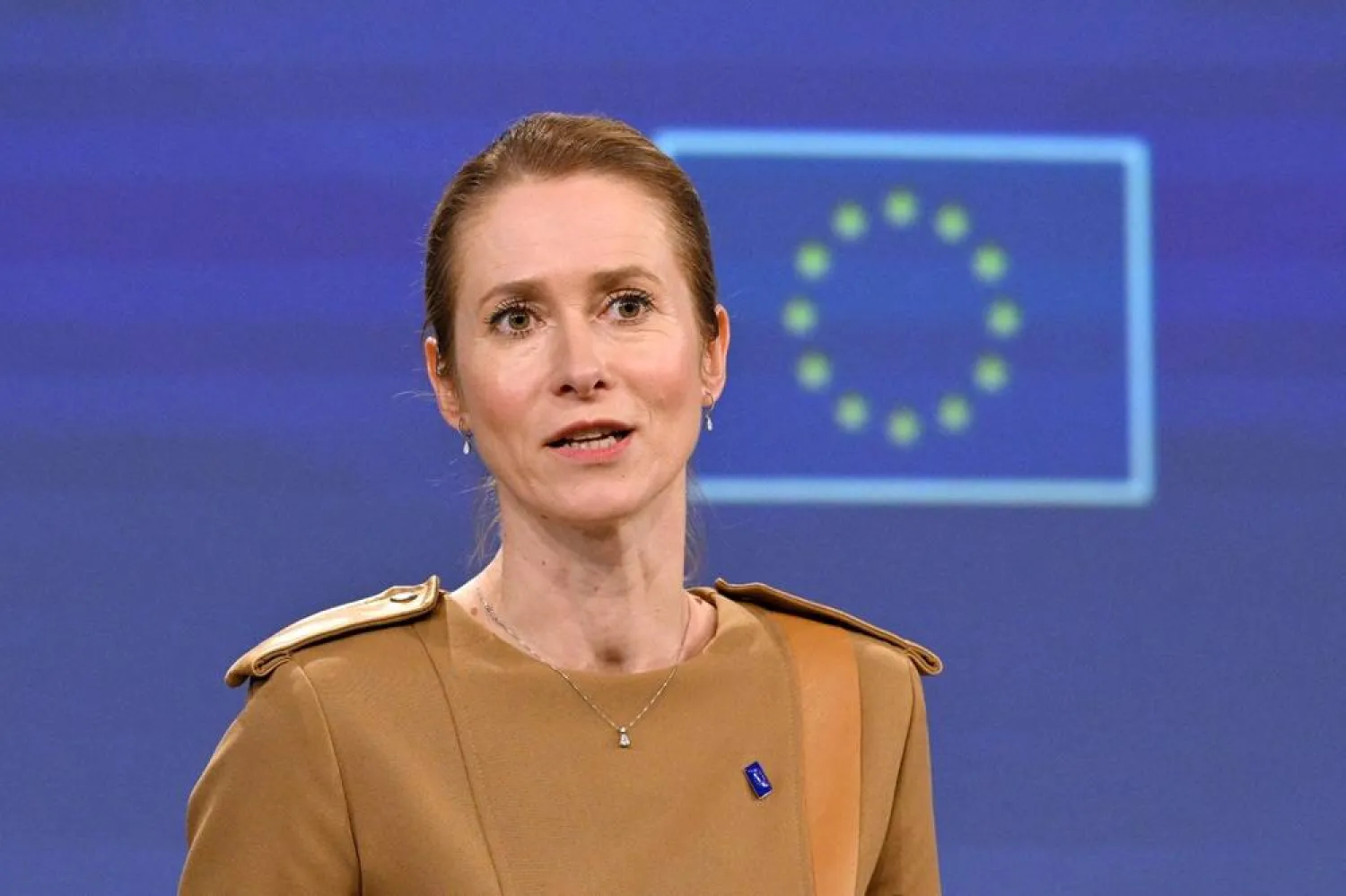
EU High Representative and Vice-President for Foreign Affairs and Security Policy Kaja Kallas gives a press conference about the Black Sea Strategy and Simplification of the External Action Guarantee at the EU headquarters in Brussels, on May 28, 2025. (AFP)
TT

EU Lifts Most Syria Sanctions

EU High Representative and Vice-President for Foreign Affairs and Security Policy Kaja Kallas gives a press conference about the Black Sea Strategy and Simplification of the External Action Guarantee at the EU headquarters in Brussels, on May 28, 2025. (AFP)

The European Union lifted a wide range of sanctions on Syria on Wednesday.

The move lifted most sanctions that had been imposed on the country, including on its financial system, while keeping them in place on individuals and organizations in Syria it says violated human rights or for “security grounds,” like the extended family of former President Bashar al-Assad or its chemical weapons program, according to the text of the European Council on the decision.

The EU’s foreign policy chief Kaja Kallas had announced plans to lift the sanctions last week. She said the move was “conditional” and that sanctions could be resumed if the new government of Ahmed al-Sharaa, who led the charge that unseated Assad in December, doesn’t keep the peace.

Kallas said in a statement Wednesday that removing sanctions “is simply the right thing to do, at this historic time, for the EU to genuinely support Syria’s recovery and a political transition that fulfills the aspirations of all Syrians.”

Wednesday’s decision slapped “restrictive measures” on two people and three armed groups that were accused of “targeting civilians and especially the Alawite community” - referring to the religious minority to which Assad belongs - during violence in March on the coast and of torture and “arbitrary killings of civilians.”

Clashes erupted at the time after a group of Assad loyalists attacked security forces near the coastal city of Latakia. Rights groups reported widespread revenge killings. Hundreds of civilians were killed.

The new government in Damascus has promised to hold perpetrators accountable, but a body formed to investigate the violence has yet to release its findings.

The lifting of the broader sanctions on Syria comes days after the United States granted Syria sweeping exemptions from sanctions in a first step toward fulfilling President Donald Trump’s pledge to lift a half-century of penalties on a country shattered by 14 years of civil war. A measure by the US State Department waived for six months a tough set of sanctions imposed by Congress in 2019.

The easing of sanctions removes one of the major barriers to reconstruction of the country, which the United Nations in 2017 estimated would cost at least $250 billion. Some experts now say that number could reach at least $400 billion.

The United Nations estimates that 90% of Syrians live in poverty and state-supplied electricity comes as little as two hours every day.



UN: 53 Migrants Dead or Missing in Shipwreck Off Libya

(FILES) Migrants sit on board a RHIB (Rigid inflatable boat) after being evacuated by crew members of the “Ocean Viking” rescue ship from the oil tanker the 'Maridive 703' in the search-and-rescue zone of the international waters between Malta and Tunisia, on December 31, 2025. (Photo by Sameer Al-DOUMY / AFP)
TT

UN: 53 Migrants Dead or Missing in Shipwreck Off Libya

(FILES) Migrants sit on board a RHIB (Rigid inflatable boat) after being evacuated by crew members of the “Ocean Viking” rescue ship from the oil tanker the 'Maridive 703' in the search-and-rescue zone of the international waters between Malta and Tunisia, on December 31, 2025. (Photo by Sameer Al-DOUMY / AFP)

The UN migration agency on Monday said 53 people were dead or missing after a boat capsized in the Mediterranean Sea off the Libyan coast. Only two survivors were rescued.

The International Organization for Migration said the boat overturned north of Zuwara on Friday.

"Only two Nigerian women were rescued during a search-and-rescue operation by Libyan authorities," the IOM said in a statement, adding that one of the survivors said she lost her husband and the other said "she lost her two babies in the tragedy.”

According to AFP, the IOM said its teams provided the two survivors with emergency medical care upon disembarkation.

"According to survivor accounts, the boat -- carrying migrants and refugees of African nationalities departed from Al-Zawiya, Libya, at around 11:00 pm on February 5. Approximately six hours later, it capsized after taking on water," the agency said.

"IOM mourns the loss of life in yet another deadly incident along the Central Mediterranean route."

The Geneva-based agency said trafficking and smuggling networks were exploiting migrants along the route from north Africa to southern Europe, profiting from dangerous crossings in unseaworthy boats while exposing people to "severe abuse.”

It called for stronger international cooperation to tackle the networks, alongside safe and regular migration pathways to reduce risks and save lives.


Eight Muslim Countries Condemn Israel’s ‘Illegal’ West Bank Control Measures

 Israeli soldiers stand guard during a weekly settlers' tour in Hebron, in the Israeli-occupied West Bank, February 7, 2026. (Reuters)
Israeli soldiers stand guard during a weekly settlers' tour in Hebron, in the Israeli-occupied West Bank, February 7, 2026. (Reuters)
TT

Eight Muslim Countries Condemn Israel’s ‘Illegal’ West Bank Control Measures

 Israeli soldiers stand guard during a weekly settlers' tour in Hebron, in the Israeli-occupied West Bank, February 7, 2026. (Reuters)
Israeli soldiers stand guard during a weekly settlers' tour in Hebron, in the Israeli-occupied West Bank, February 7, 2026. (Reuters)

Saudi Arabia and seven other Muslim countries on Monday condemned new Israeli measures to tighten control of the West Bank and pave the way for more settlements on the occupied Palestinian territory.

Saudi Arabia, Jordan, the UAE, Qatar, Indonesia, Pakistan, Egypt and Türkiye "condemned in the strongest terms the illegal Israeli decisions and measures aimed at imposing unlawful Israeli sovereignty", a Saudi Foreign Ministry statement said.

Israel's security cabinet approved a series of steps on Sunday that would make it easier for settlers in the occupied West Bank to buy land while granting Israeli authorities more enforcement powers over Palestinians, Israeli media reported.

The West Bank is among the territories that the Palestinians seek for a future independent state. Much of it is under Israeli military control, with limited Palestinian self-rule in some areas run by the Palestinian Authority (PA).

Citing statements by Finance Minister Bezalel Smotrich and Defense Minister Israel ‌Katz, Israeli ‌news sites Ynet and Haaretz said ‌the ⁠measures included scrapping ‌decades-old regulations that prevent Jewish private citizens buying land in the West Bank.

They were also reported to include allowing Israeli authorities to administer some religious sites, and expand supervision and enforcement in areas under PA administration in matters of environmental hazards, water offences and damage to archaeological sites.

Palestinian President Mahmoud Abbas said ⁠the new measures were dangerous, illegal and tantamount to de-facto annexation.

The Israeli ministers ‌did not immediately respond to requests for ‍comment.

The new measures come three ‍days before Prime Minister Benjamin Netanyahu is scheduled to ‍meet in Washington with US President Donald Trump.

In his statement, Abbas urged Trump and the UN Security Council to intervene.

Jordan’s foreign ministry condemned the decision, which it said was “aimed at imposing illegal Israeli sovereignty” and entrenching settlements. The Hamas group called on Palestinians in the West Bank to “intensify the confrontation with the occupation and its settlers.”

Trump has ruled out Israeli annexation of the West Bank, but his administration has not sought to curb Israel's accelerated settlement building, which the Palestinians say denies them a potential state ⁠by eating away at its territory.

Netanyahu, who is facing an election later this year, deems the establishment of any Palestinian state a security threat.

His ruling coalition includes many pro-settler members who want Israel to annex the West Bank, land captured in the 1967 Middle East war to which Israel cites biblical and historical ties.

The United Nations' highest court said in a non-binding advisory opinion in 2024 that Israel's occupation of Palestinian territories and settlements there is illegal and should ‌be ended as soon as possible. Israel disputes this view.

The West Bank is divided between an Israeli-controlled section where settlements are located and sections equaling 40% of the territory where the Palestinian Authority has autonomy.

Palestinians are not permitted to sell land privately to Israelis. Settlers can buy homes on land controlled by Israel’s government.

More than 700,000 Israelis live in the occupied West Bank and east Jerusalem, territories captured by Israel in 1967 from Jordan and sought by the Palestinians for a future state. The international community overwhelmingly considers Israeli settlement construction in these areas to be illegal and an obstacle to peace.

Smotrich, previously a firebrand settler leader and now finance minister, has been granted cabinet-level authority over settlement policies and vowed to double the settler population in the West Bank.

In December, Israel’s Cabinet approved a proposal for 19 new Jewish settlements in the West Bank as the government pushes ahead with a construction binge that further threatens the possibility of a Palestinian state. And Israel has cleared the final hurdle before starting construction on a contentious settlement project near Jerusalem that would effectively cut the West Bank in two, according to a government tender reported in January.


Shibani Meets Barrack in Riyadh

Syrian Foreign Minister Asaad Hassan al-Shibani during his meeting with US Special Envoy to Syria Thomas Barrack in Riyadh (SANA)
TT

Shibani Meets Barrack in Riyadh

Syrian Foreign Minister Asaad Hassan al-Shibani during his meeting with US Special Envoy to Syria Thomas Barrack in Riyadh (SANA)

Syrian Foreign Minister, Asaad al-Shibani, met on Monday in Riyadh with US Special Envoy for Syria, Tom Barrack, the Syrian Foreign Ministry reported via its Telegram channel.

According to the Syrian Arab News Agency (SANA), the meeting took place on the sidelines of the meeting of political leaders of the International Coalition to Defeat ISIS.

Al-Mikdad, accompanied by General Intelligence Chief Hussein al-Salama, arrived in Riyadh on Sunday to participate in the Coalition’s discussions.

On February 4, the UN Security Council warned during a session on threats to international peace and security that the terrorist group remains adaptable and capable of expansion.

The council emphasized that confronting this evolving threat requires comprehensive international cooperation grounded in respect of international law and human rights.