

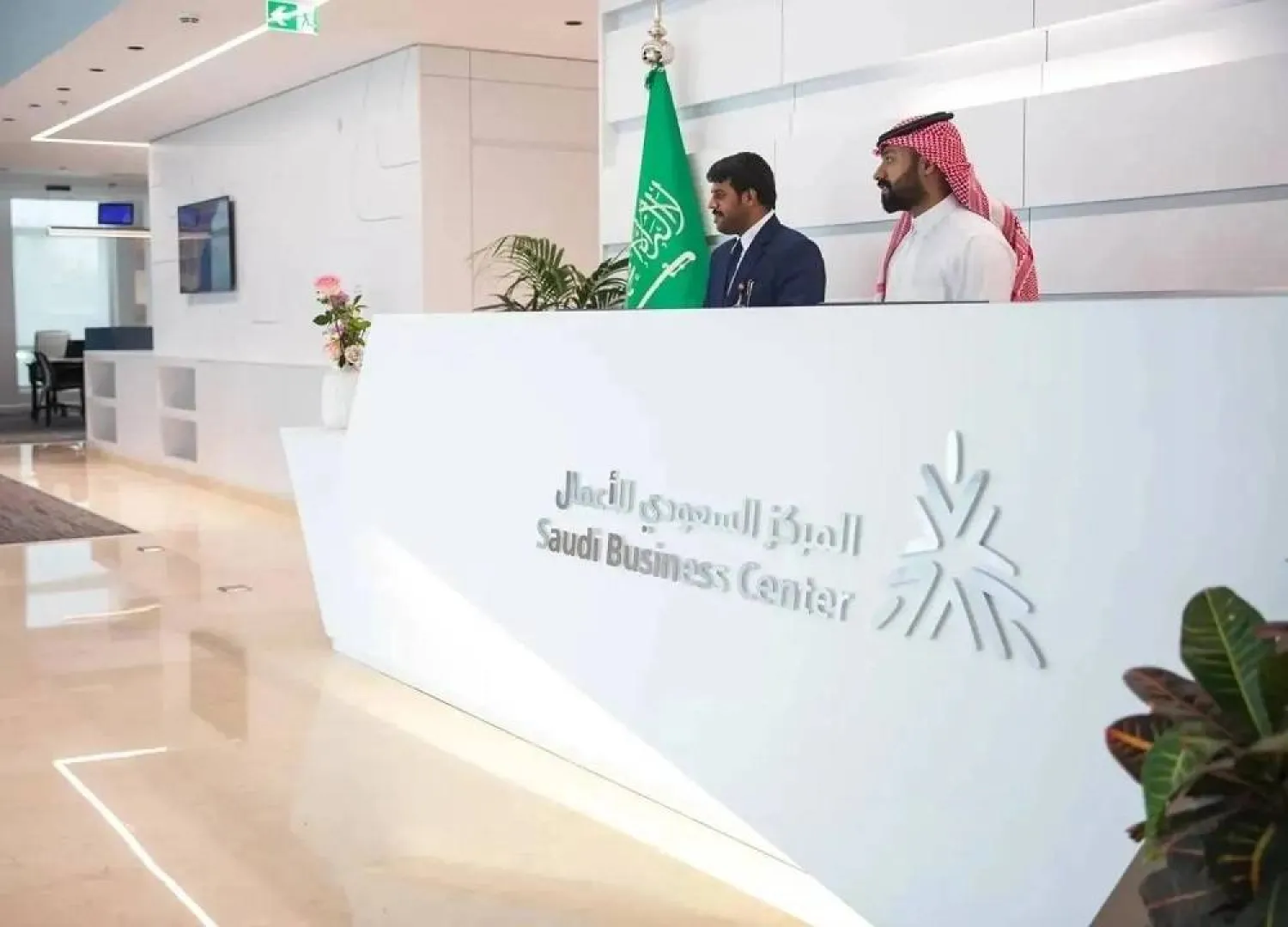

Saudi Arabia Opens Direct Communication Channel with Businesses to Overcome Investment Hurdles

The Saudi Business Center is specialized in facilitating the start and operation of economic activities. (Asharq Al-Awsat)
TT

Saudi Arabia Opens Direct Communication Channel with Businesses to Overcome Investment Hurdles

The Saudi Business Center is specialized in facilitating the start and operation of economic activities. (Asharq Al-Awsat)

Asharq Al-Awsat learned that Saudi Arabia’s Ministry of Investment is launching a new service to strengthen its relationship with national businesses by providing them with direct access to a suite of investment-related services.

The initiative will assign each company a dedicated relationship manager, who will serve as the main point of contact to streamline access to government programs and services. These include the Strategic Investor initiative, the enhanced services program “Meyza,” the Alignment Platform, and various services offered by government entities at the Business Center.

The move is part of the Kingdom’s broader effort to create a more dynamic and investor-friendly environment as outlined in the National Investment Strategy, launched in 2021 by Prince Mohammed bin Salman, Crown Prince and Prime Minister.

The strategy targets more than SAR 12 trillion ($3.2 trillion) in investments into the local economy by 2030. This includes SAR 5 trillion through the Shareek program, SAR 3 trillion in local investments by the Public Investment Fund, and SAR 4 trillion in contributions from domestic and international companies operating under the strategy’s framework.

The ministry has notified private sector companies that the new service will also serve as a platform to receive feedback, suggestions, and observations regarding regulations, business procedures, and related challenges. Additionally, businesses will receive invitations to take part in relevant events organized by the Ministry.

The initiative reflects the Ministry’s responsibility to manage Saudi Arabia’s investment environment, provide facilitation and support for investors, and elevate the competitiveness of the Kingdom’s economy. Efforts focus on expanding operational scope, boosting competitiveness, and removing barriers that hinder business performance.

In the first quarter of 2025, the ministry reported significant progress, including the issuance of 44 regional headquarters licenses, resolution of 38 investor-related challenges, and the processing of over 1,000 investor visa services. More than 55,000 digital services were also delivered through the Ministry’s website.

In parallel with these operational upgrades, the ministry is actively pursuing legislative and regulatory reforms to foster a secure and competitive investment climate.

One major development has been the establishment of the Saudi Investment Promotion Authority, which coordinates public and private efforts to position the Kingdom as a leading global investment destination.

Recent legal reforms include the implementation of new executive regulations for the commercial registry system. Under these changes, businesses now operate under a single commercial license for all their activities across the Kingdom, eliminating the need for sub-licenses and reducing financial burdens.

Additionally, new regulations for commercial names aim to streamline the name reservation and registration process, enhance their value, and ensure proper legal protection. The Ministry of Commerce has also introduced a mechanism to allow existing businesses to regularize their trade names in line with the updated regulations.



Oil Down as Easing Iran Unrest Dampens Geopolitical Risk Premium

FILE PHOTO: The LyondellBasell refinery, located near the Houston Ship Channel, is seen in Houston, Texas, US, May 5, 2019.  REUTERS/Loren Elliott/File Photo
FILE PHOTO: The LyondellBasell refinery, located near the Houston Ship Channel, is seen in Houston, Texas, US, May 5, 2019. REUTERS/Loren Elliott/File Photo
TT

Oil Down as Easing Iran Unrest Dampens Geopolitical Risk Premium

FILE PHOTO: The LyondellBasell refinery, located near the Houston Ship Channel, is seen in Houston, Texas, US, May 5, 2019.  REUTERS/Loren Elliott/File Photo
FILE PHOTO: The LyondellBasell refinery, located near the Houston Ship Channel, is seen in Houston, Texas, US, May 5, 2019. REUTERS/Loren Elliott/File Photo

Oil prices were down on Monday after rising during the previous session as civil unrest in Iran subsided, lowering the chance of a US attack that could disrupt supply from the major Middle Eastern producer.

Brent crude was trading at $63.85 a barrel at 0734 GMT, down 28 cents or 0.44%.

US West Texas Intermediate for February fell 36 cents, or 0.61%, to $59.08 a barrel. That contract expires on Tuesday and the more active March contract was at $59.10, down 24 cents, or 0.40%.

Iran's violent crackdown on protests spurred by economic hardship, which officials say killed 5,000 people, quelled the unrest, reported Reuters.

US President Donald Trump ‌seemed to ‌step back from his earlier threats of intervention, ‌saying ⁠on social media ‌Iran had called off mass hangings of protesters, although the country had not announced any such plans.

That appeared to lower the odds of a US intervention that could have disrupted oil flows from the fourth-largest producer among the Organization of the Petroleum Exporting Countries.

The downturn signaled a renewed retreat from multi-month highs reached last week, although prices still settled higher on Friday.

"The pullback followed a swift unwind of the 'Iran premium' that ‌had driven prices to 12-week highs, triggered ‍by signs of easing in Iran's crackdown ‍on protesters," IG market analyst Tony Sycamore said in a note.

That was ‍accentuated by US inventory data showing a substantial crude build and reinforcing bearish supply pressures, he added.

US markets are closed on Monday for Martin Luther King Jr. Day.

Crude stocks were up by 3.4 million barrels in the week ended January 9, the EIA said last week, versus analysts' expectations in a Reuters poll for a 1.7 million-barrel draw.

Markets are closely watching ⁠plans for Venezuela's oil fields, after Trump said the United States would run its oil industry after the capture of Nicolas Maduro.

The United States is moving as fast as possible to grant Chevron an expanded production license in the country, the US energy secretary told Reuters on Friday.

But markets were less confident about the prospects for scaled-up Venezuelan production.

"Venezuela and Ukraine remain on the back burner," said Vandana Hari, founder of oil market analysis provider Vanda Insights.

"Expect rangebound movement for the rest of the day, with US markets closed."

China's refinery throughput in 2025 rose 4.1% year on year, while crude oil output grew ‌1.5% from 2024, with both reaching all-time highs, government data showed on Monday.


Gold, Silver Hit Records and Stocks Fall as Trump Fans Trade Fears

(FILES) A jeweler shows gold and silver bars at his shop in downtown Kuwait City on January 12, 2026. (Photo by YASSER AL-ZAYYAT / AFP)
TT

Gold, Silver Hit Records and Stocks Fall as Trump Fans Trade Fears

(FILES) A jeweler shows gold and silver bars at his shop in downtown Kuwait City on January 12, 2026. (Photo by YASSER AL-ZAYYAT / AFP)

Gold and silver prices climbed to fresh peaks on Monday, as investors poured into safe-haven assets after US President Donald Trump threatened to impose extra tariffs on European countries over the control of Greenland.

Spot gold jumped 1.6% to $4,666.11 as of 0551 GMT, after scaling an all-time high of $4,689.39.

US gold futures for February ‌delivery advanced 1.7% ‌to $4,671.90 per ounce.

On Saturday, Trump vowed ‌to ⁠implement a wave ‌of increasing tariffs on European allies until the United States is allowed to buy Greenland, escalating a row over the future of Denmark's vast Arctic island.

European Union ambassadors are preparing retaliatory measures should the duties go ahead, EU diplomats said.

"Geopolitical tensions have given gold bulls yet another reason to push the yellow metal to new highs," StoneX ⁠senior analyst Matt Simpson said.

"With Trump throwing tariffs into the mix, it is clear ‌that his threat to Greenland is real, and ‍that we could be one ‍step closer to the end of NATO and political imbalances ‍within Europe."

US stock futures and dollar slid as Trump's latest tariff threats raised investors' appetite for safe-haven gold, yen and Swiss franc, in a broad risk-averse move across markets.

Spot silver climbed 3.6% to $93.15 per ounce, after hitting a record high of $94.08.

"On silver, the medium-term narrative remains constructive, supported by persistent physical deficits, resilient industrial demand and safe-haven ⁠demand," said Christopher Wong, a strategist at OCBC.

"But the pace of the recent extension may warrant some near-term tactical caution," Wong said, noting that the gold-silver ratio declined sharply from highs near 105 in late 2025 to low-50s, signaling silver's outsized performance versus gold.

J.P. Morgan analysts said that they have a stronger preference for gold relative to silver as any disruptive correction in silver could have some near-term contagion into gold but still presents a buying opportunity in gold which continues to have a cleaner, bullish structural story.

In other precious metals, ‌spot platinum added 0.6% to $2,341.08 per ounce, while palladium rose 0.1% to $1,801.87.


Saudi Arabia in Davos: Participation in Dialogues on World Economy, Geopolitical Changes

This photograph taken on January 18, 2026 shows a view of the Alpine resort of Davos with the Congress Center that will host the World Economic Forum (WEF) annual meeting. (Photo by Fabrice COFFRINI / AFP)
TT

Saudi Arabia in Davos: Participation in Dialogues on World Economy, Geopolitical Changes

This photograph taken on January 18, 2026 shows a view of the Alpine resort of Davos with the Congress Center that will host the World Economic Forum (WEF) annual meeting. (Photo by Fabrice COFFRINI / AFP)

The Saudi delegation led by Minister of Foreign Affairs Prince Faisal bin Farhan bin Abdullah is gearing up to participate in the World Economic Forum (WEF) Annual Meeting 2026 in Davos, Switzerland, from Monday to January 23.

This year’s forum, themed "A Spirit of Dialogue," comes amid swift changes in the world and geopolitical challenges.

Alongside Prince Saisal, the delegation includes Saudi Ambassador to the US Princess Reema bint Bandar bin Sultan bin Abdulaziz, Minister of Commerce Majid Al-Kassabi, Minister of Tourism Ahmed Al-Khateeb, Minister of Investment Khalid Al-Falih, Minister of Finance Mohammed Aljadaan, Minister of Communications and Information Technology Abdullah Alswaha, Minister of Industry and Mineral Resources Bandar Alkhorayef, and Minister of Economy and Planning Faisal Alibrahim.

Prince Faisal had said that the Kingdom’s participation demonstrates its commitment to international cooperation in addressing economic challenges.

He stressed the importance of maintaining regional peace, supporting sustainable development, and enhancing global economic partnerships.

Prince Faisal also highlighted the importance of public-private collaboration to achieve prosperity and security.

He noted that the Kingdom is broadening cooperation with international partners to better confront economic and environmental challenges while focusing on building institutional and human capacities to adapt to rapid transformations.

Al-Falih will speak in a session titled “AI Power Play, No Referees.”

Prince Faisal is set to speak in “Realignments and Surprises in the Middle East” and “All Geopolitics Is Local.”

Alkhorayef will be a speaker in a session called “Geopolitics of Materials,” while AlKhateeb will participate in the session on “Experiencing the World.”

Alibrahim will participate in the discussion panel "Economies Beyond the Shock Cycle," while Al-Kassabi will speak in a session titled “Many Shapes of Trade” and Alswaha is set to speak at “Converging Technologies to Win.”

Aljadaan and Alibrahim will also participate in the concluding “Global Economic Outlook” session.