


GCC Urges Security Council to Issue Resolution that Ends Genocide of Palestinians 

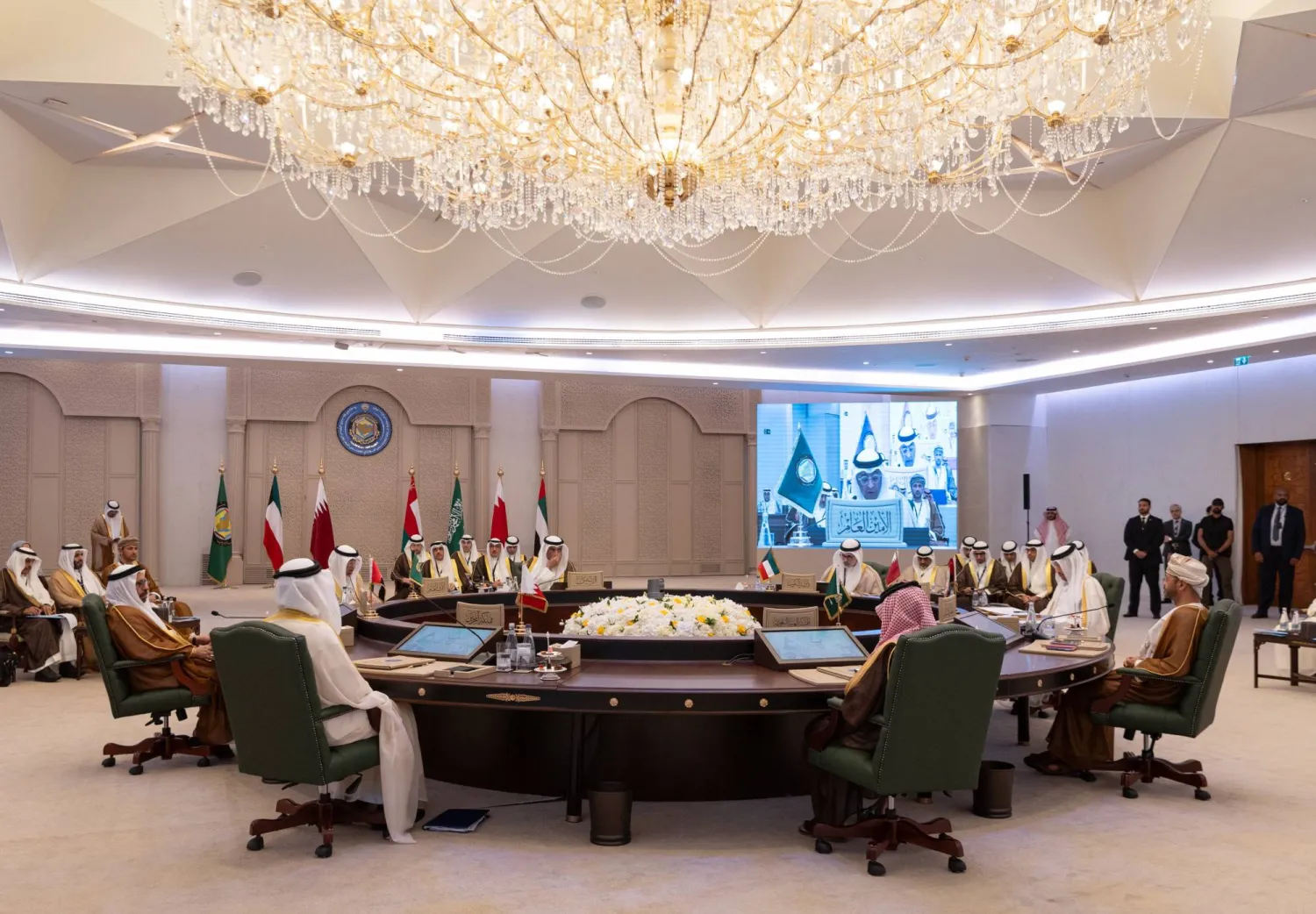
Gulf officials are seen at the GCC Ministerial Council meeting in Kuwait on Monday. (Saudi Foreign Ministry)
TT

GCC Urges Security Council to Issue Resolution that Ends Genocide of Palestinians 

Gulf officials are seen at the GCC Ministerial Council meeting in Kuwait on Monday. (Saudi Foreign Ministry)

The Gulf Cooperation Council (GCC) countries discussed on Monday regional and international developments, calling on the United Nations Security Council to take a binding decision on under Chapter 7 of its Charter ensuring compliance by Israeli forces with a permanent ceasefire in Gaza.

The move would also ensure an end to the “genocide in Gaza and forced displacement of the Palestinian people, the entry of humanitarian aid, and the restoration of normal life” in the coastal enclave, said the GCC Ministerial Council following its 164th session in Kuwait.

The council stressed its support for the Palestinian people in Gaza and its commitment “to easing their suffering, ending the Israeli blockade, opening all crossings for the entry of humanitarian and relief aid and basic needs, and ensuring their continued access.”

It condemned the Israeli authorities' announcement of the establishment of an agency targeting the displacement of Palestinians from Gaza.

It stressed its rejection of any attempts to displace the residents of Gaza and the need to respect the legitimate rights of the Palestinian people to establish an independent state on their land, warning against any plans aimed at infringing on their inalienable rights.

Moreover, the council held Israel “fully responsible for the ongoing violations and attacks on Gaza, which have resulted in the killing of tens of thousands of civilians, mostly women and children.”

It deemed the attacks “war crimes and crimes against humanity under international humanitarian law,” dismissing Israeli claims that it is acting in self-defense.

The council slammed the practices of the Israeli authorities and their policy of collective punishment against the residents of Gaza, calling on the international community to take the necessary measures to counter such actions.

The council stressed its support for the efforts of the international coalition to implement the two-state solution, and its support for Saudi Arabia’s efforts, in partnership with Norway and the European Union, to set a timetable for the establishment of an independent Palestinian state and end the Israeli occupation.

It underlined the importance of participation in the high-level international conference to reach a peaceful settlement of the Palestinian issue and implement the two-state solution, scheduled to be held at the United Nations headquarters in New York in June and co-chaired by Saudi Arabia and France.

The council underscored the centrality of the Palestinian issue, the end of the Israeli occupation, and the establishment of an independent Palestinian state on the 1967 borders, with East Jerusalem as its capital in line with the Arab Peace Initiative and international resolutions.

It stressed support for the sovereignty of the Palestinian people over all occupied Palestinian territories, and emphasized “the need to intensify cooperation with international and regional powers and redouble the efforts of the international community to resolve the conflict in a manner that fulfils all the legitimate rights of the brotherly Palestinian people.”

The Ministerial Council called on all countries to take the necessary measures to recognize the State of Palestine and support the national rights of the Palestinian people.

It also stressed “the importance of national reconciliation to restore Palestinian national unity and bring about unity to achieve the interests of the Palestinian people.”

Furthermore, it called on the international community “to intervene to stop the targeting of the Palestinian presence in the city of Jerusalem, the expulsion of Palestinians from their homes, attempts to change its legal and historical character, its demographic composition, and the arrangements related to Islamic holy sites, and attempts to impose Israeli sovereignty over it in clear violation of international law, international resolutions, and existing agreements concluded in this regard.”

It highlighted the importance of the statement of the Extraordinary Arab Summit (Palestine Summit) regarding the deployment of international protection and peacekeeping forces in the Palestinian territories in Gaza and the West Bank, pursuant to a Security Council resolution.

It also welcomed the reform measures taken by the Palestinian leadership and the appointment of Hussain Al-Sheikh as Vice President of the State of Palestine and Vice Chairman of the Executive Committee of the Palestine Liberation Organization.


Jeddah Port Welcomes First Group of Sudanese Pilgrims

The directorate reaffirmed its readiness to manage pilgrim influxes at all ports -SPA
TT

Jeddah Port Welcomes First Group of Sudanese Pilgrims

The directorate reaffirmed its readiness to manage pilgrim influxes at all ports -SPA

The General Directorate of Passports at Jeddah Islamic Port welcomed the first group of Sudanese pilgrims arriving for the 1447 AH Hajj season, completing their entry procedures with speed and efficiency, SPA reported.

The directorate reaffirmed its readiness to manage pilgrim influxes at all ports by deploying state-of-the-art technology and multilingual, highly qualified personnel to ensure a smooth transit process.

Also on Friday, the General Directorate of Passports at Prince Mohammad bin Abdulaziz International Airport in Madinah welcomed the inaugural flight of Moroccan pilgrims arriving for the 1447 AH Hajj season.

The directorate reaffirmed its full readiness to manage the influx of pilgrims across all air, land, and sea ports by deploying state-of-the-art technology and multilingual, highly qualified personnel to ensure a smooth transit process.


King of Bahrain: Iran Must Cease Meddling in Our Internal Affairs

Bahrain’s King Hamad bin Isa Al Khalifa. (BNA file)
TT

King of Bahrain: Iran Must Cease Meddling in Our Internal Affairs

Bahrain’s King Hamad bin Isa Al Khalifa. (BNA file)

Bahrain’s King Hamad bin Isa Al Khalifa called on Thursday Iran to cease interfering in the internal affairs of his country and Arab Gulf nations, stressing that the “nation comes above all and that Bahrain is a trust borne by all its citizens.”

In remarks to the media, he said the recent Iranian attacks against Bahrain’s “security, stability, and the safety of its people exposed those who betrayed the nation and aligned themselves with the enemy.”

“In times when nations face mounting challenges and when people are test, true positions are revealed,” he added, noting: “While the Bahrain Defense Force remained highly vigilant in defense of the kingdom, a small group of individuals chose to collaborate with the enemy and cooperated with those who violated national sovereignty.”

“This was a grave act of treason and an unforgivable crime,” he declared in remarks carried by Bahrain’s state news agency BNA.

King Hamad stressed that Iran must cease meddling in the internal affairs of Bahrain and Gulf Cooperation Council countries, expressing his “deep anger” over the recent developments and adding that the people of Bahrain share this sentiment.

He questioned “how one could not feel anger when those entrusted with the nation’s interests have betrayed it, and when those elected to represent the people stood with traitors who were rejected by public.”

“Public opinion stands united in rejecting such actions and called for the expulsion of those who cooperated” with Iran’s aggression, he went on to say.

“Those who betray the nation do not deserve the honor of belonging to it or the privilege of living on its land. Citizenship is not merely granted, but a binding covenant, and those who break it forfeit their right to it,” announced King Hamad.

Moreover, he expressed regret over the positions of some lawmakers “who sided with traitors instead of upholding their responsibility to protect national interests.”

He underscored the importance of maintaining unity and integrity within the Council of Representatives, adding: “Those who chose to align themselves with those who attacked the nation should go to them, as there is no place among the people for those who side with the country’s enemies.”

“The peoples of the GCC fully support the rulings against those found guilty of betrayal, including imprisonment and the revocation and withdrawal of nationality, and have called for further measures,” he went on to say.

“These deterrent measures are not acts of retribution, but a safeguard for the majority of loyal citizens, and a necessary step to prevent circumstances that could require the armed forces to assume control under military provisions in defense of Bahrain,” said King Hamad.

“Those lawmakers face two options: either to issue a clear apology to the people of Bahrain that restores trust, or to join those they chose to align with, who have left the country or been expelled under final court rulings for acts of betrayal,” he warned.

He stressed that parliamentary membership “is a trust and representation is an honor not deserved by those whose actions are tainted by betrayal. There is no place for them among the people, nor any honor in representing them going forward.”

Furthermore, King Hamad said that stability will not be restored, nor will normal life resume, “until ranks are cleansed of every traitor and accomplice.”

He reiterated that “the nation stands above all and that Bahrain is a trust borne by all.”


UAE Announces Travel Ban on Nationals to Iran, Lebanon and Iraq

The flag of the UAE. (Asharq Al-Awsat)
TT

UAE Announces Travel Ban on Nationals to Iran, Lebanon and Iraq

The flag of the UAE. (Asharq Al-Awsat)

The United Arab Emirates foreign ministry on Thursday announced a travel ban on Emirati nationals going to Iran, Lebanon and Iraq, citing regional developments including the Middle East war.

Iran has targeted the Gulf nation throughout the Middle East conflict sparked by a US-Israeli attack before a fragile ceasefire was announced, including missiles fired at civilian and energy infrastructure.

"In light of current regional developments, the Ministry of Foreign Affairs (MoFA) announces a travel ban on UAE nationals travelling to the Islamic Republic of Iran, the Lebanese Republic, and the Republic of Iraq," state news agency WAM reported.

It said the ministry called on "all UAE nationals currently in these countries to expedite their immediate return" to the UAE.
