Ancient Myanmar Ball Game Battles for Survival in Troubled Nation 

This photo taken on May 8, 2025 show a man weaving cane into a chinlone ball, used in the ancient Myanmar game considered a blend between sport and art, at a workshop in Hinthada township in the Irrawaddy delta region. (AFP)
TT

Ancient Myanmar Ball Game Battles for Survival in Troubled Nation 

This photo taken on May 8, 2025 show a man weaving cane into a chinlone ball, used in the ancient Myanmar game considered a blend between sport and art, at a workshop in Hinthada township in the Irrawaddy delta region. (AFP)

Mastering control of the rising and falling rattan chinlone ball teaches patience, says a veteran of the traditional Myanmar sport -- a quality dearly needed in the long-suffering nation.

"Once you get into playing the game, you forget everything," says 74-year-old Win Tint.

"You concentrate only on your touch and you concentrate only on your style."

Chinlone is Myanmar's national game and dates back centuries. Branded a blend of sport and art, it is often played to music and is typically practiced differently by men and women.

Male teams in skimpy shorts stand in a circle using stylized strokes of their feet, knees and heads to pass the ball in a game of "keepy-uppy", with a scoring system impenetrable to outsiders.

Women play solo like circus performers -- kicking the ball tens of thousands of times per session while walking tightropes, twirling umbrellas and perching on chairs balanced atop bottles.

Teen prodigy Phyu Sin Phyo hones her skills at the court in Yangon, toe-bouncing a burning ball while spinning a hula-hoop -- also on fire.

"I play even when I am sick," says the 16-year-old. "It is important to be patient to become a good chinlone player."

But play has plunged in recent years, with the Covid-19 pandemic followed by the 2021 military coup and subsequent civil war.

Poverty rates are shooting up and craftsmen face increasing problems sourcing materials to make balls.

But the rising and falling rhythm of the game offers its practitioners a respite.

"When you hear the sound of kicking the ball it's like music," Win Tint, vice-chairman of the Myanmar Chinlone Federation, told AFP.

"So when you play chinlone, you feel like dancing."

- 'Play day is happy' -

Different versions of the hands-free sport known as "caneball" are widely played across Southeast Asia.

In Thailand, Malaysia and Indonesia players kick and head the ball over a net in the volleyball-style "sepak takraw".

In Laos it is known as "kataw" while Filipinos play "sipa" -- meaning kick.

In China, people kicking around weighted shuttlecocks in parks is a common sight.

Myanmar's iteration dates back 1,500 years, according to popular belief.

Some cite a French archaeologist's discovery of a replica silver chinlone ball at a pagoda built in the Pyu era of 200 BC to 900 AD.

It was initially practiced as a casual pastime, a fitness activity and for royal entertainment.

But in 1953 the game was given rules and a scoring system, as part of an effort to codify Myanmar's national culture after independence from Britain.

"No one else will preserve Myanmar's traditional heritage unless the Myanmar people do it," said player Min Naing, 42.

Despite the conflict, players still gather under motorway overpasses, around street lamps blighted with wartime blackouts and on dedicated chinlone courts -- often ramshackle open-sided metal sheds with concrete floors.

"For a chinlone man, the day he plays is always a happy day. I am happy, and I sleep well at night," says Min Naing.

"On the days I don't play it, I feel I am missing something."

- 'Respect the chinlone' -

But Win Tint is concerned that participation rates are falling.

"I worry about this sport disappearing," says master chinlone ball maker Pe Thein, toiling in a sweltering workshop in Hinthada, 110 kilometers (70 miles) northwest of Yangon.

"That's the reason we are passing it on through our handiwork."

Cross-legged men shave cane into strips, curve them with a hand crank and deftly weave them into a melon-sized ball with pentagonal holes, boiled in a vat of water to seal its strength.

"We check our chinlone's quality as if we're checking diamonds or gemstones," adds the 64-year-old Pe Thein.

"As we respect the chinlone, it respects us back."

Each ball takes around two hours to make and earns business-owner Maung Kaw $2.40 apiece.

But supplies of the best-quality rattan he covets from nearby Rakhine are dwindling.

There is fierce fighting in the state between the military and opposition groups that now control almost all of it.

Farmers are too fearful to plunge into the jungle battleground to cut cane, says Maung Kaw, endangering his profession.

"It should not be that we have players but no chinlone makers," says the 72-year-old.

"I want to work as well as I can for as long as I can."


UNESCO Honors Al-Bisht Al-Hasawi as Thousands Flock to Al-Ahsa Festival

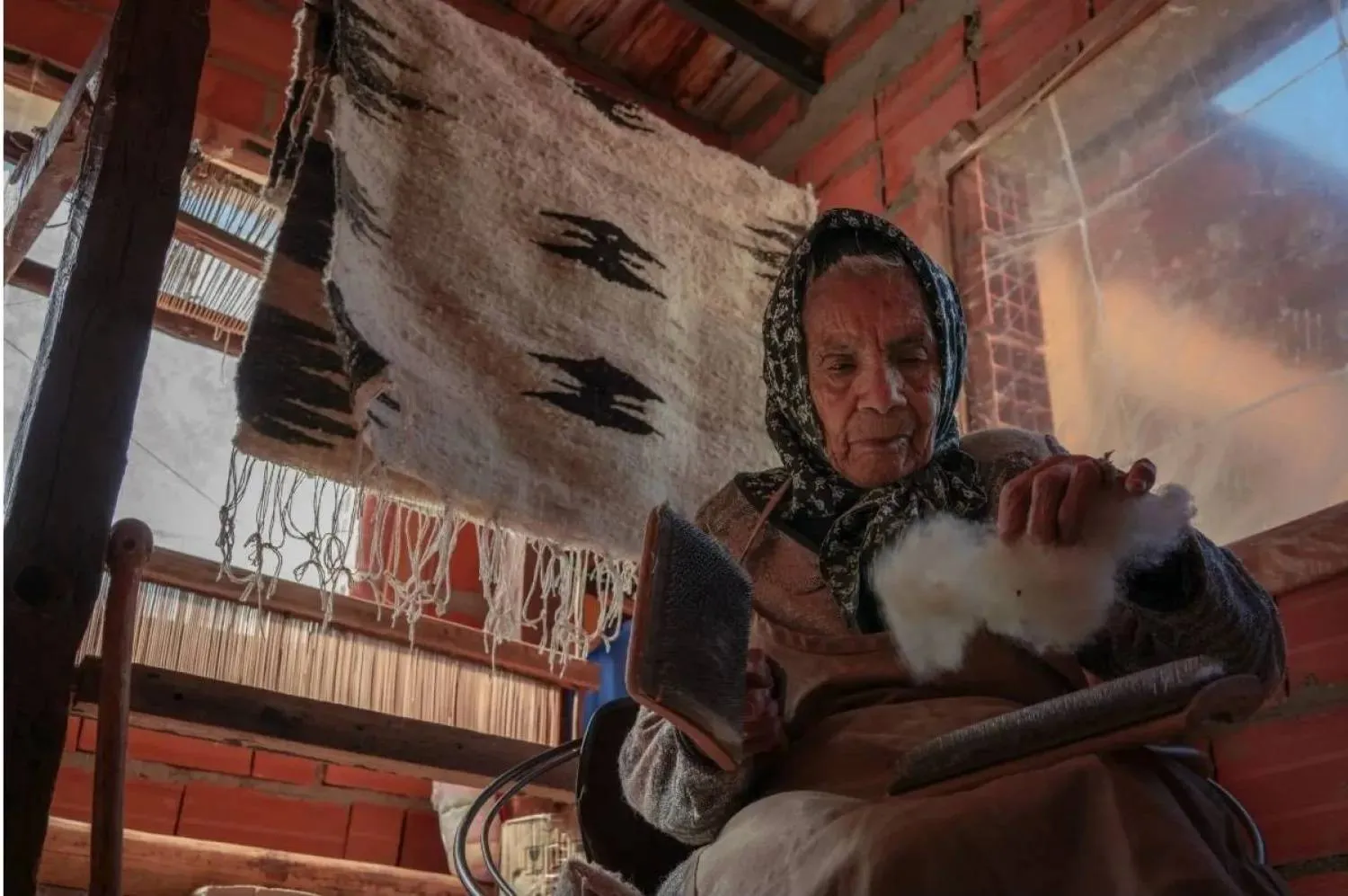
Visitors can explore interactive displays, participate in live workshops, and witness the meticulous process of tailoring this iconic symbol of prestige - SPA
TT

UNESCO Honors Al-Bisht Al-Hasawi as Thousands Flock to Al-Ahsa Festival

Visitors can explore interactive displays, participate in live workshops, and witness the meticulous process of tailoring this iconic symbol of prestige - SPA

The third edition of Al-Bisht Al-Hasawi Festival is drawing thousands of regional and international visitors to Ibrahim Palace in historic Al-Hofuf.

Organized by the Heritage Commission, this year’s festival celebrates the inscription of the Bisht on UNESCO’s Representative List of the Intangible Cultural Heritage of Humanity.

The event showcases Al-Ahsa’s centuries-old tradition of hand-weaving and gold embroidery, a craft passed down through generations of local families, SPA reported.

Visitors can explore interactive displays, participate in live workshops, and witness the meticulous process of tailoring this iconic symbol of prestige.

With UNESCO's participation and representatives from six countries, the festival has evolved into a global platform for cultural dialogue, cementing the Bisht’s status as a world-class cultural treasure.


Saudi, Syrian Culture Ministers Tour National Museum of Damascus

The ministers observed the museum’s extensive collections spanning prehistoric eras to modern art. SPA
TT

Saudi, Syrian Culture Ministers Tour National Museum of Damascus

The ministers observed the museum’s extensive collections spanning prehistoric eras to modern art. SPA

Saudi Minister of Culture Prince Badr bin Abdullah bin Farhan and his Syrian counterpart, Mohammed Yassin Saleh, have toured the National Museum of Damascus during the Kingdom’s participation as guest of honor at the 2026 Damascus International Book Fair.

The ministers observed on Thursday the museum’s extensive collections spanning prehistoric eras to modern art.

A particular focus was placed on the Arab-Islamic wing, featuring significant artifacts from the Umayyad period.

The Kingdom's participation as guest of honor at the 2026 Damascus International Book Fair, which runs until February 16, stems from the role culture plays within Saudi Vision 2030.


Saudi Culture Minister Inaugurates Kingdom's Pavilion as Guest of Honor at Damascus Book Fair

Saudi Culture Minister Inaugurates Kingdom's Pavilion as Guest of Honor at Damascus Book Fair
TT

Saudi Culture Minister Inaugurates Kingdom's Pavilion as Guest of Honor at Damascus Book Fair

Saudi Culture Minister Inaugurates Kingdom's Pavilion as Guest of Honor at Damascus Book Fair

Saudi Minister of Culture Prince Badr bin Abdullah bin Farhan, who is the Literature, Publishing and Translation Commission Board Chairman, has inaugurated the Kingdom’s pavilion as guest of honor at the 2026 Damascus International Book Fair.

The inauguration took place on Thursday in the Syrian capital in the presence of Syrian Minister of Culture Mohammed Yassin Saleh and his Qatari counterpart, Sheikh Abdulrahman bin Hamad bin Jassim bin Hamad Al Thani.

The Kingdom's participation as guest of honor at the fair, which runs until February 16, stems from the role culture plays within Saudi Vision 2030.

Literature, Publishing, and Translation Commission Chief Executive Dr. Abdul Latif Al-Wasil affirmed that the Kingdom's presence as guest of honor at the fair reflects its leading role in the Arab cultural landscape and embodies its belief in the role of culture as a bridge for communication, a space for dialogue, and a tool for supporting joint cultural initiatives.

He explained that the Kingdom's presence in Damascus affirms the depth of Saudi-Syrian relations, based on partnership and mutual respect, and stems from the Kingdom's commitment to strengthening cultural exchange.

The Kingdom's pavilion showcases the cultural and creative diversity of the Saudi cultural and literary scene through a comprehensive cultural program that includes intellectual seminars, poetry evenings, a manuscripts exhibition, a Saudi fashion corner, a hospitality corner, and a corner displaying archaeological replicas, in addition to Saudi performing arts performances that express the depth of the Kingdom's cultural heritage.

The pavilion offers visitors to the exhibition the opportunity to explore aspects of Saudi culture in its literary, heritage, and human dimensions within a cultural experience presented in a unifying Arab spirit, affirming that culture remains one of the most effective means of fostering understanding and building shared meaning.

Syrian President Ahmed al-Sharaa met on Thursday with Prince Badr at the Conference Palace in Damascus.

The meeting was attended on the Saudi side by Advisor at the Royal Court Mohammed Al-Tuwaijri, along with other officials.