Chinese Chip Firm UniVista Offers Free Product Trial after US Ban on Chip Design Software

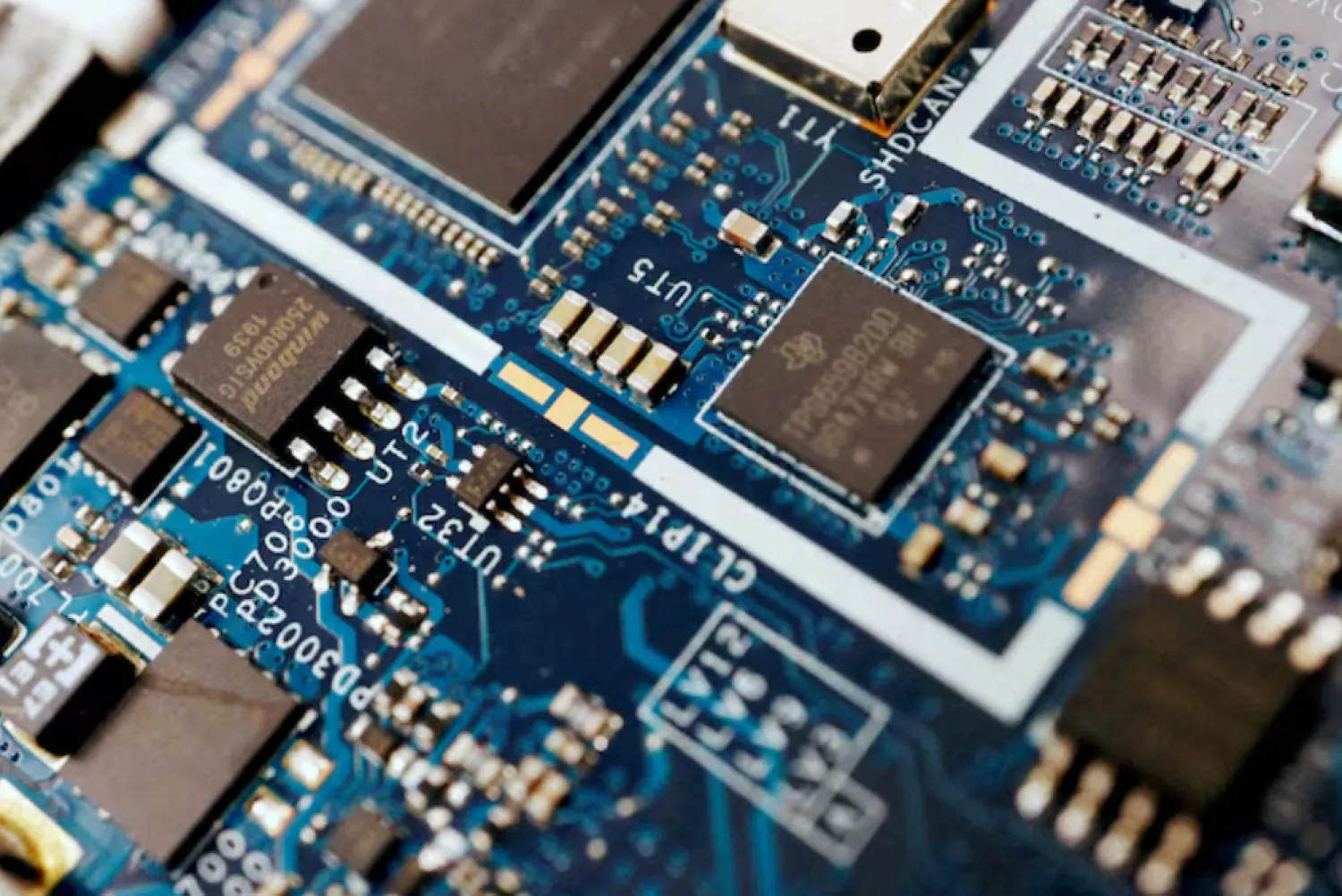
Semiconductor chips are seen on a circuit board of a computer in this illustration picture taken February 25, 2022. REUTERS/Florence Lo/Illustration/File Photo
TT

Chinese Chip Firm UniVista Offers Free Product Trial after US Ban on Chip Design Software

Semiconductor chips are seen on a circuit board of a computer in this illustration picture taken February 25, 2022. REUTERS/Florence Lo/Illustration/File Photo

UniVista, a Chinese supplier of electronic design automation (EDA) tools for semiconductors, is offering free trials for its key software to Chinese firms, the company said in a WeChat post on Tuesday.

The move comes after the United States ordered a broad swathe of companies, including EDA software suppliers, to stop shipping goods to China without a licence and revoked licences already granted to certain suppliers.


China Could See Widespread Use of Brain-Computer Tech in 3-5 Years, Expert Says

People cross a road in Beijing on March 6, 2026. (AFP)
TT

China Could See Widespread Use of Brain-Computer Tech in 3-5 Years, Expert Says

People cross a road in Beijing on March 6, 2026. (AFP)

China could see brain-computer interface (BCI) technology move into practical public use within three to five years as products mature, a leading BCI expert said, as Beijing races to catch up with US startups including Elon Musk's Neuralink.

Beijing elevated BCIs to a core future strategic industry in its new five-year plan released this week, placing it alongside sectors such as quantum, embodied AI, 6G and nuclear fusion.

"New policies will not change things overnight. I think after another three to five years, we will gradually see some (BCI) products moving ‌towards actual practical ‌service for the public," said Yao Dezhong, Director of ‌the ⁠Sichuan Institute of Brain ⁠Science, in an interview on Saturday on the sidelines of China's annual parliament meetings in Beijing.

TRIALS

A national BCI development strategy released last year aims for major technical breakthroughs by 2027 and for China to cultivate two or three world-class firms by 2030.

China is the second country to launch invasive BCI human trials. More than 10 trials are active, matching the US, while scientists plan to enroll more ⁠than 50 patients nationwide this year.

Recent high-profile trials have enabled ‌paralyzed patients and amputees to regain partial mobility ‌and operate robotic hands or intelligent wheelchairs.

The government has already integrated some BCI treatments into ‌national medical insurance in a few pilot provinces, and the domestic market is ‌projected to reach 5.58 billion yuan ($809 million) by 2027, according to CCID Consulting.

"China has many advantages in BCIs, such as its huge population, enormous patient demand, cost-effective industrial chain and abundant pool of STEM (science, technology, engineering and maths) talent," said Yao, who also ‌leads a key neuroinformatics research center under China's science and technology ministry.

Policies such as insurance integration and national standards aim ⁠to close the "huge" ⁠gap between scientific research, industry and clinical applications, he said.

"The path from experimental to clinical trials is quite long, and this remains a problem," he told Reuters, adding that many Chinese hospitals have established BCI research labs to speed up the process.

While US startups like Neuralink focus on invasive chips that penetrate brain tissue, Chinese researchers are developing invasive, semi-invasive and non-invasive BCIs with wider potential clinical use.

Semi-invasive BCIs, placed on the brain's surface, may lose some signal quality but reduce risks such as tissue damage and other post-surgery complications. Neuralink's surgical robot can insert hundreds of electrodes into the brain in minutes.

"This is a technical advantage, which I think is remarkable," said Yao, of Neuralink.

"(But) China is actually making very fast progress in this area now. In fact, Musk's direction is basically achievable domestically."


Questions over AI Capability as Tech Guides Iran Strikes

Artificial intelligence tools can also be found built into semi-autonomous attack drones and other weapons. ATTA KENARE / AFP
TT

Questions over AI Capability as Tech Guides Iran Strikes

Artificial intelligence tools can also be found built into semi-autonomous attack drones and other weapons. ATTA KENARE / AFP

The latest bout of fighting between the United States, Israel and Iran has seen AI deployed as never before to sift intelligence and select targets, although the technology's use in war remains hotly debated.

Different forms of artificial intelligence have reportedly been used to guide the Israeli campaign in Gaza and the capture of Venezuelan leader Nicolas Maduro in an American raid.

And experts believe the technology has helped select targets for the thousands of US and Israeli strikes on Iran since February 28 -- although exact uses have yet to be confirmed.

Today "every military power of any significance invests hugely in military applications of AI," said Laure de Roucy-Rochegonde of French think tank IFRI.

"Almost any military function can be boosted with AI," from "logistics to reconnaissance, observation, information warfare, electronic warfare and cybersecurity," she added.

AI tools can also be found built into semi-autonomous attack drones and other weapons.

But one of their best-known uses is in shortening the so-called "kill chain", the time and decision-making between detecting a target and striking it.

US forces use the Maven Smart System (MSS) built by Palantir, which the company says can identify and prioritize potential targets.

The Washington Post reported this week that Anthropic's Claude generative AI model has been integrated with Maven to boost the tool's detection and simulation capabilities.

Palantir and Anthropic did not respond to AFP's requests for comment.

AI algorithms "allow us to move much faster in handling information, and above all to be more comprehensive," said Bertrand Rondepierre, head of the French army's AI agency AMIAD.

The technology can sift through vast quantities of data, including "satellite images, radar, electromagnetic waves, sound, drone images and sometimes real-time video," he added.

Human control

AI's deployment in war poses a slew of moral and legal questions, notably on the extent of human control over their actions.

The debate was brought to the fore during the fighting in Gaza, where Israeli forces used a program dubbed "Lavender" to identify targets -- within a certain margin of error.

That application worked "because it covered a very limited area", de Roucy-Rochegonde said.

Israel also has a "mass surveillance system" that could feed data about the enclave's inhabitants into Lavender.

It seems less likely that such a system has been set up in Iran," she added.

"If something does go wrong, then who's responsible?" Peter Asaro, chair of the International Committee for Robot Arms Control (ICRAC), said in an interview with AFP.

The widely reported bombing of an Iranian school -- which authorities there say killed 150 people -- could be a case of mistaken AI targeting, he added.

Neither the United States nor Israel has acknowledged responsibility for the strike.

AFP was unable to reach the scene of the school to verify what happened there.

But the site was close to two facilities controlled by the Iranian Revolutionary Guard Corps (IRGC), Tehran's powerful ideological elite.

"They didn't distinguish it from the military base as they should have, (but) who is they?" he asked -- human or machine?

If AI was used, he argued that the key question is "how old was the data" used for the targeting, and whether the misdirected strike stemmed from "a database error".

Step by step

Rondepierre said that AIs "operating without anyone being in control" are "science fiction".

In France, at least, "military commanders are at the heart of the action and the design of these systems," he insisted.

"No military decision-maker would agree to use an AI if he didn't have trust in and control over what it's doing," Rondepierre added.

"They know what the risks involved are, what the capabilities of these systems are and what contexts they can use them in, with what level of trust."

Today was just the "beginning" on use of AI by the world's armed forces, said Benjamin Jensen of Washington-based think tank CSIS, who has taken part in tests of AI in military decision-making over the past decade.

The world's armies "haven't fundamentally rethought how we plan, how we conduct operations, to take advantage" of AI's capabilities, he added.

"It's going to take a generation for us to really figure this out."


Indonesia to Ban Social Media Access for Under-16s

 A YouTube logo hangs on the wall at the YouTube Podcast Awards ceremony, in Berlin, Wednesday, Feb. 25, 2026. (Christophe Gateau/dpa via AP)
A YouTube logo hangs on the wall at the YouTube Podcast Awards ceremony, in Berlin, Wednesday, Feb. 25, 2026. (Christophe Gateau/dpa via AP)
TT

Indonesia to Ban Social Media Access for Under-16s

 A YouTube logo hangs on the wall at the YouTube Podcast Awards ceremony, in Berlin, Wednesday, Feb. 25, 2026. (Christophe Gateau/dpa via AP)
A YouTube logo hangs on the wall at the YouTube Podcast Awards ceremony, in Berlin, Wednesday, Feb. 25, 2026. (Christophe Gateau/dpa via AP)

Indonesia said Friday it would ban social media access for children under 16, citing threats from online pornography, cyberbullying, online fraud and internet addiction.

"Accounts belonging to children under 16 on high-risk platforms will start to be deactivated, beginning with YouTube, TikTok, Facebook, Instagram, Threads, X, Bigo Live, and Roblox," Communications Minister Meutya Hafid said in a statement.

"The government is stepping in so that parents no longer have to fight alone against the giants of the algorithm. Implementation will begin on March 28, 2026," she added.

The ban will be introduced in stages "until all platforms fulfil their compliance obligations."

TikTok Indonesia and Google Indonesia did not immediately respond to requests for comment.

A European Union expert group began work this week on a similar social media ban for children after Australia in December required TikTok, YouTube, Snapchat and other sites to remove accounts held by under-16s.

Brussels is keeping a close eye on how successful the Australian ban proves to be, with legal challenges already filed against it.

France, along with Denmark, Greece and Spain, has been pushing for similar action at EU level, and India has been considering a teen social media ban of its own.

Meutya said the government understood the new regulation "may cause some initial inconvenience" for users in Indonesia, but "we believe that this is the best step the Government must take in the midst of a digital emergency."

She added: "We are taking this step to reclaim the sovereignty of our children's future. We want technology to humanize humans, not sacrifice our children's childhood."