


Moscow Poses No Threat to Britain, Says Russia's UK Embassy

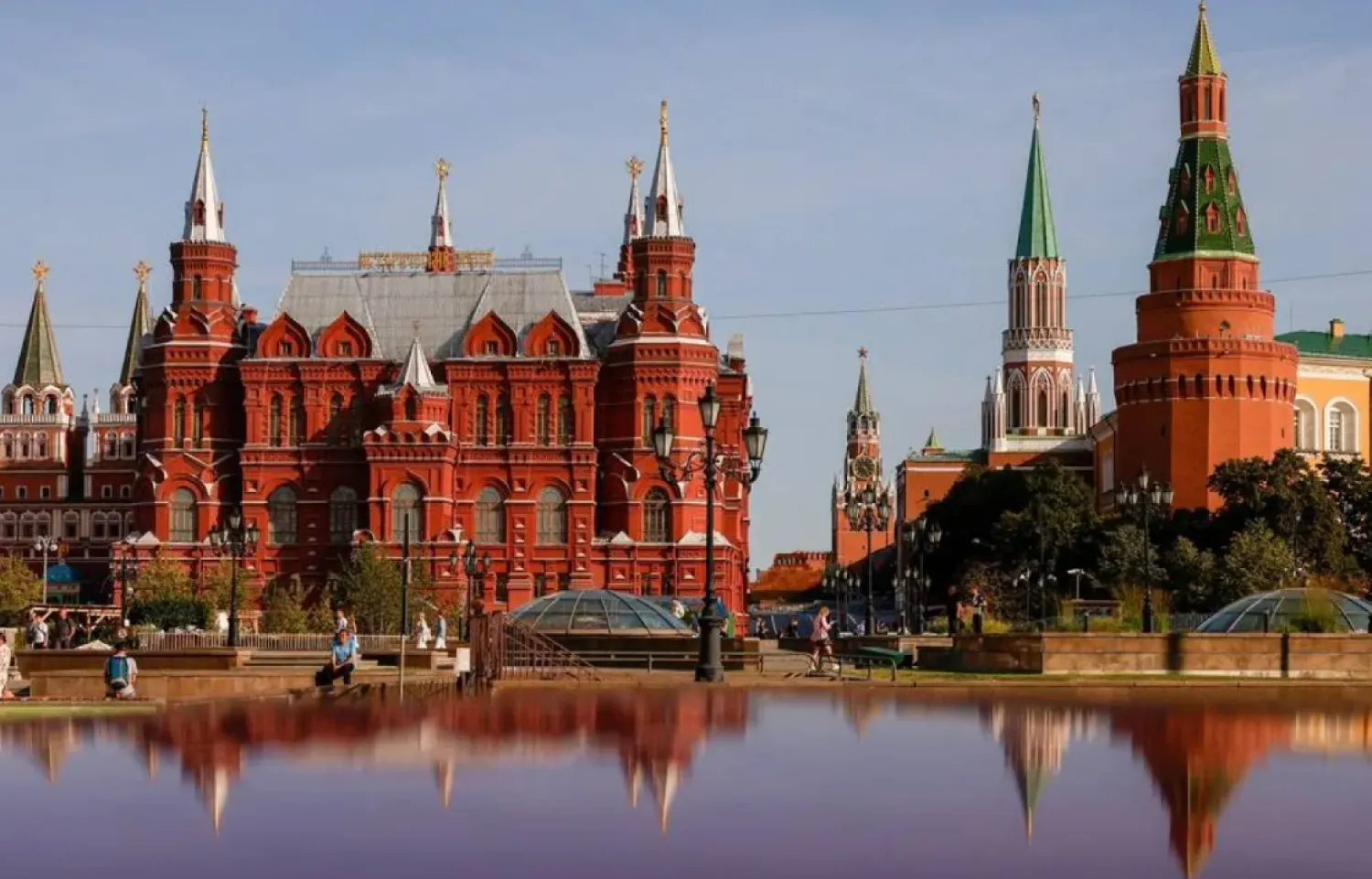
A view shows the Kremlin Wall and the State Historical Museum in central Moscow, Russia August 21, 2024. (Reuters)
TT

Moscow Poses No Threat to Britain, Says Russia's UK Embassy

A view shows the Kremlin Wall and the State Historical Museum in central Moscow, Russia August 21, 2024. (Reuters)

Russia's embassy in London said on Tuesday that Moscow had no intention of attacking Britain, rejecting accusations by the British government of growing aggression and daily cyberattacks.

Britain said on Monday it would radically change its approach to defense to address new threats, including from Russia, after endorsing the findings of an independently-produced Strategic Defense Review.

After unveiling the defense overhaul on Monday, Healey said Europe was facing war, growing Russian aggression, new nuclear risks and daily cyberattacks, Reuters reported.

Russia's embassy issued a statement on Tuesday criticizing what it described as "a fresh salvo of anti-Russian rhetoric".

"Russia poses no threat to the United Kingdom and its people," the statement said. "We harbor no aggressive intentions and have no plans to attack Britain. We are not interested in doing so, nor do we need to."

Relations between Russia and Britain are at their lowest level since the Cold War. They deteriorated further after Russia's full-scale invasion of Ukraine in February 2022, and Britain and other NATO members have provided large amounts of military aid and other support to Kyiv.

China's embassy in London also criticised Britain's defense review, saying in a statement on Tuesday that the document deliberately misrepresented Beijing's defense policy to justify British military expansion.

The review had described China as "a sophisticated and persistent challenge", citing its rapid military modernisation, including an expanded nuclear arsenal, and saying Beijing was likely using espionage and cyberattacks, and stealing intellectual property.



IMF Warns of 'Inevitable' AI-powered Threats to Global Financial System

FILE PHOTO: A view of the International Monetary Fund (IMF) logo at its headquarters in Washington, D.C., US, November 24, 2024. REUTERS/Benoit Tessier/File Photo
TT

IMF Warns of 'Inevitable' AI-powered Threats to Global Financial System

FILE PHOTO: A view of the International Monetary Fund (IMF) logo at its headquarters in Washington, D.C., US, November 24, 2024. REUTERS/Benoit Tessier/File Photo

The International Monetary Fund (IMF) warned on Thursday of the risks to global financial stability posed by cyberattacks powered by advanced artificial intelligence tools, calling for greater international cooperation on the issue.

"IMF analysis suggests that extreme cyber-incident losses could trigger funding strains, raise solvency concerns, and disrupt broader markets," the lender warned in a new report.

According to AFP, the study's authors highlighted the risks posed by the highly interconnected nature of the global financial system, with advanced AI models able to "dramatically reduce" the time and cost of exploiting vulnerabilities.

The warning comes weeks after AI company Anthropic cautioned that its yet-to-be-released "Mythos" model was incredibly adept at finding and exploiting such weaknesses.

The model was particularly efficient at identifying vulnerabilities that developers and users had been previously unaware of.

In the hands of hackers, such so-called "zero-day" vulnerabilities are considered particularly dangerous.

On Wednesday, White House economic adviser Kevin Hassett told Fox News that an "all-government" and private sector effort was being made to test the model and ensure it does not cause harm to US businesses or government.

A day earlier, the US government announced a policy shift in which it would have access to tech giants' new AI models to evaluate them before they are released.

The IMF warned that emerging and developing countries, "which often have more severe resource constraints, may be disproportionately exposed to attackers targeting regions with weaker defenses."

The risks, the authors said, were systemic, cut across sectors and came with the threat of contagion, with the reliance on a small number of platforms and cloud providers likely to increase "the impact of any single exploited weakness."

"Defenses will inevitably be breached, so resilience must also be a priority, specifically to limit how far incidents spread and ensure rapid recovery," the report said.

IMF chief Kristalina Georgieva warned last month that the global financial system was not ready for the cybersecurity threats posed by AI.

"We are very keen to see more attention to the guardrails that are necessary to protect financial stability in a world of AI," she told CBS News, seeking global collaboration on the issue.


Saudi PIF Sets Three-part Dollar Bond Spreads as Demand Tops $21.6 Bln

The Saudi capital, Riyadh. SPA
TT

Saudi PIF Sets Three-part Dollar Bond Spreads as Demand Tops $21.6 Bln

The Saudi capital, Riyadh. SPA

Saudi Arabia's Public Investment Fund set spreads for a three-part benchmark dollar bond on Thursday after drawing more than $21.6 billion in combined demand.

The PIF tightened pricing on the three-year tranche to 95 basis points over US Treasuries from initial guidance of around 130 bps, the seven-year tranche to 105 bps from 135 ⁠bps and the 30-year ⁠tranche to 135 bps from 170 bps, fixed income news service IFR said.

Order books stood at more than $7.6 billion for the three-year notes, over $6.8 billion for the seven-year tranche and above $7.2 billion for the 30-year bonds, IFR said.

Citi, Goldman Sachs International, HSBC and J.P. Morgan ⁠are acting as joint global coordinators.

The PIF last tapped debt markets in January, raising $2 billion from a 10-year Islamic bond sale.

The fund is central to Saudi Arabia's Vision 2030 program to diversify the economy away from oil.


Saudi Finance Ministry, NDMC Appoint HSBC Primary Dealer for Local Debt Instruments

The agreement is part of the Financial Sector Development Program (FSDP) strategy
TT

Saudi Finance Ministry, NDMC Appoint HSBC Primary Dealer for Local Debt Instruments

The agreement is part of the Financial Sector Development Program (FSDP) strategy

The Saudi Ministry of Finance and the National Debt Management Center (NDMC) have signed an agreement with HSBC to appoint it as a primary dealer in the government's local debt instruments.

The institution will join the six other international institutions, namely, BNP Paribas, Citigroup, Goldman Sachs, J.P. Morgan, Societe Generale, and Standard Chartered Bank, as well as the 10 local institutions, namely, the Saudi National Bank (SNB), the Saudi Awwal Bank (SAB), Bank AlJazira, Alinma Bank, Al Rajhi Bank, Albilad Capital, Aljazira Capital, Al Rajhi Capital, Derayah Financial Company, and Saudi Fransi Capital.

The agreement is part of the Financial Sector Development Program (FSDP) strategy as a step toward achieving the objectives of Saudi Vision 2030 by strengthening financial sector institutions and advancing the financial market.

It also confirms the role of the NDMC in enhancing access to local debt markets through diversifying the investor base to ensure sustainable access to the secondary market and to support its development; these efforts have resulted in recent dual inclusion in both the J.P. Morgan Government Bond Index Emerging Markets (GBI-EM) and the Bloomberg Emerging Markets Local Currency Government Index, which will contribute to increasing the presence of Saudi debt instruments within global investment portfolios, enhancing liquidity in the secondary market, and raising the international competitiveness of the local debt market.

The applications for subscription in the primary market for the government's local debt instruments are submitted to the NDMC through the appointed primary dealers on a scheduled monthly basis, and these dealers receive the applications submitted by investors.