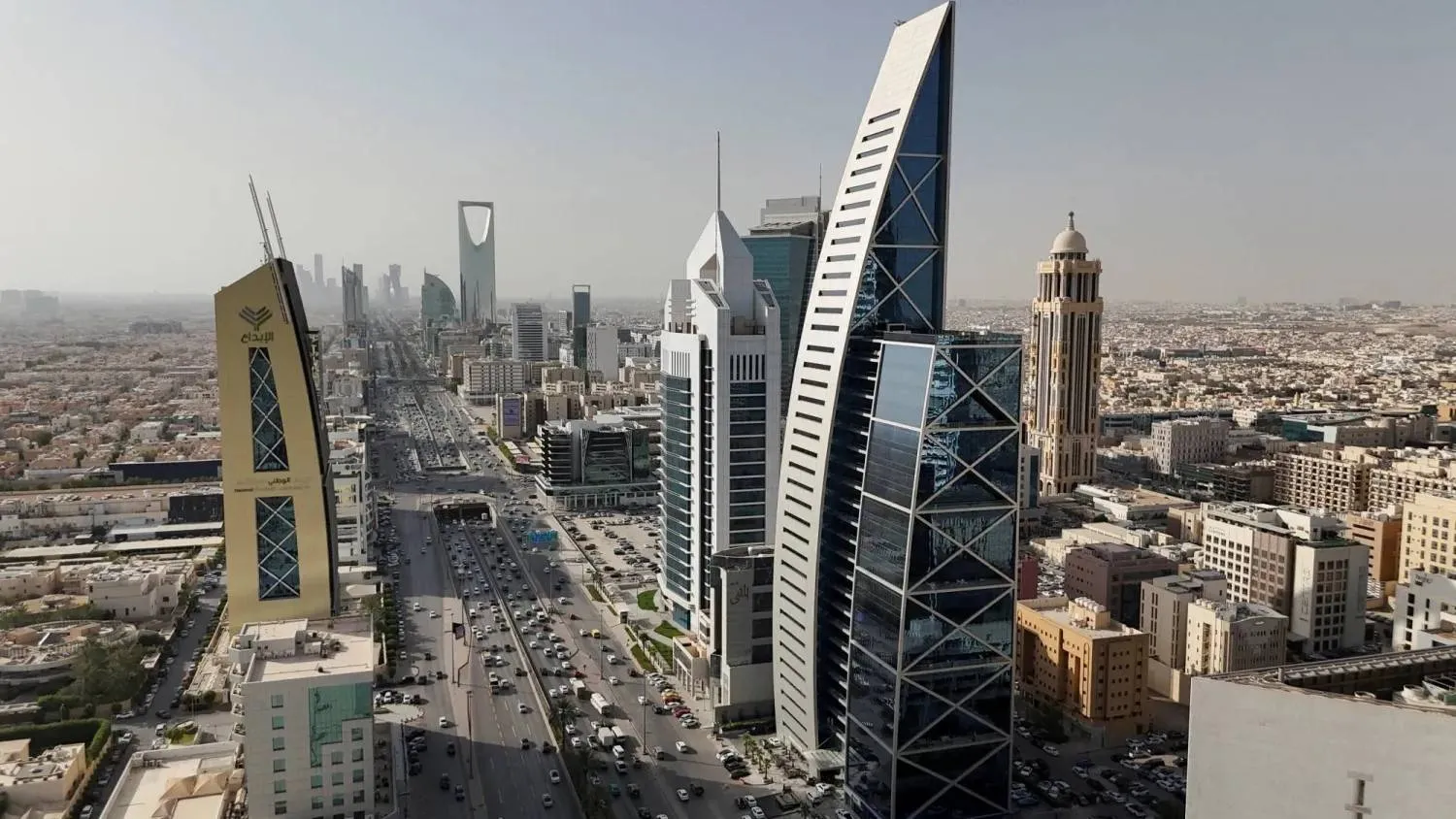
A Saudi Arabia’s sovereign credit rating affirmed at “Aa3” with a stable outlook by Moody’s last week came as an international testament to the resilience of the Kingdom’s economy and its ability to absorb the region's most violent geopolitical shocks, most notably the closure of the Strait of Hormuz since early March.
Moody’s recent rating did not only observe the Saudi strong fiscal position, but it highlighted the sustained government spending and the continued functioning of key logistics infrastructure, particularly the East–West pipeline, which have allowed the trade flows to be maintained.
The agency affirmed that stronger than expected diversification momentum, especially if supported by a durable reduction in geopolitical tensions, could strengthen Saudi Arabia's growth and fiscal prospects in line with the targets of Vision 2030.
Flexible Logistic Alternatives
In its report, Moody’s explained that the affirmation at Aa3 reflects Saudi Arabia's large and wealthy economy, supported by its vast hydrocarbon endowment, low production costs and highly competitive position in global energy markets, alongside improving institutional and policy effectiveness.
It noted that progress under Vision 2030 has underpinned solid non-hydrocarbon growth, supported by sustained public investment, structural reforms, and gradually improving fiscal and economic transparency.
In an analytical reading of the reality of the current regional conflict, Moody’s placed a key scenario assuming continued disruptions of trade flows in the Strait of Hormuz. It affirmed that its decision to maintain a stable outlook reflects expectation that Saudi Arabia's credit profile will remain resilient thanks to its ability to divert most of its oil exports through the Red Sea and its financial assets.
The credit rating agency noted that the East–West pipeline has been key to the country's ability to continue exporting crude oil since early March.
“The pipeline is already carrying 7 mb/d crude oil and the export terminals on Red Sea have been able to load up to 5 mb/d of crude oil equivalent to two-thirds of pre-conflict export levels,” it wrote.
Oil Revenues
At the financial level, Moody’s said that while oil production and export volumes will remain below pre conflict levels due to the effective closure of the strait, this will be more than offset by significantly higher oil prices, which it expects to average $90–110 per barrel in 2026.
As a result, it noted, Saudi government revenue is likely to exceed pre-conflict expectations, providing the authorities with flexibility to increase spending on economic support measures, subsidies and defense.
Also, Moody’s said it expects an improvement in both fiscal and external positions, despite higher spending and government debt burden to remain moderate at around 32% of GDP in 2026, broadly in line with similarly rated peers.
Sorting
Overall, the rating agency said it expects a contraction in Saudi real GDP of around 1.7% in 2026, reflecting a 10% decline in hydrocarbon output and a slowdown in non oil activity amid weaker confidence and higher costs.
However, Moody’s conservative outlook for 2026 matches with positive Saudi official figures. Flash estimates by the General Authority for Statistics (GASTAT) showed that real GDP increased by 2.8% in Q1of 2026 compared to Q1of 2025. This increase was driven by growth across all main economic activities, as non-oil activities rose by 2.8%, reflecting a robust domestic economy and its resistance to external shocks.
Meanwhile, IMF’s growth forecasts for Saudi Arabia in 2026 seem more optimistic. The Fund said the Kingdom is expected to lead regional growth at about 3.1% this year, supported by alternative pipeline capacity.
It noted that growth is forecast to accelerate to 4.5% in 2027, pointing to stronger medium-term prospects. Saudi Arabia has relied on an east-west pipeline to transport oil overland to the Red Sea, ensuring uninterrupted supply to customers despite disruptions to Gulf shipping routes.
While the IMF favored gradual acceleration, Moody’s offered a more-optimistic scenario for next year, saying that “in 2027, we expect a sharp rebound, with growth around 8%, as trade flows through the Strait normalize, oil production gradually increases and oil prices decline from elevated levels.”
Over the medium term, the rating agency said government debt will rise gradually, approaching around 40% of GDP, broadly in line with similarly rated peers, and supported by the sovereign's sizeable GFAs (which we estimate around 18% of GDP) and continued access to financing.
Non-Oil Economy
Moody’s expects Saudi non-hydrocarbon private sector GDP growth to return to around 4–5% after the conflict subsides, among the strongest rates in the Gulf Cooperation Council (GCC), reflecting ongoing structural reforms, sustained public investment and improving private sector participation.
This trend will, over time, reduce the sovereign's exposure to oil market downturns and long-term carbon transition risks, the agency said.
It noted that large scale projects, particularly those led by the Public Investment Fund (PIF) are entering phases that expand capacity in services sectors such as hospitality, tourism, entertainment, retail and restaurants, supporting demand and employment.
“PIF's new strategic plan 2026-2030 is consistent with the approximately $200 billion invested domestically over 2021–25 or 16% of 2025 nominal GDP,” the agency noted in its report.
Financial Flexibility
At the same time, Moody’s said prior fiscal reforms have improved the resilience of Saudi government finances to oil price fluctuations.
In particular, the introduction of a broad-based 15% value-added tax, with limited exemptions, has significantly increased non-hydrocarbon revenue, which accounted for around 45% of total revenue in 2025 against 36% in 2016, it noted.
This represents a meaningful improvement compared to the past and reduces fiscal sensitivity to oil market cycles.
As a result, Moody’s said, Saudi economy and public finances will continue to be better positioned to absorb oil price shocks than in previous downturns, supporting the credit profile over time.
The agency noted that while the country's debt trend was notably sensitive to oil price and production volatility affecting nominal GDP, the current fiscal position allows the Kingdom to maintain a sustained capital spending on Vision 2030 strategic projects, while benefiting from efficient expenditure controls and a high ability to mitigate domestic and international debt markets, which protects the government's net financial assets and maintains the Kingdom's high creditworthiness.