Damascus Says Israel Arrested Civilians During Beit Jin Raid

Residents sit outside their house in the Beit Jin village, southern Syria, where Israeli troops made a pre-dawn raid, arresting several alleged members of Hamas, Thursday, June 12, 2025. (AP)
TT

Damascus Says Israel Arrested Civilians During Beit Jin Raid

Residents sit outside their house in the Beit Jin village, southern Syria, where Israeli troops made a pre-dawn raid, arresting several alleged members of Hamas, Thursday, June 12, 2025. (AP)

A source at the Syrian Interior Ministry denied Israeli claims that its forces had arrested Palestinian Hamas members during a raid on the southern village of Beit Jin in the early hours of Thursday.

The source told Asharq Al-Awsat that the detainees were civilians and not affiliated with any party.

Saleh Daher, a resident of Beit Jin, told Asharq Al-Awsat the Israeli soldiers entered the village at 2:40 am on Thursday.

“We were awakened by the sound of gunfire,” he revealed. A unit of dozens of soldiers were raiding the village, while ten tanks were stationed at its entrance.

The forces surrounded the houses of the people they wanted to arrest, calling out their names on loudspeakers. They detained seven people, continued Daher.

One person, who is known in the village for having a mental disability, attempted to stop the soldiers, who shot and killed him, he said.

The soldiers left at 4:15 am after detaining the people they were after.

Daher said they were all Syrian natives of the village and used to be members of armed opposition groups that rose up against the Bashar al-Assad's ousted regime.

Sources revealed to Asharq Al-Awsat the names of the detainees: Amer al-Badawi, Mamoun al-Saadi, Ahmed al-Safadi, Mohammed al-Safadi, Hassan al-Safadi, Mohammed Badi Hamadeh and Ali Qassem Hamadeh.

Daher said he and his family had returned to Beit Jin in 2018 and that they never noticed any behavior by the detainees that they were working against Israel.

Israel had previously assassinated three residents of the village. They too were members of armed factions.

Moreover, Daher said he hasn’t noticed any activity by residents that indicate that they are members of or associated with Palestinian factions.

The Israeli army said it detained Hamas members during the Beit Jin raid and that they were planning attacks against it.

They have been taken to Israel for investigation. The army also said it discovered weapons in the area.

Syrian media confirmed the arrest of seven people and death of one person during the raid.

Since the fall of Assad’s government in early December, Israeli forces have moved into several areas in southern Syria and conducted hundreds of airstrikes throughout the country, destroying much of the assets of the Syrian army.

Tensions ticked up in early June after projectiles were fired from Syria towards Israel. Israel retaliated with its first strikes in nearly a month.

On June 8, Israel carried out a strike on the outskirts of Beit Jin on what it described as a Hamas member.

A resident of the village denied the claim, saying Israel targeted a youth called Anas Abboud and that he was a former member of a Syrian opposition armed group.


Iran’s Proxy in Iraq Rakes in Hundreds of Millions Through Oil Smuggling

Iraqi Prime Minister Ali al-Zaidi is seen at an event in Baghdad on Sunday. (INA)
TT

Iran’s Proxy in Iraq Rakes in Hundreds of Millions Through Oil Smuggling

Iraqi Prime Minister Ali al-Zaidi is seen at an event in Baghdad on Sunday. (INA)

Iran's most powerful armed ally in Iraq has been raking in hundreds of millions of dollars from oil stolen from the state, Iraqi officials say, prompting the prime minister to ready his security forces to confront the armed faction.

Prime Minister Ali al-Zaidi has launched his toughest challenge yet to the group Kataib Hezbollah by cracking down on an oil smuggling network it has run for years, senior security, army, police and oil officials told Reuters.

They said the smuggling, carried out with accomplices among some security and oil officials, has robbed the government of hundreds of millions of dollars dating back to 2021.

Kataib Hezbollah, branded a terrorist organization by the US, is one of dozens of armed pro-Iranian groups that have semi-official status in Iraq. It denies the smuggling and calls the crackdown part of a campaign to seize its weapons.

"We are therefore being subjected to the greatest campaign of blackmail aimed at forcing us to relinquish the weapons of dignity that have upheld sovereignty and ‌protected the rights ‌of Iraqis at multiple stages," the group said in a statement.

The Iranian-backed armed groups have resisted repeated calls by both al-Zaidi and US President Donald Trump to disarm, and have struck US troops and targets in Saudi Arabia and the United Arab Emirates in solidarity with Tehran since the United States and Israel launched their war against Iran in February.

Jasim al-Bahadli, an Iraqi security analyst specializing in studying armed Shiite groups aligned with Iran, said the government anti-smuggling campaign has become a political confrontation with the faction.

"Al-Zaidi is effectively challenging a group with deep security, political and economic influence, and that carries significant risks for both sides," he said.

"More broadly, it appears to ⁠be an attempt to contain the influence of Iran-backed armed groups by targeting economic networks that underpin ‌their power, particularly after Kataib Hezbollah resisted government efforts to bring armed factions more firmly ‌under state control."

GOVERNMENT INVESTIGATION

In 2021, a drone attack targeted Mustafa al-Kadhimi, then prime minister, in what his office said was an assassination attempt after security forces ‌clashed with supporters of pro-Iranian factions.

So far, nine senior security and oil officials have been dismissed following a high-level government investigation into oil ‌smuggling, focused on Jurf al-Sakhar in Babil province, a Kataib Hezbollah stronghold about 50 km (30 miles) south of Baghdad.

Al-Zaidi has ordered all suspects to be referred to the courts, and dismissed the Babil police chief, the province's intelligence and security commanders and the director of the state-run Oil Pipelines Company (OPC).

Now he has ordered senior military and security commanders to deploy additional forces around Jurf al-Sakhar and prepare for the entry of government troops into the town, potentially bringing ‌the government into a direct confrontation with fighters.

SIPHONED CRUDE

The groups have built up arsenals that include assault rifles, machineguns, anti-tank guided missiles, mortars, rockets, armed drones and, according to Iraqi ⁠security reports and assessments, some short-range ballistic ⁠and cruise missile capabilities supplied by Iran or derived from Iranian systems.

Two security sources who took part in an inspection mission on Saturday to Jurf al-Sakhar said investigators had found evidence that smugglers had punctured a crude oil pipeline and siphoned crude into makeshift storage pits dug in the ground.

The 26-inch pipeline carries at least 200,000 barrels per day of crude, according to an Iraqi Oil Ministry document reviewed by Reuters.

The sources said investigators found concealed pumping equipment inside several hangars used to avoid aerial surveillance while loading tanker trucks with siphoned crude. Investigators also found a small oil refinery concealed in the area, the sources said.

Two Iraqi oil officials with direct knowledge of the investigation said it was too early to quantify losses without knowing how long the tapping points had been operational, but estimated the value of crude potentially siphoned since 2021 could amount to hundreds of millions of dollars.

The crackdown is set against a backdrop of mounting US pressure on Iraq over the role of pro-Iranian groups in the country's oil sector.

In May, Washington sanctioned Iraq's deputy oil minister, alleging he had facilitated the diversion of Iraqi oil for the benefit of Iran and its proxy militias. Sanctions were also imposed on armed faction leaders and networks Washington said were exploiting Iraq's oil wealth to finance Tehran-aligned groups.

Reuters reported in 2024 that a fuel oil smuggling network had raked in $1 billion for Iran and its proxies.


Yemen Govt Forces Beef up Defenses in Lahj

Houthi forces take over from Dhubab to Bab al-Mandeb after government forces withdraw from the area, in Taiz Governorate, Yemen, in this still image taken from a handout video released November 15, 2026. (Reuters)
TT

Yemen Govt Forces Beef up Defenses in Lahj

Houthi forces take over from Dhubab to Bab al-Mandeb after government forces withdraw from the area, in Taiz Governorate, Yemen, in this still image taken from a handout video released November 15, 2026. (Reuters)

The military confrontation between Yemeni government forces and the Houthi group is entering a new phase following the withdrawal of Southern and Joint Forces from positions along the West Coast and Bab al-Mandab.

In Mari and Taiz, the battles continue amid escalating airstrikes targeting the group’s positions and military capabilities.

The Yemeni parliament, manhole, is moving to finalize a draft law classifying the Houthis as a terrorist organization and criminalizing their activities and funding sources.

Field sources said that fierce fighting erupted between government forces and the Houthis on the western fronts of Raghwan district in Marib province. The clashes lasted for hours across several sectors.

To the south in Lahij, government and Southern forces are reorganizing their deployment lines and reinforcing fortifications following their withdrawal from the Bab al-Mandeb and Dhubab airport axes through the Kahboub and Al-Suqya areas.

According to field sources, current missions are focused on reinforcing defensive lines in Lahij and securing the western and northern entrances to the interim capital, Aden, and fortifying positions and monitoring passages to prevent infiltration attempts or any potential Houthi military movements.

This deployment follows an announcement by Southern forces that they are repositioning, as Lahij’s fronts undergo field shifts after the Houthis seized Al-Maqatirah district and areas in Al-Madaribah district. These developments make securing Aden’s western entrances and reinforcing defensive positions a top priority.

Politically, the parliament has stepped up efforts to finalize a draft law classifying the Houthis as a terrorist organization. The move aims to criminalize the group’s activities, dry up its funding sources, and prosecute those involved in its operations both locally and internationally.

In a statement following a virtual meeting chaired by Speaker Sultan al-Barakani, parliament said completing the legislative process has become a national, regional, and international necessity after peace opportunities and political options were exhausted, and as the group continues attacking civilians, state institutions, waterways, and economic interests.

Parliament noted that the draft bill to designate the Houthis was first introduced during a session in the city of Seiyun in April 2019, before a decision was postponed to give peace efforts a chance.

However, according to the statement, the group pressed ahead with its military operations and attacks inside and outside Yemen, including targeting Saudi Arabia and its civilian and economic facilities.


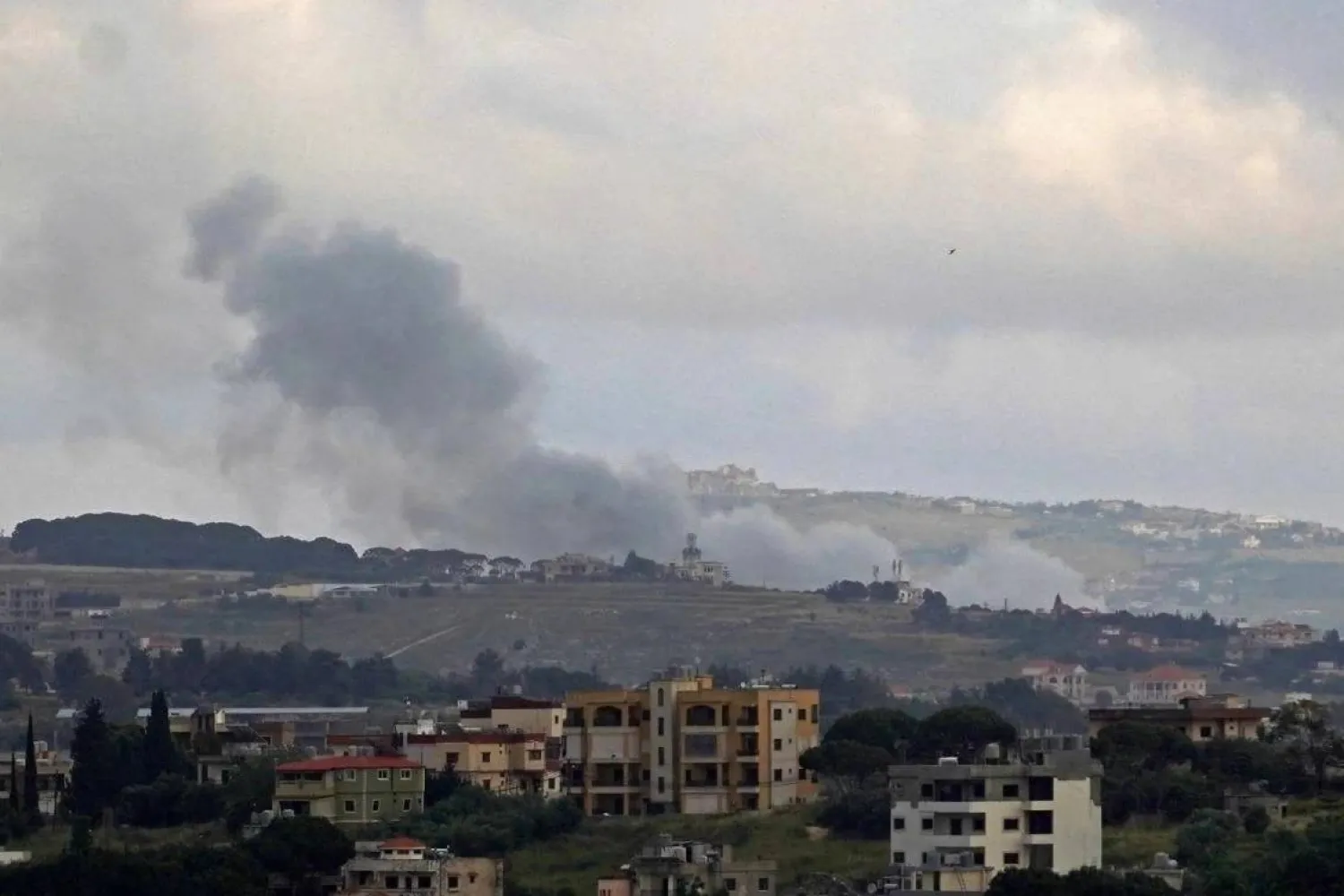
Israel Strikes East Lebanon, Says Targeting Hezbollah Arms

Smoke rises from the site of an Israeli strike that targeted the southern Lebanese village of Kfar Tebnit on May 21, 2026. (AFP)
TT

Israel Strikes East Lebanon, Says Targeting Hezbollah Arms

Smoke rises from the site of an Israeli strike that targeted the southern Lebanese village of Kfar Tebnit on May 21, 2026. (AFP)

Israel struck a mountainous area in eastern Lebanon on Monday, according to Lebanese state media, with the Israeli military saying it was targeting a shipment of weapons headed for Hezbollah. 

Israel also said it had seized two "terror operatives" in south Lebanon who it said belonged to a group operating "under the guidance" of the Iran-backed movement. 

Lebanon's official National News Agency (NNA) said that "enemy aircraft launched a strike at dawn against the Al-Shaara region, in the highlands of the Anti-Lebanon mountain range, without resulting in victims or damage". 

The Israeli military said it "struck a weapons shipment transferred from Syria to Lebanon, intended for the Hezbollah terrorist organization". 

Hezbollah has been weakened by two successive wars with Israel since 2023, most recently after it drew Lebanon into the Middle East conflict in March this year with rocket fire at Israel, which responded with airstrikes and a ground invasion. 

The ousting in 2024 of longtime Syrian president Bashar al-Assad, a key Hezbollah ally, also cut off a major weapons supply route for the group. 

Hezbollah lawmakers have nonetheless maintained that the group is rebuilding its military capacities. 

In October, Lebanese security forces seized a half-ton of explosives transported in a truck from east Lebanon towards Beirut. 

Hezbollah acknowledged ownership of the explosives, saying they were intended for "resistance" against Israel. 

Hostilities in Lebanon have declined since June after a US-Iran understanding over the broader regional war, and a US-sponsored Israel-Lebanon framework agreement. 

The framework involves the disarmament of Hezbollah, a gradual Israeli troop withdrawal from south Lebanon, and the deployment of the Lebanese army to the area. 

But implementation has stalled and Hezbollah has refused to surrender its weapons. 

Israel's army still carries out strikes, shelling and detonations in the south, where its forces are operating in a self-declared occupied "security zone" running around 10 kilometers (six miles) deep along the border. 

Later Monday, the Israeli army said that overnight its soldiers had "apprehended two terror operatives" belonging to a group "operating under the guidance and auspices" of Hezbollah in southern Lebanon. 

The suspects "are being questioned by the security forces", the military statement added. 

Lebanon's NNA had reported that Israeli forces advanced towards the border town of Shebaa and "kidnapped two brothers" after raiding and searching their home. 

Lebanese local media reported that Israeli soldiers had already seized a third brother in June while he was herding sheep. 

Israeli forces have seized around 40 people from Lebanese territory since 2024, according to a local committee which is demanding their release.