


Nike Says US Tariffs Will Add $1 Billion to Costs, Plans to Reduce China Production

People walk past a Nike store in New York City, US, April 2, 2025. (Reuters)
TT

Nike Says US Tariffs Will Add $1 Billion to Costs, Plans to Reduce China Production

People walk past a Nike store in New York City, US, April 2, 2025. (Reuters)

Nike expects US tariffs on imports to add around $1 billion to its costs, the sportswear giant said on Thursday, detailing how it aims to reduce its reliance on production in China and mitigate the impact.

President Donald Trump's sweeping tariffs on key trading partners have forced many retailers, including Hoka owner Deckers Brands to withdraw their forecasts as they brace for a slowdown in non-essential spending from consumers.

China, subject to the biggest tariff increases imposed by Trump, accounts for about 16% of the shoes Nike imports into the United States, chief financial officer Matthew Friend said.

But the company aims to cut the figure to a "high single-digit percentage range" by end-May 2026 by shifting production to other countries.

"We are partnering with our suppliers and our retail partners to mitigate this structural cost increase in order to minimize the overall impact to the consumer," Friend added in a call with analysts.

Nike has also already announced price increases to partly mitigate the impact of tariffs.

Nike's shares gained 11% in extended trading after the company forecast first-quarter revenue to fall in the mid-single digits, slightly better than estimates of a 7.3% drop.

The company also reported a smaller-than-expected drop in fourth-quarter revenue and beat profit estimates as CEO Elliott Hill's strategy to focus product innovation and marketing around sports begins to pay off.

Having lost share in the fast-growing running market, Nike has scaled back production of sneakers such as the Air Force 1 and invested heavily in running shoes such as Pegasus and Vomero. Friend said the running category returned to growth in the fourth quarter.

Under Hill, who joined in October last year, Nike is investing more into sport-focused marketing to regain its edge as a sports brand. On Thursday, it hosted an attempt by sponsored athlete Faith Kipyegon to run a mile in under four minutes.

Paced by other star athletes in the glitzy, live-streamed event in a Paris stadium, Kipyegon fell short of the goal but set a new unofficial record.

Nike's fourth-quarter sales fell 12% to $11.10 billion, compared with analysts' expectation of a 14.9% drop to $10.72 billion, according to data compiled by LSEG.

China continued to be a pain point, with executives saying a turnaround in the country will take time as Nike contends with tougher economic conditions and competition.

The company's inventory was flat as of May 31, compared with a year ago, at $7.5 billion.

"Nike's inventories are still too high considering the sales declines. It was a tough quarter, but this was widely anticipated," said David Swartz, analyst at Morningstar Research.

Hugo Boss Shares Jump after Frasers' $2.3 Billion Takeover Bid

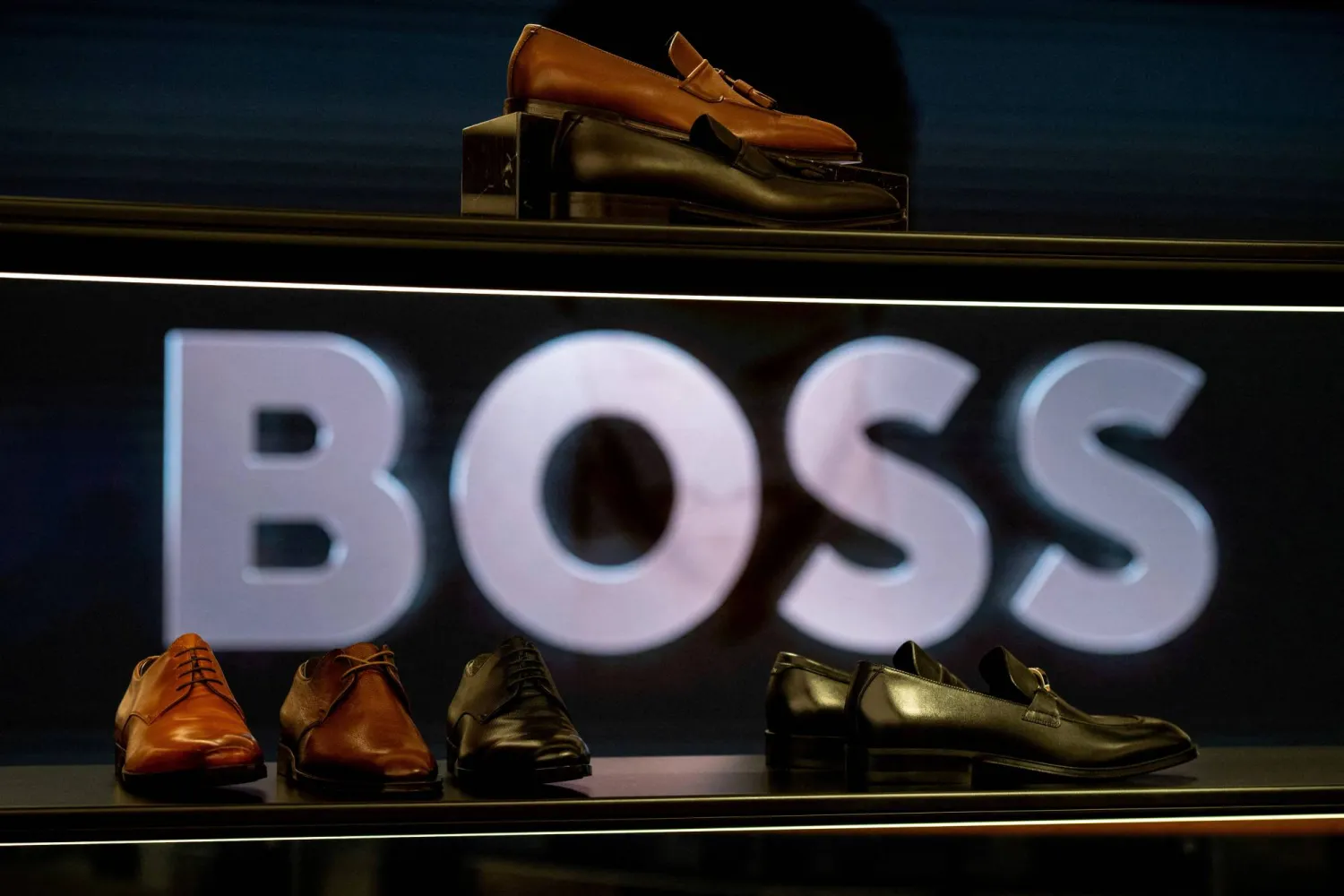
FILE PHOTO: Men's shoes are on display at the Boss store in London, Britain, May 30, 2024. REUTERS/Chris J. Ratcliffe/File Photo
TT

Hugo Boss Shares Jump after Frasers' $2.3 Billion Takeover Bid

FILE PHOTO: Men's shoes are on display at the Boss store in London, Britain, May 30, 2024. REUTERS/Chris J. Ratcliffe/File Photo

Shares in Hugo Boss rose about 7% on Thursday after Britain’s Frasers Group launched a $2.3 billion takeover offer for the German fashion brand.

Frasers, already the largest shareholder of Hugo Boss with a stake of just over 26%, is offering €38 per share in cash for the remaining shares, a 4.3% premium to Wednesday’s close, Reuters reported.

Hugo Boss said late on Wednesday the approach was not coordinated ⁠with the company ⁠and that its board would review the offer, which values the stake not yet owned by Frasers at about €1.98 billion ($2.3 billion).

The deal would bring Hugo Boss into the retail empire controlled ⁠by British billionaire Mike Ashley, whose Frasers Group owns Sports Direct and House of Fraser and holds stakes in Asos, Debenhams and Currys.

J.P. Morgan said the bid likely sets a near-term floor for the shares but flagged limited scope for further upside, adding it did not expect a rival bidder to emerge.

Hugo Boss, ⁠whose ⁠shares are about half their level of three years ago, has been struggling with weaker sales and is pursuing a turnaround strategy focused on store revamps, a streamlined product range and expanding women's wear.

By 0713 GMT, Hugo Boss shares were up 6.2% at €38.7, above Frasers' offer price, taking their year-to-date gains to 7.2%. Frasers shares fell 2.5%.


Primark Names Lucy Slinger as Finance Chief Ahead of AB Foods Split


A Primark store is pictured in the Bullring shopping center in Birmingham, Britain, November 4, 2020. REUTERS/Andrew Boyers
TT

Primark Names Lucy Slinger as Finance Chief Ahead of AB Foods Split


A Primark store is pictured in the Bullring shopping center in Birmingham, Britain, November 4, 2020. REUTERS/Andrew Boyers

Fashion retailer Primark named Lucy Slinger as its chief financial officer on Thursday, strengthening its leadership team ahead of its split from Associated British Foods.

Slinger joins Primark from IKEA franchisee ⁠Ingka Group, where she ⁠has served as deputy CFO.

Prior to Ingka Group, she spent over two ⁠decades at Shell in a range of senior finance leadership roles.

Slinger's appointment follows that of Eoin Tonge as Primark chief executive and Filip Ekvall as chief commercial officer in March, Reuters reported.

⁠AB ⁠Foods said in April it would spin off Primark from its food businesses, telling investors that it will be better positioned to grow on its own.


NASA to Wear Prada as Luxury Group Pushes Into Space Industry

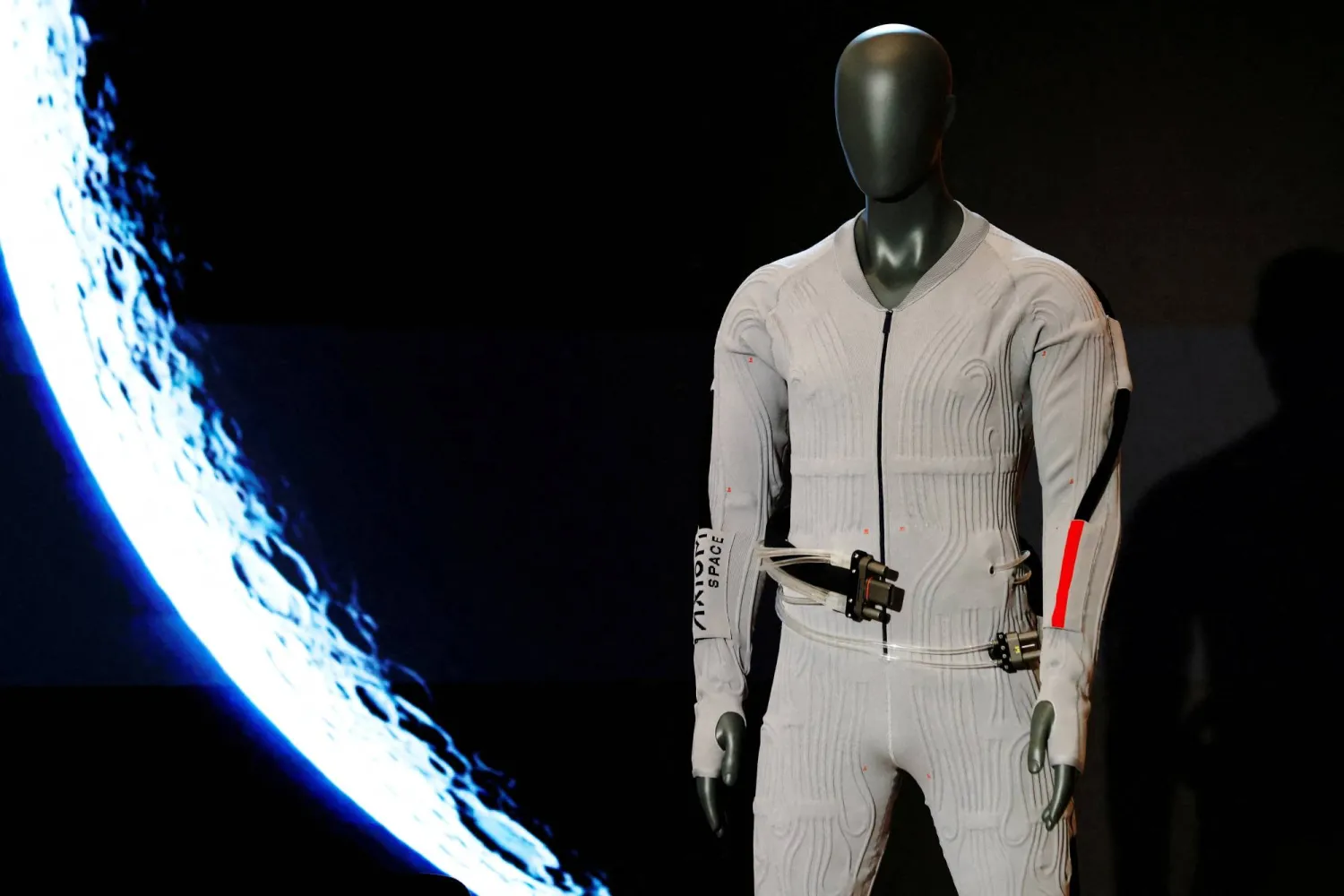
The inner-layer liquid cooling and ventilation garment designed by Prada and Axiom Space is unveiled at a press event in New York City, US, June 7, 2026. REUTERS/Heather Khalifa
TT

NASA to Wear Prada as Luxury Group Pushes Into Space Industry

The inner-layer liquid cooling and ventilation garment designed by Prada and Axiom Space is unveiled at a press event in New York City, US, June 7, 2026. REUTERS/Heather Khalifa

Italian fashion house Prada unveiled on Sunday the inner-layer garment set to be worn by NASA astronauts heading into space, underscoring the brand's push to be the first major luxury player to make inroads in the space industry.

The body-hugging suit, created in collaboration with Houston-based space infrastructure developer Axiom Space, features ventilation tubes knitted into the garment.

"We have really a broad spectrum of capability and know-how," Lorenzo Bertelli, Prada's chief marketing officer, said at an event at Prada's Manhattan store, sitting beside a mannequin donning the new Liquid Cooling and Ventilation Garment.

Expertise for developing space exploration products "can come from lots of seemingly unrelated industries," Reuters quoted Jonathan Cirtain, CEO of Axiom Space, as saying.

The new product follows Prada's splashy foray into space fashion in 2024 with the ⁠unveiling of a ⁠spacesuit that is expected to be used for NASA's Artemis 3 Earth orbit, set to launch in 2027, and the anticipated Artemis 4 moon landing in 2028. Luxury brands have long drawn inspiration from space travel.

But Prada has gone "beyond inspiration into an actual partnership" as the space exploration and tourism industries develop, said Thomai Serdari, a luxury brand strategist and marketing professor at New York University's Stern ⁠School of Business. Serdari pointed to two factors motivating Prada's interest in the space industry: to gain access to affluent consumers who are contemplating space travel, and to align the brand with avant-garde thought.

Companies from Jeff Bezos' Blue Origin to Elon Musk's SpaceX have leaned into space tourism for the wealthy.

The resumption of space exploration and human travel to the moon is "bound to attract a lot of eyeballs," said Luca Solca, global head of luxury goods at Bernstein. Luxury brands need to stay relevant and visible, he said. Prada's push comes against a backdrop of a struggling luxury goods sector.

After two years of contraction, the ⁠industry was showing signs ⁠of stabilization until the Iran war began at the end of February, disrupting travel and denting luxury spending far beyond the Middle East.

WILL LUXURY PEERS FOLLOW? Other fashion and apparel companies have jumped on the space bandwagon. Under Armour has partnered with spaceflight company Virgin Galactic to create space apparel, while Columbia Sportswear has worked with space exploration company Intuitive Machines on space fabric technology.

But it remains unclear whether other luxury players might follow Prada's lead. "In luxury, it is important to be the first to do something, to be a trend-setter," Serdari said, noting that LVMH's Louis Vuitton, Hermès and Chanel are all interested in space travel but that they would likely find new ways to make inroads.

"You will never see the upper crust of the luxury sector copying each other," she added.