


Israel Killed 30 Iranian Security Chiefs and 11 Nuclear Scientists, Israeli Official Says

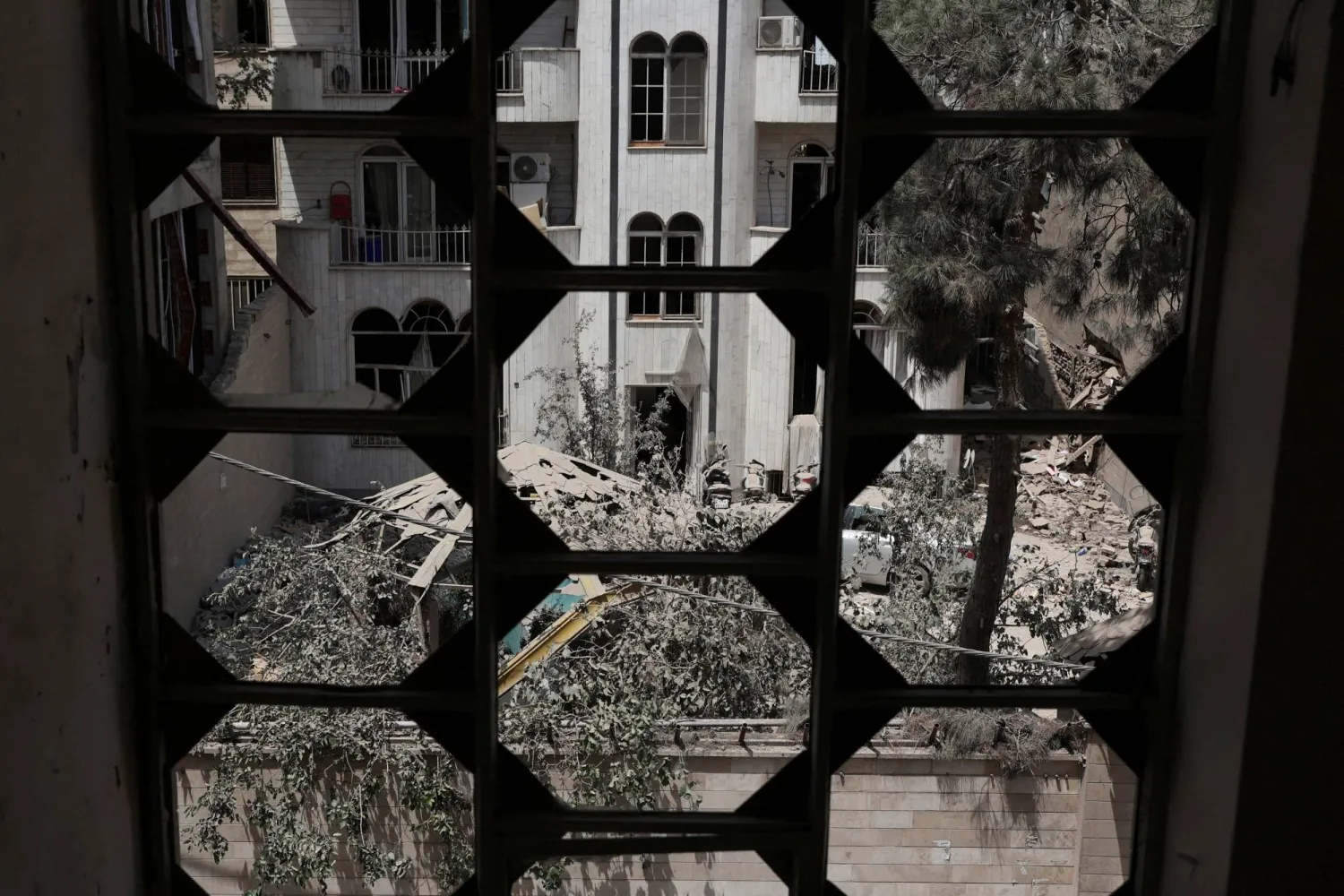
A view shows the aftermath of an Israeli strike on a building on Monday, after the ceasefire between Israel and Iran, in Tehran, Iran, June 26, 2025. Majid Asgaripour/WANA (West Asia News Agency) via Reuters
TT

Israel Killed 30 Iranian Security Chiefs and 11 Nuclear Scientists, Israeli Official Says

A view shows the aftermath of an Israeli strike on a building on Monday, after the ceasefire between Israel and Iran, in Tehran, Iran, June 26, 2025. Majid Asgaripour/WANA (West Asia News Agency) via Reuters

Israel killed more than 30 senior security officials and 11 senior nuclear scientists to deliver a major blow to Iran's nuclear ambitions, a senior Israeli military official said on Friday in summarizing Israel's 12-day air war with Iran.

In the United States, an independent expert said a review of commercial satellite imagery showed only a small number of the approximately 30 Iranian missiles that penetrated Israel's air defenses managed to hit any militarily significant targets.

"Iran has yet to produce missiles that demonstrate great accuracy," Decker Eveleth, an associate research analyst at the CNA Corporation specializing in satellite imagery, told Reuters.

In Israel, the senior military official said Israel's June 13 opening strike on Iran severely damaged its aerial defenses and destabilized its ability to respond in the critical early hours of the conflict.

Israel's air force struck over 900 targets and the military deeply damaged Iran's missile production during the war that ended with a US-brokered ceasefire, the official said.

"The Iranian nuclear project suffered a major blow: The regime's ability to enrich uranium to 90% was neutralized for a prolonged period. Its current ability to produce a nuclear weapon core has been neutralized," the official said.

Iran, which denies trying to build nuclear weapons, retaliated against the strikes with barrages of missiles on Israeli military sites and cities. Iran said it forced the end of the war by penetrating Israeli defenses.

Iranian authorities said 627 people were killed in Iran, where the extent of the damage could not be independently confirmed because of tight restrictions on the media. Israeli authorities said 28 people were killed in Israel.

Eveleth, the independent US expert, said Iran's missile forces were not accurate enough to destroy small military targets like US-made F-35 jet fighters in their shelters.

"Because of this the only targets they can hit with regularity are large cities or industrial targets like the refinery at Haifa," he told Reuters.

Iranian missile salvos, which were limited by Israeli airstrikes in Iran, did not have the density to achieve high rates of destruction, he wrote on X.

"At the current level of performance, there is effectively nothing stopping Israel from conducting the same operation in the future with similar results," he wrote.

In a statement on Friday, Israeli Defense Minister Israel Katz said he had directed the military to draft plans to safeguard air superiority over Iran, prevent nuclear development and missile production, and address Iran's support for militant operations against Israel.

Israel's military Chief of Staff Lieutenant General, Eyal Zamir, said on Friday the outcome in Iran could help advance Israeli objectives against the Iranian-backed Palestinian Hamas group in the Gaza Strip.

Zamir told troops in Gaza an Israeli ground operation, known as "Gideon's Chariots," would in the near future achieve its goal of greater control of the Palestinian enclave and present options to Israel's government for further action.



US Announces New Iran Oil Sanctions Moments after Talks

Iranian flag with stock graph and an oil pump jack miniature model are seen in this illustration taken October 9, 2023. REUTERS/Dado Ruvic/Illustration/File Photo
TT

US Announces New Iran Oil Sanctions Moments after Talks

Iranian flag with stock graph and an oil pump jack miniature model are seen in this illustration taken October 9, 2023. REUTERS/Dado Ruvic/Illustration/File Photo

The United States on Friday announced new sanctions to curb Iran's oil exports, including targeting 14 vessels, moments after the adversaries wrapped up a day of indirect talks in Oman.

President Donald Trump is "committed to driving down the Iranian regime's illicit oil and petrochemical exports under the administration's maximum pressure campaign," State Department spokesman Tommy Pigott said in a statement.


Iran Expects More US Talks after 'Positive Atmosphere' in Oman

US and Iran flags are seen in this illustration taken June 18, 2025. REUTERS/Dado Ruvic/Illustration/File Photo
TT

Iran Expects More US Talks after 'Positive Atmosphere' in Oman

US and Iran flags are seen in this illustration taken June 18, 2025. REUTERS/Dado Ruvic/Illustration/File Photo

Iran on Friday said it expected to hold more negotiations with the United States, hailing a "positive atmosphere" during a day of indirect talks in Oman but warning against threats after Washington raised the spectre of new military action.

With an American naval group led by an aircraft carrier in Middle Eastern waters, US and Iranian delegations held talks in Muscat mediated by the Gulf sultanate without publicly meeting face-to-face.

The talks were the first between the two foes since the United States joined Israel's war with Iran in June with strikes on nuclear sites.

They also come just under a month after Iranian authorities launched a crackdown on protests that left thousands dead according to rights groups, AFP reported.

Foreign Minister Abbas Araghchi, who led Iran's delegation in Muscat, said talks "focused exclusively" on the Iranian nuclear program which the West believes is aimed at making the bomb but Tehran insists is peaceful.

The US delegation, led by US Middle East envoy Steve Witkoff and President Donald Trump's influential son-in-law Jared Kushner, had also wanted Tehran's backing for militant groups, its ballistic missile program and treatment of protesters to also be on the agenda.

"In a very positive atmosphere, our arguments were exchanged and the views of the other side were shared with us," Araghchi told Iranian state TV, adding that the two sides had "agreed to continue negotiations, but we will decide on the modalities and timing at a later date".

"The way forward will depend on our consultations with capitals," he added after the talks concluded.

Speaking to the official IRNA news agency, he expressed hope that Washington would refrain from "threats and pressure" so that "the talks can continue".

There was no immediate comment from the American delegation in Muscat.

The foreign ministry of US ally Qatar expressed hope the talks "lead to a comprehensive agreement that serves the interests of both parties and enhances security and stability in the region."


Suicide Bomber Kills 31 in Mosque in Pakistan's Capital

An ambulance evacuates casulties after a deadly explosion at a Shi'ite Muslim mosque in Islamabad, Pakistan, February 6, 2026. REUTERS/Waseem Khan
TT

Suicide Bomber Kills 31 in Mosque in Pakistan's Capital

An ambulance evacuates casulties after a deadly explosion at a Shi'ite Muslim mosque in Islamabad, Pakistan, February 6, 2026. REUTERS/Waseem Khan

A suicide bomber killed at least 31 people and wounded almost 170 others during Friday prayers in a Shiite Muslim mosque in Islamabad, officials said, in the deadliest attack of its kind in the capital in over a decade.

Images from the site showed bloodied bodies lying on the carpeted mosque floor surrounded by shards of glass, debris and panicked worshippers, Reuters reported.

Dozens more wounded were lying in the gardens of the Khadija Tul Kubra Imambargah, in a semi-urban area on the outskirts of Islamabad, as people called for help.

Two police officials said the attacker was stopped at the gate of the mosque before detonating the bomb. They asked not to be identified as they were not authorised to speak to the media.

Bombings are rare in the heavily guarded capital, although Pakistan has been hit by a rising wave of militancy in the past few years, particularly along the border with Afghanistan.

"A total of 31 people have lost their lives. The number of wounded brought to hospitals has risen to 169," Islamabad's Deputy Commissioner, Irfan Memon, said in a statement.

The attack was the deadliest suicide bombing in Islamabad in more than a decade, according to conflict monitor ACLED, which said it "bears the hallmarks of ISIS".

"We are giving every possible help to the families of those killed and those injured. We are doing everything possible to extend all the facilities they need," parliamentary affairs minister Tariq Fazal said after visiting the wounded at Islamabad's Polyclinic hospital.

The capital was already on high alert on Friday for the visiting President of Uzbekistan, Shavkat Mirziyoyev, with roads around the capital blocked by checkpoints and security forces posted across the city.