
US Sanctions on Sudan Over Alleged Chemical Weapons Use Take Effect

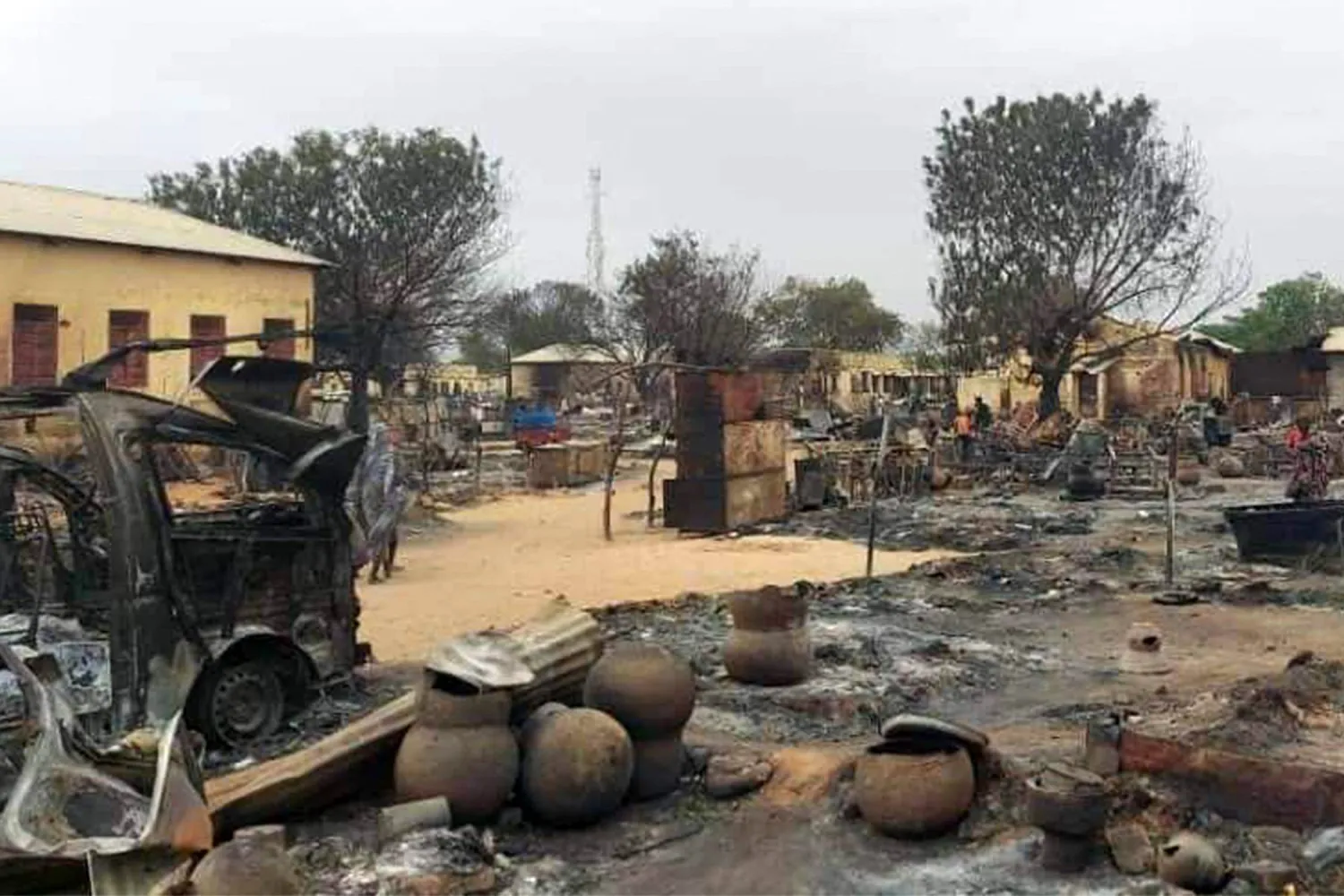
AFP file photo showing the destruction caused by the fighting in El Fasher, the capital of North Darfur State
TT

US Sanctions on Sudan Over Alleged Chemical Weapons Use Take Effect

AFP file photo showing the destruction caused by the fighting in El Fasher, the capital of North Darfur State

Friday marked the start of sweeping US sanctions imposed on Sudan, following accusations that the Sudanese army deployed chemical weapons during its conflict against the Rapid Support Forces (RSF).

The US State Department announced it had obtained credible evidence confirming the Sudanese government’s use of lethal chemical and biological weapons against civilians, an act it described as a flagrant violation of international law.

Under the Chemical and Biological Weapons Control and Warfare Elimination Act, the sanctions immediately suspend nearly all US assistance to Sudan, excluding only emergency humanitarian aid.

The measures include an outright ban on defense-related sales and financing, the denial of access to any US government funding - including loans or credits from the Export-Import Bank - and restrictions on the export of sensitive goods and technologies tied to national security.

While humanitarian aid remains exempt, each case will undergo individual review. The sanctions also carve out exceptions for exports to civilian airlines and US businesses operating in Sudan. Officials indicated the measures would remain in place for at least a year, subject to renewal.

Last month, State Department spokesperson Tammy Bruce revealed that Washington had concluded Sudanese forces used chemical weapons earlier in 2024 and had formally notified Congress before enacting the penalties.

Sudanese authorities have so far issued no official response, though the Ministry of Information previously rejected the allegations as “baseless political blackmail,” claiming that US interventions “lack moral and legal foundation” and have eroded Washington’s credibility in Sudan.

Since April 2023, Sudan has been engulfed in a brutal war between the army, led by General Abdel Fattah al-Burhan, and the RSF, commanded by Mohamed Hamdan Dagalo, widely known as “Hemedti.” The fighting has killed tens of thousands and displaced over 13 million people, according to UN estimates.

In recent weeks, RSF units have subjected the city of El Fasher, the capital of North Darfur, to relentless artillery and drone attacks targeting army positions, resulting in heavy civilian casualties. UN Secretary-General Antonio Guterres has appealed to Sudan’s leadership to agree to a humanitarian ceasefire to allow aid deliveries to besieged areas.

Meanwhile, the UN Security Council has warned that the conflict is driving Sudan toward a humanitarian catastrophe. Fighting in Darfur and Kordofan has intensified, with all sides vying to secure territorial gains.

Martha Pobee, Assistant Secretary-General for African Affairs, briefed the Council, citing a surge in extrajudicial killings, sexual violence against women, child recruitment, and attacks on humanitarian workers.

She urged the Council to press for an immediate humanitarian truce in El Fasher to protect civilians and facilitate aid, while calling on the UN envoy to Sudan to use diplomatic leverage to de-escalate the crisis.

Diplomats from the UK, Russia, South Korea, and Greece also sounded alarms over the deteriorating humanitarian situation, noting that Sudan now faces the largest displacement crisis in Africa’s recent history.

Sudan’s UN representative defended government efforts to secure humanitarian corridors and support voluntary returns, stating that 350,000 families have already gone back to their homes in ten states.


Israeli Strike on Lebanon Kills One

 31 August 2026, Lebanon, Arnoun: Smoke billows after an Israeli detonation on Arnoun, not far from the strategic Ali al-Taher Ridge. (dpa)
31 August 2026, Lebanon, Arnoun: Smoke billows after an Israeli detonation on Arnoun, not far from the strategic Ali al-Taher Ridge. (dpa)
TT

Israeli Strike on Lebanon Kills One

 31 August 2026, Lebanon, Arnoun: Smoke billows after an Israeli detonation on Arnoun, not far from the strategic Ali al-Taher Ridge. (dpa)
31 August 2026, Lebanon, Arnoun: Smoke billows after an Israeli detonation on Arnoun, not far from the strategic Ali al-Taher Ridge. (dpa)

An Israeli strike on south Lebanon killed one person on Wednesday, Lebanese official media said, while Israel said it targeted Hezbollah in retaliation for an attack targeting its soldiers in the south.

"One person was killed and another wounded in a strike launched by an enemy drone" in the city of Nabatieh, Lebanon's state-run National News Agency (NNA) said, also reporting other Israeli strikes on the area.

Israel's army said the Iran-backed Hezbollah group overnight "launched two explosive drones" towards Israeli soldiers in Ali al-Taher Ridge area, reporting no troop casualties.

In response, the Israeli military said it struck Hezbollah infrastructure in the Nabatieh area.

Israel has recently increased its attacks on south Lebanon, particularly in the Nabatieh area where the strategic Ali al-Taher Ridge is located.

Israel has previously said Hezbollah fighters are holed up in "underground terror infrastructure" there.

Hezbollah has not claimed any attacks on Israeli targets for weeks.

Last week, Israeli airstrikes killed a woman as Israel's military said it struck Hezbollah targets.

On August 15, Israeli strikes killed 11 people including several children. Israel's military said it killed two Hezbollah commanders in raids also launched in retaliation for an attack by the group.

Hezbollah drew Lebanon into the Middle East war in March by attacking Israel in support of its backer Iran, triggering massive Israeli airstrikes and a ground invasion that Lebanese authorities say have killed more than 4,300 people.

Israeli forces are operating inside a self-declared "security zone", which runs around 10 kilometers (six miles) deep inside Lebanese territory along the border.

Violence has dropped since a US-Iran memorandum of understanding on the broader conflict in June and a framework agreement between Israel and Lebanon later that month.

But Lebanon still reports Israeli strikes, artillery shelling and broad demolitions of civilian buildings in southern villages and towns.

Lebanon's health ministry says Israeli attacks have killed at least 8,920 people since hostilities initially erupted in October 2023, after Hezbollah launched rockets at Israel in support of its Palestinian ally Hamas over the Gaza conflict.


Xi Tells Egypt’s Sisi ‘External Interference’ in Middle East Should Be Opposed

 In this photo released by Xinhua News Agency, Chinese President Xi Jinping, second left, and his wife Peng Liyuan, left, are welcomed by Egyptian President Abdel Fattah al-Sisi, right, and his wife Entissar Amerupon on their arrival at Cairo International Airport in Cairo, Tuesday, Sept. 1, 2026. (Yin Bogu/Xinhua via AP)
In this photo released by Xinhua News Agency, Chinese President Xi Jinping, second left, and his wife Peng Liyuan, left, are welcomed by Egyptian President Abdel Fattah al-Sisi, right, and his wife Entissar Amerupon on their arrival at Cairo International Airport in Cairo, Tuesday, Sept. 1, 2026. (Yin Bogu/Xinhua via AP)
TT

Xi Tells Egypt’s Sisi ‘External Interference’ in Middle East Should Be Opposed

 In this photo released by Xinhua News Agency, Chinese President Xi Jinping, second left, and his wife Peng Liyuan, left, are welcomed by Egyptian President Abdel Fattah al-Sisi, right, and his wife Entissar Amerupon on their arrival at Cairo International Airport in Cairo, Tuesday, Sept. 1, 2026. (Yin Bogu/Xinhua via AP)
In this photo released by Xinhua News Agency, Chinese President Xi Jinping, second left, and his wife Peng Liyuan, left, are welcomed by Egyptian President Abdel Fattah al-Sisi, right, and his wife Entissar Amerupon on their arrival at Cairo International Airport in Cairo, Tuesday, Sept. 1, 2026. (Yin Bogu/Xinhua via AP)

Chinese President Xi Jinping told his Egyptian counterpart on Wednesday that "external interference" in the Middle East should be opposed, Beijing's state media reported, following talks in Cairo between the two leaders. 

"We must uphold the principle that the people of the Middle East are the masters of their own affairs, oppose external interference (and) support regional countries in strengthening dialogue on peace and security," Xi told Egyptian President Abdel Fattah al-Sisi, according to Chinese state news agency Xinhua. 

Xi is on his first visit to Egypt in a decade as Beijing seeks a greater foothold in the region against the backdrop of the US-Iran war. 

Washington vowed last month to isolate Iran economically, threatening expanded sanctions that could also hit Chinese banks, among others. 

China, a major buyer of Iranian oil, has vowed to safeguard its interests. 

Xi also said during talks with Sisi that Beijing was willing to help protect maritime shipping from the energy-rich region, upended since US-Israeli strikes on Iran in late February triggered the war. 

"China stands ready to work with countries in the region to safeguard the security of international shipping lanes, advance development cooperation... and eliminate the breeding grounds for conflict," Xi said, according to Xinhua. 


Damascus Begins Establishing its Authority in Hasakeh after SDF Dissolution

A Syrian Defense Ministry delegation in Hasakeh on Monday. (Hasakeh governorate media)
TT

Damascus Begins Establishing its Authority in Hasakeh after SDF Dissolution

A Syrian Defense Ministry delegation in Hasakeh on Monday. (Hasakeh governorate media)

The Special Task Forces of the Ministry of Interior took over a regiment on Tuesday from the disbanded Syrian Democratic Forces (SDF) in Hasakeh city as part of a plan to deploy Syrian security forces in the Hasakeh governorate in northeastern Syria.

The move is part of completing integration procedures and taking control of all security and military positions in the governorate, and hours after the arrival of a Ministry of Defense delegation to Hasakeh to discuss measures for completing the integration process.

Internal Security and Special Task forces are expected to deploy gradually across all areas of Hasakeh to extend state control, maintain security, and boost stability.

New appointments within the Syrian security apparatus are expected as part of an integration process.

Forces are also preparing to deploy to Hasakeh city center, Qamishli, Rumeilan, Al-Malikiyah, and border regions in the coming days.

A delegation from the Ministry of Defense arrived in Hasakeh on Monday and held a meeting at the governorate headquarters with local officials, including Governor Nour al-Din Ahmed, Military Security chief Thaer Obaid al-Bilal, and Military Police chief Imad Fawaz al-Ayesh.

The meeting addressed the procedures and steps required to finalize the integration of military and security institutions within the region, said a statement.

The meeting also addressed coordination mechanisms and the strengthening of cooperation between the relevant entities to unify efforts and ensure the smooth implementation of procedures related to the integration.

The executive bureau of the Hasakeh governorate also held its first meeting on Tuesday, chaired by the governor and attended by bureau members, to discuss mechanisms for boosting coordination across various sectors.

In a related development, displaced Arab families from Haskaeh city returned to their homes in the Al-Aziziyeh neighborhood after more than 10 years of displacement. A celebration was held in their honor attended by Internal Security Commander Marwan Al-Ali and Hasakeh Deputy Governor Ahmed Al-Hilali.