



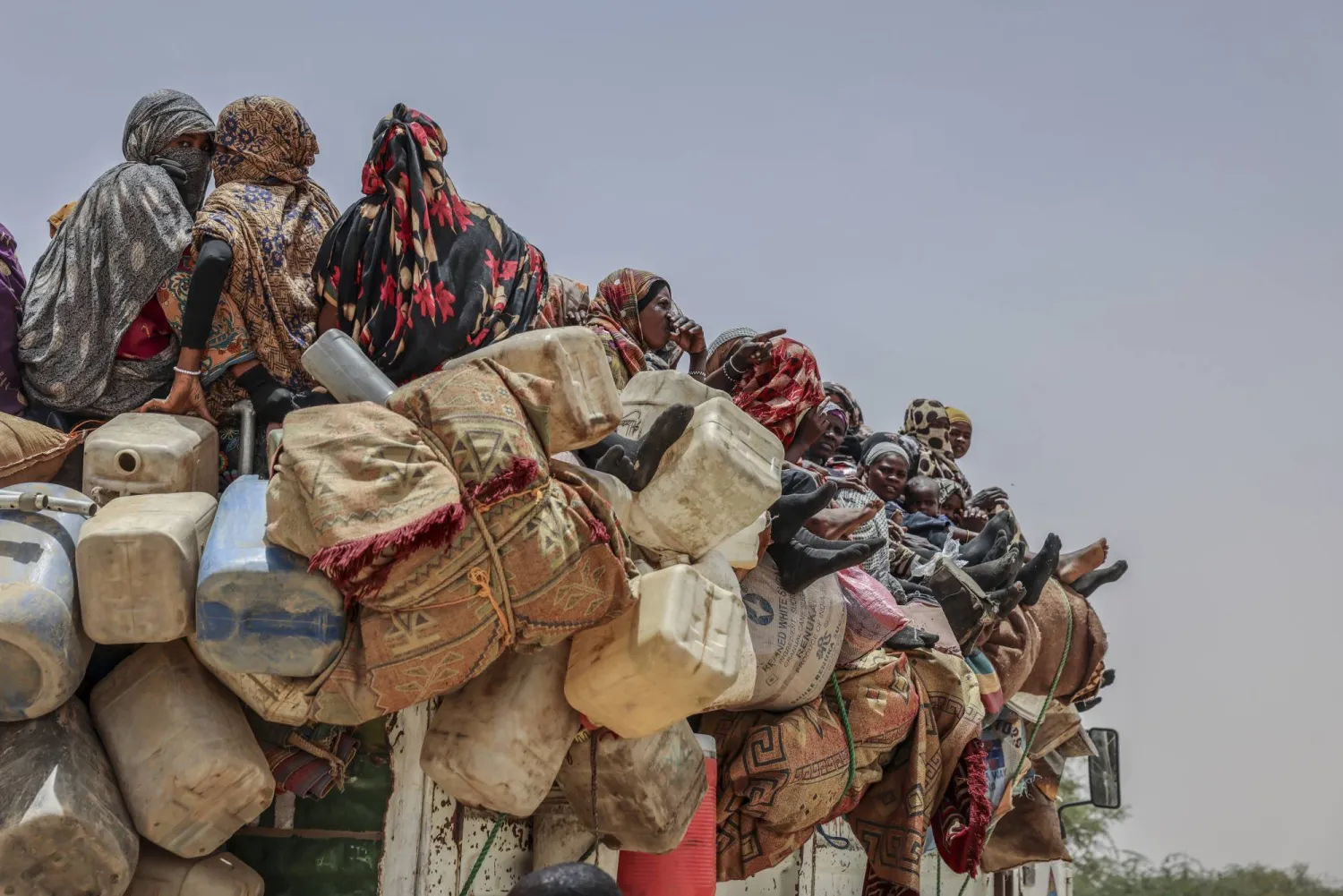

Critical shortfalls in global humanitarian funding now threaten millions of Sudanese refugees fleeing war to seek refuge in neighboring countries, the UN World Food Program (WFP) warned on Monday.
Since conflict erupted in Sudan in April 2023, over 13 million people were forced to flee their homes, including more than 4 million people who fled to neighboring countries in search of food, shelter and safety.
“Millions of people who have fled Sudan depend wholly on support from WFP, but without additional funding we will be forced to make further cuts to food assistance,” said Shaun Hughes, WFP Emergency Coordinator for the Sudan Regional Crisis.
“This will leave vulnerable families, and particularly children, at increasingly severe risk of hunger and malnutrition,” he added.
Hughes described the situation as “a full-blown regional crisis that’s playing out in countries that already have extreme levels of food insecurity and high levels of conflict.”
Last April, WFP said donor funding for its 2025 operations was 40% lower than the previous year while the UN says its humanitarian response plan for Sudan - also the world’s largest hunger crisis - is only 14.4% funded.
A UN conference in Spain this week aims to rally international donors, following deep funding shortfalls that have affected relief operations globally.
On Monday, WFP said its support to Sudanese refugees in the Central African Republic (CAR), Egypt, Ethiopia and Libya may grind to a halt in the coming months as resources run dry.
Around 1.5 million Sudanese affected by the crisis have arrived in Egypt since the conflict began in Sudan two years ago. They are receiving aid from UN agencies including WFP and the High Commissioner for Refugees.
According to WFP, food aid for 85,000 refugees — 36% of those previously supported — had already been cut in Egypt.
Without new funding, the WFP warned, all assistance to the most vulnerable refugees would be suspended by August.
In Chad, where more than 850,000 people have fled but find little help in overwhelmed camps, the WFP said food rations would be reduced even further.
The UN agency also said around 1,000 refugees continue to arrive in Chad each day from Sudan’s western Darfur region, where famine has already been declared and displacement camps regularly come under attack.
“Refugees from Sudan are fleeing for their lives and yet are being met with more hunger, despair, and limited resources on the other side of the border,” said Hughes.
“Food assistance is a lifeline for vulnerable refugee families with nowhere else to turn.”
Inside Sudan, more than eight million people are estimated to be on the brink of famine, with nearly 25 million suffering dire food insecurity.


