


Russia Warns US, South Korea and Japan against Forming Security Alliance Targeting North Korea

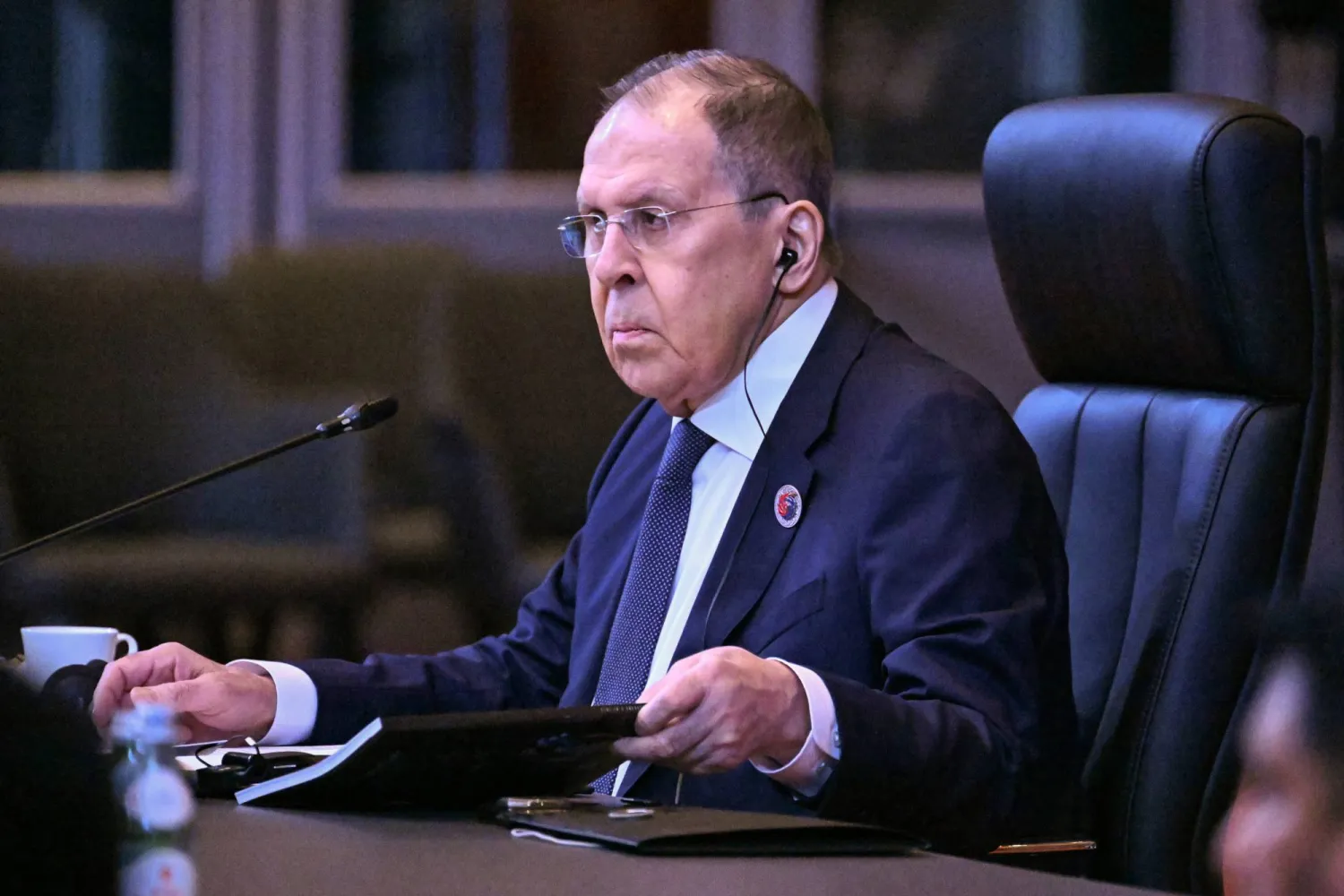
Russia's Foreign Affairs Minister Sergei Lavrov attends the Association of Southeast Asian Nations (ASEAN) Post-Ministerial Conference during the 58th ASEAN Foreign Ministers' meeting and related meetings at the Convention Centre in Kuala Lumpur, Thursday, July 10, 2025. (Mohd Rasfan/Pool Photo via AP)
TT

Russia Warns US, South Korea and Japan against Forming Security Alliance Targeting North Korea

Russia's Foreign Affairs Minister Sergei Lavrov attends the Association of Southeast Asian Nations (ASEAN) Post-Ministerial Conference during the 58th ASEAN Foreign Ministers' meeting and related meetings at the Convention Centre in Kuala Lumpur, Thursday, July 10, 2025. (Mohd Rasfan/Pool Photo via AP)

Russia’s foreign minister on Saturday warned the US, South Korea and Japan against forming a security partnership targeting North Korea as he visited his country's ally for talks on further solidifying their booming military and other cooperation.

Russian Foreign Minister Sergey Lavrov flew to North Korea’s eastern Wonsan city on Friday for a meeting with his North Korean counterpart Choe Son Hui, The Associated Press.

Relations between Russia and North Korea have been flourishing in recent years, with North Korea supplying troops and ammunitions to support Russia’s war against Ukraine in return for military and economic assistance. That has raised concerns among South Korea, the US and others that Russia might also transfer to North Korea sensitive technologies that can increase the danger of its nuclear and missile programs.

After a meeting with Choe on Saturday, Lavrov accused the US, South Korea and Japan of what he called their military buildups around North Korea.

“We warn against exploiting these ties to build alliances directed against anyone, including North Korea and, of course, Russia,” he told reporters, according to Russia’s state Tass news agency.

The US, South Korea and Japan have been expanding or restoring their trilateral military exercises in response to North Korea’s advancing nuclear program. On Friday, the three countries held a joint air drill involving US nuclear-capable bombers near the Korean Peninsula, as their top military officers met in Seoul and urged North Korea to cease all unlawful activities that threaten regional security.

North Korea views major US-led military drills as invasion rehearsals. It has long argued that it’s forced to develop nuclear weapons to defend itself from US military threats.

Lavrov said Russia understands North Korea’s decision to seek nuclear weapons.

“The technologies used by North Korea are the result of the work of its own scientists. We respect North Korea’s aspirations and understand the reasons why it is pursuing a nuclear development,” Lavrov said.

During their meeting, Choe reiterated that North Korea “unconditionally” supports Russia’s fight against Ukraine. She described ties between North Korea and Russia as “the invincible alliance.”

Lavrov said he repeated Russia’s gratitude for the contribution that North Korean troops made in efforts to repel a Ukrainian incursion into Russia’s Kursk border region.

Wonsan city, the meeting venue, is where North Korea recently opened a mammoth beach resort that it says can accommodate nearly 20,000 people.

In his comments at the start of his meeting with Choe, Lavrov said that “I am sure that Russian tourists will be increasingly eager to come here. We will do everything we can to facilitate this, creating conditions for this, including air travel,” according to the Russian Foreign Ministry.

The Wonsan-Kalma tourist zone is at the center of North Korean leader Kim Jong Un’s push to boost tourism as a way to improve his country’s troubled economy. But prospects for the biggest tourist complex in North Korea aren’t clear, as the country appears unlikely to fully reopen its borders and embrace Western tourists anytime soon.


Russian Envoy to Join Ukraine Talks in Miami

Burned electric water heaters lie at the site of a warehouse of home appliances which was hit during an overnight Russian drone strike, amid Russia's attack on Ukraine, in Odesa, Ukraine December 16, 2025. Press service of the State Emergency Service of Ukraine in Odesa region/Handout via REUTERS
TT

Russian Envoy to Join Ukraine Talks in Miami

Burned electric water heaters lie at the site of a warehouse of home appliances which was hit during an overnight Russian drone strike, amid Russia's attack on Ukraine, in Odesa, Ukraine December 16, 2025. Press service of the State Emergency Service of Ukraine in Odesa region/Handout via REUTERS

Russian envoy Kirill Dmitriev said on Saturday he was heading to Miami, where another round of talks to settle the Ukraine war is set to take place.

Ukrainian and European teams were also in the sunny American city for the negotiations mediated by Donald Trump's envoy Steve Witkoff and the US president's son-in-law Jared Kushner.

Trump's envoys have pushed a plan in which the United States would offer security guarantees to Ukraine, but Kyiv will likely be expected to surrender some territory, a prospect resented by many Ukrainians.

However, US Secretary of State Marco Rubio on Friday promised not to force Ukraine into any agreement, saying "there's no peace deal unless Ukraine agrees to it". He added that he may join the talks on Saturday in Miami, his hometown.

Dmitriev wrote in an X post that he was "on the way to Miami," adding a peace dove emoji and attaching a short video of a morning sun shining through clouds on a beach with palms.

"As warmongers keep working overtime to undermine the US peace plan for Ukraine, I remembered this video from my previous visit -- light breaking through the storm clouds," he added.

Russian and European involvement in the talks marks a step forward from an earlier stage, when the Americans held separate negotiations with each side in different locations, AFP reported.

However, it is unlikely Dmitriev would hold direct talks with Ukrainian and European negotiators as relations between the two sides remain extremely strained.

Moscow, which sent troops into Ukraine in February 2022, argues that Europe's involvement in the talks would only hinder the process and tends to paint the continent's leaders as pro-war.

The weekend talks come after President Vladimir Putin vowed to press ahead with his military offensive in Ukraine, hailing Moscow's battlefield gains nearly four years into his war in an annual news conference on Friday.

Russia announced on Saturday it had captured two villages in Ukraine's Sumy and Donetsk regions, further grinding through the country's east in costly battles.

Meanwhile, the death toll in Ukraine's Black Sea Odesa region from an overnight Russian ballistic missile strike on port infrastructure rose to eight, with almost three dozen people wounded in the attack.

At the same time, Ukraine claimed to have destroyed two Russian fighter jets at an airfield in occupied Crimea, according to the security service SBU.

Putin ordered a full-scale invasion of Ukraine in February 2022, describing it as a "special military operation" to demilitarize the country and prevent the expansion of NATO.

Kyiv and its European allies say the war, the largest and deadliest on European soil since World War II, is an unprovoked and illegal land grab that has resulted in a tidal wave of violence and destruction.


8 Dead, Dozens Wounded in Russian Strike on Ukraine's Odesa Port

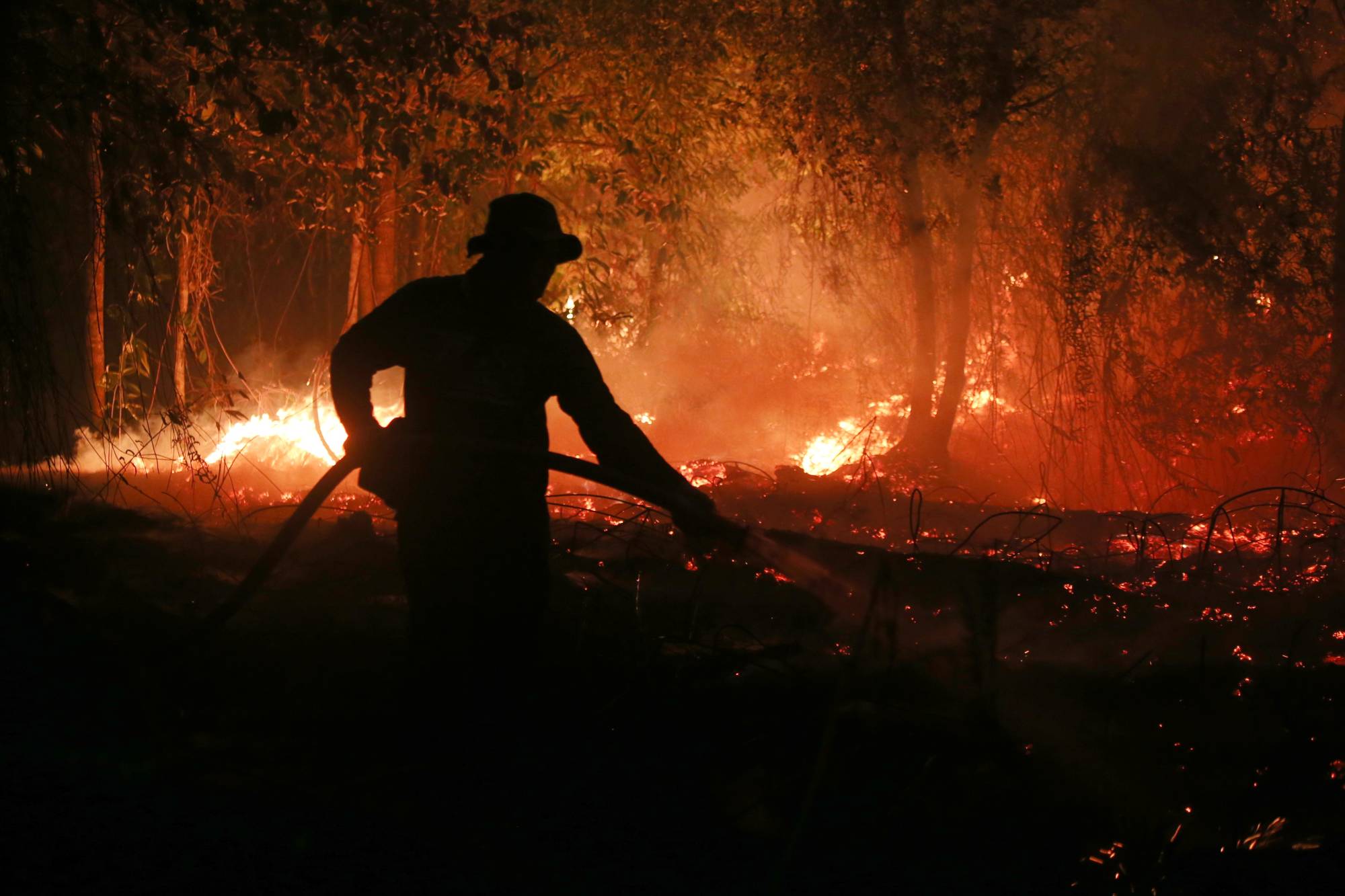
A firefighter works at the site of a Russian missile and drone strike, amid Russia's attack on Ukraine, in Odesa region, Ukraine in this handout picture released December 20, 2025. Press service of the State Emergency Service of Ukraine in Odesa region/Handout via REUTERS
TT

8 Dead, Dozens Wounded in Russian Strike on Ukraine's Odesa Port

A firefighter works at the site of a Russian missile and drone strike, amid Russia's attack on Ukraine, in Odesa region, Ukraine in this handout picture released December 20, 2025. Press service of the State Emergency Service of Ukraine in Odesa region/Handout via REUTERS

Eight people were killed and 27 wounded in a Russian missile strike on port infrastructure in Odesa, southern Ukraine, late on Friday, Ukraine’s Emergency Service said Saturday morning.

Some of the wounded were on a bus at the epicenter of the overnight strike, the service said in a Telegram post. Trucks caught fire in the parking lot, and cars were also damaged.

The port was struck with ballistic missiles, said Oleh Kiper, the head of the Odesa region.

Elsewhere, Ukrainian forces hit a Russian warship and other facilities with drones, Ukraine’s General Staff said in a statement Saturday.

The nighttime attack on Friday hit the Russian warship “Okhotnik,” according to the statement posted to the Telegram messaging app.

The ship was patrolling in the Caspian Sea near an oil and gas production platform, The Associated Press reported. The extent of the damage is still being clarified, the statement added.

A drilling platform at the Filanovsky oil and gas field in the Caspian Sea was also hit. The facility is operated by Russian oil giant Lukoil. Ukrainian drones also struck a radar system in the Krasnosilske area of Crimea, which Russia illegally annexed from Ukraine in 2014.


Satellite Imagery Shows ‘Recent Activity’ at Iran Nuclear Facility

An inspector of the International Atomic Energy Agency sets up surveillance equipment at a uranium conversion facility in Iran in 2005. Photograph: Mehdi Ghasemi/AP
TT

Satellite Imagery Shows ‘Recent Activity’ at Iran Nuclear Facility

An inspector of the International Atomic Energy Agency sets up surveillance equipment at a uranium conversion facility in Iran in 2005. Photograph: Mehdi Ghasemi/AP

New satellite imagery shows recent activity at the Natanz nuclear facility that was damaged during June's 12-day war with Israel, according to the US-based Institute for Science and International Security (ISIS).

During the June conflict, the IAEA confirmed Israeli strikes hit Iran's Natanz underground enrichment plant.

The think tank said the satellite imagery from December 13 show panels placed on top of the remaining anti-drone structure at the Pilot Fuel Enrichment Plant (PFEP), providing cover for the damaged facility.

It suggested the new covering allows Iran to examine or retrieve materials from the rubble while limiting external observation.

The Natanz uranium enrichment facility, located some 250 km south of the Iranian capital Tehran, is one of Iran's most important and most controversial nuclear facilities in the Middle East.

Although the facility “likely held several kilograms of highly enriched uranium,” ISIS stressed that such material is “not negligible” in the broader context of Iran’s nuclear capabilities.

While PFEP shows renewed activity, ISIS said it has not observed similar signs at other major nuclear sites, including the underground Fordow facility also damaged in June by airstrikes.

Inspections
On December 15, IAEA chief Rafael Grossi has reiterated that Iran must allow inspectors access to the three key nuclear facilities that enrich uranium and were hit by the US and Israeli airstrikes last June.

Speaking to RIA Novosti, Grossi said the agency’s activities in Iran are very limited. “We are only allowed to access sites that were not hit.”

In October, the head of the UN nuclear watchdog told AP that Iran does not appear to be actively enriching uranium but that the agency has recently detected renewed movement at the country’s nuclear sites.

Grossi said that despite being unable to fully access Iranian nuclear sites, inspectors have not seen any activity via satellite to indicate that Tehran has accelerated its production of uranium enriched beyond what it had compiled before the 12-day war with Israel in June.

“However, the nuclear material enriched at 60% is still in Iran,” Grossi said in an interview at the United Nations headquarters in New York.

“And this is one of the points we are discussing because we need to go back there and to confirm that the material is there and it’s not being diverted to any other use,” he added, “This is very, very important.”

Iran’s Foreign Minister Abbas Araghchi said on December 8 that resuming the agency’s inspections is currently not possible because “there is no protocol or guideline” for inspecting facilities he described as “peaceful.”

ISIS reported on October 3 that new satellite imagery shows that Iran is ongoing construction efforts at a mountainous area just south of the Natanz enrichment site known as Kuh-e Kolang Gaz La, or Pickaxe Mountain.

On Sept. 26, The Washington Post said according to a review of satellite imagery and independent analysis, Iran has increased construction at a mysterious underground site in the months since the US and Israel pummeled its main nuclear facilities, suggesting Tehran has not entirely ceased work on its suspected weapons program and may be cautiously rebuilding.
