OpenAI Lists Google as Cloud Partner amid Growing Demand for Computing Capacity

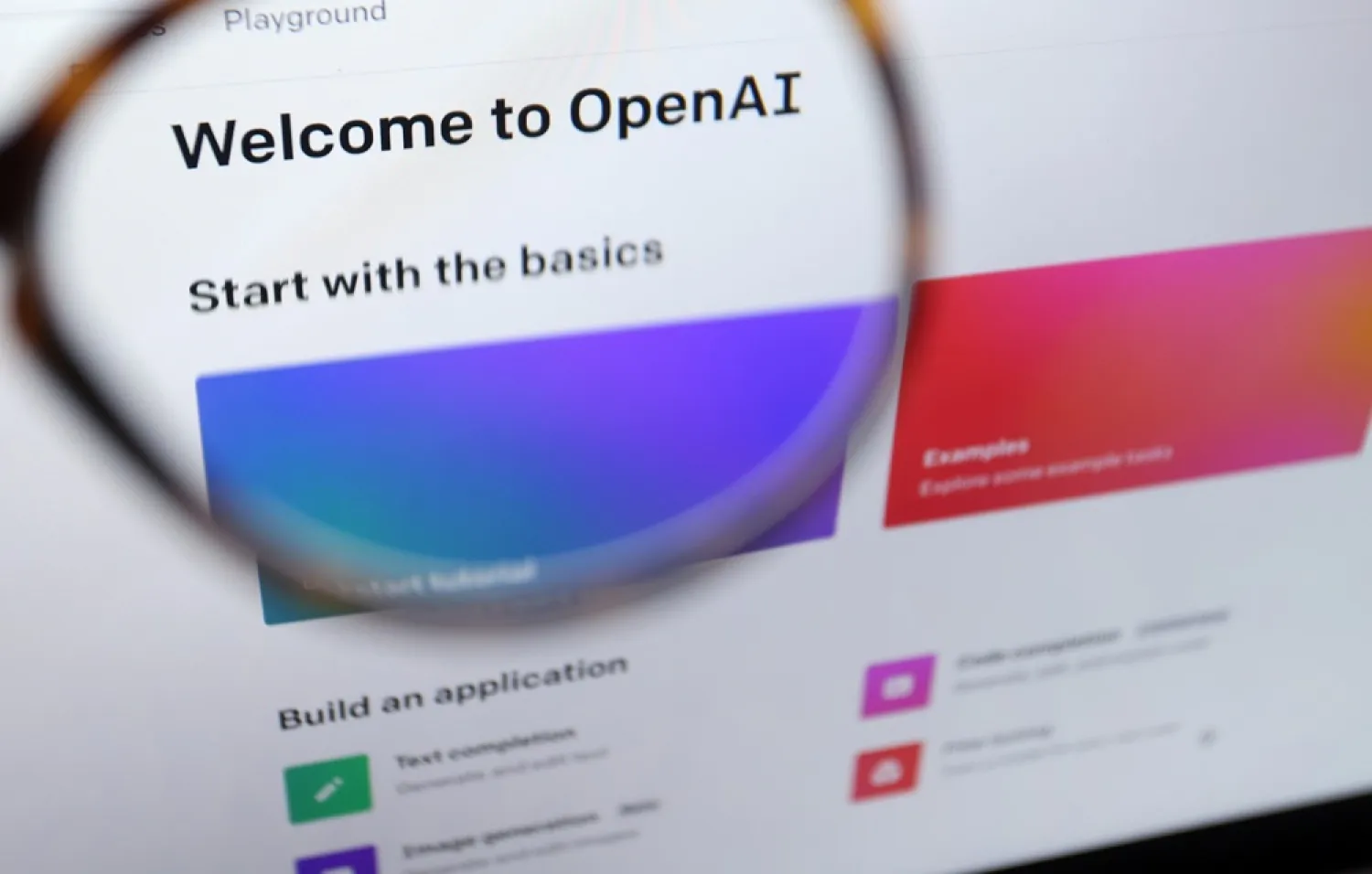
19 January 2023, Bavaria, Kempten: The words "Welcome to OpenAI" is written on the ChatGPT homepage. (dpa)
TT

OpenAI Lists Google as Cloud Partner amid Growing Demand for Computing Capacity

19 January 2023, Bavaria, Kempten: The words "Welcome to OpenAI" is written on the ChatGPT homepage. (dpa)

OpenAI has included Alphabet's Google Cloud among its suppliers to meet escalating demands for computing capacity, according to an updated list published on the ChatGPT maker's website.

The artificial-intelligence giant also relies on services from Microsoft, Oracle, and CoreWeave.

The deal with Google, finalized in May after months of discussions, was first reported by Reuters citing a source in June.

The arrangement underscores how massive computing demands to train and deploy AI models are reshaping the competitive dynamics in AI, and marks OpenAI's latest move to diversify its compute sources beyond its major supporter Microsoft, including its high-profile Stargate data center project.

Earlier this year, OpenAI partnered with SoftBank and Oracle on the $500 billion Stargate infrastructure program and signed multi-billion-dollar agreements with CoreWeave to bolster computing capacity.

The partnership with Google is the latest of several maneuvers made by OpenAI to reduce its dependency on Microsoft, whose Azure cloud service had served as the ChatGPT maker's exclusive data center infrastructure provider until January.

Google and OpenAI discussed an arrangement for months but were previously blocked from signing a deal due to OpenAI's lock-in with Microsoft, a source had told Reuters.


China's Alibaba Targets $100B in AI and Cloud Revenue over 5 Years

FILE PHOTO: Deepseek and Alibaba logos are seen in this illustration taken on January 29, 2025. REUTERS/Dado Ruvic/Illustration/File Photo
TT

China's Alibaba Targets $100B in AI and Cloud Revenue over 5 Years

FILE PHOTO: Deepseek and Alibaba logos are seen in this illustration taken on January 29, 2025. REUTERS/Dado Ruvic/Illustration/File Photo

China’s technology giant Alibaba Group pledged on Thursday a goal of surpassing $100 billion in revenue from its artificial intelligence and cloud businesses over the next five years, which it said would be powered by the AI demand boom.

The announcement of the ambitious target came as the company posted a 67% drop in profit in the latest quarter, even as growth in its cloud business remained robust.

For the October-December quarter, the company, which shifted its focus to cloud and AI technologies in recent years, reported an overall revenue increase of 2% year-on-year to 284.8 billion yuan ($41.4 billion), lower than analysts’ estimates.

Revenue from its cloud business jumped 36% in the quarter to 43.3 billion yuan ($6.2 billion) from a year ago.

CEO Eddie Wu said during an earnings call on Thursday that Alibaba stands to benefit from the “exponential growth in AI demand.” It has been expanding and upgrading its flagship Qwen AI app and consumer-facing chatbot and also provides cloud computing and storage services to commercial customers.

“(There is) enormous and sustained growth momentum of the AI market,” Wu said.

Profit for the quarter was 16.3 billion yuan ($2.4 billion), down from 48.9 billion yuan the same quarter last year, in part due to growing marketing and sales expenses.

The Hangzhou-based company, which started out in e-commerce, has also seen a price war in the food delivery segment over the past months adding pressure to its profitability.

To help drive profit and amid rising costs and growing demand, the company said on Wednesday it would be increasing prices for some AI services by as much as 34%. It also launched the agentic AI tool Wukong this week, in an expansion of its products for commercial customers.

Alibaba’s AI ambitions was also tested recently following the departure this month of Lin Junyang, head of its AI model division Qwen. Last year, the company pledged investments of at least 380 billion yuan ($53 billion) in three years to advance its cloud computing and AI infrastructure.

Chinese tech companies have been stepping up their competitiveness against US rivals and growing their dominance, especially after AI startup DeepSeek sent shock waves across the industry last year.


Tencent's Quarterly Revenue Rises 13% on Gaming, AI Demand

FILE PHOTO: Tencent's logo is displayed at its booth at the China International Fair for Trade in Services (CIFTIS) in Beijing, China, September 11, 2025. REUTERS/Maxim Shemetov/File Photo
TT

Tencent's Quarterly Revenue Rises 13% on Gaming, AI Demand

FILE PHOTO: Tencent's logo is displayed at its booth at the China International Fair for Trade in Services (CIFTIS) in Beijing, China, September 11, 2025. REUTERS/Maxim Shemetov/File Photo

Tencent Holdings reported a 13% increase in fourth-quarter revenue on Wednesday, driven by strong demand for gaming and growth in its artificial intelligence services, cementing its position as China's largest social media and gaming company.

The Shenzhen-based firm posted revenue of 194.4 billion yuan ($28.3 billion) for the three months to December 31, just above the 193.5 billion yuan forecast by analysts polled by LSEG.

Quarterly net profit was 58.26 billion yuan, compared with an average estimate of 57.75 billion yuan.

Tencent has been accelerating AI ⁠investments funded by ⁠its gaming arm as it competes with rivals including Alibaba and ByteDance.

The company is embedding AI across its WeChat messaging and payment app, cloud services and gaming, drawing on an ecosystem of more than one billion users.

Domestic gaming revenue rose 15% to 38.2 billion yuan, while international gaming revenue surged ⁠32% to 21.1 billion yuan. Online advertising revenue climbed 17% to 41.1 billion yuan, boosted by AI-enhanced ad targeting.

Gaming growth was driven by newer titles including "Delta Force" and "Valorant Mobile", alongside established hits "Honor of Kings" and "Peacekeeper Elite".

Revenue in its FinTech and Business Services segment, which includes cloud computing, rose 8% to 60.8 billion yuan. Tencent does not break out cloud revenue separately.

To compete with rivals such as Alibaba Group and ByteDance, Tencent ramped up AI talent acquisition, including hiring ⁠former OpenAI ⁠researcher Yao Shunyu to lead the development of its proprietary Hunyuan large language model.

It spent 1 billion yuan promoting its Yuanbao AI chatbot during the Lunar New Year holiday period to gain market share in China's increasingly crowded AI sector, Reuters reported.

This month, it launched its "OpenClaw" AI product suite, comprising QClaw for individual users, Lighthouse for developers and WorkBuddy for enterprises, as competition intensifies around AI agents - software that can perform multi-step tasks autonomously.

Capital expenditure for 2025 totaled 79.2 billion yuan, compared to 76.8 billion yuan in 2024.


Samsung Elec and AMD Sign MoU on AI Memory, Explore Foundry Partnership

FILE PHOTO: The logo of Samsung Electronics is seen at the company's store in Seoul, South Korea, April 15, 2025. REUTERS/Kim Hong-Ji/File Photo
TT

Samsung Elec and AMD Sign MoU on AI Memory, Explore Foundry Partnership

FILE PHOTO: The logo of Samsung Electronics is seen at the company's store in Seoul, South Korea, April 15, 2025. REUTERS/Kim Hong-Ji/File Photo

Samsung Electronics and Advanced Micro Devices (AMD) signed a memorandum of understanding to expand their strategic partnership on memory chip supplies for artificial intelligence infrastructure, the companies said on Wednesday.

The agreement will focus on supplying Samsung's next-generation high-bandwidth memory (HBM4) for AMD's upcoming Instinct MI455X AI accelerators, as well as optimized DDR5 memory for AMD's sixth-generation EPYC processors, they said in a statement.

The companies will also discuss opportunities for a foundry partnership, under which Samsung could provide contract chip manufacturing services ⁠for next-generation AMD ⁠products.

Under the agreement, Samsung will position itself as a key HBM4 supplier for AMD's next-generation AI GPUs, Reuters reported. The South Korean firm has already been a primary HBM supplier for AMD, supplying HBM3E chips used in AMD's MI350X and MI355X accelerators.

The ⁠agreement comes during the week of Nvidia's annual developer conference GTC, where CEO Jensen Huang on Monday announced a foundry partnership with the Korean firm and praised its HBM4 chips.

The tie-up highlights a broader race among global chipmakers to lock in long-term supply partnerships for advanced memory, as AI-driven demand reshapes the semiconductor industry and tightens supply of HBM chips.

Last month, AMD said it had agreed ⁠to sell ⁠up to $60 billion worth of AI chips to Meta Platforms over five years, a deal that allows the Facebook owner to purchase as much as 10% of the chips. AMD signed a similar deal with OpenAI last year.

Samsung, the world's largest memory chipmaker, has been seeking to narrow the gap with rivals in the fast-growing HBM segment. It holds about a 22% share of the global HBM market, compared with market leader SK Hynix's 57%, according to Counterpoint.