

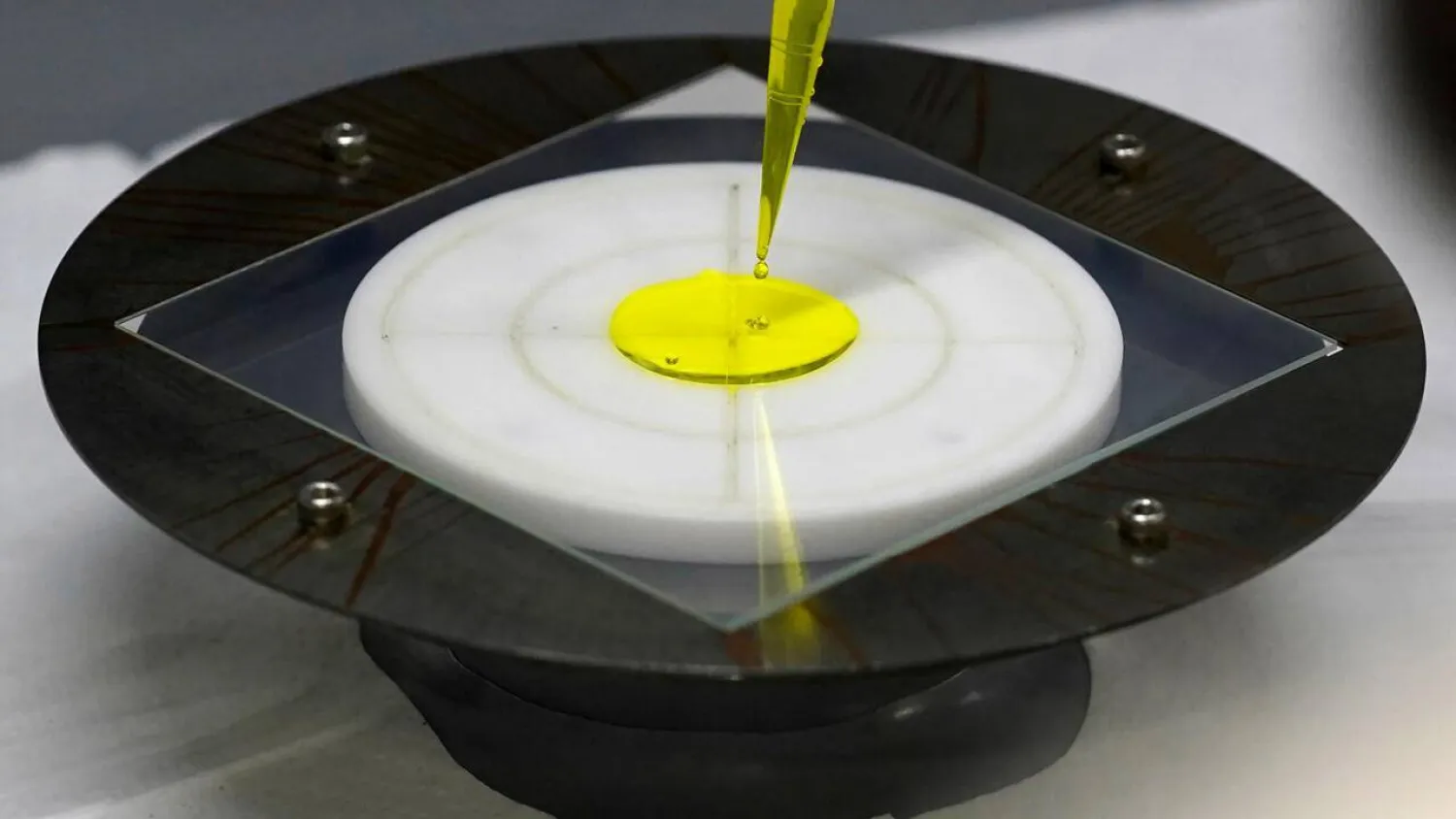

Japan Sees Bright Future for Ultra-Thin, Flexible Solar Panels

Japan is hoping ultra-thin, flexible solar panels made from perovskite will help it meet renewable energy goals. (AFP)
TT

Japan Sees Bright Future for Ultra-Thin, Flexible Solar Panels

Japan is hoping ultra-thin, flexible solar panels made from perovskite will help it meet renewable energy goals. (AFP)

Japan is heavily investing in a new kind of ultra-thin, flexible solar panel that it hopes will help it meet renewable energy goals while challenging China's dominance of the sector.

Pliable perovskite panels are perfect for mountainous Japan, with its shortage of flat plots for traditional solar farms. And a key component of the panels is iodine, something Japan produces more of than any country but Chile, reported AFP.

The push faces some obstacles: perovskite panels contain toxic lead, and, for now, produce less power and have shorter lifespans than their silicon counterparts.

Still, with a goal of net-zero by 2050 and a desire to break China's solar supremacy, perovskite cells are "our best card to achieve both decarbonization and industrial competitiveness," minister of industry Yoji Muto said in November.

The government is offering generous incentives to get industry on board, including a 157-billion-yen ($1 billion) subsidy to plastic maker Sekisui Chemical for a factory to produce enough perovskite solar panels to generate 100 megawatts by 2027, enough to power 30,000 households.

By 2040, Japan wants to install enough perovskite panels to generate 20 gigawatts of electricity, equivalent to adding about 20 nuclear reactors.

That should help Japan's target to have renewable energy cover up to 50 percent of electricity demand by 2040.

- Breaking the silicon ceiling -

The nation is looking to solar power, including perovskite and silicon-based solar cells, to cover up to 29 percent of all electricity demand by that time, a sharp rise from 9.8 percent in 2023.

"To increase the amount of renewable energy and achieve carbon neutrality, I think we will have to mobilize all the technologies available," said Hiroshi Segawa, a specialist in next-generation solar technology at the University of Tokyo.

"Perovskite solar panels can be built domestically, from the raw materials to production to installation. In that sense, they could significantly contribute to things like energy security and economic security," he told AFP.

Tokyo wants to avoid a repeat of the past boom and bust of the Japanese solar business.

In the early 2000s, Japanese-made silicon solar panels accounted for almost half the global market.

Now, China controls more than 80 percent of the global solar supply chain, from the production of key raw material to assembling modules.

Silicon solar panels are made of thin wafers that are processed into cells that generate electricity.

They must be protected by reinforced glass sheets and metal frames, making the final products heavy and cumbersome.

Perovskite solar cells, however, are created by printing or painting ingredients such as iodine and lead onto surfaces like film or sheet glass.

The final product can be just a millimeter thick and a tenth the weight of a conventional silicon solar cell.

Perovskite panels' malleability means they can be installed on uneven and curved surfaces, a key feature in Japan, where 70 percent of the country is mountainous.

- Generating where power is used -

The panels are already being incorporated into several projects, including a 46-storey Tokyo building to be completed by 2028.

The southwestern city of Fukuoka has also said it wants to cover a domed baseball stadium with perovskite panels.

And major electronics brand Panasonic is working on integrating perovskite into windowpanes.

"What if all of these windows had solar cells integrated in them?" said Yukihiro Kaneko, general manager of Panasonic's perovskite PV development department, gesturing to the glass-covered high-rise buildings surrounding the firm's Tokyo office.

That would allow power to be generated where it is used, and reduce the burden on the national grid, Kaneko added.

For all the enthusiasm, perovskite panels remain far from mass production.

They are less efficient than their silicon counterparts, and have a lifespan of just a decade, compared to 30 years for conventional units.

The toxic lead they contain also means they need careful disposal after use.

However, the technology is advancing fast. Some prototypes can perform nearly as powerfully as silicon panels and their durability is expected to reach 20 years soon.

University professor Segawa believes Japan could have a capacity of 40 gigawatts from perovskite by 2040, while the technology could also speed up renewable uptake elsewhere.

"We should not think of it as either silicon or perovskite. We should look at how we can maximize our ability to utilize renewable energy," Segawa said.

"If Japan could show a good model, I think it can be brought overseas."


Spain and Portugal Continue to Battle Storm Leonardo as New Storm Approaches

 A mountain landslide blocks railway tracks during heavy rains, as storm Leonardo hits parts of Spain, in Benaojan, Spain, February 6, 2026. (Reuters)
A mountain landslide blocks railway tracks during heavy rains, as storm Leonardo hits parts of Spain, in Benaojan, Spain, February 6, 2026. (Reuters)
TT

Spain and Portugal Continue to Battle Storm Leonardo as New Storm Approaches

 A mountain landslide blocks railway tracks during heavy rains, as storm Leonardo hits parts of Spain, in Benaojan, Spain, February 6, 2026. (Reuters)
A mountain landslide blocks railway tracks during heavy rains, as storm Leonardo hits parts of Spain, in Benaojan, Spain, February 6, 2026. (Reuters)

Storm Leonardo continued to batter the Iberian Peninsula on Friday, bringing floods and putting rivers at risk of bursting their banks while thousands of people were evacuated from their homes in Spain and Portugal.

In southern Spain's Andalusia region, some 7,000 people have had to leave their homes due to successive storms.

Among them were around 1,500 people ordered to evacuate the mountain village of Grazalema, where Andalusia's regional leader Juan Manuel Moreno warned that aquifers were "full to the brim with water,” and at risk of collapsing.

“It's raining on already saturated ground. The land is unable to drain," Moreno said. “We urge extreme caution. This is not over.”

Spanish police said Friday they had found a body located 1,000 meters (about 0.6 miles) away from where a woman had disappeared Wednesday after she fell into a river in Malaga province while trying to rescue her dog. Police said they had not yet identified the body, but believed it belonged to the 45-year-old woman.

Another storm front, Marta, was expected to arrive Saturday, with Spain's weather agency AEMET saying it would bring even more rain and heavy winds, including to areas already drenched by Storm Leonardo.

Marta is expected to affect Portugal, too.

Of particular concern was southern Spain's Guadalquivir River, which flows through Córdoba and Seville and eventually into the Atlantic Ocean, and whose water levels have dramatically risen in recent days.

Additional rain Saturday could leave many more homes at risk in Córdoba, local authorities warned.

In Portugal, parts of Alcacer do Sal were submerged after the Sado River overflowed, forcing residents to leave the city located 90 kilometers (about 56 miles) south of Lisbon.

Alerts were issued also for regions near the Tagus River due to rising water levels.

A separate storm in late January left a trail of destruction in Portugal, killing several people, according to Portuguese authorities.


AROYA Cruises Debuts Arabian Gulf Voyages for 2026

AROYA offers a curated experience featuring culturally inspired entertainment and diverse dining options - SPA
TT

AROYA Cruises Debuts Arabian Gulf Voyages for 2026

AROYA offers a curated experience featuring culturally inspired entertainment and diverse dining options - SPA

AROYA Cruises, a subsidiary of the PIF-owned Cruise Saudi, has officially launched its inaugural season in the Arabian Gulf.

Running from February 21 to May 8, the season marks a milestone in regional tourism by blending authentic Saudi hospitality with international maritime standards, SPA reported.

AROYA offers a curated experience featuring culturally inspired entertainment and diverse dining options.

The season is designed to provide guests with a dynamic way to explore the Gulf, setting a new benchmark for luxury travel that reflects the Kingdom's heritage on a global stage.


Snowstorm Brings Much of Denmark to a Halt

A car drives in heavy snow at Store Heddinge in South Zealand, Denmark, 05 February 2026.  EPA/Mads Claus Rasmussen
A car drives in heavy snow at Store Heddinge in South Zealand, Denmark, 05 February 2026. EPA/Mads Claus Rasmussen
TT

Snowstorm Brings Much of Denmark to a Halt

A car drives in heavy snow at Store Heddinge in South Zealand, Denmark, 05 February 2026.  EPA/Mads Claus Rasmussen
A car drives in heavy snow at Store Heddinge in South Zealand, Denmark, 05 February 2026. EPA/Mads Claus Rasmussen

Denmark authorities halted public transport, closed schools and cancelled flights on Friday as heavy snowfall blanketed much of the country.

The Nordic country's meteorological institute DMI warned that heavy snow would likely continue until Friday evening in the east, where the capital Copenhagen is located.

Police said people should avoid going outdoors unless necessary and stay indoors in the capital and the surrounding region.

Copenhagen's airport cancelled flights to Paris and Berlin and warned of "delay and cancellation risks because of snowy conditions." Many schools were closed.

In the second-largest city of Aarhus, bus services were cancelled.
