


Tehran, Moscow and Beijing to Discuss European Threat of Sanctions ‘Snapback’

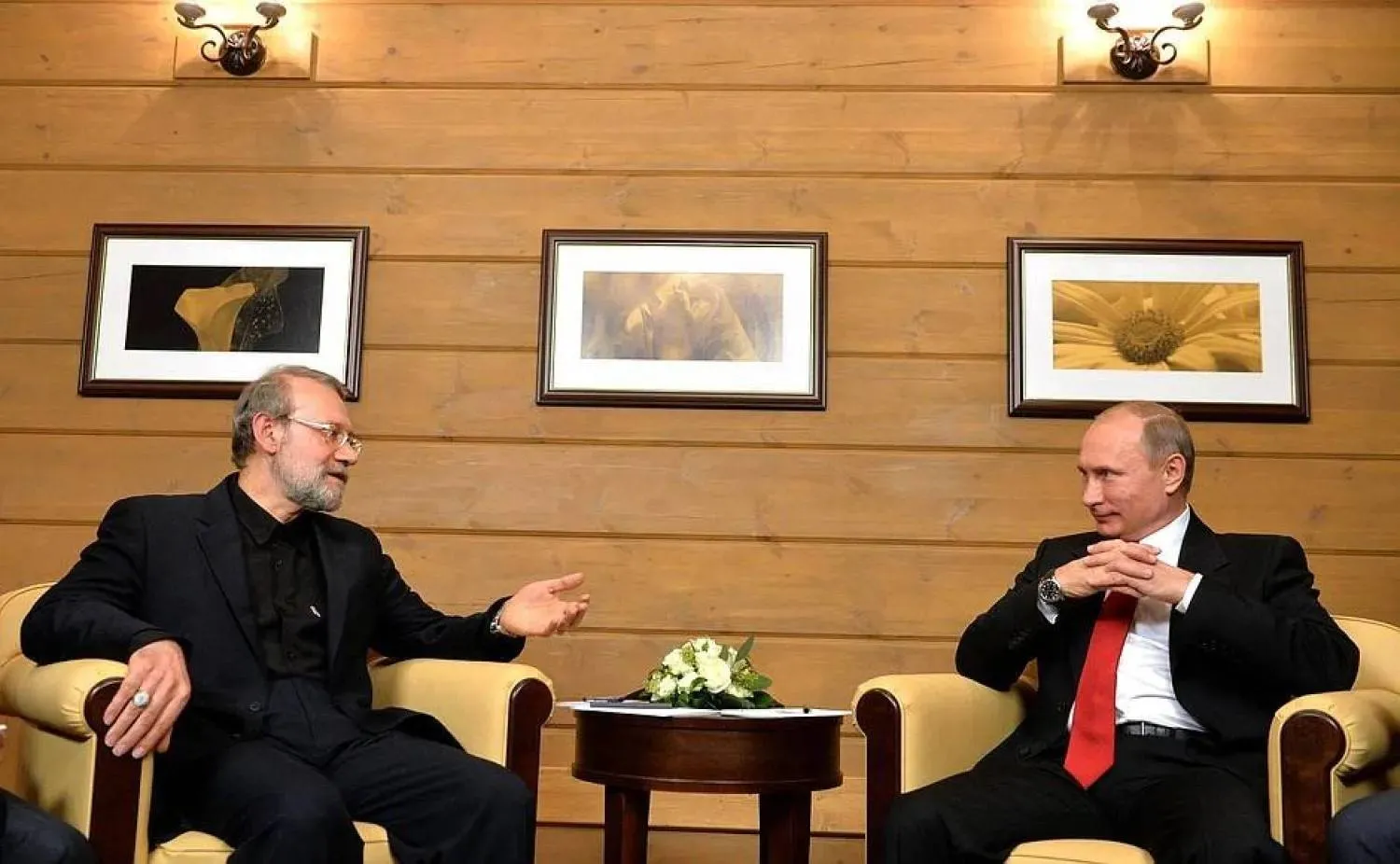
Russian President Vladimir Putin held a meeting with Ali Larijani, top adviser to Iran’s supreme leader on nuclear issues (The Kremlin) 
TT

Tehran, Moscow and Beijing to Discuss European Threat of Sanctions ‘Snapback’

Russian President Vladimir Putin held a meeting with Ali Larijani, top adviser to Iran’s supreme leader on nuclear issues (The Kremlin) 

Russia, China, and Iran are holding crucial consultations in Tehran on Tuesday to coordinate their positions ahead of the European Troika meeting in Geneva next week, focusing on discussions related to the threat of reimposed UN sanctions under the 2015 nuclear deal’s snapback mechanism.

Britain, France and Germany, known as the E3, have warned they would use the mechanism, which would reimpose international sanctions on Iran, if there was no progress on nuclear talks by the end of August.

Russian experts warned forceful pressure on Iran would only further exacerbate the situation, pushing Tehran to take steps that would most likely derail chances of a new nuclear deal.

Lately, Iran has not been impressed with Russia's support as the country wants Russian President Vladimir Putin to do more to back it against Israel and the United States.

Observers have questioned the Kremlin's ability to provide serious assistance to the Iranians amid Moscow's preoccupation with the war in Ukraine, and its unwillingness to engage in a direct confrontation with the United States and Israel.

Ahead of Tuesday’s meeting in Tehran, Permanent Representative of the Russian Federation to international organizations in Vienna, Mikhail Ulyanov, told Izvestia newspaper that the European troika has lost the right to resume international sanctions against Iran.

“The E3 has no legal or moral right to launch the so-called snapback mechanism to reimpose anti-Iranian sanctions,” he said.

The Russian diplomat added that Britain, France, and Germany, known as the E3, have repeatedly violated the terms of the 2015 nuclear deal, and thus forfeited their right to trigger the snapback mechanism.

Meanwhile, state-run Russian news agencies quoted the representative of the UN Secretary General, Stephane Dujarric, as saying that the countries participating in the JCPOA had not notified the world organization of their intention to launch a mechanism to restore sanctions against Iran.

“Thus, for now, such threats from Europe remain at the level of words. It is likely that this is an attempt to play on Iran's fears and scare the elite with the return of sanctions,” orientalist Leonid Tsukanov told Izvestia.

He added that despite the fact that the “snapback mechanism” implies an “instant return” to sanctions, the launch process itself takes about 30 days.

In return, some Russian observers say the E3 rush to implement the snapback before October, when Russia assumes the Security Council presidency.

“The rush of the European powers is due to the desire to fully introduce the mechanism until the moment when Russia takes over the presidency of the Security Council, that is, until October 2025,” Tsukanov said.

In this case, he added, the troika proceeds from the fact that its actions are legitimate, since the United States withdrew from the deal unilaterally in 2018, and Iran has significantly reduced its obligations over the past few years.

Russian Mediation

The E3 had promised not to impose sanctions if Tehran removes about 400 kg of uranium enriched to 60% from the country, and also agrees to resume monitoring by the IAEA, which Iran has suspended, according to Axios.

When the initial Joint Comprehensive Plan of Action was concluded, Moscow and Tehran agreed to export to Russia low-enriched uranium produced in Iran with a volume of more than 300 kg, Ulyanov recalled. He did not rule out that the Russian Federation may reimpose this agreement.

“In principle, I see no reason why such a scheme could not continue to be implemented if it would help resolve differences between Tehran and the Westerners over the Iranian nuclear program,” the diplomat said.

Ulyanov also said that Russia agrees to mediate between Iran and the United States to resolve the issue surrounding the nuclear deal at the request of both sides.

“Of course, we are ready to help resolve the problems surrounding the Iranian nuclear program through political and diplomatic means. We have been following this line for many years now, and it has repeatedly brought positive results. We are ready to play a mediating role now, if both contracting parties request it,” he said.

Recently, reports suggested Western countries could turn to Russia for guarantees that Iran would not work on developing nuclear weapons, Ulyanov noted. However, according to him, such guarantees will be extremely difficult to implement.

“I don't know anything about such requests. It is quite difficult to imagine how this idea can be put into practice. At the end, such guarantees should be provided by Iran, as well as the International Atomic Energy Agency, whose mandate includes verifying the use of atomic energy exclusively for peaceful purposes,” the diplomat added.

Meanwhile, Farhad Ibragimov, an expert in Oriental studies, told Izvestia that the ultimatum of the European troika and further threats from Washington may lead to Iran withdrawing from the nuclear deal and becoming actively engaged in its nuclear program.

In this regard, Moscow and Tehran held several meetings aimed at clarifying their positions, and to assess Russia’s ability to support Tehran amid the escalating Western pressure.

Russian Defense Minister Andrei Belousov and his Iranian counterpart Aziz Nasirzadeh discussed strengthening military cooperation at a meeting in Moscow, Russian state news agency RIA reported on Monday, citing the Iranian ambassador.

The meeting followed talks on Sunday between Russian President Vladimir Putin and Ali Larijani, a senior adviser to Iran's Supreme Leader Ali Khamenei, on the situation in the Middle East and issues surrounding Iran's nuclear program.

Iran hopes that Russia and China as members of the JCPOA, as well as permanent members of the UN Security Council, can play a role in any process within the Security Council.

The Iranian Foreign Ministry spokesperson Esmail Baghaei said Tehran, Moscow and Beijing had held “constructive consultations” over the past year, discussing the possible reintroduction of the UN Security Council’s sanctions on Iran.

This came as conflicting reports emerged about Russia’s stance regarding the enrichment of uranium in Iran.

On Sunday, Russia rejected an Axios report saying Putin has told both US President Donald Trump and Iranian officials that he supports the idea of a nuclear deal in which Iran is unable to enrich uranium.

Another difference emerged when Moscow announced that Putin had not received a letter from Khamenei during a previous visit by Iran's foreign minister to Moscow.

Also, Iran has not been impressed with Russia's support so far, Iranian sources said, and the country wants Putin to do more to back it against Israel and the United States.

The Farhikhtegan newspaper, whose editorial board is headed by the Iranian leader's senior adviser on international affairs, Ali Akbar Velayati, revealed details of the Khamenei letter, before later deleting it.

The newpspaer said Araghchi had conveyed the Supreme Leader’s “discontent” over what Tehran considered Moscow's shortcomings during the recent war with Israel.

Alexander Baunov, a former Russian diplomat and Kremlin watcher, wrote that “the Kremlin realizes that Israel and the United States are willing to make more efforts to destroy the Iranian regime than to save it.”

He said the recent military confrontation between Israel, the US and Iran has put Putin in front of very difficult choices, particularly because Iran's current adversaries are not Russia's enemies.

“This applies to Israel, the Gulf Arab states, and the Trump administration, with whom Putin still hopes to reach a big deal,” he said.


EU Holds Crunch Summit on Russian Asset Plan for Ukraine

Ukrainian President Volodymyr Zelensky hold talks with German Chancellor Friedrich Merz (not pictured) in the Chancellery in Berlin, Germany, 15 December 2025.  EPA/NADJA WOHLLEBEN / POOL
Ukrainian President Volodymyr Zelensky hold talks with German Chancellor Friedrich Merz (not pictured) in the Chancellery in Berlin, Germany, 15 December 2025. EPA/NADJA WOHLLEBEN / POOL
TT

EU Holds Crunch Summit on Russian Asset Plan for Ukraine

Ukrainian President Volodymyr Zelensky hold talks with German Chancellor Friedrich Merz (not pictured) in the Chancellery in Berlin, Germany, 15 December 2025.  EPA/NADJA WOHLLEBEN / POOL
Ukrainian President Volodymyr Zelensky hold talks with German Chancellor Friedrich Merz (not pictured) in the Chancellery in Berlin, Germany, 15 December 2025. EPA/NADJA WOHLLEBEN / POOL

EU leaders gather in Brussels Thursday for a make-or-break summit on using frozen Russian assets for Ukraine -- with key player Belgium under pressure to drop its opposition.

The 27-nation bloc is scrambling to strengthen Kyiv's hand as Russia's war drags towards the four-year mark and US President Donald Trump pushes for a quick deal to end the fighting, AFP said.

Officials have insisted the talks will last as long as it takes to hammer out an agreement, saying both Ukraine's survival and Europe's credibility are at stake.

"If we do not succeed in this, then the European Union's ability to act will be severely damaged for years," German Chancellor Friedrich Merz warned this week.

"We will show the world that we are incapable of standing together and acting at such a crucial moment in our history."

The EU estimates Ukraine, whose president Volodymyr Zelensky will join the meeting, needs an extra 135 billion euros ($159 billion) to stay afloat over the next two years -- with the cash crunch set to start in April.

In a bid to plug the yawning gap, the European Commission, the EU's executive, has put forward a plan to tap some 210 billion euros of Russian central bank assets frozen in the bloc.

The scheme -- which would initially provide Kyiv 90 billion euros over two years -- involves an untested financial switcheroo under which the funds are loaned to the EU, which then loans them on to Ukraine.

Kyiv would then only pay back the "reparations loan" once the Kremlin coughs up for all the damage it has wrought.

Belgium blocking

Belgium, where international deposit organization Euroclear holds the vast bulk of the funds, has been firmly opposed due to fears it could face crippling financial and legal reprisals from Moscow.

Russia has already fired a shot across the bows by announcing it was suing Euroclear.

Belgium's outspoken prime minister Bart De Wever will be in the spotlight as his EU counterparts -- most of whom back the plan -- try to cajole him to accept.

EU officials say they have gone out of their way to allay Belgian worries and that multiple layers of protection -- including guarantees from other member states -- mean the risks are minimal.

But so far Flemish nationalist De Wever has only dug in further, insisting that any guarantees must be unlimited and assets frozen in other countries should be used too.

In theory, other EU countries could override Belgium and ram the initiative through with a weighted majority but that would be a nuclear option that few see as likely for now.

"These are complex decisions that cannot be forced," said Italian premier Giorgia Meloni, who could offer key political cover for Belgium.

Plan B?

The commission has floated a potential fallback plan of the EU raising the money itself to lend Ukraine.

But officials say that scheme has been shelved as it requires unanimous approval from the EU's 27 leaders and Hungary has ruled it out.

De Wever nonetheless looks set to try to revive that idea, and other countries may be open to his arguments.

"It is on the shelf, not in the bin," said one EU diplomat, speaking like others on condition of anonymity. "But we are focused now on the reparations loan."

Bubbling close to the surface of the EU's discussion are the US efforts to forge a deal to end the war.

US and Russian officials are set to meet in Miami this weekend to discuss Trump's peace plan, a White House official told AFP Wednesday.

Trump's roving envoy Steve Witkoff and son-in-law Jared Kushner are expected to take part on the US side, while Putin's economic envoy Kirill Dmitriev is set to be in the Russian delegation, Politico reported.

Ukraine has said Washington was "pressuring" the EU not to use the assets as they view them as a vital bargaining chip in winning over Russia.

But EU officials deny that and say that, if anything, the push for peace has spurred the efforts to tap the Russian funds.

Given that Ukraine has only months before the shortfalls bite, diplomats and officials insist leaders will find a way to keep funds flowing -- even if this week yields only a loose deal with details to be hammered out later.

"We need to find a solution," said a second EU diplomat. "I'd be surprised if they break up on Saturday or Sunday without a decision."


Trump Vows Economic Boom, Blames Biden in Address to Nation

US President Donald Trump delivered a speech to the American people from the White House. (AP)
TT

Trump Vows Economic Boom, Blames Biden in Address to Nation

US President Donald Trump delivered a speech to the American people from the White House. (AP)

President Donald Trump promised Americans an economic boom in an address to the nation on Wednesday, while blaming Democratic predecessor Joe Biden for high prices that have hit the Republican's popularity.

"Good evening America. Eleven months ago I inherited a mess, and I'm fixing it," the 79-year-old said in his live speech from the White House at the end of his first year back in power.

Trump faces growing voter anger over the issue of affordability despite his efforts to dismiss it as a "hoax" by Democrats, sparking Republican fears they could be punished in the 2026 midterm elections, said AFP.

The billionaire president insisted that prices of gas and groceries that have worried Americans were "falling rapidly, and it's not done yet. But boy, are we making progress."

In a surprise announcement, Trump said that 1.45 million United States military service members would each receive "warrior dividend" bonus checks for $1,776 before Christmas, paid for with revenues raised from tariffs.

He added that specific amount was in honor of the year of the founding of the United States, the 250th anniversary of which the country will celebrate next year.

Trump then promised that "we are poised for an economic boom the likes of which the world has never seen" in 2026, when the United States will co-host the FIFA World Cup, with Canada and Mexico.

But while the White House had billed the speech as a chance for Trump to set out his economic agenda for the rest of his second term, much of it consisted on attacks on familiar targets.

He repeatedly raged against Biden, the Democrats, and migrants whom he said "stole American jobs."

Democrats fired back after the speech, with Senator Chuck Schumer saying in a statement that Trump "just showed he lives in a bubble completely disconnected from the reality everyday Americans are seeing and feeling."

"The facts are that prices are going up. Unemployment is going up. And there's no end in sight," he added.

Trump's speech comes at the end of a whirlwind year in which he has launched an unprecedented display of presidential power, including a crackdown on migration and the targeting of political opponents.

Poll worries for Trump

But polls show what Americans are most concerned about is high prices, which experts say are partly fueled by the tariffs he has slapped on trading partners around the world.

Trump got his worst approval ratings ever for his handling of the economy in a PBS News/NPR/Marist poll published Wednesday, with 57 percent of Americans disapproving and expressing concerns about the cost of living.

A YouGov poll published Tuesday showed that 52 percent of Americans thought the economy was getting worse under Trump.

He has also faced criticism from his Make America Great Again (MAGA) movement for focusing on peace deals in Ukraine and Gaza and on tensions with Venezuela, instead of domestic issues.

Trump did not mention Ukraine or Venezuela, but did boast about the Gaza ceasefire, the US attacks on Iran's nuclear program, and what he calls a war on drug traffickers.

There are signs Trump's team has had a wake-up call on the economy in recent weeks, with next year's midterm elections for the control of Congress already looming.

Republicans lost heavily in elections in November for the mayor of New York and governorships in Virginia and New Jersey, while Democrats ran them close in a previously safe area in Tennessee.

The president is now ramping up his domestic travel to push his economic message.

Last week in Pennsylvania he promised to "make America affordable again," and on Friday he is due to give another campaign-style rally in North Carolina.

Vice President JD Vance -- who is rapidly becoming Trump's messenger on the issue as he eyes his own presidential run in 2028 -- also urged voters to show patience during a speech on Tuesday.


US Military Says Strike on Alleged Drug Boat Kills 4 in Eastern Pacific

File photo: This screen grab from a video posted by US Defense Secretary Pete Hegseth on his X account on October 28, 2025 shows what he says is one four alleged drug-smuggling boats in the eastern Pacific Ocean that was destroyed in strikes, bringing the death toll from Washington's anti-narcotics campaign to at least 57. (Photo by Handout / US Secretary of Defense Pete Hegseth's X Account / AFP)
TT

US Military Says Strike on Alleged Drug Boat Kills 4 in Eastern Pacific

File photo: This screen grab from a video posted by US Defense Secretary Pete Hegseth on his X account on October 28, 2025 shows what he says is one four alleged drug-smuggling boats in the eastern Pacific Ocean that was destroyed in strikes, bringing the death toll from Washington's anti-narcotics campaign to at least 57. (Photo by Handout / US Secretary of Defense Pete Hegseth's X Account / AFP)

The US military said Wednesday that it attacked a boat accused of smuggling drugs in the eastern Pacific Ocean, killing four people on the same day the House rejected efforts to limit President Donald Trump’s power to use military force against drug cartels.

US Southern Command stated on social media that the vessel was operated by narco-terrorists along a known trafficking route. The military didn't provide evidence behind the allegations but posted a video of a boat moving through water before there was an explosion, The Associated Press said.

The attack brought the total number of known boat strikes to 26 while at least 99 people have been killed, according to numbers announced by the Trump administration. Trump has justified the attacks as a necessary escalation to stem the flow of drugs into the United States and asserted the US is engaged in an “armed conflict” with drug cartels.

The administration is facing increasing scrutiny from lawmakers over the boat strike campaign. The first attack in early September involved a follow-up strike that killed two survivors clinging to the wreckage of a boat after the first hit.

House Republicans rejected a pair of Democratic-backed resolutions Wednesday that would have forced the Trump administration to seek authorization from Congress before continuing attacks against cartels.

They were the first votes in the House on Trump’s military campaign in Central and South America.

A majority of Republicans in the Senate had previously voted against similar resolutions, and Trump would almost certainly veto them if they were to pass Congress.
