


Iran Says It Held ‘Frank’ Nuclear Talks with European Powers

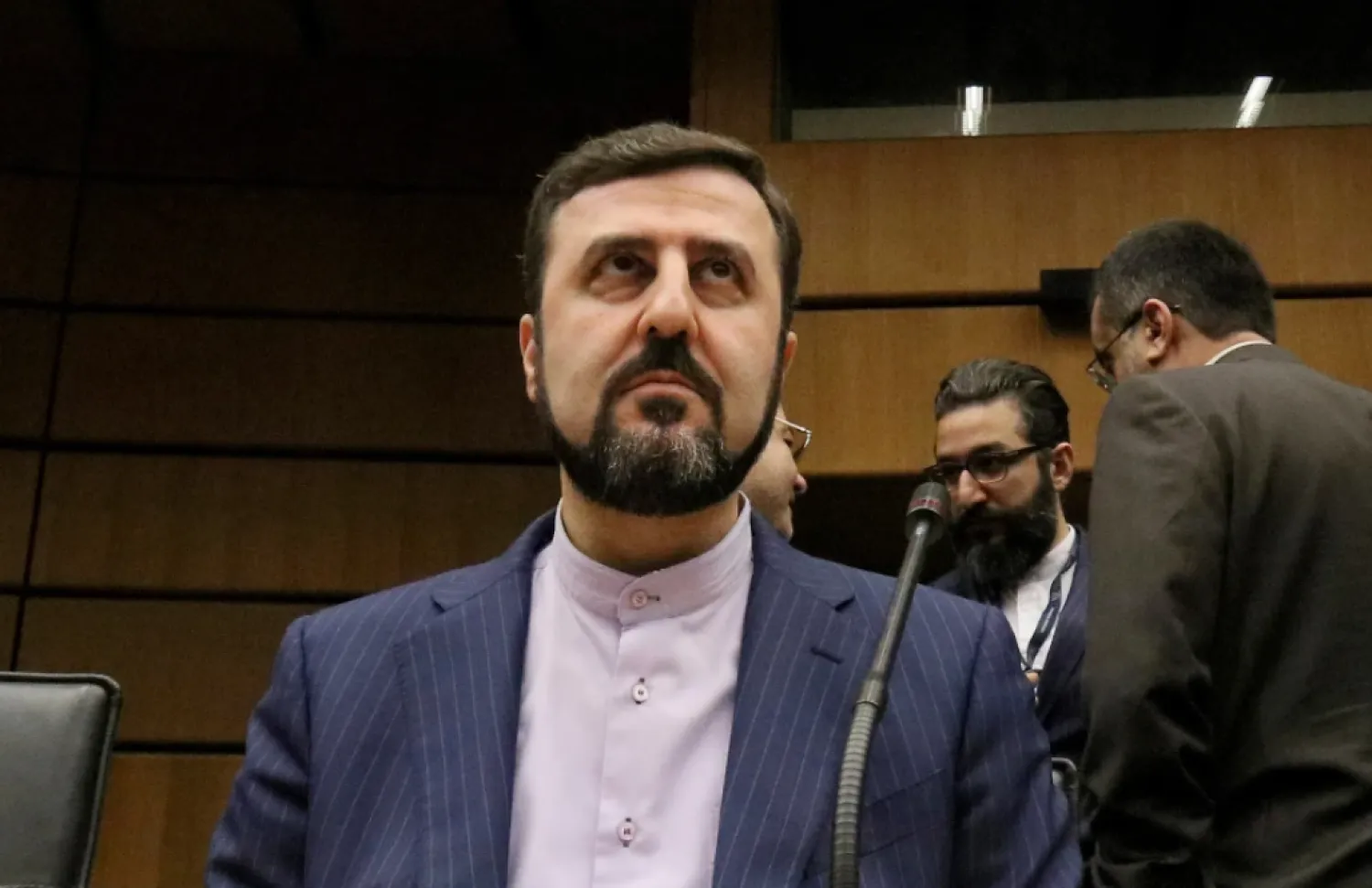
Iran’s Ambassador to the International Atomic Energy Agency, IAEA, Kazem Gharibabadi, waits for the start of the IAEA board of governors meeting at the International Center in Vienna, Austria, Nov. 21, 2019. (AP Photo/Ronald Zak, file)
TT

Iran Says It Held ‘Frank’ Nuclear Talks with European Powers

Iran’s Ambassador to the International Atomic Energy Agency, IAEA, Kazem Gharibabadi, waits for the start of the IAEA board of governors meeting at the International Center in Vienna, Austria, Nov. 21, 2019. (AP Photo/Ronald Zak, file)

Iranian diplomats said they held "frank and detailed" nuclear talks on Friday with counterparts from Germany, Britain and France, who have threatened to trigger sanctions if Tehran fails to agree a deal on uranium enrichment and cooperation with UN inspectors.  

The meeting in Istanbul was the first since Israel launched an attack on Iran last month targeting key nuclear and military sites, sparking a 12-day war and leading Tehran to pull away from working with the UN watchdog.  

The European diplomats were seen leaving the Iranian consulate shortly before 1100 GMT after spending several hours inside. 

Israel's offensive -- which killed top commanders, nuclear scientists and hundreds of others and in which residential areas and military sites were struck -- also derailed US-Iran nuclear talks that began in April. 

Since then, the European powers, known as the E3, have threatened to trigger a so-called "snapback mechanism" under a moribund 2015 nuclear deal that would reinstate UN sanctions on Iran by the end of August.  

The sanctions trigger expires in October, and Tehran has warned of consequences should the E3 opt to activate it.  

Iran's Deputy Foreign Minister Kazem Gharibabadi, who attended the talks alongside senior Iranian diplomat Majid Takht-Ravanchi, wrote on X that he had used the meeting to criticize the European stance on the 12-day conflict with Israel.  

He said the snapback mechanism had also been discussed, adding: "It was agreed that consultations on this matter will continue."  

Takht-Ravanchi told state news agency IRNA the Iranian side had demanded "punitive sanctions" be lifted "as soon as possible".  

Before the talks, a European source said the three countries were preparing to trigger the mechanism "in the absence of a negotiated solution".  

The source urged Iran to make "clear gestures" on uranium enrichment and resuming cooperation with the UN nuclear watchdog.  

- 'Common ground' -  

Gharibabadi warned earlier in the week that triggering sanctions -- which would deepen Iran's international isolation and place further pressure on its already strained economy -- would be "completely illegal". 

He accused European powers of "halting their commitments" under the 2015 deal, which the United States unilaterally withdrew from in 2018 during President Donald Trump's first term.  

"We have warned them of the risks, but we are still seeking common ground to manage the situation," said Gharibabadi.  

Iranian diplomats have previously warned that Tehran could withdraw from the global nuclear non-proliferation treaty if sanctions were reimposed.  

Israeli Foreign Minister Gideon Saar has urged European powers to trigger the mechanism.  

Israel's June 13 attack on Iran came two days before Tehran and Washington were scheduled to meet for a sixth round of nuclear negotiations.  

On June 22, the US joined Israel's offensive by striking Iranian nuclear facilities at Fordo, Isfahan, and Natanz.  

Before the war, the US and Iran were divided over uranium enrichment -- with Tehran describing it as a "non-negotiable" right, while Washington called it a "red line".  

The International Atomic Energy Agency (IAEA) says Iran is enriching uranium to 60 percent purity -- far above the 3.67 percent cap under the 2015 deal and close to weapons-grade levels.  

Tehran has said it is open to discussing the rate and level of enrichment, but not the right to enrich uranium.  

A year after the US withdrew from the nuclear deal, Iran began rolling back its commitments, which had placed restrictions on its nuclear activities in exchange for sanctions relief.  

Israel and Western powers accuse Iran of pursuing nuclear weapons, a charge Tehran has repeatedly denied.  

- 'New form' -  

Iran insists it will not abandon its nuclear program, with Foreign Minister Abbas Araghchi describing the position as "unshakable".  

Though he claimed enrichment had come to a halt because of "serious and severe" damage to nuclear sites caused by US and Israeli strikes, the full extent of the damage sustained in the US bombing remains unclear.  

Trump claimed at the time the sites had been "completely destroyed", but US media reports based on Pentagon assessments cast doubt on the scale of destruction.  

Since the 12-day war, Iran has suspended cooperation with the IAEA, accusing it of bias and failing to condemn the attacks.  

Inspectors have since left the country but a technical team is expected to return in the coming weeks after Iran said future cooperation would take a "new form".  

Israel has warned it may resume strikes if Iran rebuilds facilities or moves toward weapons capability.  

Iran has pledged a "harsh response" to any future attacks. 


Trump Reposts Suggestion that Rubio become Next Cuba Leader

Republican presidential nominee and former US President Donald Trump and Senator Marco Rubio (R-FL) react during campaign event at Dorton Arena, in Raleigh, North Carolina, US November 4, 2024. REUTERS/Jonathan Drake/
TT

Trump Reposts Suggestion that Rubio become Next Cuba Leader

Republican presidential nominee and former US President Donald Trump and Senator Marco Rubio (R-FL) react during campaign event at Dorton Arena, in Raleigh, North Carolina, US November 4, 2024. REUTERS/Jonathan Drake/

President Donald Trump reposted a social media message on Sunday suggesting that US Secretary of State Marco Rubio, born to Cuban immigrant parents, would become the next leader of Cuba.

Trump republished on his Truth Social platform a message from X user Cliff Smith on January 8 that read: "Marco Rubio will be president of Cuba," accompanied by a crying laughing emoji, AFP reported.

"Sounds good to me!" Trump commented in his repost.

The largely unknown user, whose bio refers to him as a "conservative Californian," has less than 500 followers on X.

Trump's repost comes a week after US forces seized Venezuela's authoritarian leader Nicolas Maduro in an overnight operation in Caracas that killed dozens of Venezuelan and Cuban security forces.

Cuba's communist government has yet to directly respond to the US president's provocative suggestion that an American citizen could rule the island.

But shortly after Trump's post, Cuban Foreign Minister Bruno Rodriguez insisted "right and justice are on Cuba's side."

The United States "behaves like an out-of-control criminal hegemon that threatens peace and security, not only in Cuba and this hemisphere, but throughout the entire world," Rodriguez posted on X.


UK's Former US Envoy Apologizes to Epstein's Victims, Not for His Own Ties

British Ambassador to the United States Peter Mandelson walks on the day British Prime Minister Keir Starmer holds an emergency Cobra meeting to discuss Israel-Iran conflict, in London, Britain, June 18, 2025. REUTERS/Jaimi Joy/File Photo
TT

UK's Former US Envoy Apologizes to Epstein's Victims, Not for His Own Ties

British Ambassador to the United States Peter Mandelson walks on the day British Prime Minister Keir Starmer holds an emergency Cobra meeting to discuss Israel-Iran conflict, in London, Britain, June 18, 2025. REUTERS/Jaimi Joy/File Photo

Britain's former US ambassador Peter Mandelson, who was dismissed over his links to Jeffrey Epstein last year, apologized on Sunday ​to the victims of the late convicted sex offender but not for his own actions.

Mandelson was fired in September over emails that came to light revealing a much closer relationship than previously acknowledged. The veteran British politician called Epstein "my best pal" and had advised him on seeking early jail release.

"I want to apologize to ‌those women ‌for a system that refused to ‌hear ⁠their ​voices and ‌did not give them the protection they were entitled to expect," Mandelson told the BBC broadcaster when asked if he wanted to say sorry for his links, Reuters reported.

Mandelson said he would only apologize for his own ties if he had known about Epstein's actions or been complicit.

"I was not ⁠culpable, I was not knowledgeable of what he was doing," he said.

"I ‌believed his story and that of ‍his lawyer, who spent ‍a lot of time trying to persuade me of ‍this ... that he had been falsely criminalized in his contact with these young women. Now I wish I had not believed that story."

Britain's government said at the time of Mandelson's dismissal that ​the depth of his ties to Epstein appeared "materially different" from what was known at the ⁠time of his appointment.

It has since named Christian Turner as its next ambassador to the US in a pivotal moment for transatlantic ties.

"Do you really think that if I knew what was going on and what he was doing with and to these vulnerable young women that I'd have just sat back, ignored it and moved on?", Mandelson added in the interview, describing Epstein as an "evil monster".

Mandelson also said he believed that, as a gay man in Epstein's ‌circle, he was "kept separate from what he was doing in the sexual side of his life".


German FM Puts Emphasis on Close Ties before US Trip

German Foreign Minister Johann Wadephul attends a press conference in Beijing, China December 8, 2025. REUTERS/Tingshu Wang/File Photo
TT

German FM Puts Emphasis on Close Ties before US Trip

German Foreign Minister Johann Wadephul attends a press conference in Beijing, China December 8, 2025. REUTERS/Tingshu Wang/File Photo

German Foreign Minister Johann Wadephul emphasized the importance of transatlantic relations on Sunday as he ​left for a trip to Washington that takes place at a delicate time due to tensions over US interests in Greenland and Venezuela.

"Never before has it been so crucial to ‌invest in ‌the transatlantic partnership in ‌order ⁠to ​remain ‌capable of shaping the world order," Wadephul said in Berlin before his departure.

He said he would address what he called "differences of opinions" between Germany and the United States during ⁠a meeting on Monday with US Secretary ‌of State Marco Rubio.

"Where ‍there are ‍differences of opinion, we want ‍to address these differences through dialogue in order to fulfil our shared responsibility for peace and security," Wadephul said.

On ​his way to Washington, Wadephul plans to stop over in Iceland ⁠on Sunday, where a meeting on Arctic security is scheduled with his Icelandic counterpart in Reykjavik.

Later on Monday, he also plans to meet UN Secretary-General Antonio Guterres.

"For Germany, reliability as an international partner clearly includes a commitment to international law and international cooperation," he said, ‌referring to the United Nations.
