


Official to Asharq Al-Awsat: Egypt to Counter Any Threat to Its Water Security 

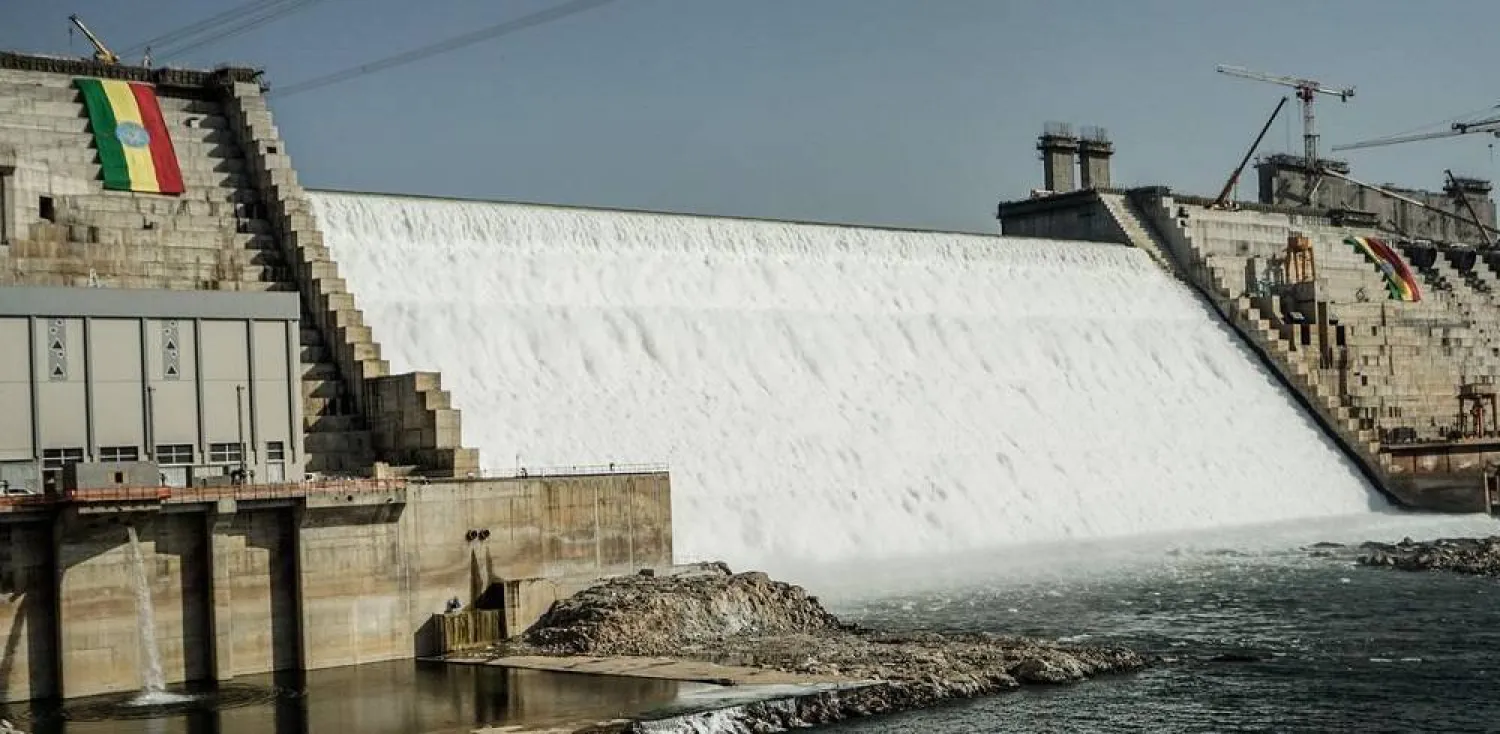
The Grand Ethiopian Renaissance Dam (GERD). (Getty Images/AFP file)
TT

Official to Asharq Al-Awsat: Egypt to Counter Any Threat to Its Water Security 

The Grand Ethiopian Renaissance Dam (GERD). (Getty Images/AFP file)

Egypt has warned it will take “necessary measures” to protect its historical rights to Nile waters, following new statements by Ethiopian officials that the Grand Ethiopian Renaissance Dam (GERD) is only the beginning of a wider dam-building plan.

A senior Egyptian official, speaking to Asharq Al-Awsat on condition of anonymity, said Cairo remains committed to securing a binding agreement that regulates current and future projects on the Nile and its tributaries.

“Egypt will act to safeguard its water security in line with international law and treaties governing transboundary rivers,” the official said.

“We have always known Ethiopia has broader ambitions beyond the GERD. That’s why we’ve insisted from the beginning on a binding agreement, not only to limit the harm from GERD but to regulate any future projects as well.”

He added that Egypt considers Nile water a matter of national survival and would “resist any threat with full force.” Cairo is closely monitoring whether Ethiopia’s new dam plans will involve the Nile or other river systems, he said. “Each case will be assessed accordingly.”

The comments came after Ethiopia’s GERD Coordination Office head, Aregawi Berhe, told local media on Wednesday that the dam was “only the first step” in the country’s strategy for water and energy development.

“We cannot rely on just one dam,” he said, calling for additional projects to support agriculture, which he described as the backbone of Ethiopia’s economy and food security.

Berhe also said the GERD was built entirely with domestic funding, pushing back on earlier remarks by US President Donald Trump suggesting American financial involvement.

'Vital lifeline’

Egyptian lawmaker Mostafa Bakry described the Ethiopian statements as “provocative” and accused Addis Ababa of seeking to impose a fait accompli, despite ongoing deadlock over the GERD negotiations.

“Ethiopia is treating the GERD as a closed chapter and is now openly discussing what comes next,” Bakry said. “Cairo has known from the start that Ethiopia wants to build dozens of dams under the pretext of development and agriculture. But the real goal is to control the river and limit Egypt’s water supply.”

“This is an existential matter for Egypt,” he warned. “We will not tolerate threats to our survival. Ethiopia must reconsider its course before the situation escalates.”

Ethiopia’s latest declarations come amid renewed international attention on the Nile dispute, following comments by Trump expressing concern over the dam’s potential impact on Egypt. Egyptian President Abdel Fattah al-Sisi welcomed the remarks and reiterated his country’s reliance on US mediation to broker a final agreement.

Earlier this month, Ethiopian Prime Minister Abiy Ahmed announced the completion of GERD construction and set September as the date for its official inauguration, inviting Egypt and Sudan to attend. Cairo swiftly rejected the call, denouncing what it sees as Ethiopia’s continued unilateralism on Nile issues.

Skepticism

Egyptian water and Africa expert Dr. Raafat Mahmoud dismissed Ethiopia’s justification that future dams would support agriculture. “Most of Ethiopia’s terrain is unsuitable for conventional irrigation. It’s a rugged highland that relies on rainfall,” he said. “Even GERD was completed with great difficulty and at high financial cost. Additional dams will face the same hurdles.”

He argued that Ethiopia’s ambitions are driven less by development and more by geopolitical aspirations. “This is about positioning itself as a regional power and countering Egypt’s influence in Africa. It’s also part of a broader effort to gain access to the Red Sea and build a naval presence there.”

Still, Mahmoud said Egypt is unlikely to take immediate action unless a direct threat to its water supply materializes. “As long as there’s no measurable harm, Cairo will likely stick to diplomacy. But under international law, it reserves the right to act if its vital interests are jeopardized.”

He added that many of Addis Ababa’s announcements are aimed more at domestic audiences than at regional planning. “These public statements are often designed to rally Ethiopian citizens, even when they don’t reflect the realities on the ground.”


Israel Says Killed Four Militants Exiting Tunnel in Gaza’s Rafah

Boys walk past the rubble of destroyed buildings in the Jabalia camp for Palestinian refugees in the northern Gaza Strip on February 8, 2026. (AFP)
TT

Israel Says Killed Four Militants Exiting Tunnel in Gaza’s Rafah

Boys walk past the rubble of destroyed buildings in the Jabalia camp for Palestinian refugees in the northern Gaza Strip on February 8, 2026. (AFP)

Israel's military said it killed four suspected militants who attacked its troops as the armed men emerged from a tunnel in southern Gaza on Monday, calling the group's actions a "blatant violation" of the ceasefire.

Despite a US-brokered truce entering its second phase last month, violence has continued in the Gaza Strip, with Israel and Hamas accusing each other of breaching the agreement.

"A short while ago, four armed terrorists exited an underground tunnel shaft and fired towards soldiers in the Rafah area in the southern Gaza Strip.... Following identification, the troops eliminated the terrorists," the military said in a statement.

It said none of its troops had been injured in the attack, which it called a "blatant violation of the ceasefire agreement" between Israel and Hamas.

Israeli troops "are continuing to operate in the area to locate and eliminate all the terrorists within the underground tunnel route", the military added.

Gaza health officials have said Israeli air strikes last Wednesday killed 24 people, with Israel's military saying the attacks were in response to one of its officers being wounded by enemy gunfire.

That wave of strikes came after Israel partly reopened the Rafah border crossing between Gaza and Egypt on February 2, the only gateway to the Palestinian territory that does not pass through Israel.

Israeli forces seized control of the crossing in May 2024 during the war with Hamas, and it had remained largely closed since.

Around 180 Palestinians have left the Gaza Strip since Rafah's limited reopening, according to officials in the territory.

Israel has so far restricted passage to patients and their accompanying relatives.

The second phase of the Gaza ceasefire foresees a demilitarization of the territory -- including the disarmament of Hamas -- along with a gradual withdrawal of Israeli forces.

Hamas has repeatedly said that disarmament is a red line, although it has indicated it could consider handing over its weapons to a future Palestinian governing authority.

Israeli officials say Hamas still has around 20,000 fighters and about 60,000 Kalashnikovs in Gaza.

A Palestinian technocratic committee has been set up with a goal of taking over day-to-day governance in the strip, but it remains unclear whether, or how, it will address the issue of demilitarization.


Building Collapse in Lebanon's Tripoli Kills 13, Search for Missing Continues

Rescue workers and residents search for survivors in the rubble of a building that collapsed in the northern city of Tripoli, Lebanon, Sunday, Feb. 8, 2026. (AP Photo)
TT

Building Collapse in Lebanon's Tripoli Kills 13, Search for Missing Continues

Rescue workers and residents search for survivors in the rubble of a building that collapsed in the northern city of Tripoli, Lebanon, Sunday, Feb. 8, 2026. (AP Photo)

The death toll from the collapse of a residential building in the Lebanese city of Tripoli rose to 13, as rescue teams continued to search for missing people beneath the rubble, Lebanon's National News ‌Agency reported ‌on Monday. 

Rescue ‌workers ⁠in the ‌northern city's Bab al-Tabbaneh neighborhood have also assisted nine survivors, while the search continued for others still believed to be trapped under the ⁠debris, NNA said. 

Officials said on ‌Sunday that two ‍adjoining ‍buildings had collapsed. 

Abdel Hamid Karameh, ‍head of Tripoli's municipal council, said he could not confirm how many people remained missing. Earlier, the head of Lebanon's civil defense rescue ⁠service said the two buildings were home to 22 residents, reported Reuters. 

A number of aging residential buildings have collapsed in Tripoli, Lebanon's second-largest city, in recent weeks, highlighting deteriorating infrastructure and years of neglect, state media reported, ‌citing municipal officials. 


Salam Concludes Visit to South Lebanon: Region Must Return to State Authority

Lebanon's Prime Minister Nawaf Salam (L) holds bouquets of flower as he stands next to the mayor of the heavily-damaged southern village of Kfar Shouba, near the border with Israel, during his visit on February 8, 2026. (AFP)
TT

Salam Concludes Visit to South Lebanon: Region Must Return to State Authority

Lebanon's Prime Minister Nawaf Salam (L) holds bouquets of flower as he stands next to the mayor of the heavily-damaged southern village of Kfar Shouba, near the border with Israel, during his visit on February 8, 2026. (AFP)

Lebanese Prime Minister Nawaf Salam vowed on Sunday to work on rebuilding infrastructure in southern villages that were destroyed by Israel during its last war with Hezbollah.

On the second day of a tour of the South, he declared: “We want the region to return to the authority of the state.”

He was warmly received by the locals as he toured a number of border villages that were destroyed by Israel during the conflict. His visit included Kfar Kila, Marjeyoun, Kfar Shouba and Kfar Hamam. He kicked off his tour on Saturday by visiting Tyre and Bint Jbeil.

The visit went above the differences between the government and Hezbollah, which has long held sway over the South. Throughout the tour, Salam was greeted by representatives of the “Shiite duo” of Hezbollah and its ally the Amal movement, as well as MPs from the Change bloc and others opposed to Hezbollah.

In Kfar Kila, the locals raised a banner in welcome of the PM, also offering him flowers and an olive branch. The town was the worst hit during the war with Israel, which destroyed nearly 90 percent of its buildings and its forces regularly carrying out incursions there.

Salam said the town was “suffering more than others because of the daily violations and its close proximity to the border.”

He added that its residents cannot return to their homes without the reconstruction of its infrastructure, which should kick off “within the coming weeks.”

“Our visit underlines that the state and all of its agencies stand by the ruined border villages,” he stressed.

“The government will continue to make Israel commit” to the ceasefire agreement, he vowed. “This does not mean that we will wait until its full withdrawal from occupied areas before working on rehabilitating infrastructure.”

Amal MP Ali Hassan Khalil noted that the people cannot return to their town because it has been razed to the ground by Israel and is still coming under its attacks.

In Marjeyoun, Salam said the “state has long been absent from the South. Today, however, the army has been deployed and we want it to remain so that it can carry out its duties.”

“The state is not limited to the army, but includes laws, institutions, social welfare and services,” he went on to say.

Reconstruction in Marjeyoun will cover roads and electricity and water infrastructure. The process will take months, he revealed, adding: “The state is serious about restoring its authority.”

“We want this region to return to the fold of the state.”

MP Elias Jarade said the government “must regain the trust of the southerners. This begins with the state embracing and defending its people,” and protecting Lebanon’s sovereignty.

MP Firas Hamdan said the PM’s visit reflects his keenness on relations with the South.

Ali Murad, a candidate who ran against Hezbollah and Amal in Marjeyoun, said the warm welcome accorded to Salam demonstrates that the “state needs the South as much as the people of the South need the state.”

“We will always count on the state,” he vowed.

Hezbollah MP Hussein Jishi welcomed Salam’s visit, hoping “it would bolster the southerners’ trust in the state.”

Kataeb leader MP Sami Gemayel remarked that the warm welcome accorded to the PM proves that the people of the South “want the state and its sovereignty. They want legitimate institutions that impose their authority throughout Lebanon, without exception.”
